Artwork
Man Climbing a Wall (L'escalade)
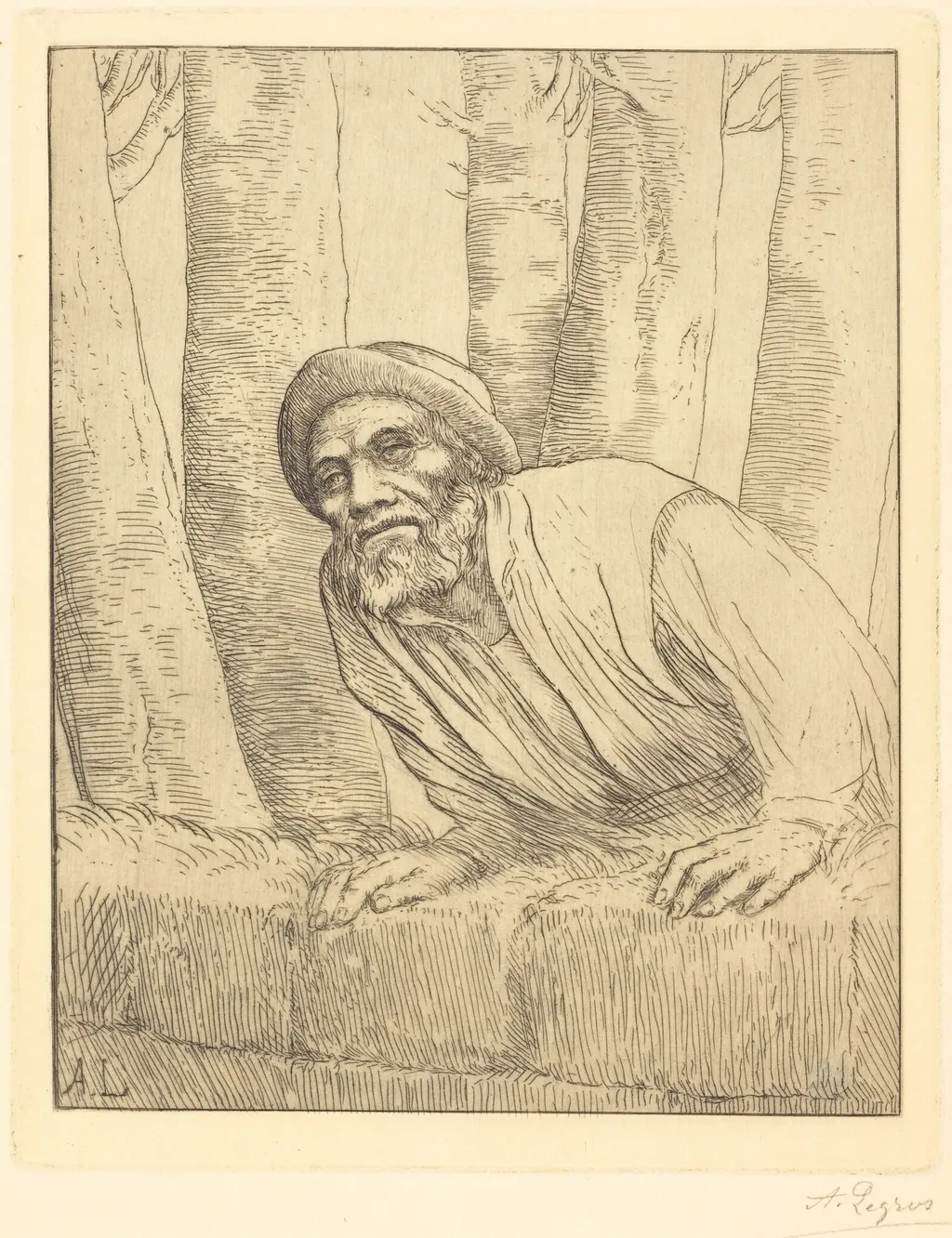
Man Climbing a Wall (L'escalade) is an ink print by the Romanticist artist Alphonse Legros. It dates from 1874 and is held in the collection of the National Gallery of Art.
About this work
Overview
Created in 1874 by Alphonse Legros, Man Climbing a Wall (L'escalade) is an etching and drypoint that captures a solitary figure in motion.
Created in 1874 by Alphonse Legros, Man Climbing a Wall (L'escalade) is an etching and drypoint that captures a solitary figure in motion. Legros, originally French but based in London since 1863, was instrumental in revitalizing printmaking in Britain. This work exemplifies his commitment to the expressive potential of intaglio techniques, emphasizing physical effort through meticulous line work and tonal variation.
Subject & Meaning
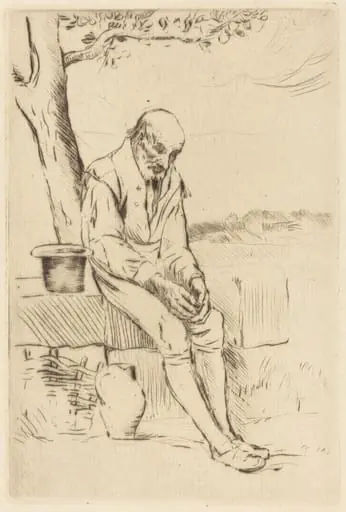
The print portrays a man in a long robe and hat, climbing a vertical surface in profile. His body is twisted in exertion: one hand grips the wall’s edge, the other pushes upward, while his face shows strain. The absence of context or narrative detail focuses attention on the act of ascent itself, suggesting themes of perseverance, isolation, or inner struggle without overt symbolism.
Technique & Style
Legros employed etching and drypoint to achieve fine, controlled lines and rich, uneven tonal depths. The wall’s surface is suggested by vertical incisions, while the figure’s musculature and drapery are rendered with dense, directional strokes. Drypoint’s burr adds soft, blurred shadows, enhancing the sense of weight and tension, contrasting with the stark emptiness of the background.
History & Provenance
Produced during Legros’s tenure at the Slade School of Fine Art, the print reflects his influence on British print culture. Though not widely exhibited at the time, it circulated among collectors and students, contributing to renewed interest in etching as a serious artistic medium. Its survival in institutional collections underscores its role in late 19th-century print revival.
Context
In the 1870s, British art was shifting toward realism and technical precision, with printmaking gaining renewed academic respect. Legros, trained in Paris and influenced by Daumier and Rembrandt, brought continental approaches to London. This work aligns with broader European trends that valued the human form in moments of physical and psychological intensity.
Legacy
Legros’s technical rigor and focus on the human figure in motion influenced generations of British printmakers. Man Climbing a Wall remains a quiet but potent example of his ability to convey emotion through line and texture alone. It continues to be studied for its economy of means and its embodiment of endurance as a visual subject.
Own this work as a print
Artist & collection

Artist
Alphonse Legros (French pronunciation:; 8 May 1837 – 8 December 1911) was a French, later British, painter, etcher, sculptor, and medallist.

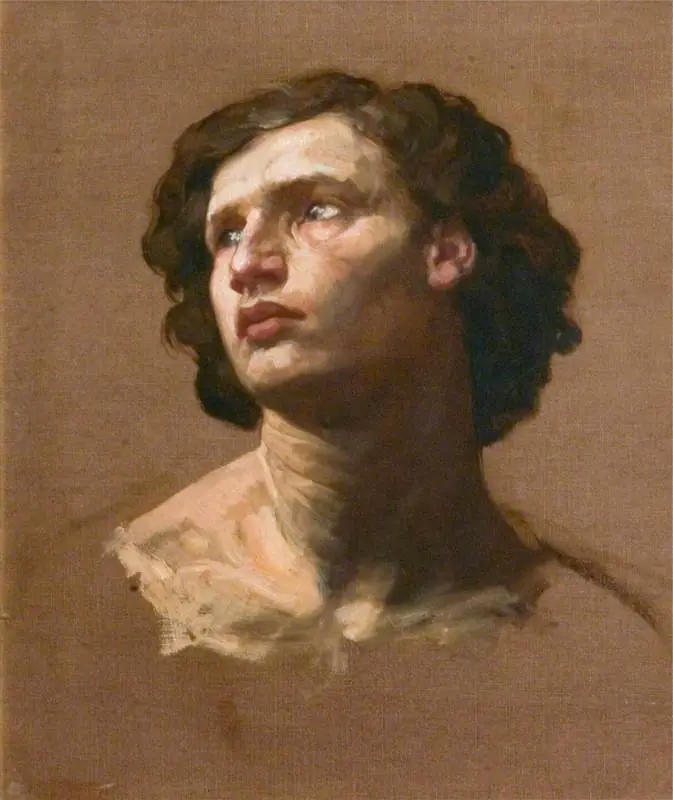
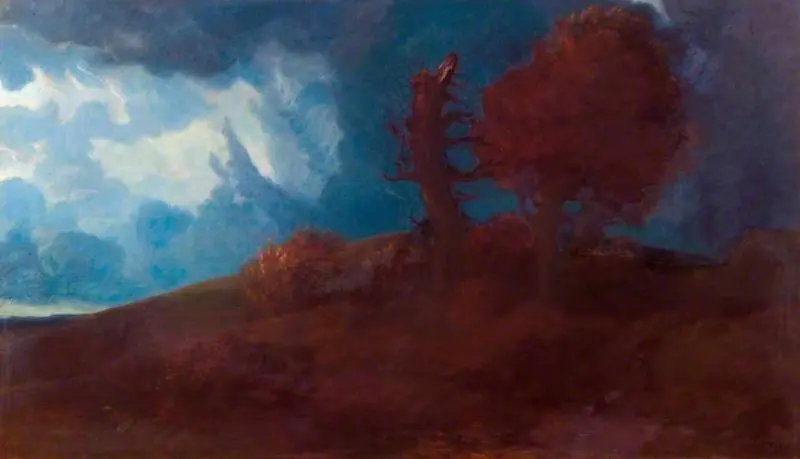
- Desperate Man (Le desespere)
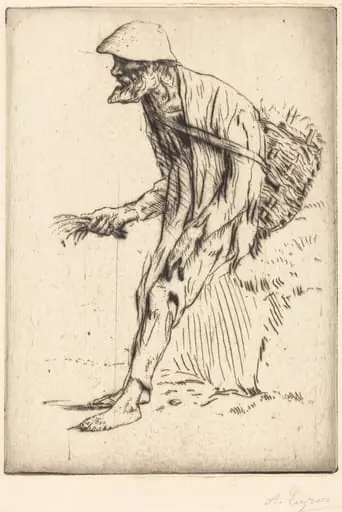 Chickweed Merchant (Marchand de mouron)
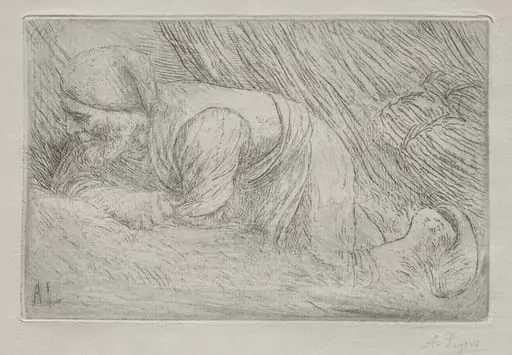 The Fagot Gatherers
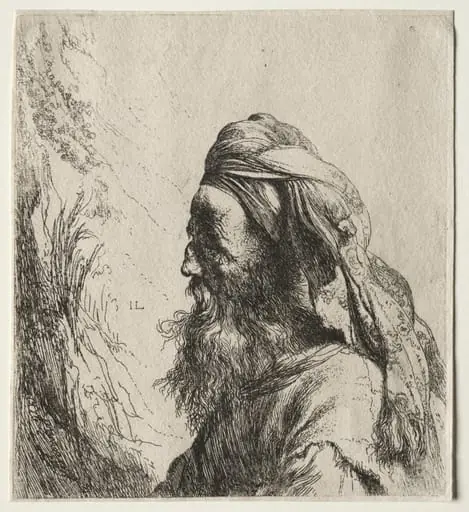 Head of an Oriental
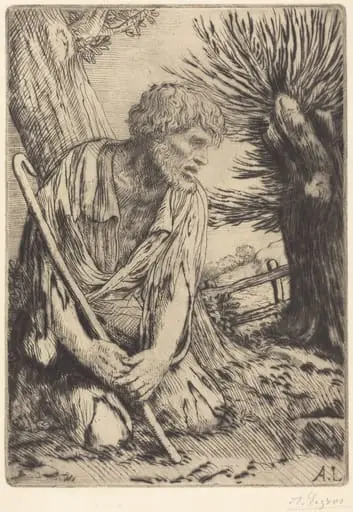 The Prodigal Son, 3rd plate (L'enfant prodigue)
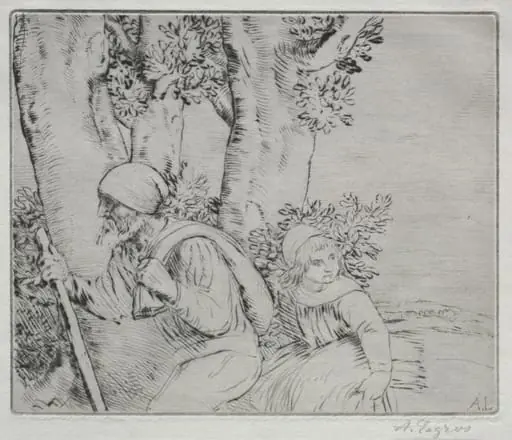 Return from the Field (2nd plate)
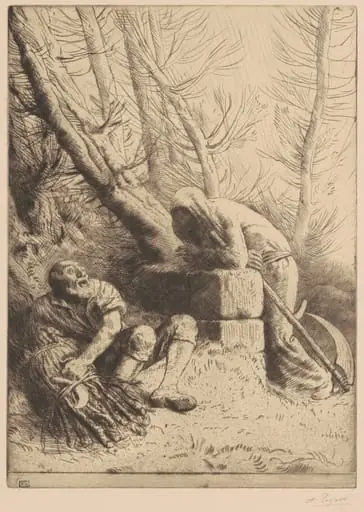 Death and the Woodcutter, 4th plate (La Mort et le bûcheron)
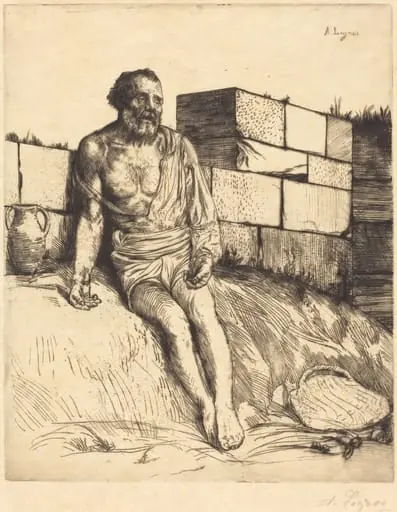 Job, 1st plate
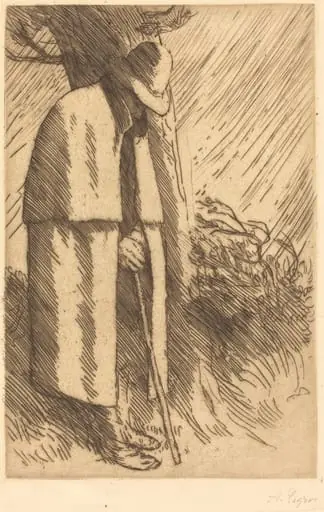 Traveler taking Shelter (Le voyageur a l'abri)
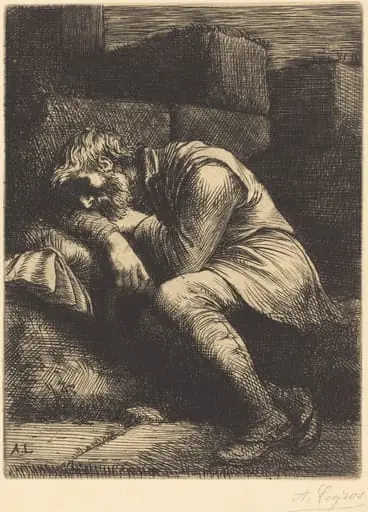 Sleeping Beggar (Mendiant endormi)
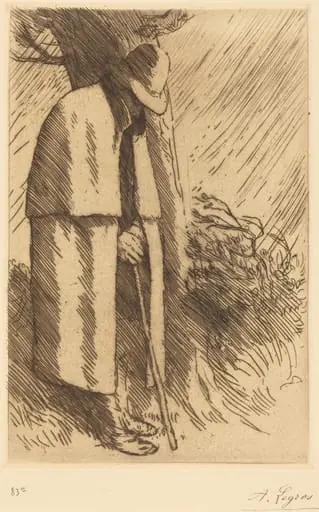 Traveler taking Shelter (Le voyageur a l'abri)
 "Since Then" ("Depuis ce temps-la")