Artwork
Untitled
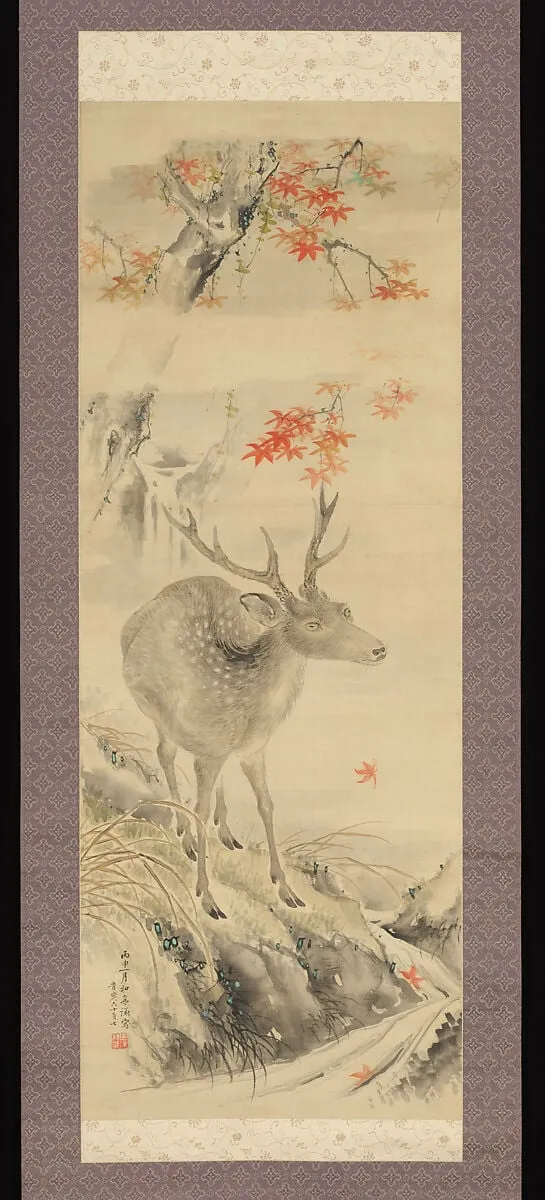
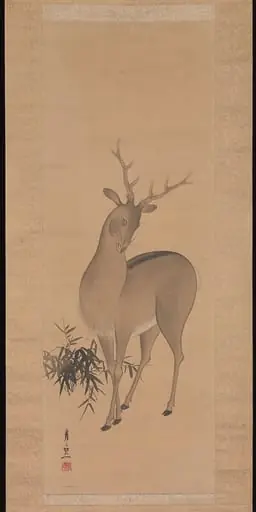
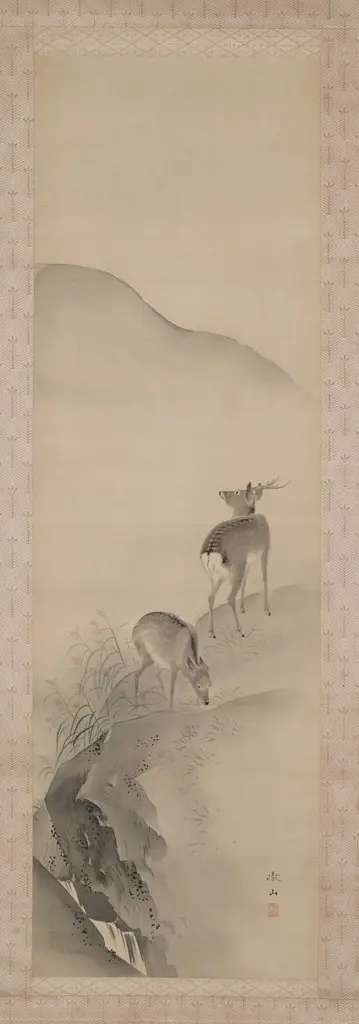
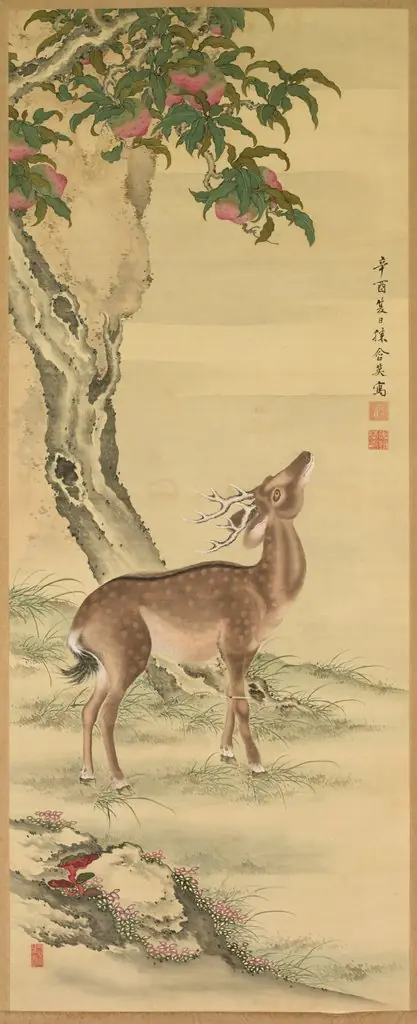
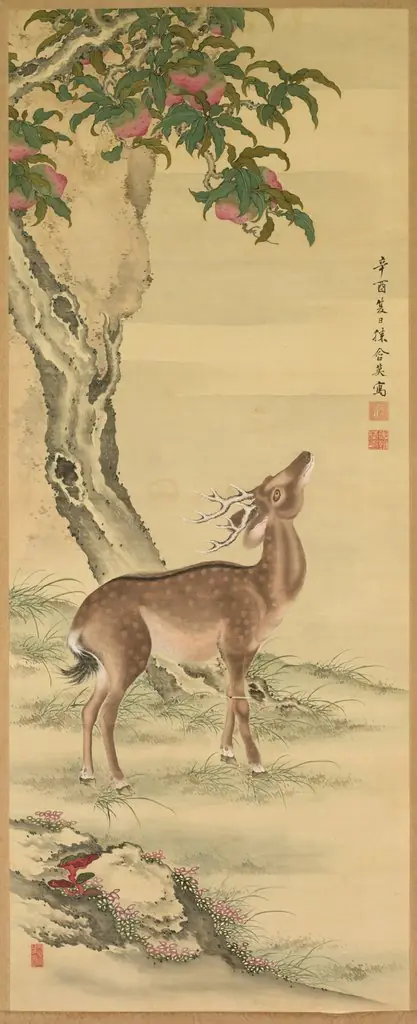
Untitled is an ink painting by the Impressionist artist Taki Katei. It dates from 1896 and is held in the collection of the Metropolitan Museum of Art.
About this work
Taki Katei blended old brush techniques with a quieter, almost snapshot moment, no drama, just a deer pausing in the cold air.
A single deer stands on a rocky ledge, its body turned toward us. Soft ink strokes shape its fur, while pale washes of color suggest mist around its legs.
This scroll was painted in 1896, when Japan was opening to Western ideas. Taki Katei blended old brush techniques with a quieter, almost snapshot moment, no drama, just a deer pausing in the cold air.
To see how other Japanese artists painted deer in nature, look up the subject deer, japan.
Subject & Meaning
Taki Katei's 1896 hanging scroll, Untitled, presents a landscape genre scene centered on the depiction of a deer. As a work of Japanese painting from the late nineteenth century, the inclusion of the deer serves as the primary subject and iconographic focus within the composition. While the specific symbolic interpretation of the deer is not detailed in the provided records, the animal's presence defines the artwork's representational content, situating it within a tradition where such creatures often signify natural harmony or spiritual themes in East Asian art.
History & Provenance
The hanging scroll titled Untitled was created by the Japanese artist Taki Katei on January 20, 1896. Executed in ink and color on silk, the work depicts a deer within a landscape setting. It is currently held in the collection of the Metropolitan Museum of Art, where it remains part of their permanent holdings. The painting measures 109.4 cm in height and 41.6 cm in width.
The painting is held by the Metropolitan Museum of Art in New York. Its accession number is 2015.500.1.
It was exhibited in 2015 at the Metropolitan Museum of Art as part of the installation “Celebrating Asian Art: A New Installation of the Arts of Japan, China, Korea, and South and Southeast Asia.”
Context
Taki Katei’s Untitled (1896) exemplifies the landscape genre within Meiji‑era Japanese painting, reflecting the artist’s role in bridging traditional ink techniques with emerging Western naturalism. The hanging scroll, rendered in ink and color on silk, measures 109.4 cm by 41.6 cm and depicts a deer, a motif that recurs in his oeuvre.
Its inclusion in the Metropolitan Museum of Art’s collection has prompted scholarly attention to Katei’s contribution to the evolution of Japanese decorative arts during the late nineteenth century. The work is frequently cited in studies of Meiji‑era artistic exchange, underscoring its significance as a representative piece of the period’s hybrid aesthetic.
Overview
Painted in 1896, this hanging scroll by Taki Katei depicts a solitary deer standing on a rocky ledge, its body oriented toward the viewer. Executed in ink and color on silk, the work features soft brushstrokes that delineate the animal's fur, while pale washes create an atmospheric mist around its legs. Created during the late Meiji period, a time of significant cultural exchange between Japan and the West, the piece reflects Katei's position as a master of the Nanga (literati) tradition who also served the imperial household.
The composition balances traditional ink-wash aesthetics with a focused, almost observational approach to the subject, characteristic of Katei's mature style. This work exemplifies the artist's ability to maintain classical brush techniques while adapting to the shifting artistic sensibilities of late 19th-century Japan, bridging the gap between established literati conventions and emerging modern interests in naturalism.
Technique & Style
Employing traditional brushwork, the artist uses delicate ink lines to delineate the deer's fur, while light washes of pigment create a veil of mist around its lower limbs. The balance of precise strokes and soft tonal layers reflects a synthesis of classical Japanese painting methods with a more immediate, almost photographic sensibility.
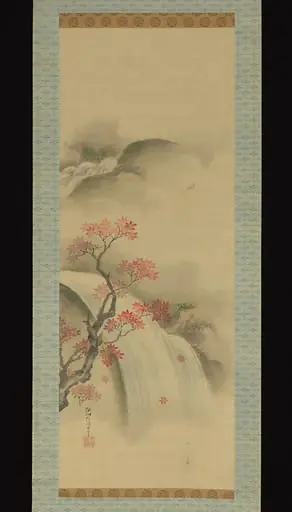
Artist & collection
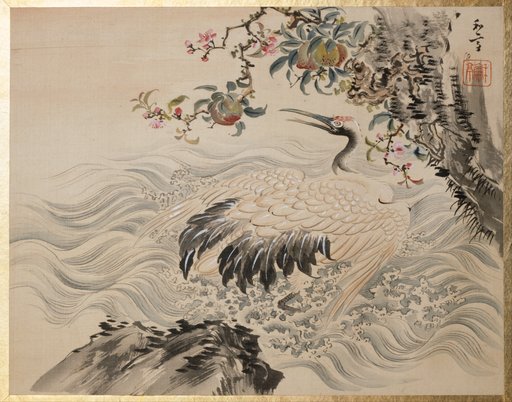

- Untitled
 Untitled
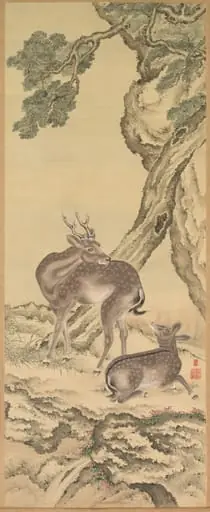 Symbols of Longevity: Deer under Peach and Pine (Peach) (left)
 Deer in an Autumn Landscape
 Untitled
 Symbols of Longevity: Deer under Peach and Pine (Peach) (left)
 Symbols of Longevity: Deer under Peach and Pine (Pine) (right)
 Symbols of Longevity: Deer under Peach and Pine
 Symbols of Longevity: Deer under Peach and Pine (Pine) (right)
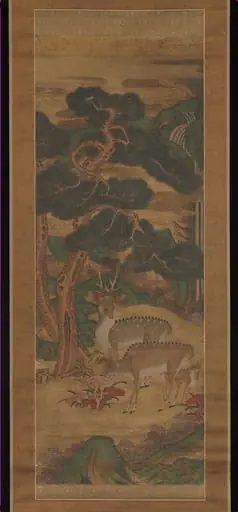 작자미상 소나무 아래 사슴 조선|作者未詳 松下雙鹿圖 朝鮮|Deer amid Pine Trees
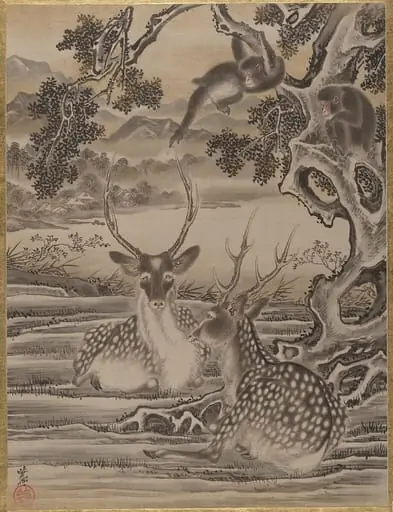 Untitled
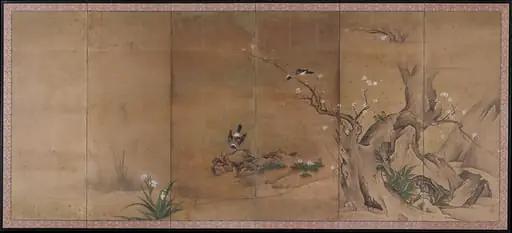 狩野山卜筆四季花鳥図屏風|Birds and Flowers of the Four Seasons