Artwork
A Beauty Carrying Two Buckets of Flowers
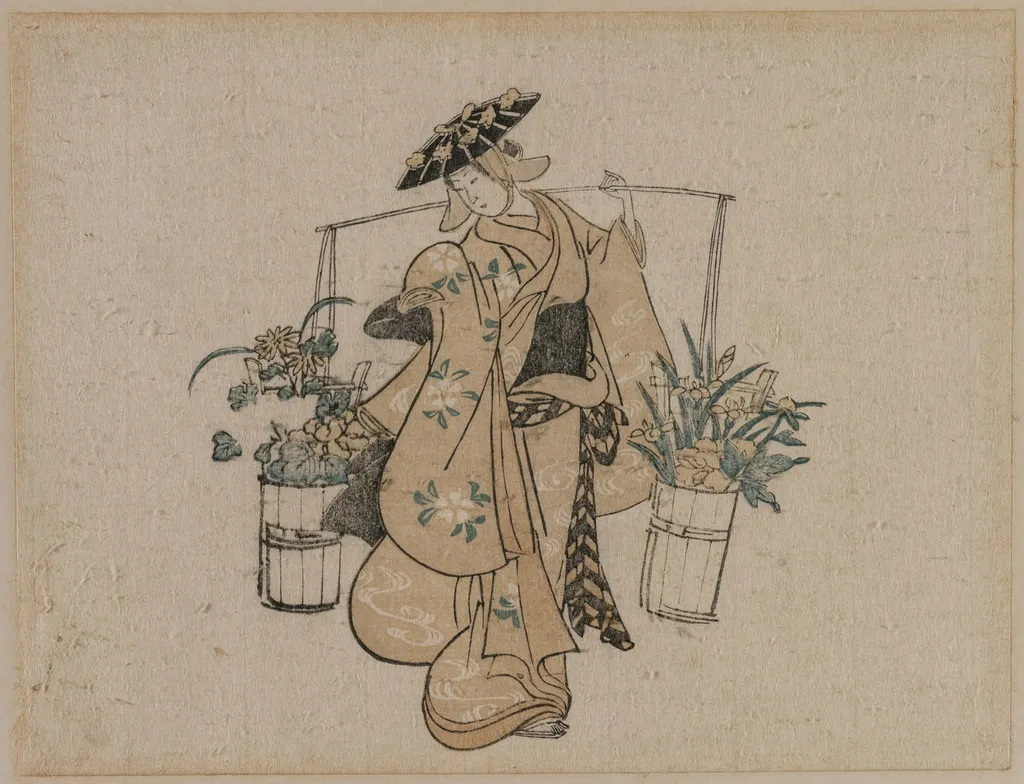
A Beauty Carrying Two Buckets of Flowers is a print by the Baroque artist Torii Kiyomasu I. It dates from 1706 and is held in the collection of the Cleveland Museum of Art. Created around 1706, this woodblock print by Torii Kiyomasu depicts a woman transporting flowers using a shoulder pole.
- Accession no.
- 1985.242
About this work
Overview
As a member of the Torii school, Kiyomasu specialized in imagery tied to Edo-period theater culture, though this piece shifts focus to a civilian figure.
Created around 1706, this woodblock print by Torii Kiyomasu depicts a woman transporting flowers using a shoulder pole. As a member of the Torii school, Kiyomasu specialized in imagery tied to Edo-period theater culture, though this piece shifts focus to a civilian figure. The work exemplifies early ukiyo-e’s blend of commercial aesthetics and refined observation, capturing everyday life with stylized elegance. It is now part of the Cleveland Museum of Art’s collection.
Subject & Meaning
The figure is not a courtesan or actor, but a working woman engaged in a common task: delivering flowers, likely for domestic or ceremonial use. Her presence suggests the integration of floral culture into daily urban life. The absence of theatrical context and the quiet dignity of her posture imply a broader interest in ordinary beauty, reflecting a subtle shift in ukiyo-e’s subject matter beyond entertainment circles.
Technique & Style
Kiyomasu employs bold, fluid lines to define the woman’s robe and the arrangement of flowers, emphasizing movement and texture without heavy shading. The patterned fabric is rendered with restrained detail, allowing the vibrant green accents and flowing sleeves to suggest elegance through simplicity. The background is left blank, directing attention to the figure and the dynamic contrast between the full left bucket and the lighter right load.
History & Provenance
The print originates from the early 18th century, a period when the Torii school was refining its commercial printmaking for a growing urban audience. While few signed works by Kiyomasu survive, this piece is attributed based on stylistic parallels with known Torii school outputs. It entered the Cleveland Museum of Art’s collection through established acquisition channels, likely in the 20th century.
Context
During the Genroku era, Edo’s expanding merchant class fueled demand for affordable art depicting both theater and daily life. While Torii artists were known for actor portraits, this print reveals their adaptability. The depiction of a laboring woman with floral goods aligns with broader cultural appreciation for seasonal beauty and the aestheticization of routine tasks in urban Japan.
Legacy
This print illustrates how early ukiyo-e expanded beyond kabuki advertising to include nuanced portrayals of common people. Kiyomasu’s work helped lay groundwork for later artists who elevated everyday subjects. Though less celebrated than his contemporaries, his contributions reflect the Torii school’s role in shaping the visual language of Edo’s commercial art culture.
Own this work as a print
Artist & collection
Artist
Torii Kiyomasu was the shop name of a printmaker in Edo, modern Tokyo, who spent his short career plastering the city with bold, eye-catching posters.

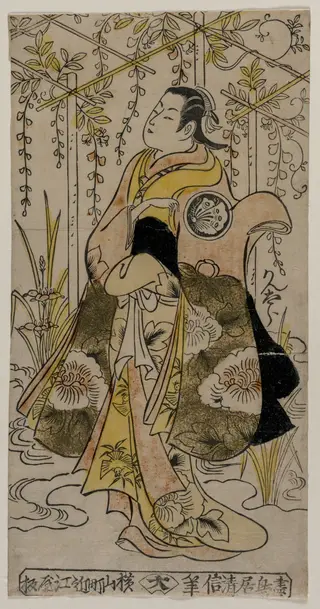 Sanjo Kantaro as a Young Woman Standing in a Wisteria Arbor
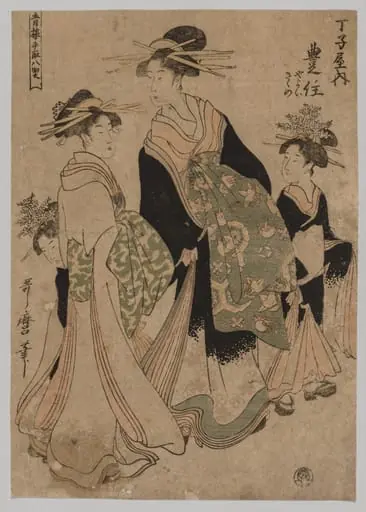 Courtesans and Attendants
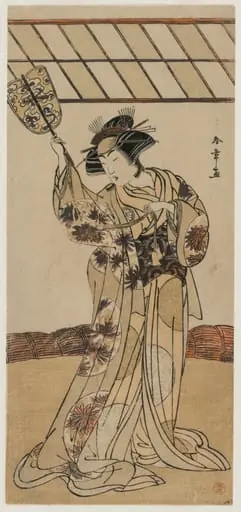 Segawa Kikunojō III as Teruha
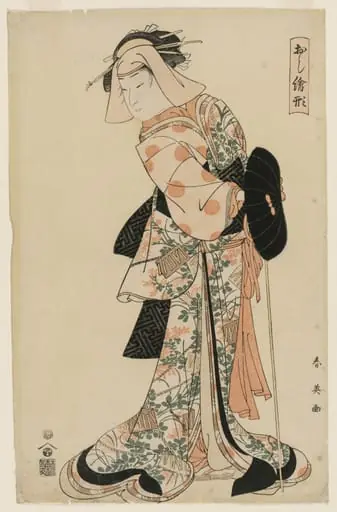 Dancer as Kuzunoha, Fox Spirit Disguised as a Woman
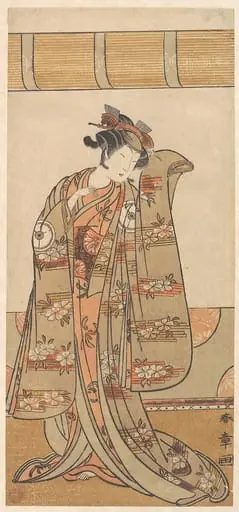 Untitled
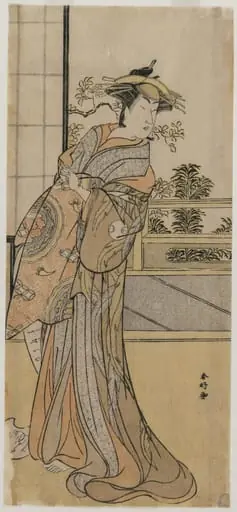 Arashi Murajiro as a Courtesan Holding a Letter
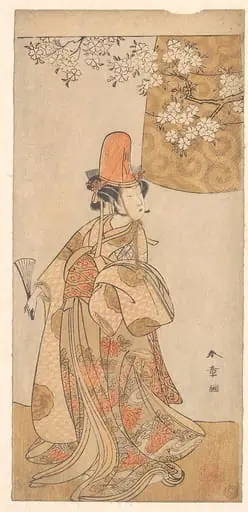 花形見風折烏帽子瀬川富三郎の娘道成寺|Segawa Tomisaburo in the Role of Musume Dojoji in "Hanagatami Kazaori Eboshi"
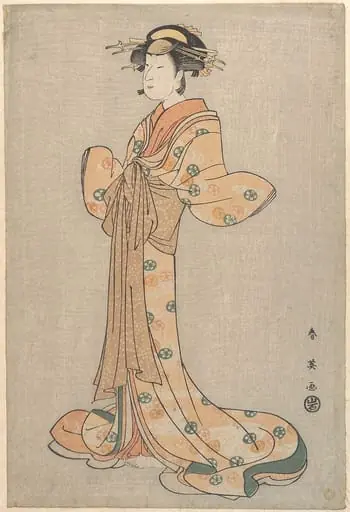 二代目中村二代目中村野塩のお軽|The Actor Nakamura Noshio II as the Courtesan Okaru
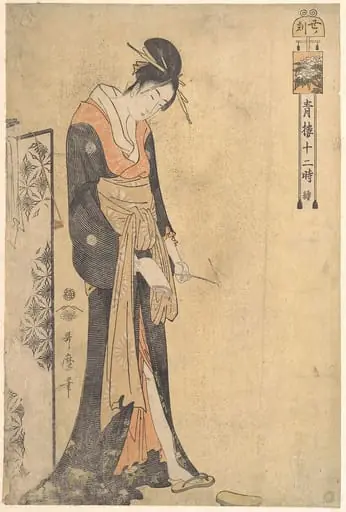 Ushi no Koku|青楼十二時 続 丑の刻|The Hour of the Ox (1 A.M.–3 A.M.)
 Untitled
 Elegantly Garbed Male Youth
- Ichikawa Monnosuke II as a Lord