Artwork
The Nymph Syrinx Pursued by Pan
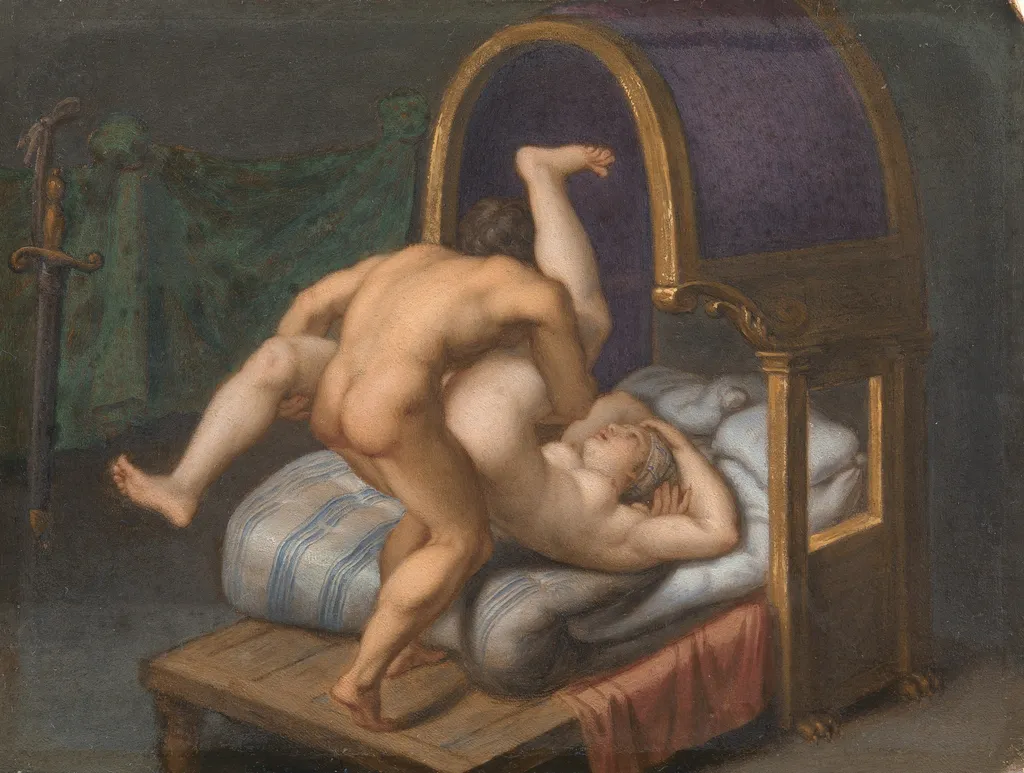
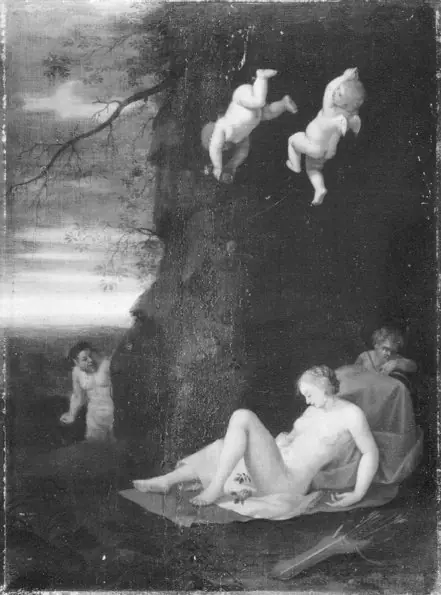
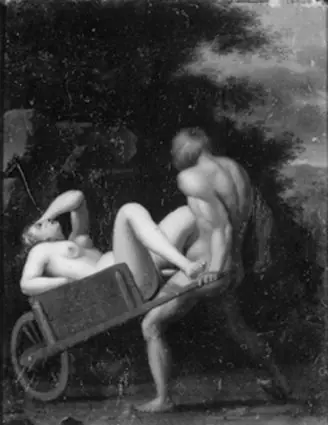
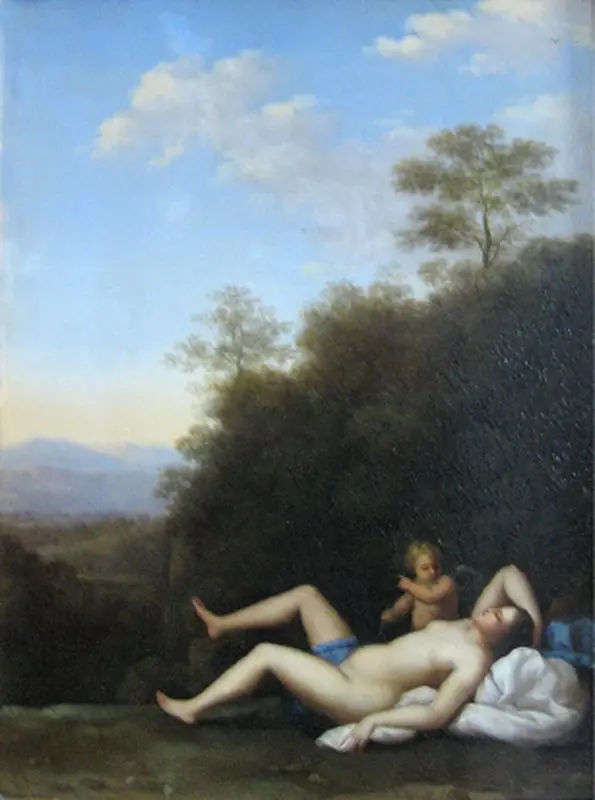
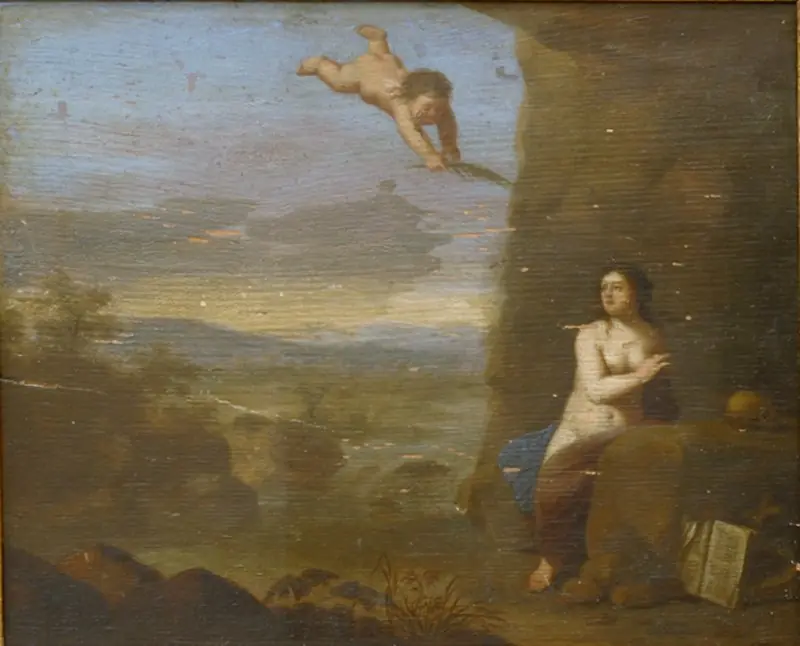
The Nymph Syrinx Pursued by Pan is an unspecified painting by the French Classical Baroque artist Toussaint Gelton. It dates from 1662 and is held in the collection of the Statens Museum for Kunst.
About this work
Subject & Meaning
In the scene Pan chases the frightened nymph through a wooded landscape, her body caught mid-turn as she reaches for the safety of the trees.
The painting portrays the myth of Syrinx, a nymph fleeing the amorous pursuit of the god Pan. In the scene Pan chases the frightened nymph through a wooded landscape, her body caught mid-turn as she reaches for the safety of the trees. The composition emphasizes the moment of transformation, with Syrinx on the verge of becoming a stream to escape Pan's advances.
This narrative draws on classical mythology that underscores themes of chastity, divine pursuit, and the protective power of nature. The work thus reflects Baroque interpretations of mythological subjects as vehicles for exploring desire and the fleeting boundaries between mortal and divine realms.
Technique & Style
Executed in oil on canvas in 1662, the work measures 177 by 220 centimeters. The handling combines smooth modeling of flesh and drapery with energetic, broken brushwork in the foliage and Pan’s furred legs, reflecting a mid-seventeenth-century Dutch adaptation of Flemish dynamism. Figures are arranged along a shallow diagonal that directs attention from the fleeing nymph at left toward Pan’s outstretched arms at right, while the background dissolves into atmospheric haze, creating a staged yet naturalistic recession.
The palette relies on silvery grays and warm umbers, punctuated by highlights on Syrinx’s translucent drapery and Pan’s ruddy skin.
Stylistic traits include a sculptural treatment of anatomy beneath fluid drapery, a tendency toward diagonal compositional thrusts, and a taste for dramatic yet contained movement, all consistent with Gelton’s training and the period’s classicizing tendencies.
History & Provenance
The painting The Nymph Syrinx Pursued by Pan was created by Toussaint Gelton in 1662. Classified as a mythological work, it depicts the nymph Syrinx and is currently held in the collection of the Statens Museum for Kunst. The artwork measures 177 cm in height and 220 cm in width.
No specific details regarding the original commission, the identity of the initial patron, or the subsequent chain of ownership prior to its current location are provided in the available records.
The painting The Nymph Syrinx Pursued by Pan by Toussaint Gelton is held in the collection of the Statens Museum for Kunst. The work, created in 1662, is classified as a mythological painting within the museum's holdings. While the specific inventory or accession number is not provided in the available sources, the artwork is confirmed to be located at this institution in Copenhagen. No exhibition history for this specific piece is recorded in the provided documentation.
Overview
The Nymph Syrinx Pursued by Pan is a 1662 painting by Toussaint Gelton, a Dutch artist who worked in Sweden and Denmark. It is a representation of a mythological scene, executed in a style characteristic of the French Classical Baroque movement.
Own this work as a print
Artist & collection
Artist
Toussaint Gelton (1630 – 1680) was a Dutch painter known for his work buying paintings in 1658 for the Swedish king Charles X Gustav and the family of Swedish noble Magnus Gabriel de la Gardie.