Artwork
Diana and Callisto
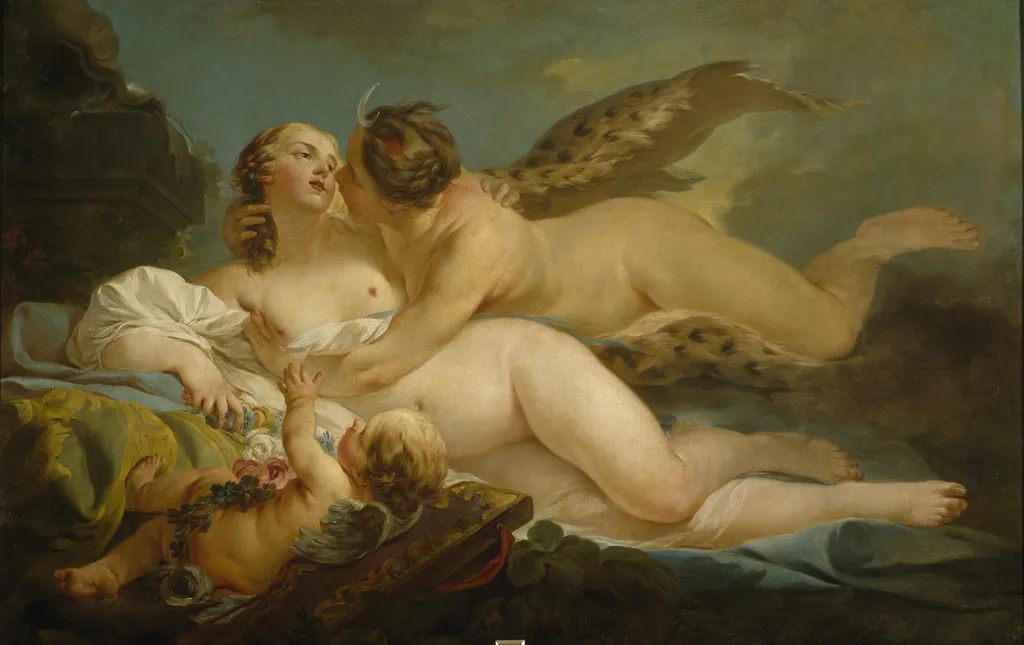
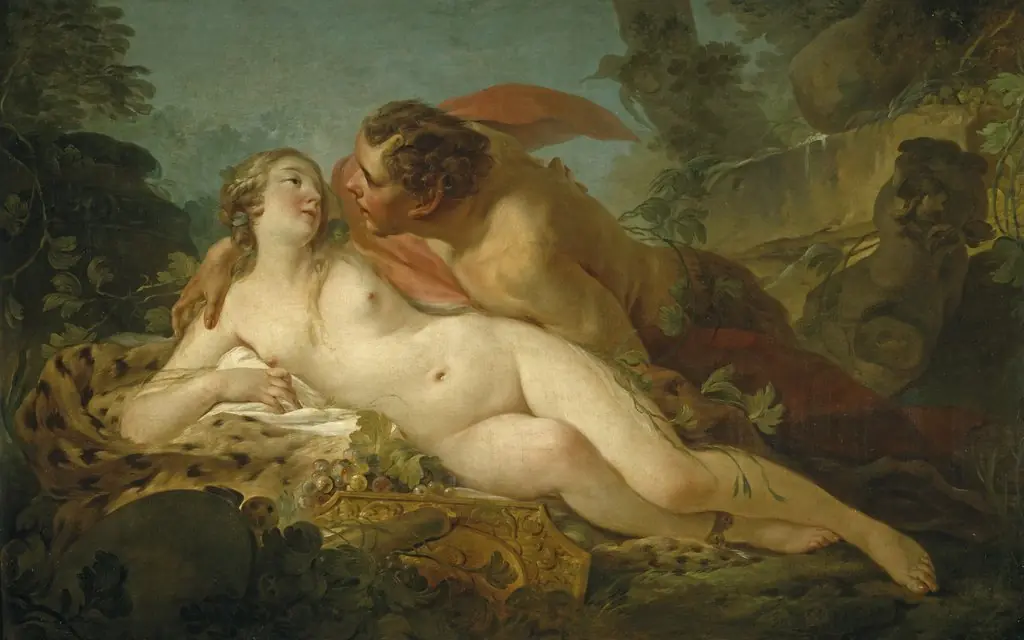
Diana and Callisto is an oil painting by the Rococo painting artist Jean-Baptiste Marie Pierre. It dates from 1745 and is held in the collection of the Museo del Prado. Jean‑Baptiste Marie Pierre’s oil on canvas, executed in 1745, presents a mythic tableau now displayed in Madrid’s Museo del Prado.
About this work
Subject & Meaning
In the scene, the disguised god embraces Callisto while the actual Diana, distinguished by a crescent on her head, stands nearby.
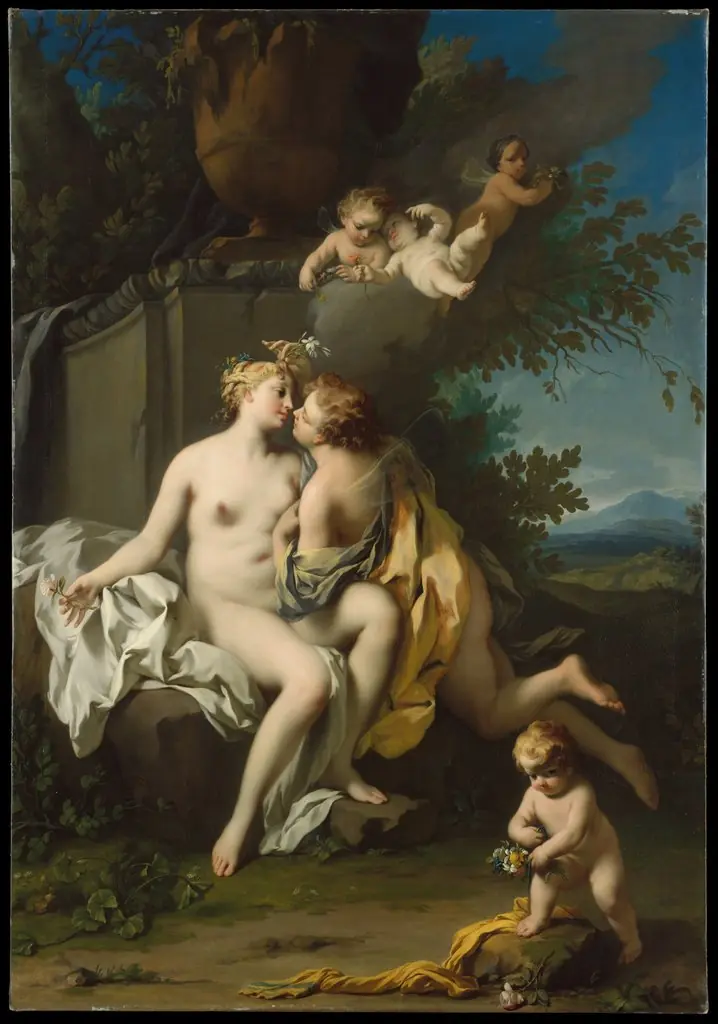
The work depicts the Ovidian myth in which Jupiter, disguised as Diana, seduces the nymph Callisto. In the scene, the disguised god embraces Callisto while the actual Diana, distinguished by a crescent on her head, stands nearby. An amorino rests against Diana’s quiver, signaling the episode’s amorous deception.
The composition captures Jupiter’s initial ruse rather than the later discovery of Callisto’s pregnancy, emphasizing the moment of disguise and seduction central to the narrative.
Technique & Style
Jean-Baptiste Marie Pierre executed Diana and Callisto as an oil painting on canvas between 1745 and 1749. The work measures 114 cm in height by 197 cm in width. It depicts a mythological scene featuring a female nude, specifically illustrating the moment of deception where Jupiter, disguised as Diana, embraces the nymph Callisto.
The composition includes specific iconographic details such as a crescent moon symbol on the head of the disguised deity and a cupid resting against Diana's quiver. The painting is currently held by the Museo del Prado in Madrid, having been acquired by the museum in 1971.
History & Provenance
The work was painted by Jean-Baptiste Marie Pierre between 1745 and 1749. It was acquired by the Museo del Prado, Madrid, in 1971, where it remains in the collection.
The painting’s subject derives from Ovid’s Metamorphoses (Book II, lines 417–440), depicting the moment Jupiter, disguised as Diana, deceives the nymph Callisto. The canvas entered the Prado’s holdings through a purchase in 1971 and is exhibited in gallery 087.
Context
Jean-Baptiste Marie Pierre's Diana and Callisto (1745) exemplifies the mid-18th-century French engagement with Ovidian mythology, specifically illustrating the moment of Jupiter's deception of Callisto while disguised as the huntress Diana. The work, currently held by the Museo del Prado in Madrid since its acquisition in 1971, aligns with the broader tradition of mythological painting that includes significant interpretations by artists such as Titian, Rubens, and Peter Paul Rubens. By depicting the initial seduction rather than the subsequent transformation or punishment, Pierre focuses on the psychological drama of the narrative found in Ovid's Metamorphoses.
The painting's inclusion in the Prado's collection of mythological works underscores its role in preserving the 18th-century academic approach to classical themes, situated alongside other notable representations of the Diana and Callisto cycle.
Overview
Jean‑Baptiste Marie Pierre’s oil on canvas, executed in 1745, presents a mythic tableau now displayed in Madrid’s Museo del Prado. The composition features two female figures suspended amid a sky of soft blues and billowing clouds, accompanied by a winged infant. The work reflects the Rococo fascination with classical narratives and graceful, airy arrangements.
Own this work as a print
Artist & collection
Artist
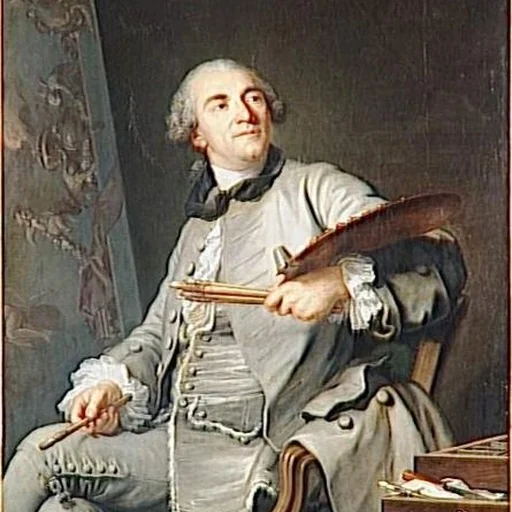
Jean-Baptiste Marie Pierre (1714–1789) was a French artist, born in Paris.