Artwork
Movement
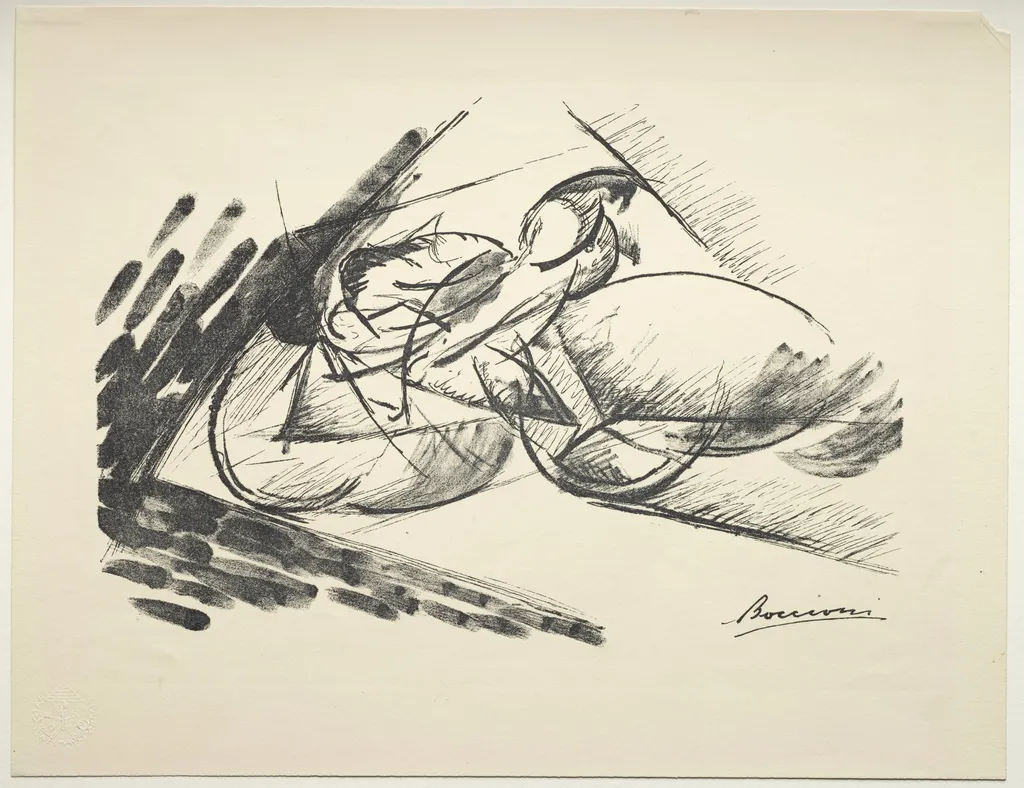
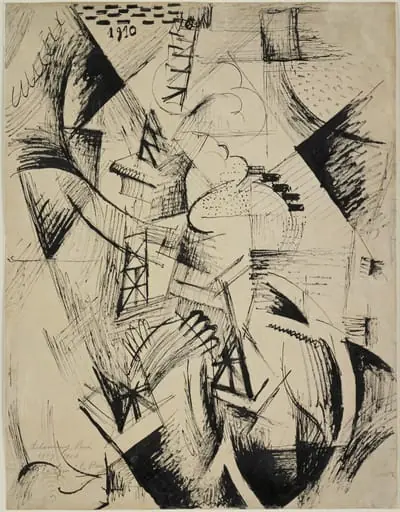
Movement is a print by Umberto Boccioni. It dates from 1904 and is held in the collection of the Cleveland Museum of Art.
- Accession no.
- 1971.38
- Credit line
- Gift of Mr. and Mrs. Richard H. Zinser
About this work
Overview
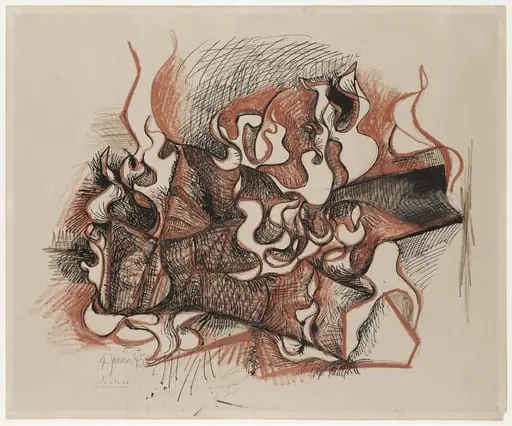
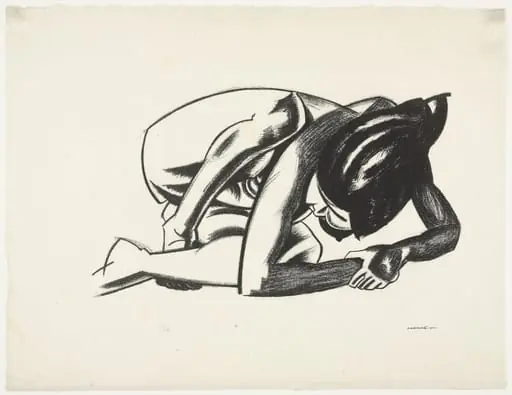
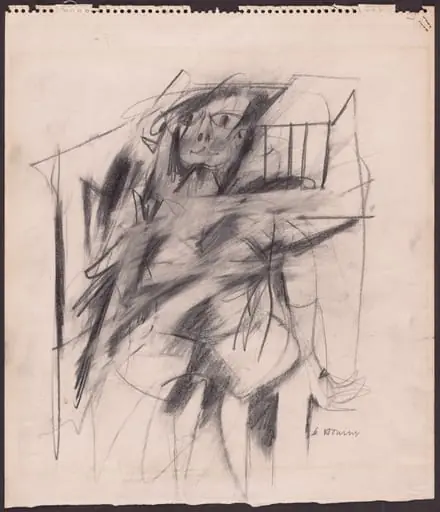
Movement, a print executed around 1904 by Italian artist Umberto Boccioni, belongs to the collection of the Cleveland Museum of Art. The work presents a single figure on a bicycle, rendered with loose, gestural lines that suggest rapid motion rather than precise representation. Its compact size and sketch‑like quality place it among Boccioni’s early experiments with dynamism.
Subject & Meaning
The image captures a cyclist caught in the act of propelling forward, the body angled as if on the verge of tipping. The exaggerated posture and the implied wind in the background convey a sense of fleeting energy, hinting at the artist’s interest in the instability of motion and the transient nature of everyday activity.
Technique & Style
Boccioni employs quick, jagged strokes for the rider’s limbs, while the bicycle’s wheels appear as oversized circles. The surrounding environment is suggested by rough, sketchy lines that evoke trees or gusts of air. This deliberately unrefined approach prioritises the impression of speed over anatomical accuracy, anticipating the later Futurist emphasis on kinetic force.
History & Provenance
Created in the early 1900s, Movement entered the Cleveland Museum of Art’s holdings through acquisition (date and donor unspecified). The piece reflects Boccioni’s pre‑Futurist period, offering insight into his developmental trajectory before he became a leading figure in the movement that celebrated modernity and industrial dynamism.
Own this work as a print
Artist & collection

Artist
Umberto Boccioni was an influential Italian painter and sculptor. He helped shape the revolutionary aesthetic of the Futurism movement as one of its principal figures. Despite his short life, his approach to the…

![Mia madre che lavora [My Mother Working], by Umberto Boccioni](https://artifactworldgallery.com/img/umberto-boccioni--mia-madre-che-lavora-my-mother-working--ce84f1205dd9eec1-w320.webp)
![Woman Reading [Donna che legge], by Umberto Boccioni](https://artifactworldgallery.com/img/umberto-boccioni--woman-reading-donna-che-legge--d9496ecdedc4f414-w320.webp)
![Periphery [Periferia], by Umberto Boccioni](https://artifactworldgallery.com/img/umberto-boccioni--periphery-periferia--ea91379039261e85-w320.webp)