Artwork
清 佚名 中國地圖 屏風|Map of China
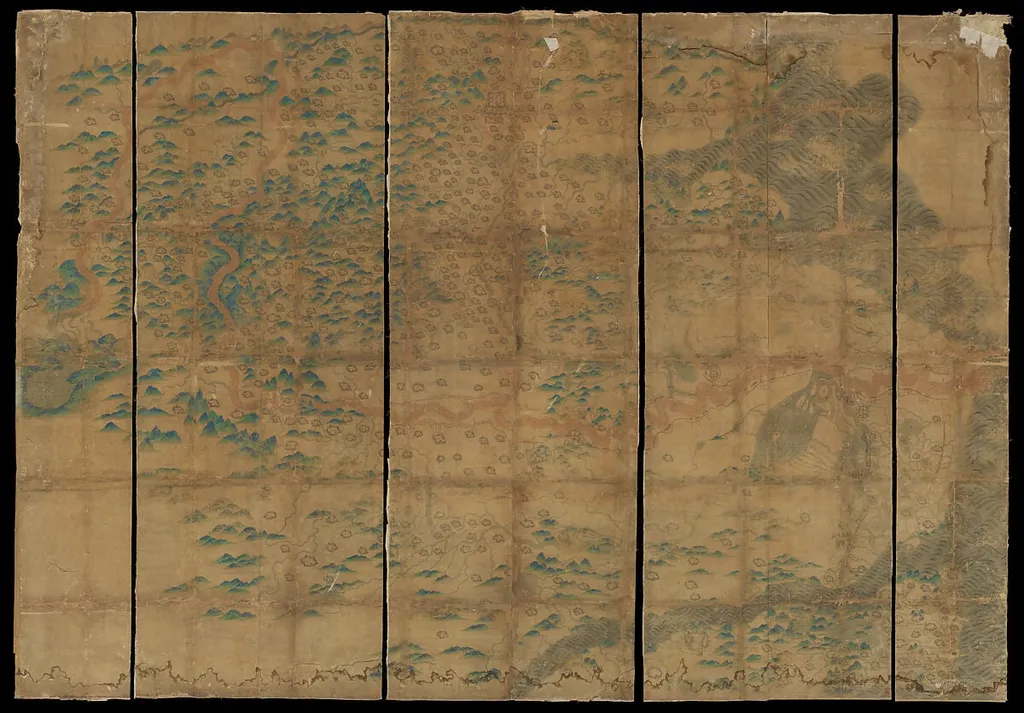
清 佚名 中國地圖 屏風|Map of China is an ink painting. It dates from 1506 and is held in the collection of the Metropolitan Museum of Art. The work consists of eight silk hanging scrolls that together form a detailed cartographic representation of China.
- Accession no.
- 25.21a–h
- Credit line
- Gift of Yamanaka & Co., 1925
About this work
Subject & Meaning
The work therefore represents both a technical achievement in Chinese cartographic art and a symbolic statement of state power and cosmological order.
The work presents a cartographic representation of China rendered across eight hanging scrolls, using ink and color on silk to convey a geographic subject rather than a narrative scene. Its iconography consists of the stylized depiction of rivers, coastlines, and administrative boundaries that signal the territorial extent of the Ming dynasty, while the material format of a hanging scroll underscores traditional scholarly engagement with visual knowledge. Symbolically, the map functions as a visual assertion of imperial authority and cultural unity, encoding political legitimacy through the visual ordering of space.
The work therefore represents both a technical achievement in Chinese cartographic art and a symbolic statement of state power and cosmological order.
Technique & Style
Created in 1506, this work consists of eight hanging scrolls executed in ink and color on silk. The piece functions as a map of China, rendered in a traditional painting style characteristic of the period. The support material is silk, which serves as the base for the ink and pigment application.
The overall dimensions of the work are 40 cm in height and 243.8 cm in width, reflecting the expansive format typical of multi-panel hanging scroll compositions.
History & Provenance
The work known as Map of China is a painting created in China during the year 1506. It was produced by an anonymous artist, as the creator is not identified in historical records. The piece currently resides in the collection of the Metropolitan Museum of Art, where it is held as part of their holdings of Chinese maps and paintings.
The Map of China is held by the Metropolitan Museum of Art, which is listed as both its collection and its location in the associated Wikidata record.
No inventory or accession number is provided in the available sources, and no exhibition history is documented for the work.
The eight hanging scrolls, executed in ink and color on silk, are catalogued within the museum's Paintings classification.
Legacy
The Map of China, attributed to an anonymous Qing court artist and created in 1506, is recognized as an early example of European-influenced cartography within the Chinese tradition. Its representation of geographic space incorporates elements from Portuguese maritime charts, marking a significant moment in the exchange of cartographic knowledge between East and West. The work's composition, featuring eight hanging scrolls rendered in ink and color on silk, influenced subsequent depictions of China in both scholarly and popular visual culture, contributing to the evolving visual vocabulary of imperial geography.
Although the precise pathways of its reception in later centuries remain sparsely documented, its presence in major collections such as the Metropolitan Museum of Art has ensured continued scholarly attention to its stylistic and historical significance.
Overview
The work consists of eight silk hanging scrolls that together form a detailed cartographic representation of China. Executed with ink and colored pigments, the panels present a continuous map that emphasizes the nation’s topography, river systems, and administrative divisions. The piece is attributed to an anonymous creator, whose identity and background remain unknown.
Context
During periods of increased global exchange, maps of foreign territories were sometimes produced by artists outside the regions depicted, often relying on imported texts or travelers’ reports. This piece exemplifies such cross‑cultural curiosity, illustrating how knowledge of China circulated beyond its borders and was visualized by artists unfamiliar with the land.
Artist & collection

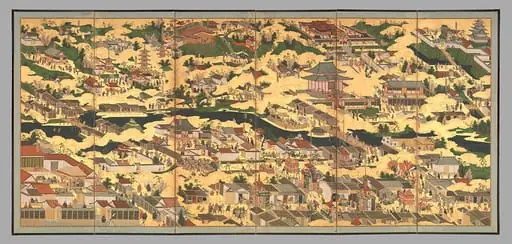
- 洛中洛外図屏風|Scenes in and around the Capital
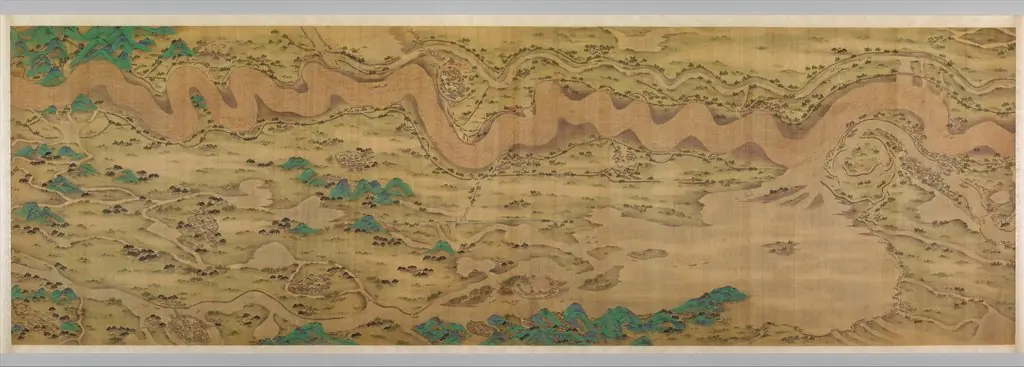 Ten Thousand Miles along the Yellow River
 清 佚名 黃河萬里圖 卷|Ten Thousand Miles along the Yellow River
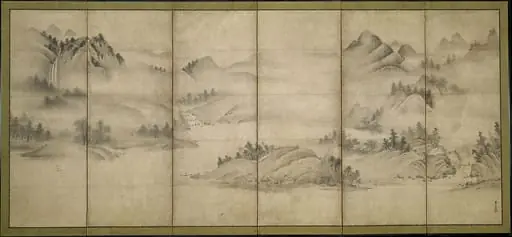 相阿弥筆 四季山水図 (瀟湘八景)|Landscape of the Four Seasons (Eight Views of the Xiao and Xiang Rivers)
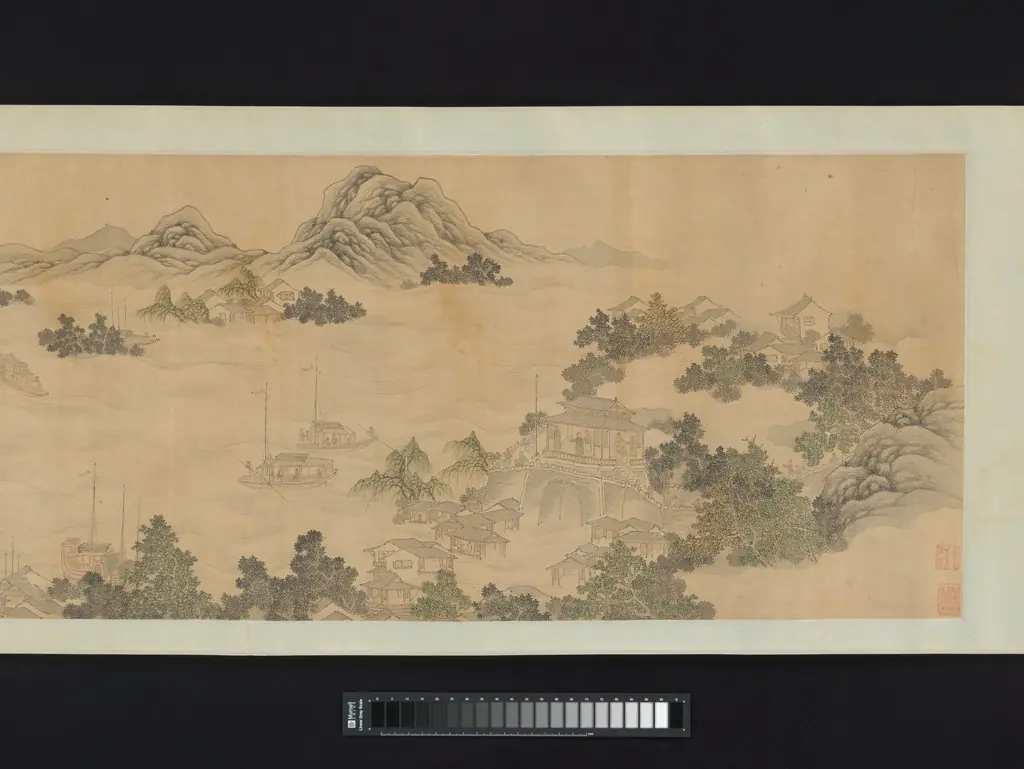 Reminiscence of Jinling
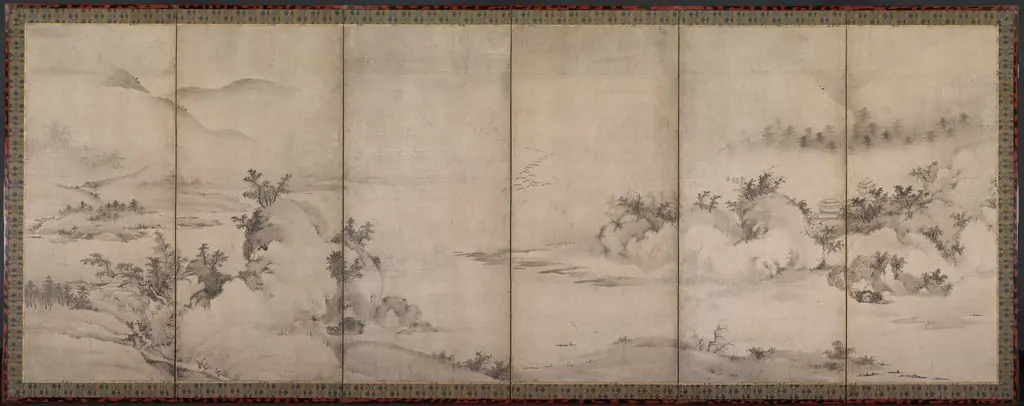 Landscape with Motifs from the Eight Views of Xiao-Xiang
 南宋 佚名 別苑春山圖 卷|Retreats in the Spring Hills
 Portraits of the Qianlong Emperor and His Twelve Consorts
 Raja Sansar Chand Attacking Kangra Fort
 Album of Daoist and Buddhist Themes: Search the Mountain: Leaf 50
 Untitled
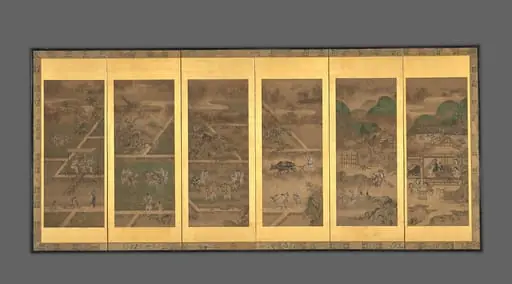 農耕作月次図屏風|Farmers' Lives in the Twelve Months