Artwork
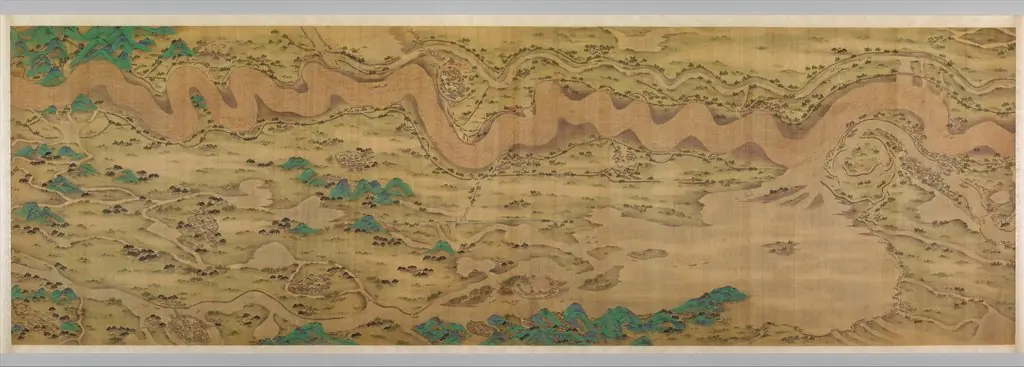
清 佚名 黃河萬里圖 卷|Ten Thousand Miles along the Yellow River
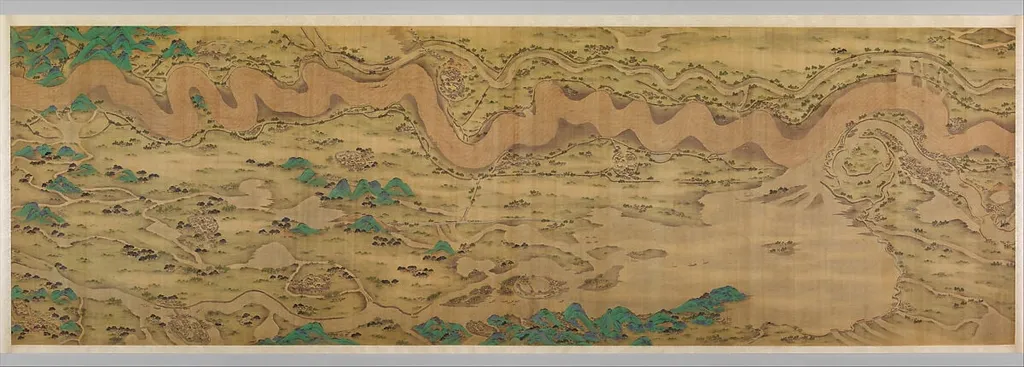
清 佚名 黃河萬里圖 卷|Ten Thousand Miles along the Yellow River is an ink painting. It dates from 1690 and is held in the collection of the Metropolitan Museum of Art.
About this work
Subject & Meaning
The painting reflects a Confucian perspective on water as a persistent, eastward-moving force, symbolizing continuity and the natural order.
The handscroll titled Ten Thousand Miles along the Yellow River portrays the meandering Yellow River cutting through rugged mountains and punctuated by solitary trees, a composition that maps the river's entire course across the Chinese landscape. Created in the Qing dynasty around 1690 by an unidentified artist, the work belongs to the landscape genre and uses ink, color and gold on silk to emphasize the river's dynamic flow. The painting reflects a Confucian perspective on water as a persistent, eastward-moving force, symbolizing continuity and the natural order.
Today it is held by the Metropolitan Museum of Art, having entered the collection in 2006 with support from the W. M. Keck Foundation, the Dillon Fund and other donors.
Technique & Style
Created during the Qing dynasty, this work consists of two handscrolls executed in ink, color, and gold on a silk support. The anonymous artist employed traditional Chinese landscape painting techniques to depict the Yellow River system, integrating mountains, trees, and the river itself into a continuous composition. The use of gold alongside ink and pigments on silk indicates a high level of material refinement typical of the period.
Stylistically, the scroll illustrates the geographical reality of the river twisting eastward, reflecting contemporary understandings of the landscape's form. The physical format as a handscroll allows for the unfolding narrative of the river's journey, characteristic of the genre.
History & Provenance
Created during the Qing dynasty under the reign of the Kangxi Emperor (1662–1722), this handscroll is attributed to an unidentified artist. While one internal record specifies the date 1690, broader scholarly dating places its inception between 1690 and 1722. The work, which illustrates the Yellow River system, remained in private or unrecorded hands until its acquisition by the Metropolitan Museum of Art in 2006.
The museum purchased the scroll with financial support from the W. M. Keck Foundation, The Dillon Fund, and additional donors. Executed in ink, color, and gold on silk, the piece serves as a geographical record reflecting understanding of the region during the late seventeenth and early eighteenth centuries. No specific accession number is provided in the available records.
Legacy
The scroll known as Ten Thousand Miles along the Yellow River, dated to the late seventeenth-century Qing period (c. 1690–1722), entered the Metropolitan Museum of Art in 2006 after being acquired with support from the W. M. Keck Foundation and the Dillon Fund. As a rare anonymous Qing landscape that maps the river's entire course, it is recognized as a notable example of Chinese landscape painting and of the artistic representation of natural forces.
Overview
Titled Ten Thousand Miles along the Yellow River, this extensive work is a pair of Chinese handscrolls created by an anonymous artist during the Qing dynasty, likely between 1690 and 1722. The painting offers a comprehensive visual journey along the Yellow River system, capturing its vastness and the life along its banks. It represents a significant example of traditional Chinese landscape painting.
Artist & collection

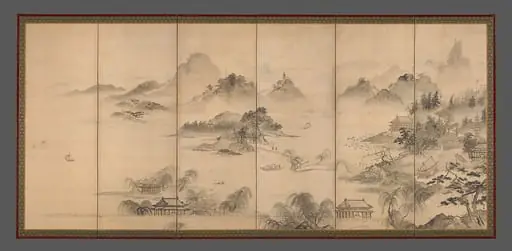 久隅守景筆 西湖図屏風|View of West Lake
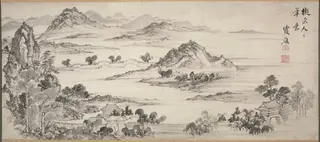 West Lake
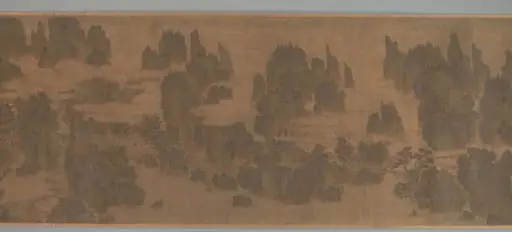 南宋 佚名 別苑春山圖 卷|Retreats in the Spring Hills
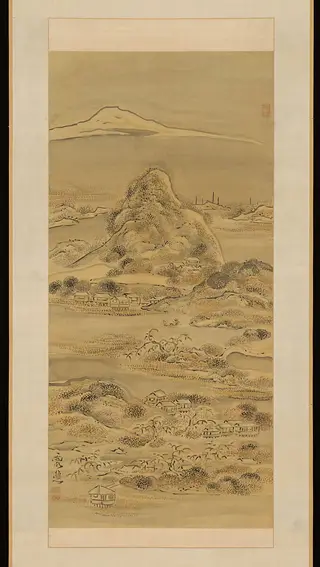 Untitled
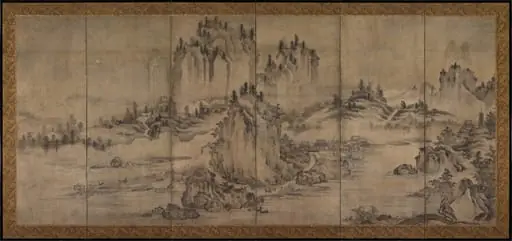 Landscape
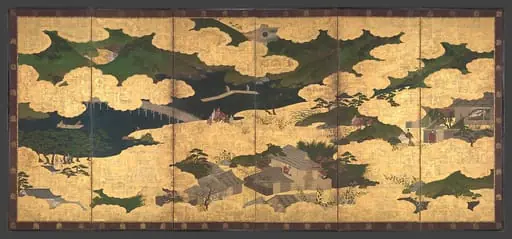 平家物語図屏風 「小督」 「大原御幸」|"Kogō" and "The Imperial Procession to Ōhara", from The Tale of the Heike (Heike monogatari)
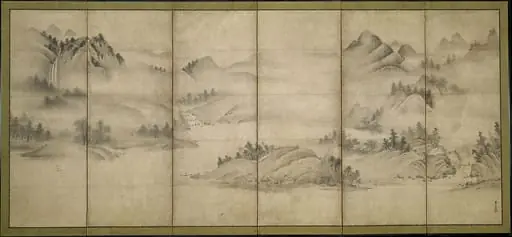 相阿弥筆 四季山水図 (瀟湘八景)|Landscape of the Four Seasons (Eight Views of the Xiao and Xiang Rivers)
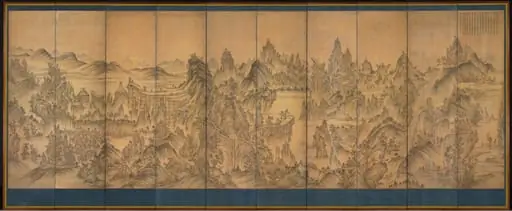 Seven Jeweled Mountain
 The Peach Blossom Spring