Artwork
相阿弥筆 四季山水図 (瀟湘八景)|Landscape of the Four Seasons (Eight Views of the Xiao and Xiang Rivers)
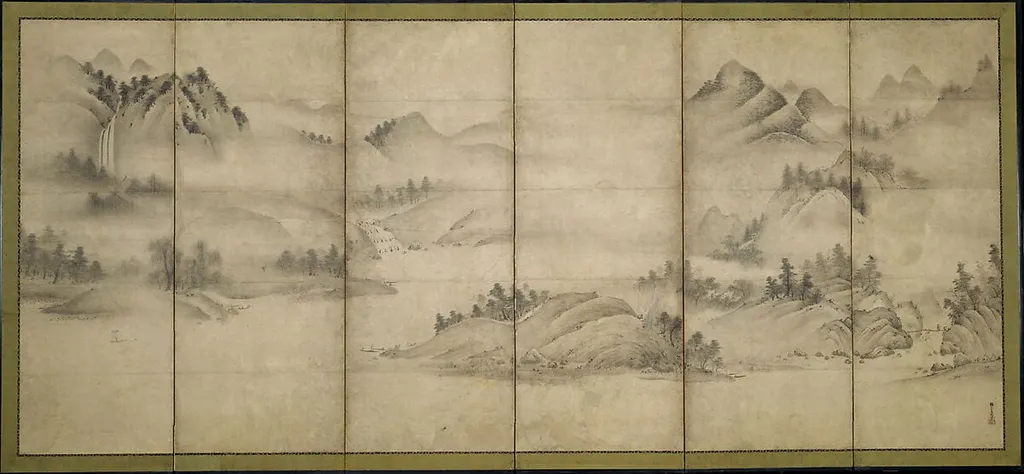
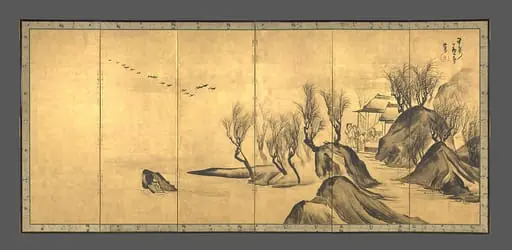
相阿弥筆 四季山水図 (瀟湘八景)|Landscape of the Four Seasons (Eight Views of the Xiao and Xiang Rivers) is an ink painting by the Nanga artist Sōami. It dates from 1516 and is held in the collection of the Metropolitan Museum of Art.
About this work
Technique & Style
According to the internal catalogue, it belongs to the landscape genre and depicts a mountain within the eight views of the Xiao and Xiang rivers.
The work titled 相阿弥筆 四季山水図 (瀟湘八景)|Landscape of the Four Seasons (Eight Views of the Xiao and Xiang Rivers) is a pair of six‑panel folding screens executed in ink on paper in 1516 by the Japanese master Sōami. According to the internal catalogue, it belongs to the landscape genre and depicts a mountain within the eight views of the Xiao and Xiang rivers. The Wikidata entry confirms that the screens were made in Japan and are held by the Metropolitan Museum of Art.
The technique employs traditional sumi‑e ink wash, using subtle tonal gradations to suggest atmospheric depth and seasonal change. Brushwork is restrained, emphasizing line and negative space, while the composition balances each seasonal vista across the adjoining panels to create a continuous narrative flow. The support consists of layered paper panels mounted on wooden frames, a construction typical of Muromachi‑period byōbu.
History & Provenance
The work titled 相阿弥筆 四季山水図 (Landscape of the Four Seasons) was created in 1516 by the Japanese painter Sōami as a pair of six‑panel folding screens executed in ink on paper, depicting a mountain landscape. It was produced in Japan and later entered the collection of the Metropolitan Museum of Art, where it remains on display. No documentation of a specific commission survives; the work is recorded only with its date, medium, and current location.
Overview
Sōami's Landscape of the Four Seasons (Eight Views of the Xiao and Xiang Rivers), created in 1516, is a significant example of Japanese ink painting. This work comprises a pair of six-panel folding screens, executed with ink on paper. It presents a sweeping panorama that subtly transitions through the seasons, reflecting a traditional theme in East Asian art while also incorporating elements from classical Chinese landscape motifs.
Subject & Meaning
The two screens collectively depict a continuous landscape, illustrating the progression of the four seasons. The composition features towering, mist-shrouded mountains receding into the distance, juxtaposed with tranquil lakes. Delicate pine trees and small boats with minute figures are integrated into the softer, more serene passages of the scenery, inviting close observation and contemplation of the natural world's cyclical changes.
Context
Sōami, an influential artist during the Muromachi period, was renowned for his ink landscapes. This particular work exemplifies his mastery of the suiboku (ink wash) tradition, which often drew inspiration from Chinese Song and Yuan dynasty painting styles. His contributions helped shape the aesthetic sensibilities of his era, establishing a precedent for subsequent generations of Japanese landscape painters.
Artist & collection


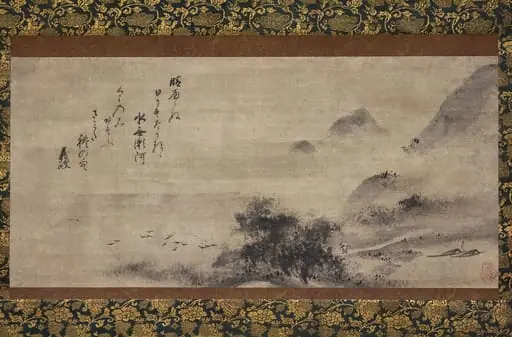
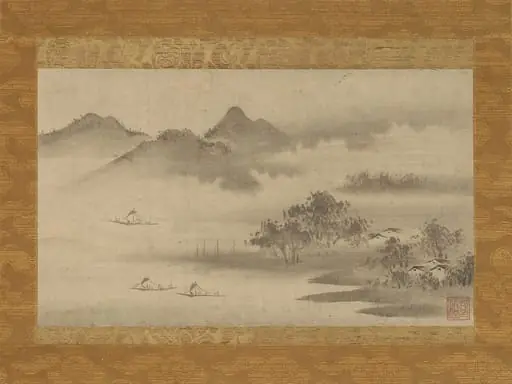
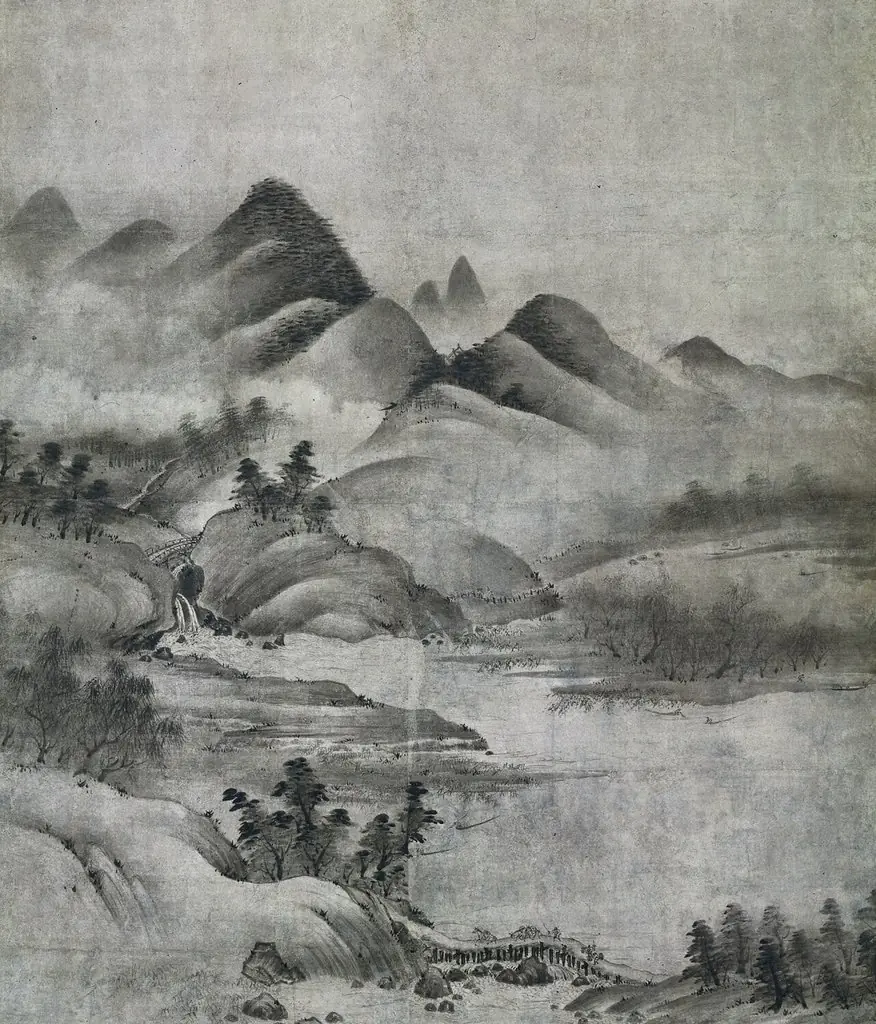
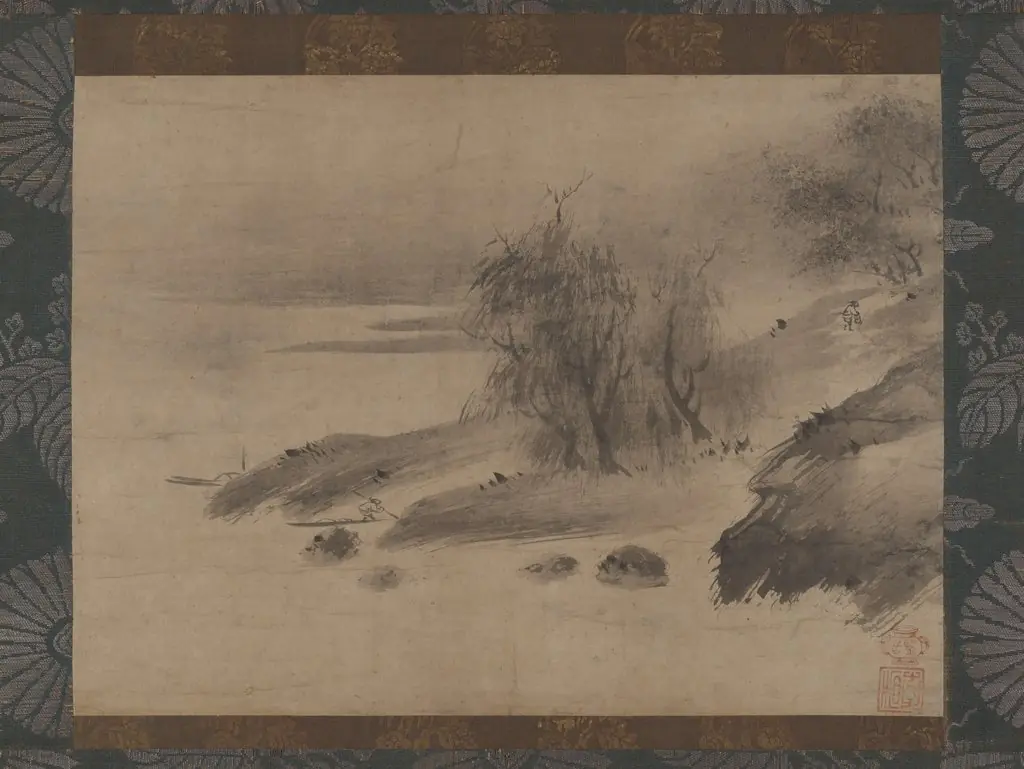
- Landscape with Motifs from the Eight Views of Xiao-Xiang
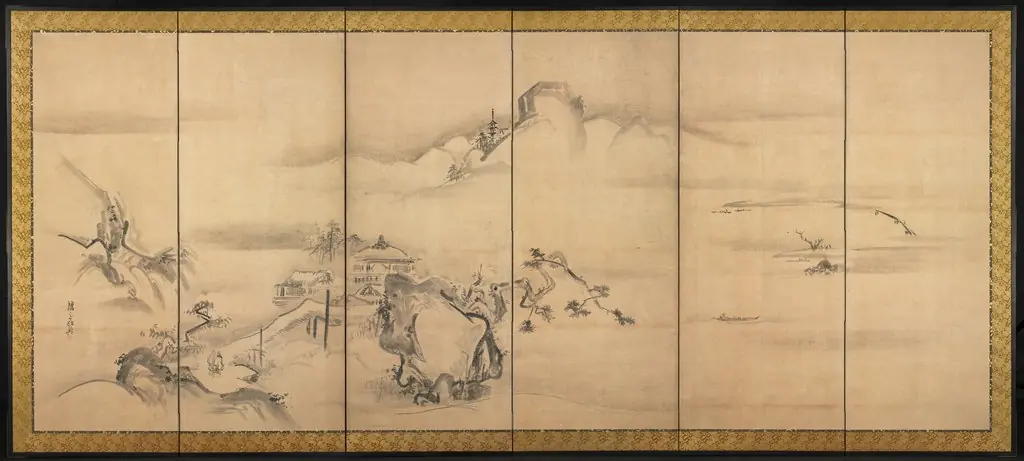 Eight Views of the Xiao and Xiang Rivers
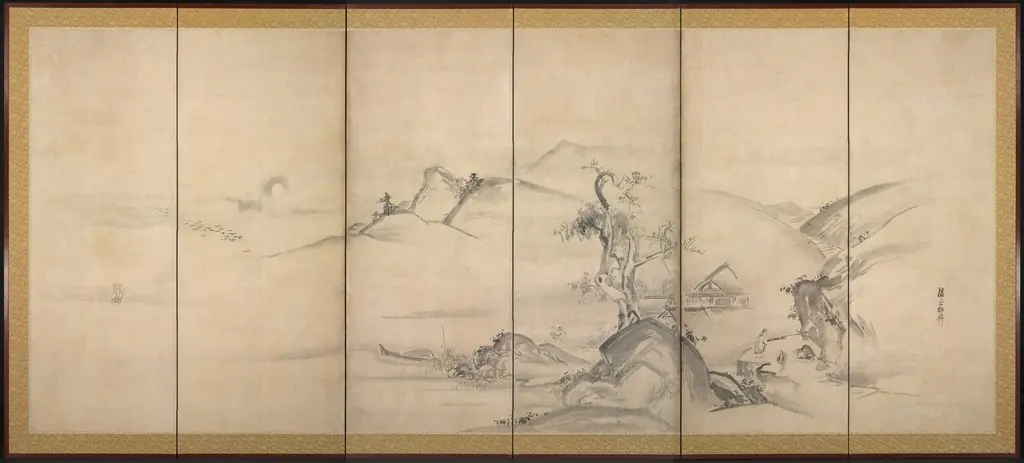 Eight Views of the Xiao and Xiang Rivers
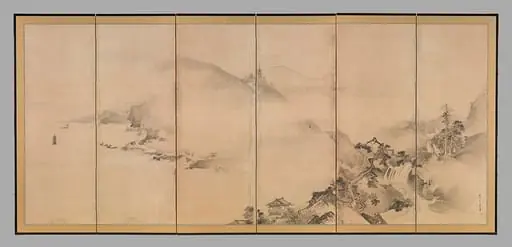 四季山水図屏風|Landscapes of the Four Seasons
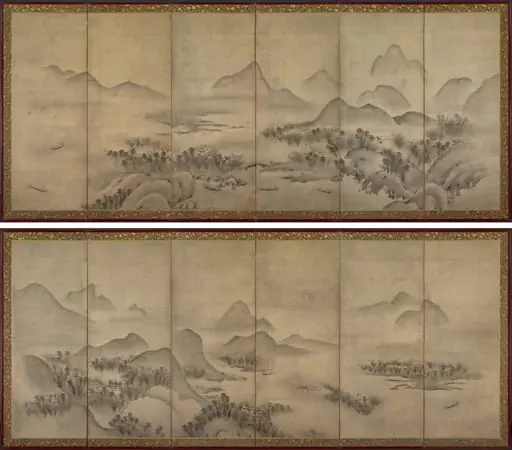 Moonlit Landscape
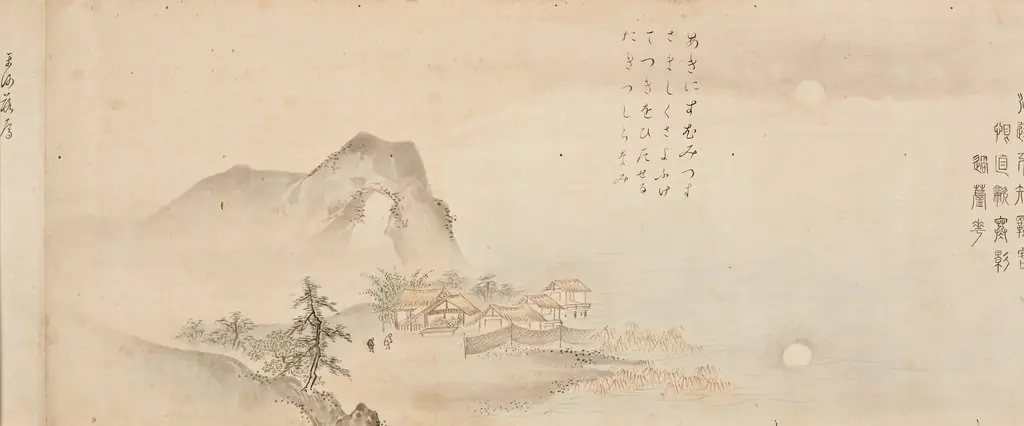 Eight Views of the Xiao and Xiang Rivers
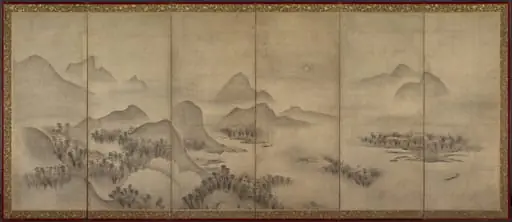 Moonlit Landscape (one of a pair)
 山水唐人物図屏風|Landscapes with the Chinese Literati Su Shi and Tao Qian