Artwork
Untitled
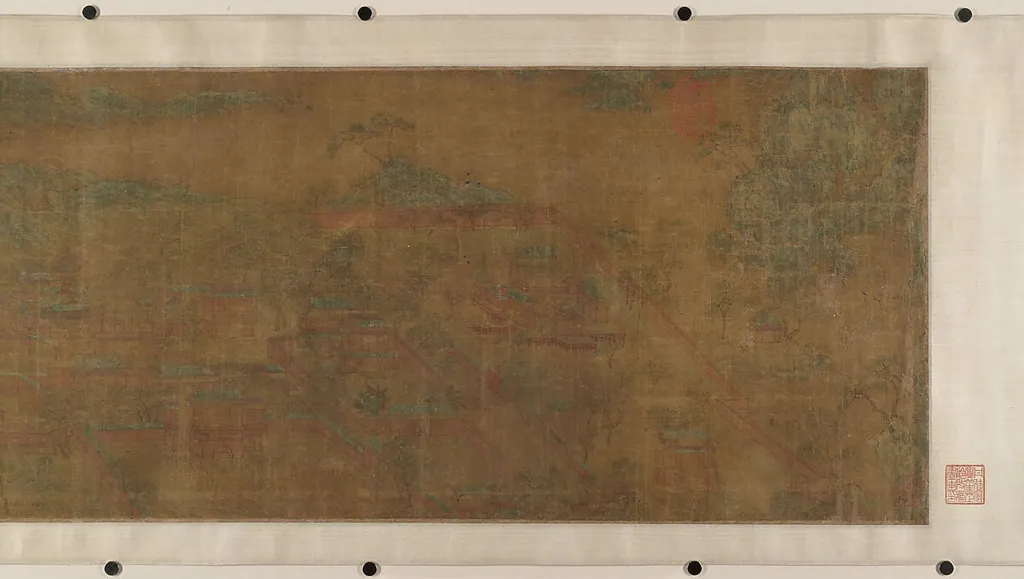
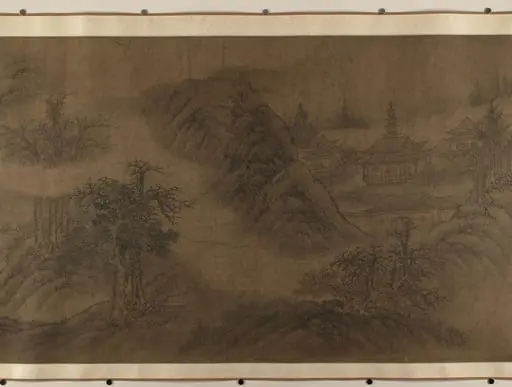
Untitled is an ink painting by the Song dynasty painting artist After Zhao Boju. It dates from 1472 and is held in the collection of the Metropolitan Museum of Art.
About this work
Subject & Meaning
As a landscape painting, the subject matter centers on the relationship between human habitation, represented by the palace, and the broader natural world.
The work depicts a traditional Chinese landscape featuring a palace structure integrated within the natural scenery. Created in 1472 by an anonymous artist working in the style of Zhao Boju, the handscroll presents a harmonious composition where architectural elements coexist with the surrounding environment. As a landscape painting, the subject matter centers on the relationship between human habitation, represented by the palace, and the broader natural world.
The imagery reflects the genre conventions of the period, emphasizing the grandeur of the setting and the placement of the building within it. The piece serves as a visual representation of a palatial scene set against a landscape backdrop, characteristic of silk paintings from China during the late 15th century.
Technique & Style
The work is executed as a handscroll combining ink and color on silk, a format and support typical of late fifteenth-century Chinese painting. The palette relies on muted ink washes and delicate mineral pigments applied in fine, layered brushstrokes to articulate recession in the palace architecture and surrounding landscape. Handling emphasizes fluid, attenuated lines for the buildings and attenuated trees, while broader ink washes modulate atmospheric recession.
The scroll’s layered composition and refined modeling suggest a close study of Zhao Boju’s twelfth-century manner, adapted to the softer tonality and refined detailing of the Ming court style. No losses or major tears are recorded in the current condition report, and the silk support remains taut within its mounting.
History & Provenance
The work was created in 1472 during the Ming dynasty, as indicated by the date inscribed in the handscroll. It is attributed to an anonymous painter working in the style of Zhao Boju, a court painter known for landscape depictions of palatial settings. The painting entered the collection of the Metropolitan Museum of Art, where it is currently held.
Its dimensions are recorded as 29.5 cm in height and 242.6 cm in length, and it was produced in China.
The painting is held by the Metropolitan Museum of Art, New York, where it is recorded with the accession number 1973.121.1. It was exhibited at the museum in 1973, as indicated by the accession year, and has remained part of its permanent collection since then.
Overview
This untitled handscroll, rendered with ink and color on silk, presents a continuous panorama of natural scenery. It depicts expansive mountain ranges, winding rivers, and small, intricately detailed palace structures nestled within the landscape. Designed for intimate contemplation, the scroll is meant to be unfurled gradually, revealing its narrative in a sequence of unfolding scenes.
Context
This artwork exemplifies the tradition of Chinese landscape painting, a genre highly valued for its philosophical depth and aesthetic refinement. Such scrolls offered a means of experiencing nature vicariously, often serving as objects of private meditation and appreciation for scholars and connoisseurs.
Artist & collection



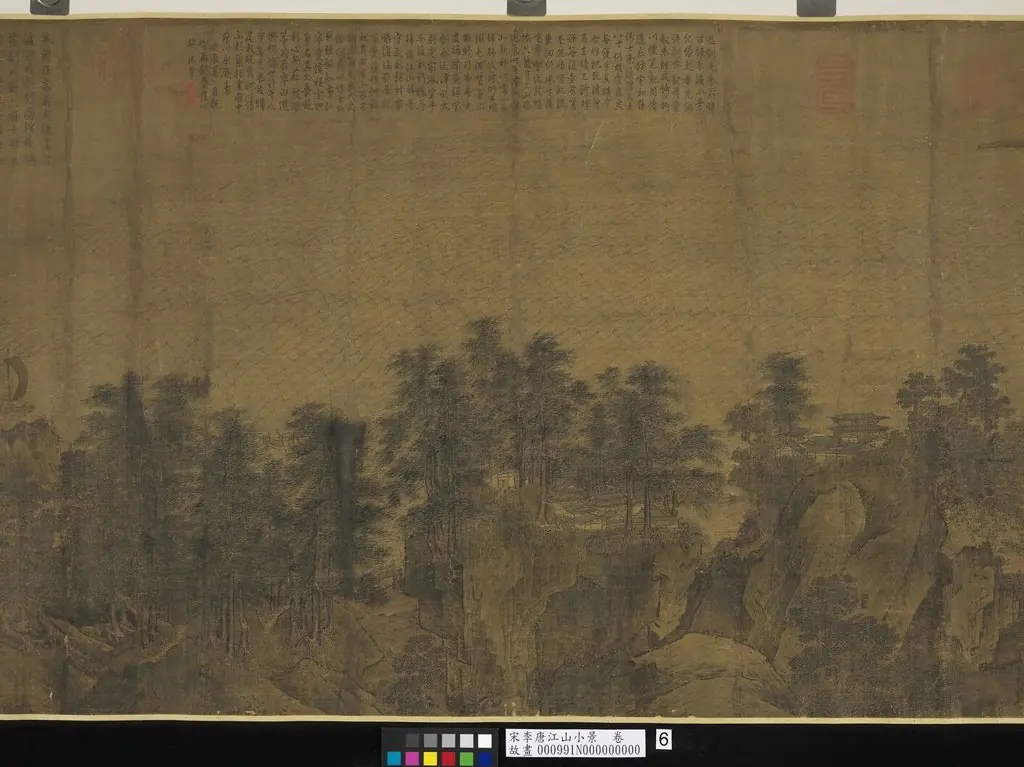 宋李唐江山小景卷
 宋人寒林待渡 軸
 W drodze do przełęczy
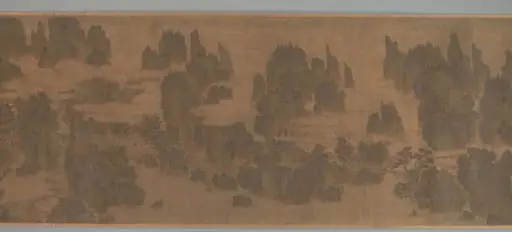 南宋 佚名 別苑春山圖 卷|Retreats in the Spring Hills
 明 佚名 舊傳燕文貴 溪山行旅圖 卷|Landscape
 Untitled
 元 佚名 臨王振鵬 金明池圖 卷|Dragon Boat Regatta on Jinming Lake
 南宋 李結 西塞漁社圖 卷 |Fisherman's Lodge At Mount Xisai
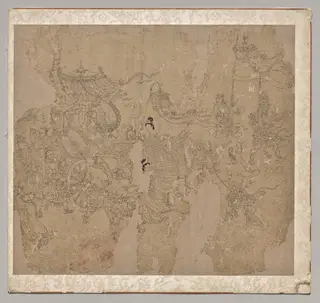 Album of Daoist and Buddhist Themes: Procession of Daoist Deities: Leaf 3
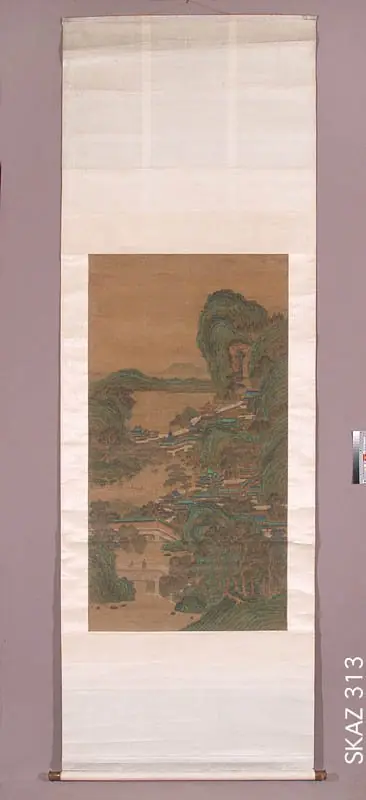 Pałac nad brzegiem jeziora - pejzaż
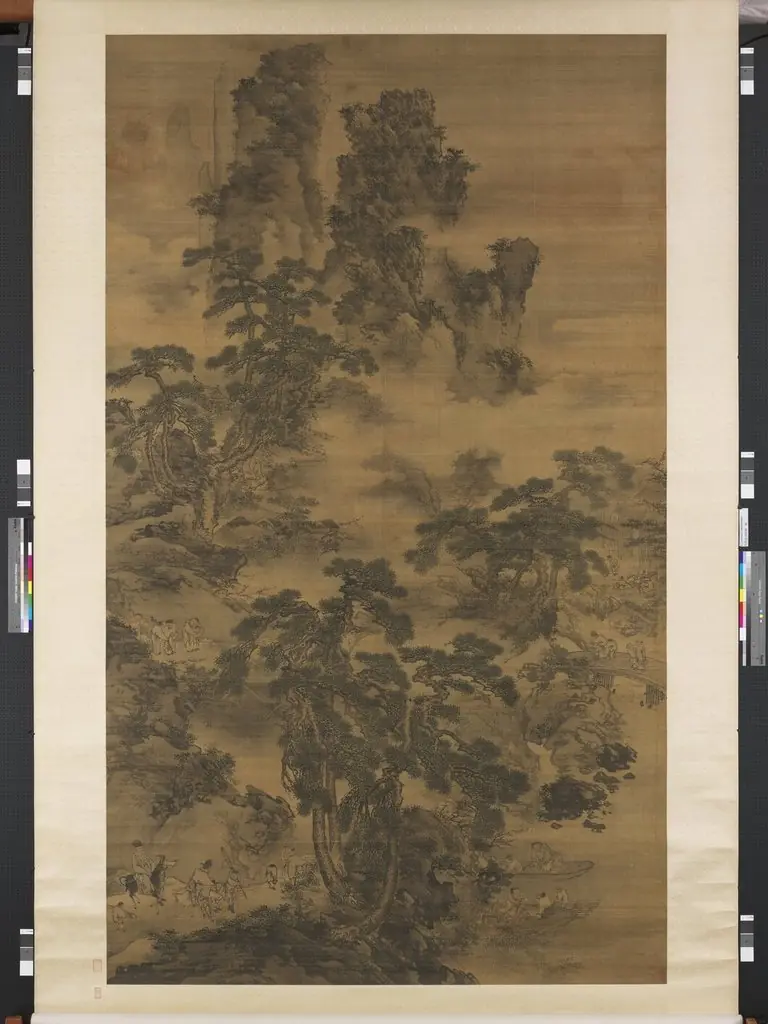 明戴進春酣圖 軸
- 元? 佚名 仿李公麟 屈原九歌圖 卷|The Nine Songs: Illustrations to the poems of Qu Yuan (343–277 B.C.)