Artwork
A Mughal courtier
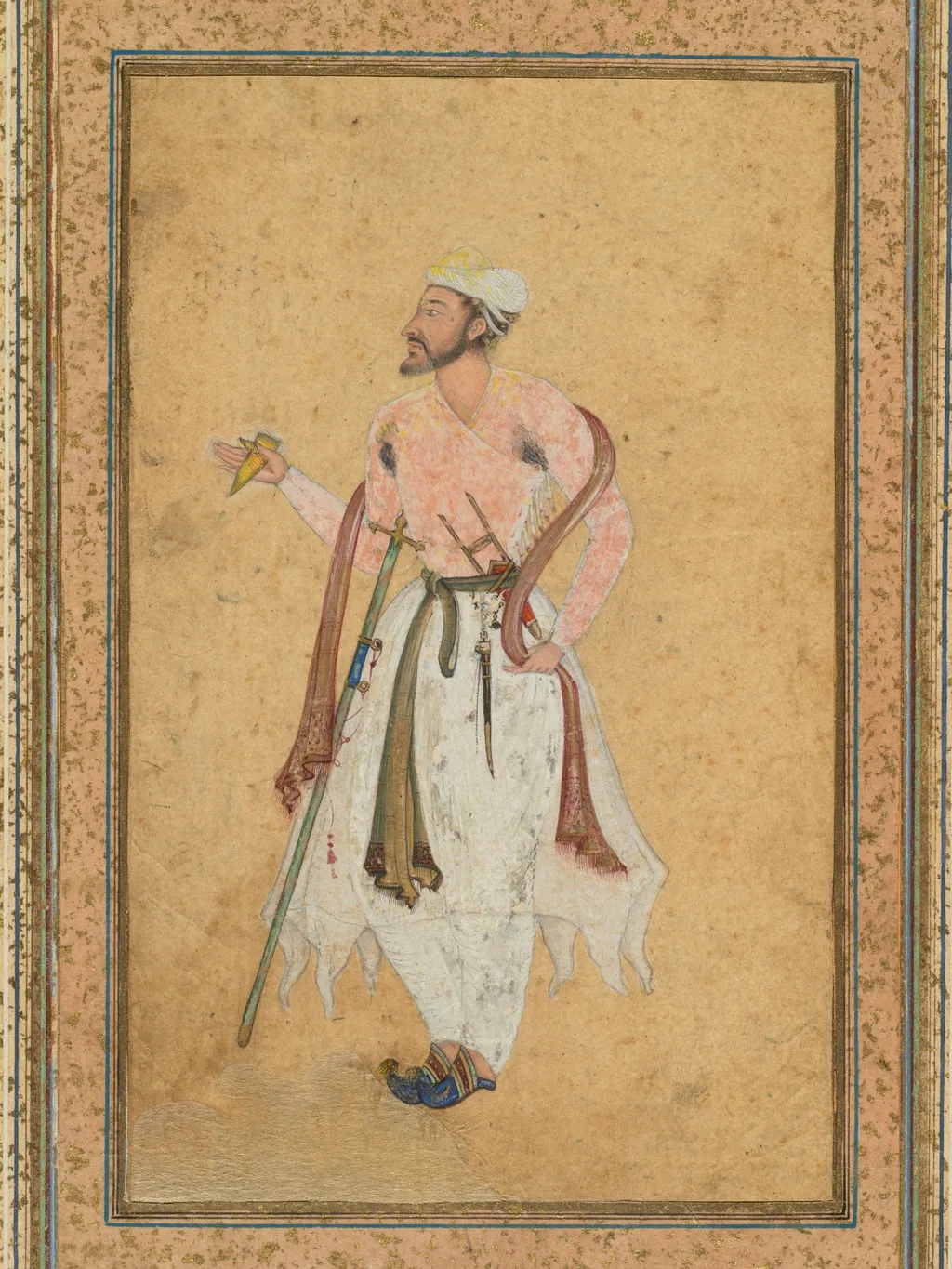
A Mughal courtier is an unspecified painting. It dates from 1575 and is held in the collection of the Cleveland Museum of Art.
About this work
History & Provenance
The sources do not provide information about any earlier ownership, commission, or subsequent provenance beyond its entry into the museum’s collection.
The work titled A Mughal courtier is attributed to an unknown artist and dated to 1575, having been created in the Mughal Empire. It is presently held by the Cleveland Museum of Art, where it is recorded under accession number 2013.294. The sources do not provide information about any earlier ownership, commission, or subsequent provenance beyond its entry into the museum’s collection.
The painting A Mughal courtier, created in 1575, is held in the collection of the Cleveland Museum of Art in Cleveland. The work is cataloged under the accession number 2013.294. It was attributed to an unknown artist within the context of the Mughal Empire. No specific exhibition history is recorded in the available sources.
Overview
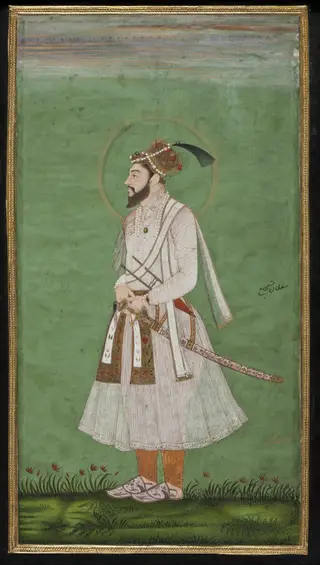
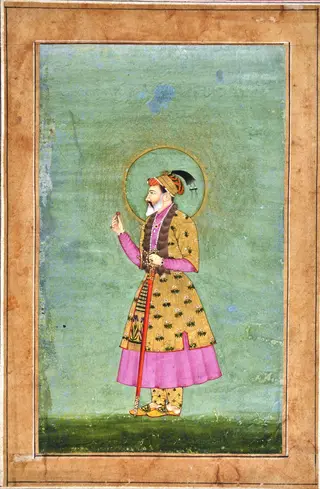
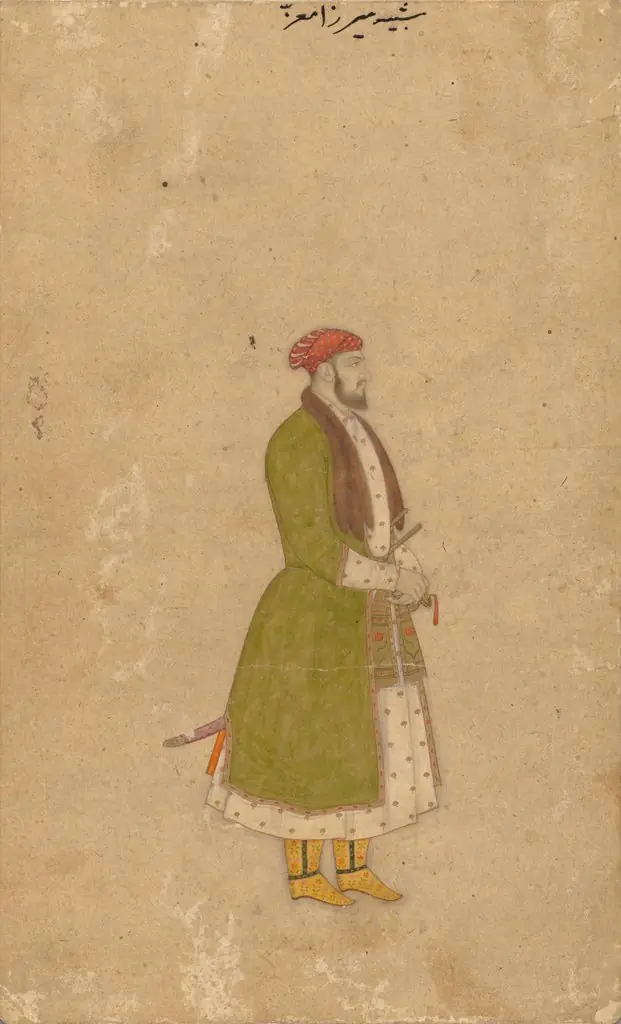
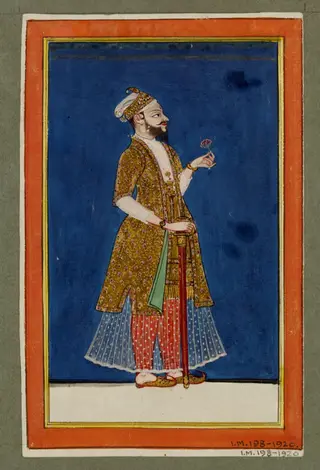
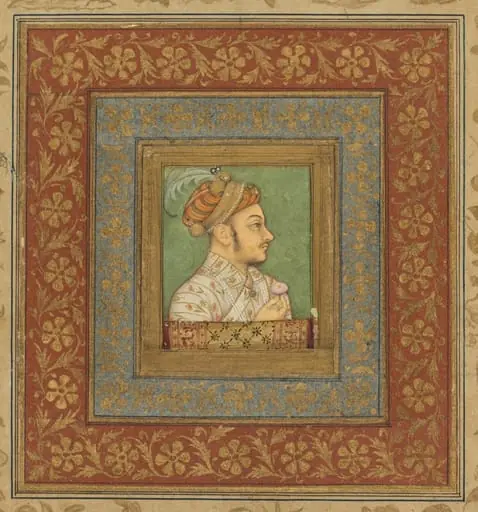
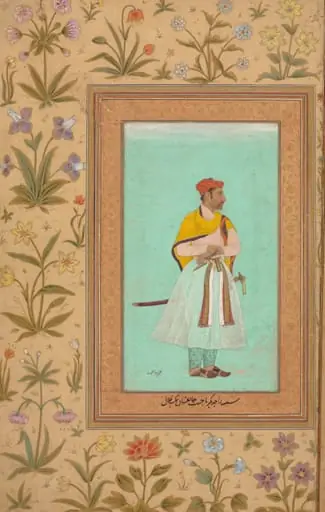
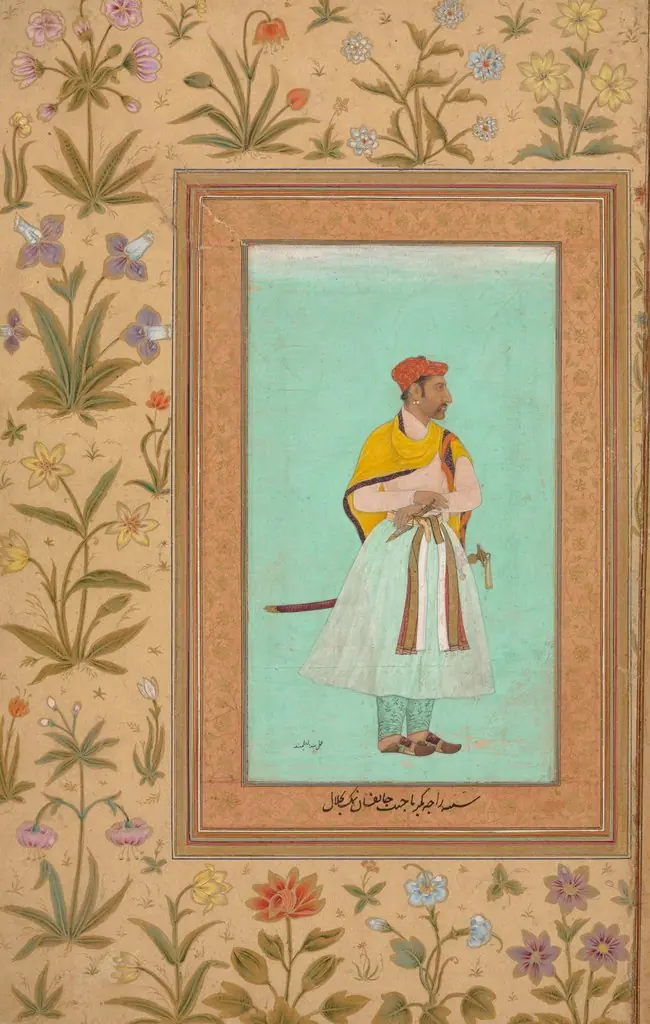
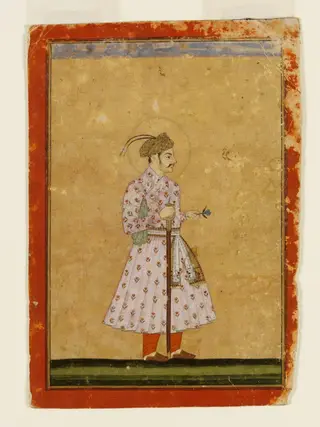
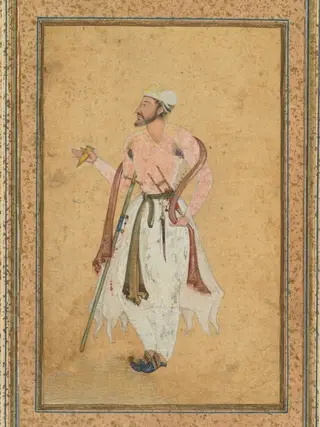
The work portrays a Mughal court figure dressed in the period’s ceremonial costume: a white turban, a flowing white robe, and a red sash across the chest. He grips a dagger in his right hand, his expression solemn and his bearing assured. A muted background recedes, directing the viewer’s focus onto the individual.
Subject & Meaning
The sitter is presented as a member of the imperial entourage, his attire and weapon indicating status and martial readiness. The serious facial expression and upright posture suggest a role of authority or service within the court, embodying the dignified comportment expected of high-ranking officials in Mughal society.
Technique & Style
Rendered in the refined brushwork characteristic of Mughal painting, the piece balances delicate line work with subtle washes of colour. The contrast between the bright white garments and the subdued backdrop highlights the figure, while the precise rendering of the dagger and turban reflects the court’s attention to detail and realism.
Context
Created during the Mughal era, the artwork exemplifies the court’s patronage of portraiture that combined Persian artistic traditions with indigenous Indian elements. Such depictions served both to record the appearance of notable courtiers and to convey the cultural sophistication of the empire’s elite.
Artist & collection