Artwork
A prince visiting a holy man in a rocky landscape
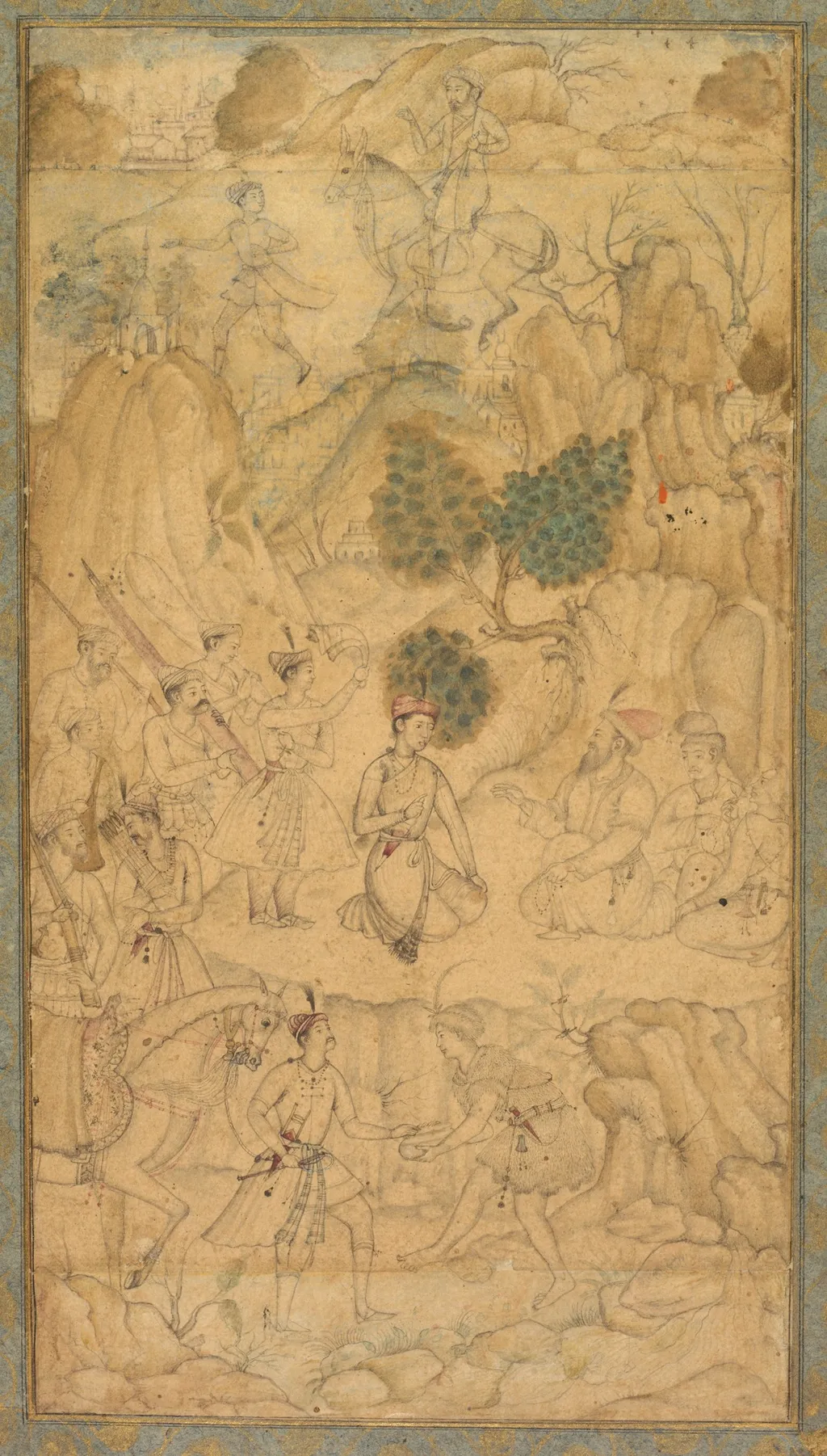
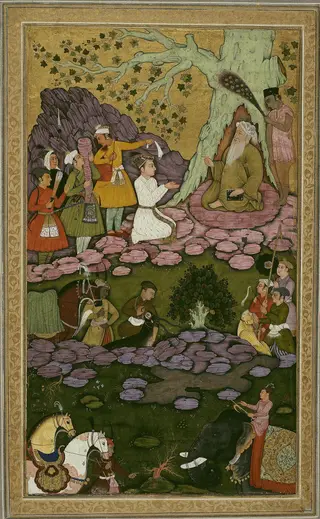
A prince visiting a holy man in a rocky landscape is an unspecified painting. It dates from 1596 and is held in the collection of the Cleveland Museum of Art. The work depicts a princely figure advancing across a rugged hillside toward a seated ascetic.
About this work
Subject & Meaning
The painting depicts a prince visiting a holy man in a rocky landscape, a subject that indicates the prince’s pursuit of spiritual counsel and the ascetic’s retreat from courtly life. The work was made in the Mughal Empire around 1590, placing it within a tradition of Mughal miniature painting that often portrayed rulers seeking the wisdom of saints. As such, the scene embodies the era’s synthesis of imperial authority and Sufi‑inspired piety, highlighting the ideal of a ruler guided by wisdom beyond the throne.
History & Provenance
The Cleveland Museum of Art acquired the piece in 2013, assigning it accession number 2013.
The work is dated to 1590 and was produced in the Mughal Empire by an unidentified artist. It is classified as a painting of the landscape genre. The Cleveland Museum of Art acquired the piece in 2013, assigning it accession number 2013.302, and it remains in the museum’s holdings.
Prior to its 2013 acquisition, the painting’s provenance is not documented in the sources. No earlier ownership, commission, or exhibition history is recorded.
The painting is held by the Cleveland Museum of Art, where it is recorded as object 2013.302.
It has been exhibited at the Cleveland Museum of Art in the exhibition “Revealing Krishna: Journey to Cambodia’s Sacred Mountain,” held from June 22 to September 13, 2014.
Overview
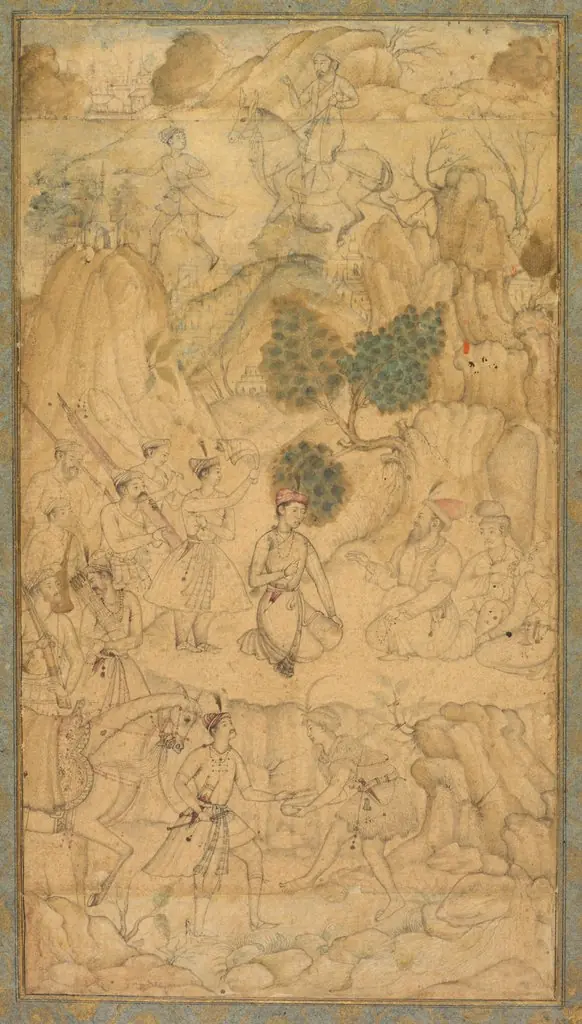
The work depicts a princely figure advancing across a rugged hillside toward a seated ascetic. The prince, distinguished by a red hat and elaborate attire, carries an object in his hand, while the holy man rests beneath a tree. Surrounding them are various onlookers, horses, structures, and foliage rendered in muted tones, creating a narrative tableau set within a rocky landscape.
Technique & Style
Executed with a delicate palette, the painting employs soft, blended colors to model the distant hills, trees, and architecture, contrasting with the more sharply defined figures in the foreground. The handling of light and shadow gives the rocky terrain a textured quality, while the fine brushwork on clothing details emphasizes the prince’s luxurious garments.
Context
Scenes of noble patrons meeting ascetics were common in medieval and early Renaissance art, often serving didactic purposes. The inclusion of everyday figures, animals, and architectural elements situates the encounter within a broader social landscape, reflecting contemporary interests in moral instruction and the integration of the sacred into daily life.
Artist & collection

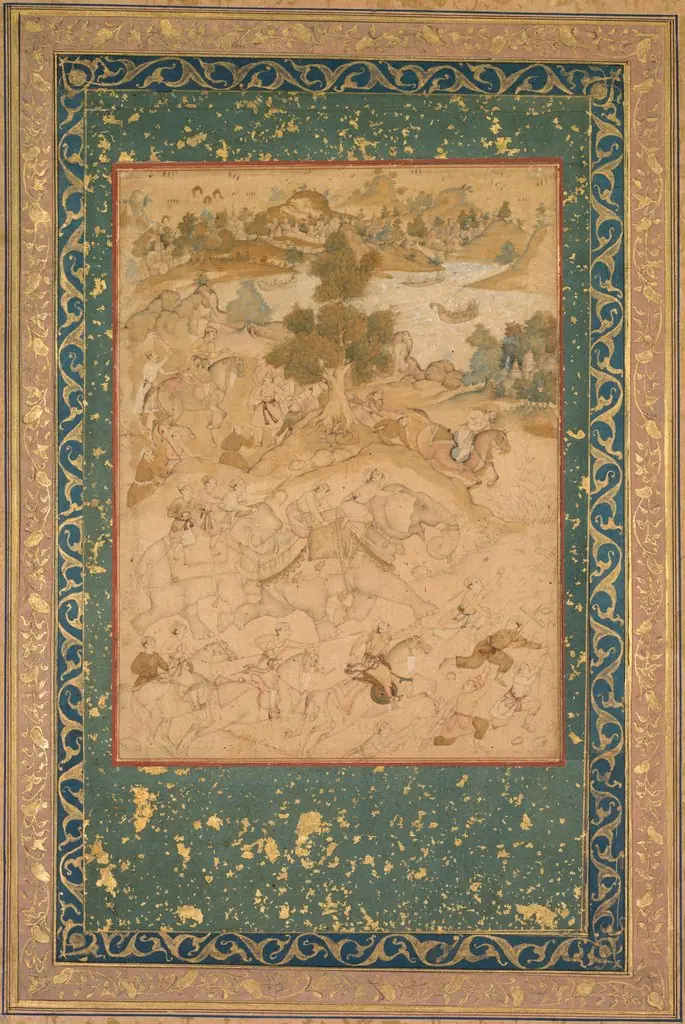 Akbar supervising the capture of wild elephants at Malwa in 1564, painting 90 from an Akbar-nama (Book of Akbar) of Abu’l Fazl (Indian 1551–1602)
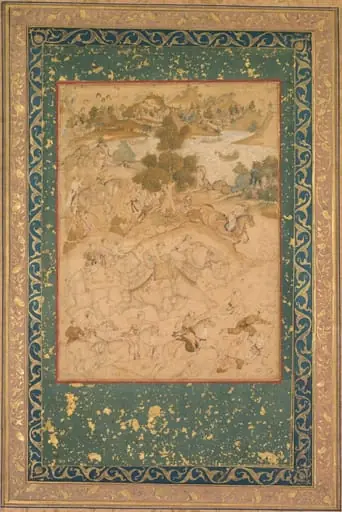 Akbar supervising the capture of wild elephants at Malwa in 1564, painting 90 from an Akbar-nama (Book of Akbar) of Abu’l Fazl (Indian 1551–1602)
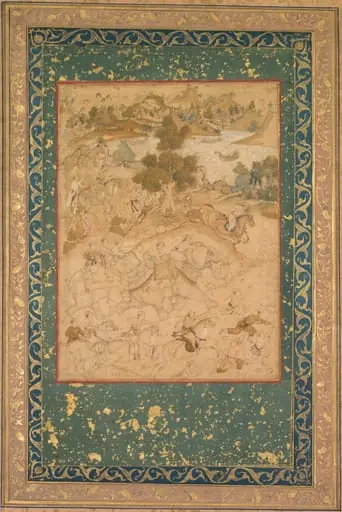 Akbar supervising the capture of wild elephants at Malwa in 1564, painting 90 from an Akbar-nama (Book of Akbar) of Abu’l Fazl (Indian 1551–1602)
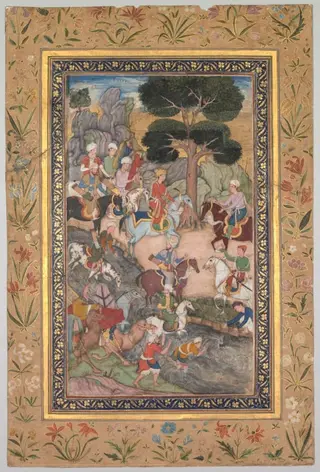 Babur meeting with Sultan Ali Mirza at the Kohik River, from a Babur-nama (Memoirs of Babur)
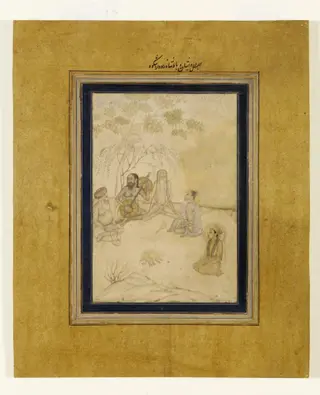 The gathering of dervishes with Prince Dara Shikuh
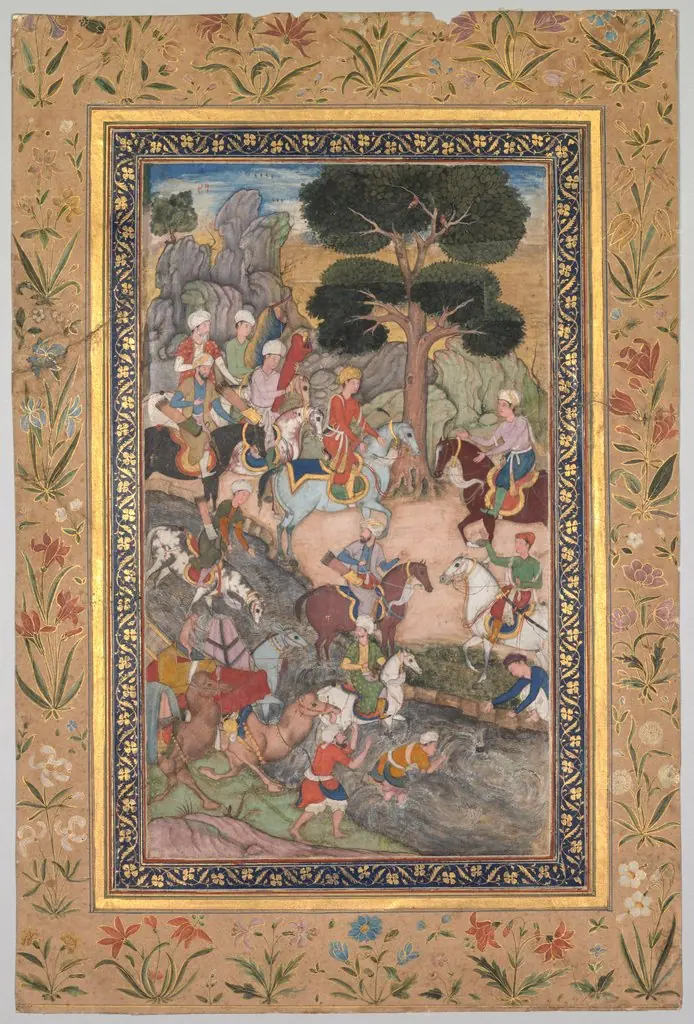 Babur meeting with Sultan Ali Mirza at the Kohik River, from a Babur-nama (Memoirs of Babur)