Artwork
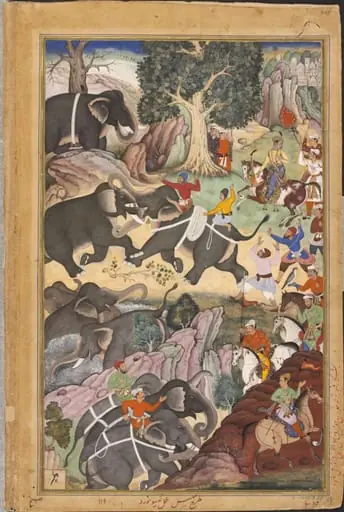
Akbar supervising the capture of wild elephants at Malwa in 1564, painting 90 from an Akbar-nama (Book of Akbar) of Abu’l Fazl (Indian 1551–1602)
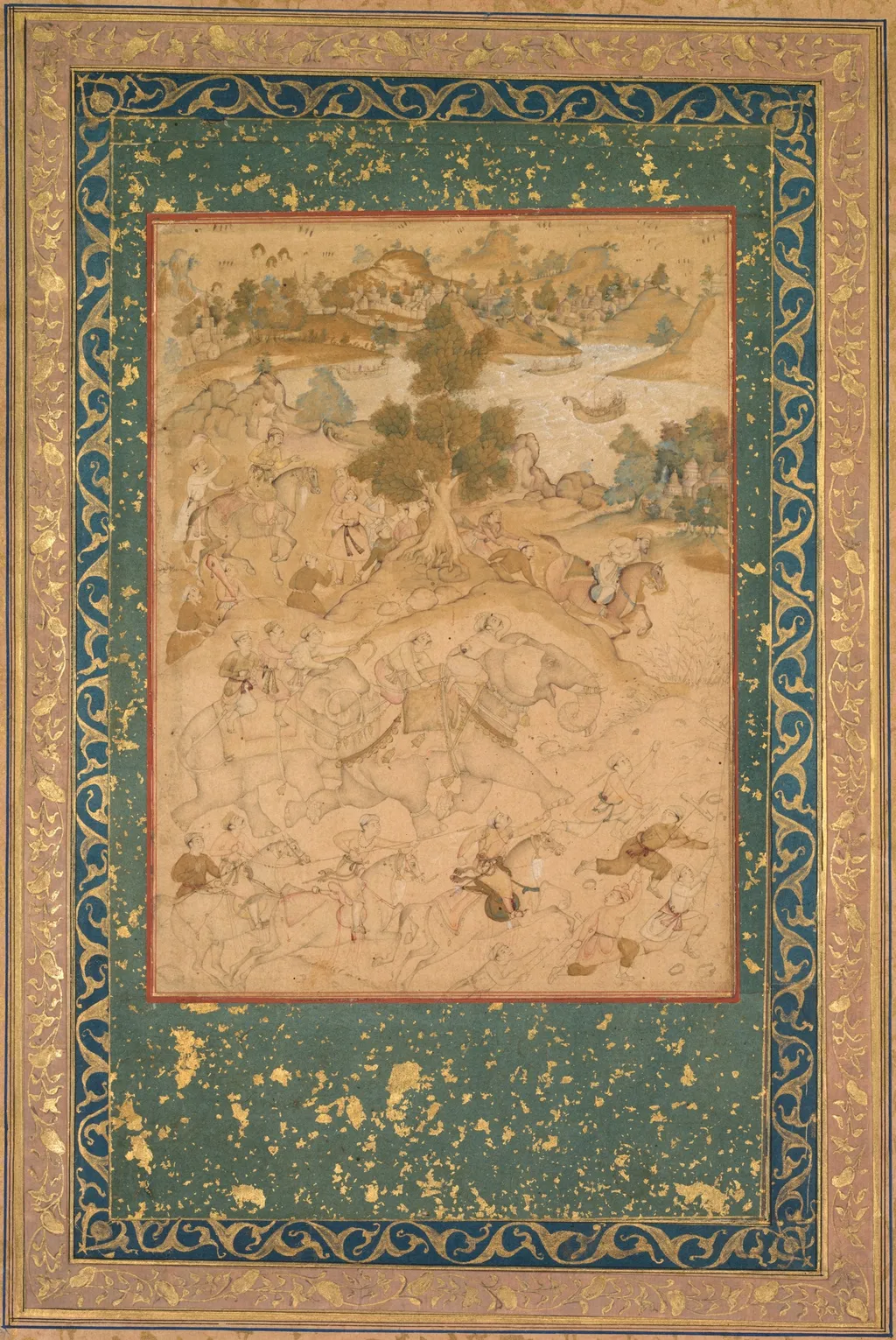
Akbar supervising the capture of wild elephants at Malwa in 1564, painting 90 from an Akbar-nama (Book of Akbar) of Abu’l Fazl (Indian 1551–1602) is an unspecified painting. It dates from 1602 and is held in the collection of the Cleveland Museum of Art.
About this work
Technique & Style
It depicts Akbar overseeing the capture of wild elephants at Malwa in 1564 and is attributed to an anonymous artist within the Mughal imperial workshop.
The work is executed in tempera on paper as part of the Akbar-nama manuscript tradition. It depicts Akbar overseeing the capture of wild elephants at Malwa in 1564 and is attributed to an anonymous artist within the Mughal imperial workshop. The painting measures 39.4 centimeters in height and 28.6 centimeters in width. Its formal style reflects the naturalistic detail and hierarchical composition characteristic of 16th-century Indian court painting.
History & Provenance
The painting depicting Akbar supervising the capture of wild elephants at Malwa in 1564 was created as part of the Akbar-nama commissioned by Abu’l Fazl, with the specific miniature attributed to an artist identified as Farukh Chela and dated to 1602. It is part of the Cleveland Museum of Art's collection, where it has been held since at least 2013 under the accession number 2013.309.a.
The work is held in the collection of the Cleveland Museum of Art, where it is catalogued under accession number 2013.309.a. It has been part of the museum's exhibition schedule, appearing in displays of Indian miniature painting and related thematic presentations on Mughal art.
The painting is attributed to Farukh Chela, Govardhan, and Dhanraj and is dated to 1602, corresponding to its inclusion in the Akbar-nama of Abu’l Fazl.
Exhibition history includes participation in the Cleveland Museum of Art's 2013 presentation of Indian miniature works, highlighting the collaborative nature of Mughal artistic production.
Context
Scholarship on this folio has centered on its role within the imperial Akbar-nama manuscript, completed in 1602 to document the reign of Emperor Akbar. The painting is attributed to a collaborative workshop, with Farrukh Chela, Govardhan, and Dhanraj among the named artists, reflecting the Mughal atelier’s collective production model. Its dynamic composition, depicting Akbar’s strategic command during the 1564 elephant capture, exemplifies the period’s fusion of Persian miniature traditions with Indian naturalism and narrative vigor.
Art historians highlight the work’s significance in illustrating Mughal courtly patronage, where Abu’l Fazl’s text and accompanying illustrations served as propaganda, reinforcing Akbar’s authority and administrative prowess. The Cleveland Museum of Art’s acquisition (2013) underscores its recognition as a key document of Mughal visual culture, bridging historical documentation and artistic innovation.
Overview
The work illustrates a royal hunting expedition in which Emperor Akbar oversees the rounding up of wild elephants in the Malwa region, dated to 1564. Executed as a miniature for the Akbar‑nama, the manuscript chronicling the emperor’s reign, the scene combines courtly observation with a vivid portrayal of the natural landscape and the logistical effort of the capture.
Subject & Meaning
The composition foregrounds a group of riders and foot soldiers encircling several elephants, some poised, others in motion, suggesting the controlled yet dynamic nature of the enterprise. By placing Akbar as a supervisory figure, the image underscores the monarch’s authority over both the natural world and the administrative apparatus required for such large‑scale endeavors.
Artist & collection

- Akbar supervising the capture of wild elephants at Malwa in 1564, painting 90 from an Akbar-nama (Book of Akbar) of Abu’l Fazl (Indian 1551–1602)
 Akbar supervising the capture of wild elephants at Malwa in 1564, painting 90 from an Akbar-nama (Book of Akbar) of Abu’l Fazl (Indian 1551–1602)
 Battle of Sarnal in Gujarat
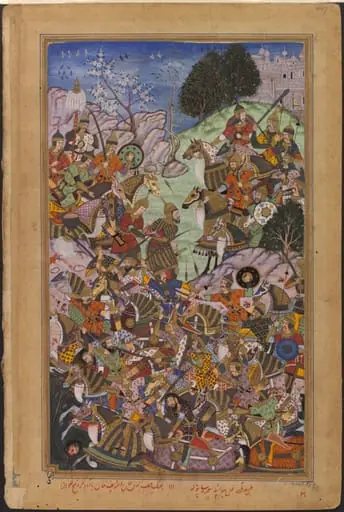 Sultan Adam
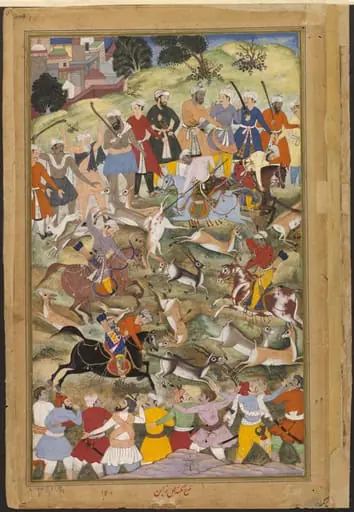 Akbar
Akbar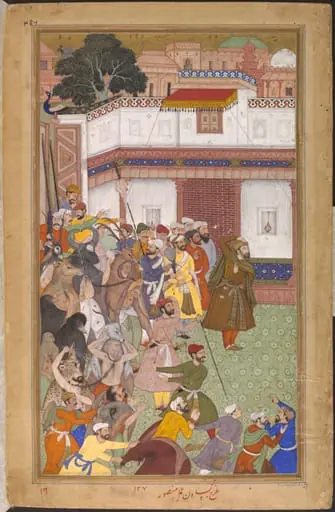 Husain Quli and Akbar
 Akbar
Akbar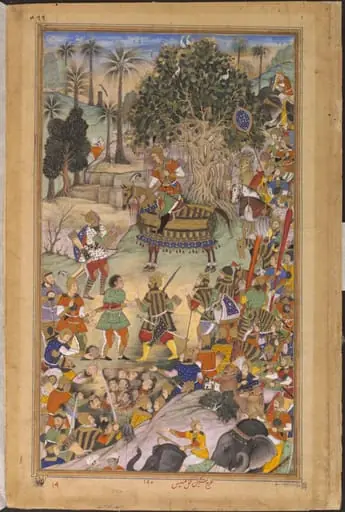 Muhammad Husain Mirza and Akbar
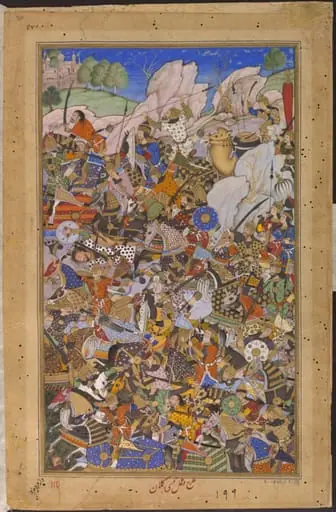 Untitled
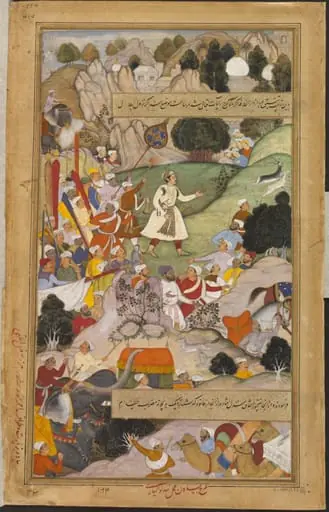 Akbar
Akbar
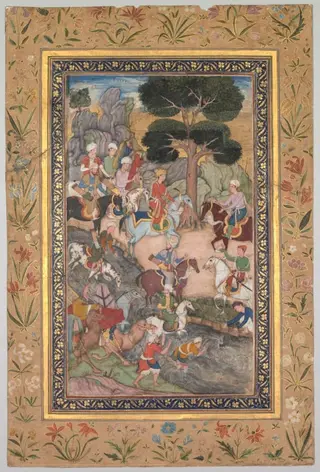 Babur meeting with Sultan Ali Mirza at the Kohik River, from a Babur-nama (Memoirs of Babur)
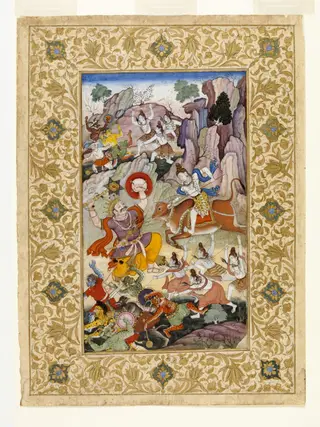 Shiva and Andhaka
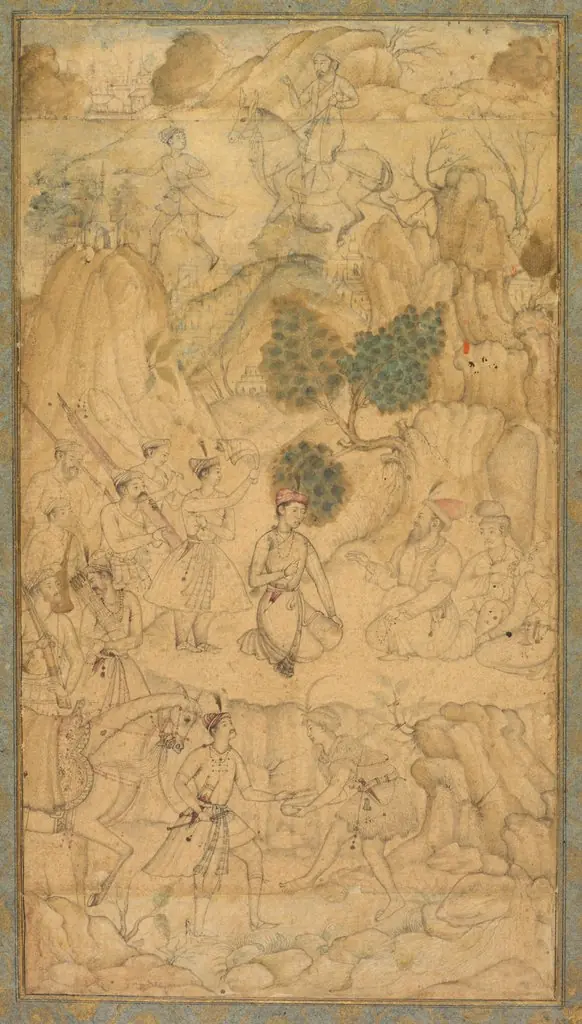 A Prince Visiting a Holy Man in a Rocky Landscape (recto)
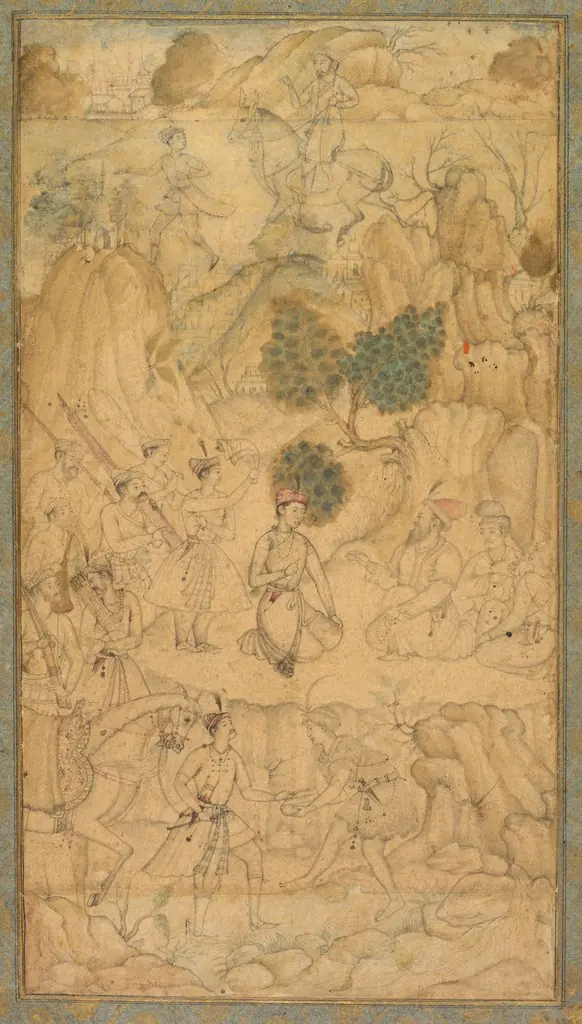 A prince visiting a holy man in a rocky landscape
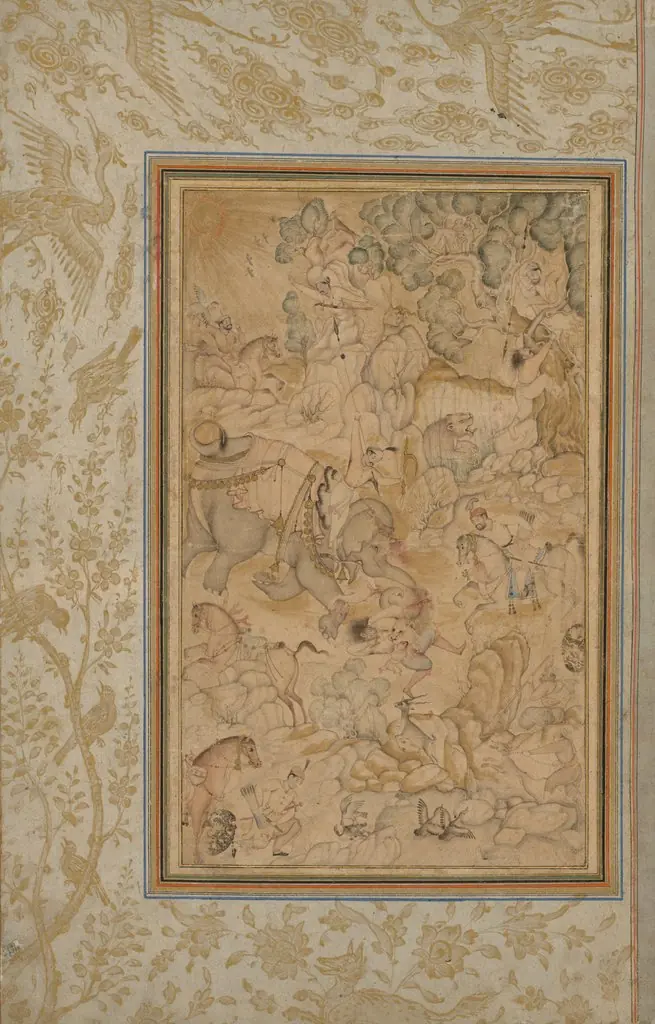 Princes hunting in a rocky landscape
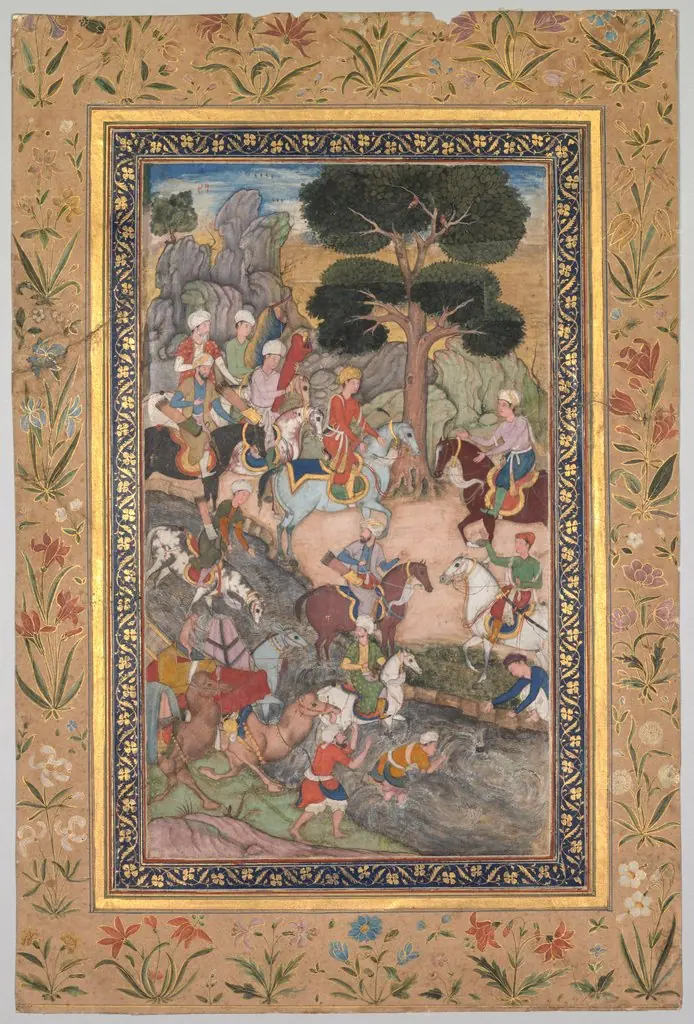 Babur meeting with Sultan Ali Mirza at the Kohik River, from a Babur-nama (Memoirs of Babur)
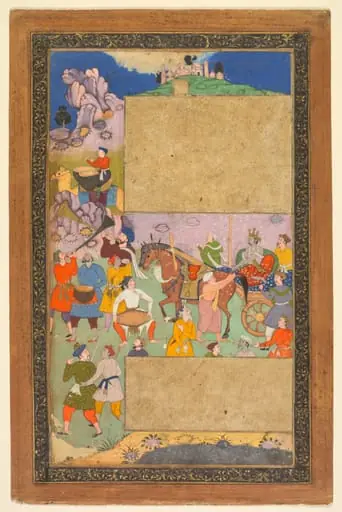 A charioteer riding through a rocky landscape with an entourage of footmen and musicians, page from a Razm-nama (Book of Wars) adapted from the Sanskrit Mahabharata and translated into Persian by Mir Ghiyath al-Din Ali Qazvini, known as Naqib Khan (Persian, d. 1614)
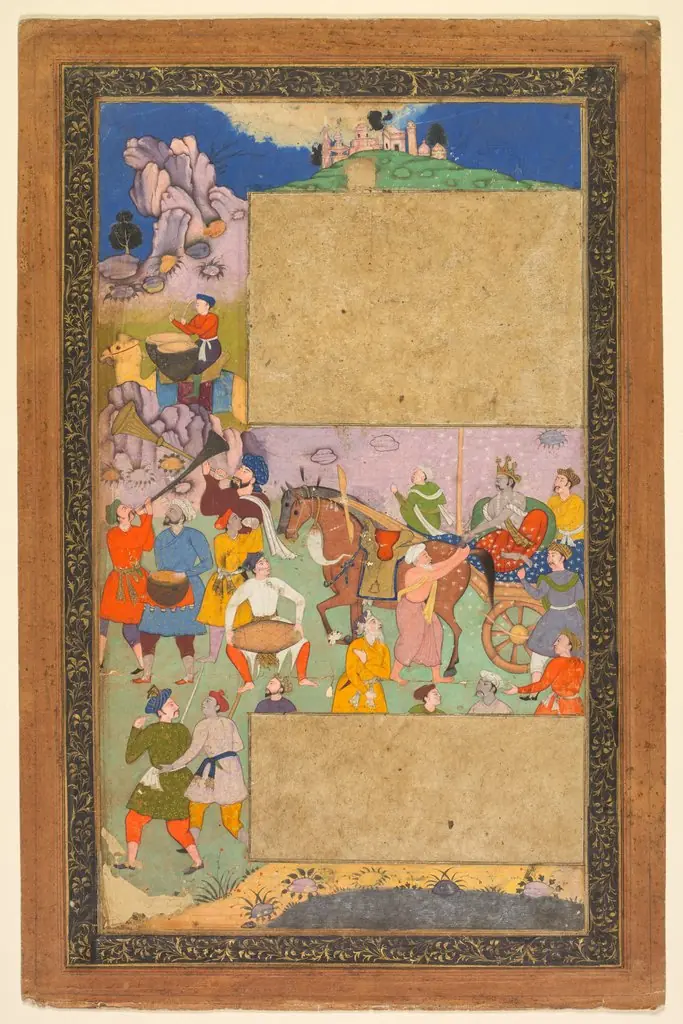 A charioteer riding through a rocky landscape with an entourage of footmen and musicians, page from a Razm-nama (Book of Wars) adapted from the Sanskrit Mahabharata and translated into Persian by Mir Ghiyath al-Din Ali Qazvini, known as Naqib Khan (P
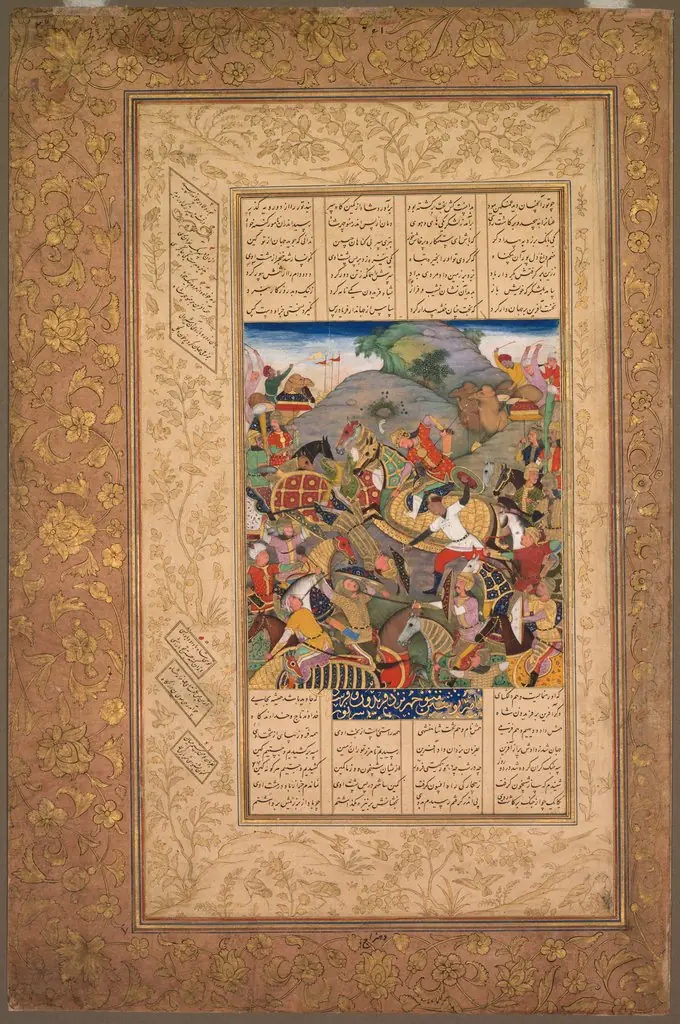 Battle between Manuchihr and Tur, from a Shah-nama (Book of Kings) of Firdausi (Persian, c. 934–1020)