Artwork
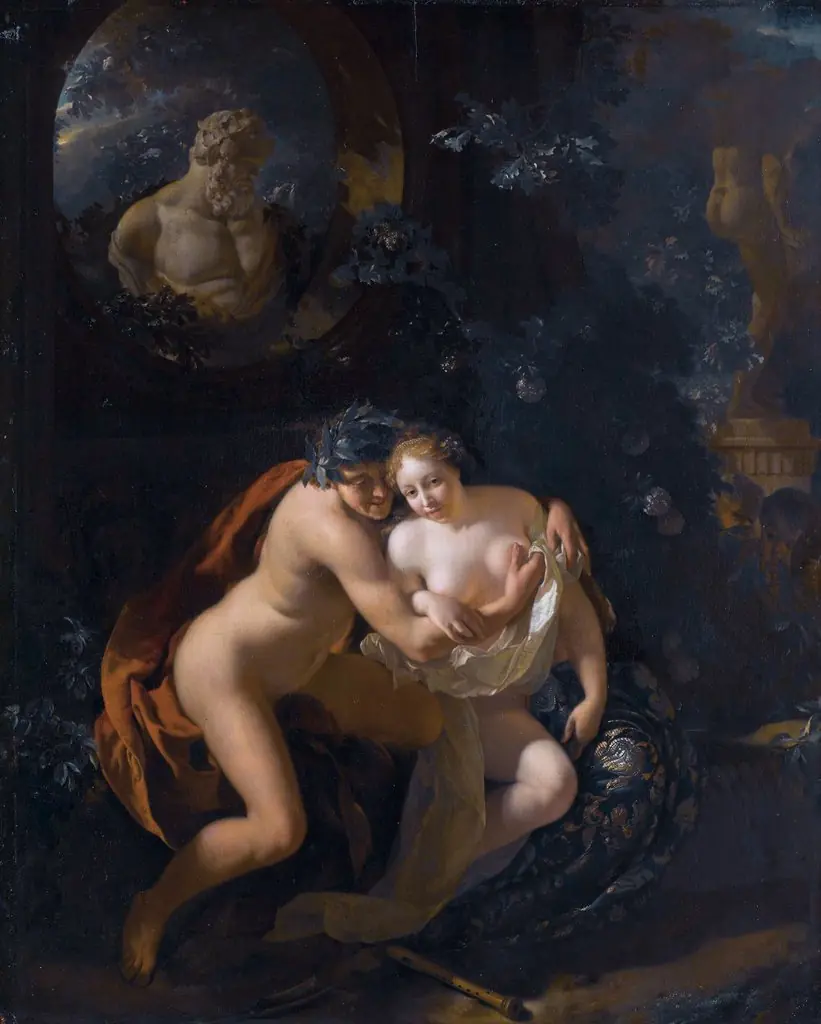
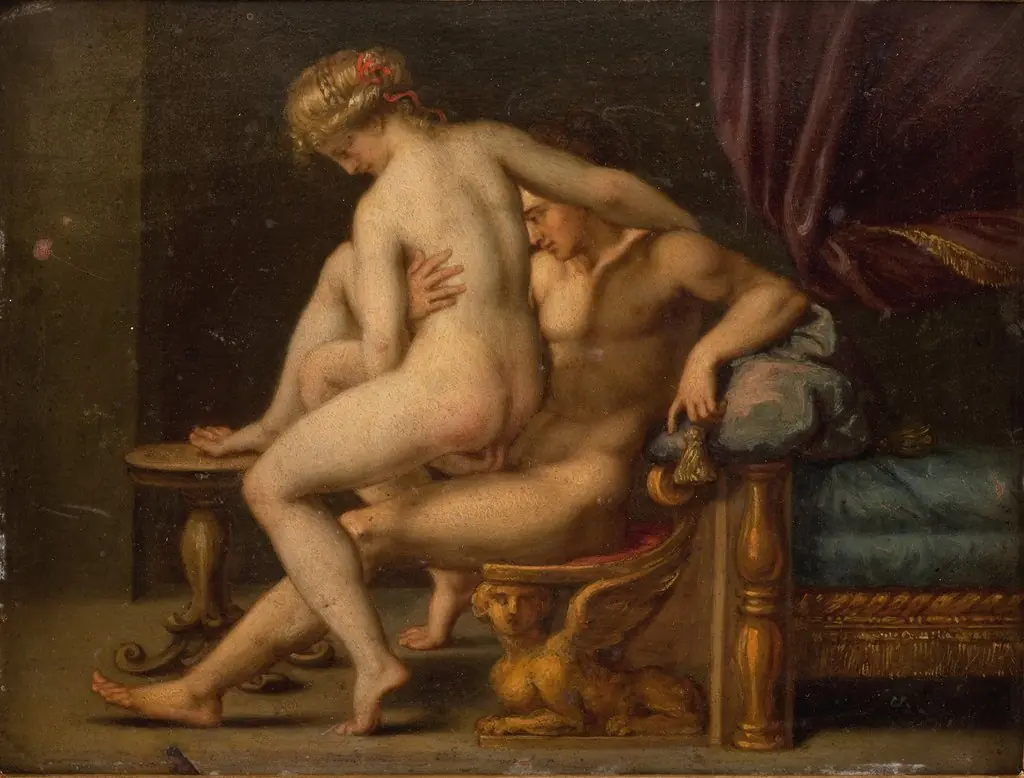
Amorous Couple
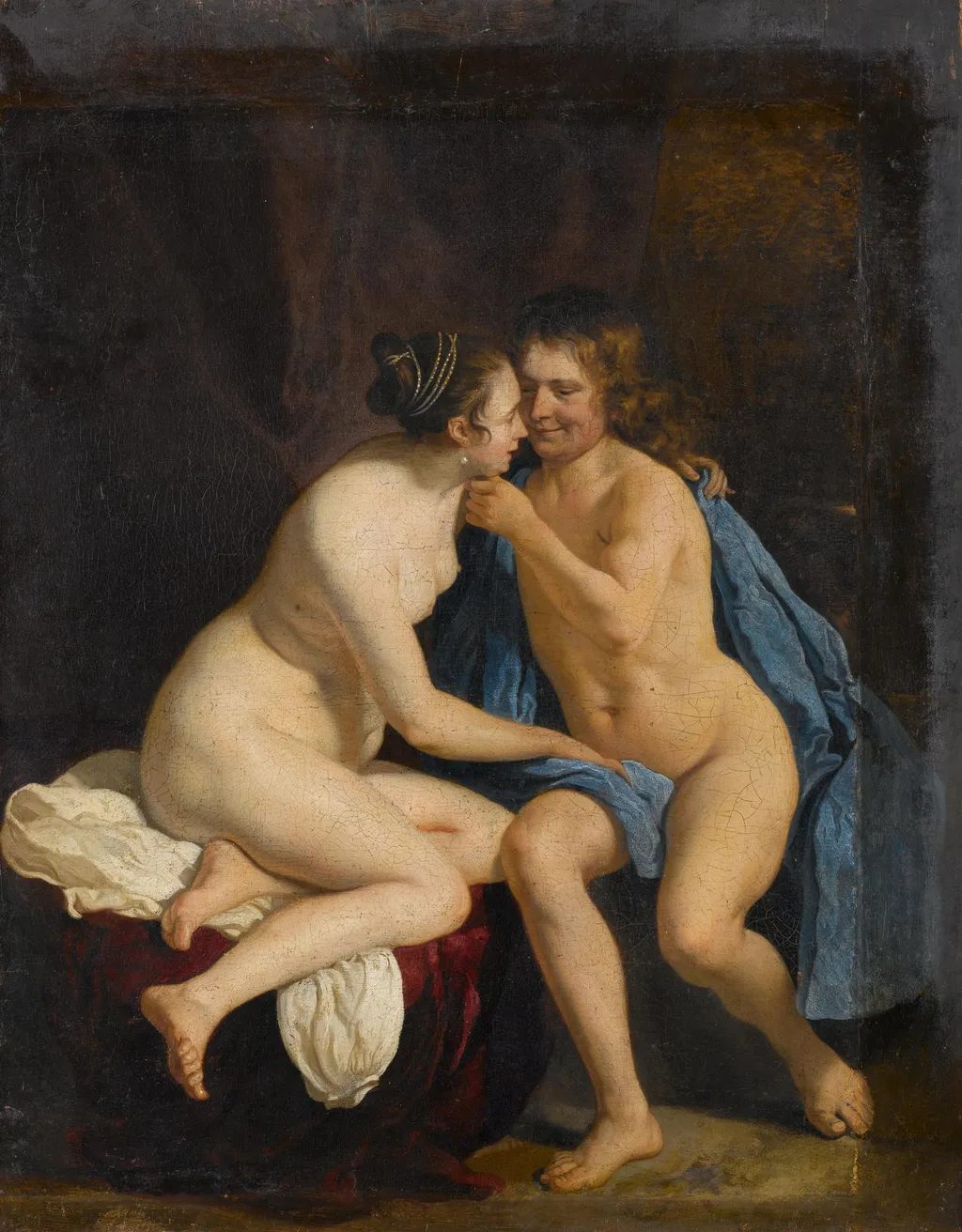
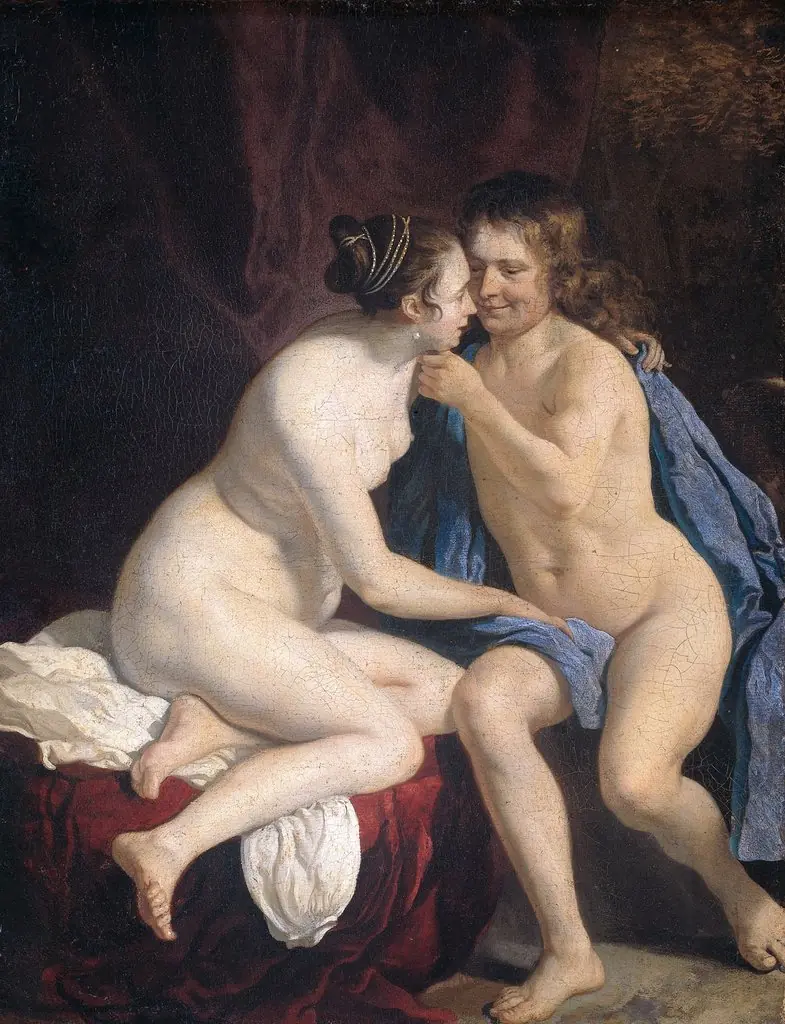
Amorous Couple is an unspecified painting. It dates from 1650 and is held in the collection of the Rijksmuseum.
About this work
Technique & Style
The composition demonstrates his technical focus on fabric rendering and anatomical precision, particularly in the handling of drapery and flesh tones.
The Amorous Couple is an oil painting on canvas, executed in the Baroque style characteristic of Dutch Golden Age art. Jacob van Loo employed a restrained palette of blues, golds, and reds to render satin and silk textures, with figures arranged in intimate, conversational groupings. The composition demonstrates his technical focus on fabric rendering and anatomical precision, particularly in the handling of drapery and flesh tones.
This work exemplifies his influence on Johannes Vermeer, as seen in comparative studies of Vermeer’s Diana and Her Companions with van Loo’s 1648 version of the same subject. The painting’s condition is stable, with no documented restoration issues noted in available records.
History & Provenance
The painting Amorous Couple (Couple d'amoureux) is attributed to the Dutch Golden Age artist Jacob van Loo. Internal records date the work to approximately 1650–1655, while French museum inventories extend the estimated creation period slightly to between 1650 and 1660. The oil on canvas measures 47 by 37.5 centimeters.
It is currently held in the collection of the Rijksmuseum in Amsterdam, where it is cataloged under inventory number A 2116. No specific details regarding the original commission, early ownership history, or provenance chain prior to its museum acquisition are provided in the available sources.
The painting is held by the Rijksmuseum in Amsterdam, where it is recorded under inventory number A 2116. According to the French-language catalogue entry, the work is in oil on canvas, measures 47 × 37.5 cm, and dates to circa 1650–1660. No prior ownership history, acquisition details, or exhibition records are documented in the available sources.
Context
Although the specific artist of Amorous Couple remains unidentified in available records, the work aligns with the Dutch Golden Age tradition of intimate genre scenes and portraiture popularized in the mid-17th century. During this period, artists such as Jacob van Loo were celebrated for their conversational groupings and the depiction of nudes, with his female figures sometimes considered superior to those of his contemporary Rembrandt. Van Loo is credited as a founder of the konversatiestuk, or intimate group scene, which likely informs the thematic context of Amorous Couple.
His influence extended to younger masters like Johannes Vermeer, particularly regarding the composition of mythological and domestic scenes. Van Loo’s career, which bridged Amsterdam and Paris, established the Van Loo dynasty, a family of painters that dominated French art from the 17th into the 19th century, situating works from this era within a broader transnational artistic network.
Legacy
The Amorous Couple exemplifies Jacob van Loo’s intimate genre scenes that bolstered his reputation as a leading Dutch Golden Age painter whose female nudes were considered to rival those of Rembrandt. His conversational groupings and subtle palette influenced later artists, notably Johannes Vermeer, as seen in the comparison between Vermeer’s Diana and Her Companions and van Loo’s Diana and nymphs. The painting’s presence in the Rijksmuseum Amsterdam underscores its enduring legacy within the artist’s oeuvre, which continued through the Van Loo dynasty of French painters into the 18th and 19th centuries.
Overview
‘Amorous Couple’ is a small oil painting depicting a naked man and woman seated together beneath a tree. The figures are intertwined in a gentle embrace, their bodies rendered with a softness that conveys intimacy rather than eroticism. The work’s palette and lighting create a warm atmosphere that sets it apart from the more formal, clothed genre scenes typical of 17th‑century Dutch art.
Subject & Meaning
The composition focuses on a private moment of affection, emphasizing tenderness over overt sensuality. By presenting the couple unclothed in a natural setting, the artist invites contemplation of vulnerability and emotional closeness, suggesting a universal theme of love that transcends social conventions of the period.
Artist & collection