Artwork
Amnon and Tamar
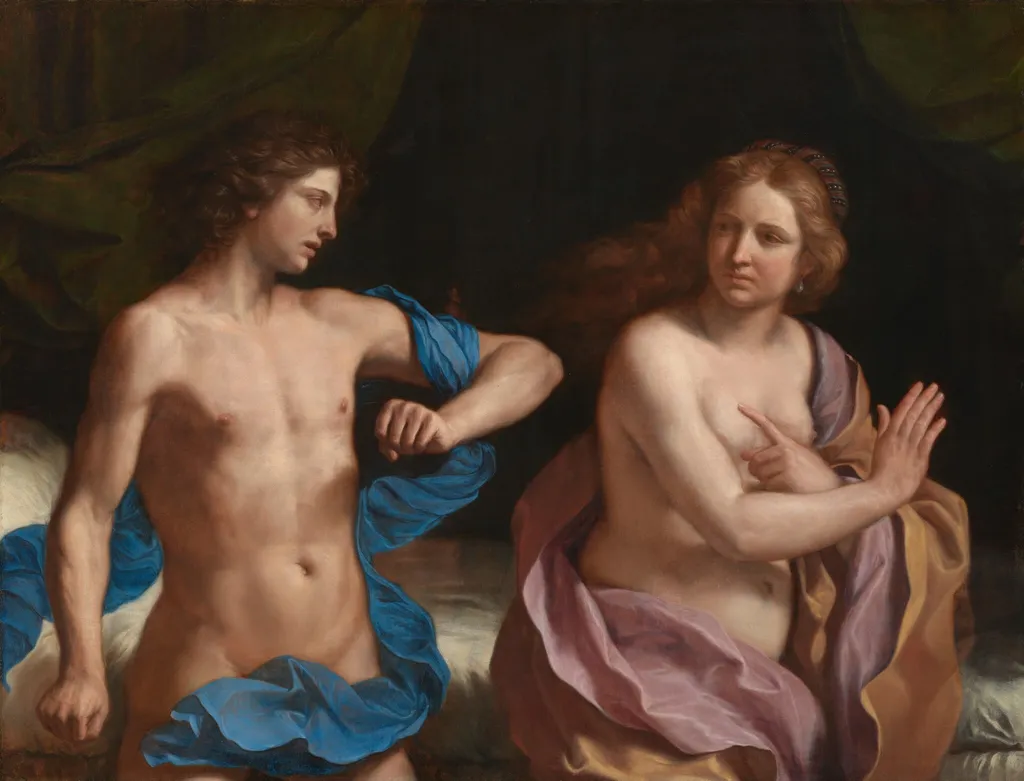
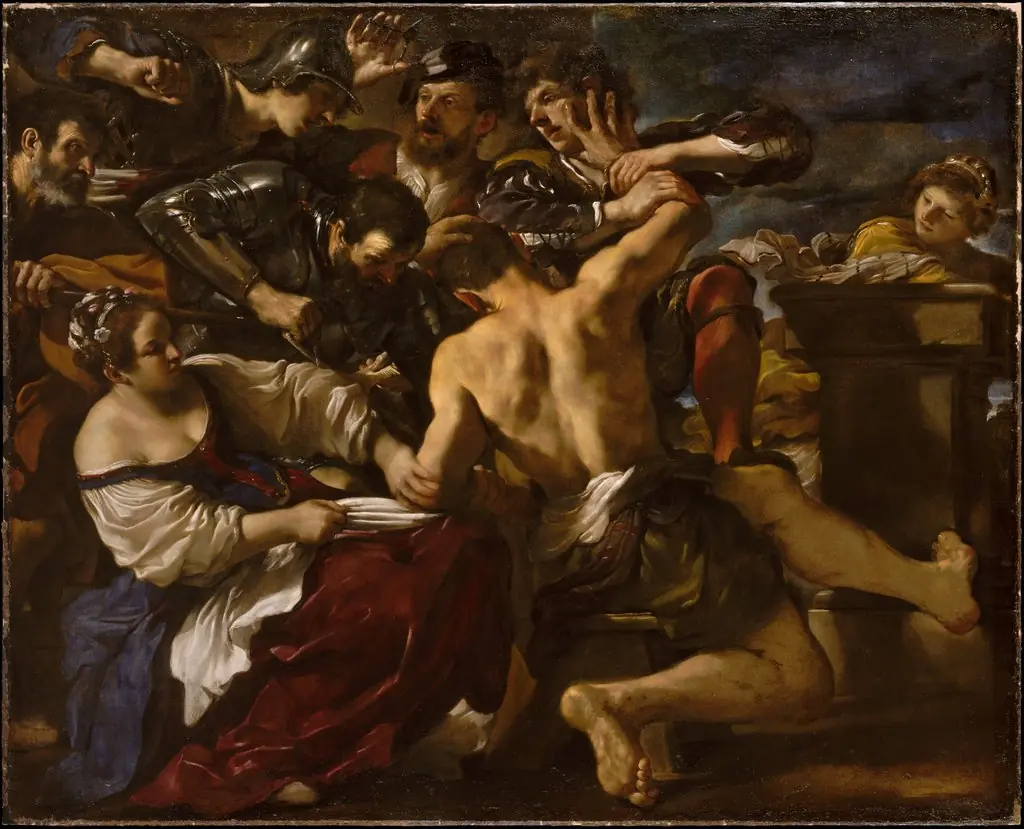
Amnon and Tamar is an oil painting by the Baroque artist Guercino. It dates from 1650 and is held in the collection of the National Gallery of Art.
About this work
Technique & Style
The painting remains in good condition as part of the collection at the National Gallery of Art in Washington, D.
Guercino executed Amnon and Tamar in 1650 using oil paint on canvas. The work measures 123 cm in height and 158.5 cm in width. Commissioned by Aurelio Zaneletti of Reggio, the painting depicts a religious narrative featuring two half-length figures, as noted in the artist's account book entries from 1649 and 1650.
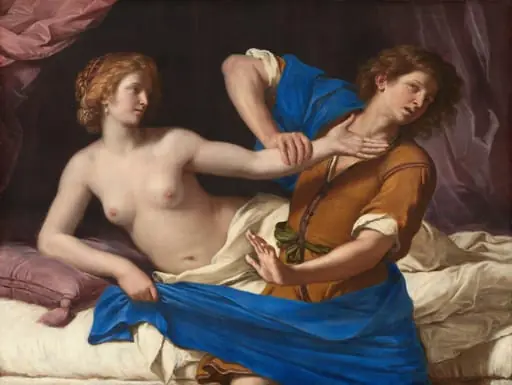
The composition was originally created as part of a pair, with a companion piece depicting the Flight of Joseph. The painting remains in good condition as part of the collection at the National Gallery of Art in Washington, D.C.
History & Provenance
Guercino created Amnon and Tamar in 1650 as an oil on canvas religious painting commissioned by the Reggio Emilia collector Aurelio Zaneletti, a transaction documented in the artist’s account books with down‑payment and final payments recorded between March and August 1649. After Zaneletti’s purchase, the work passed to dealer Samuel Woodburn, who exported it to England, and subsequently entered the collection of Charles Stewart, 3rd Marquess of Londonderry, by 1833. The painting remained in the Stewart‑Vane‑Tempest family until its 1986 acquisition by the National Gallery of Art, where it is catalogued with dimensions 123 cm by 158.5 cm.
The painting Amnon and Tamar by Guercino is held in the collection of the National Gallery of Art in Washington, D.C., where it bears the accession number 1986.17.2. The work entered the museum's holdings in 1986 after a provenance that began with a commission by Aurelio Zaneletti of Reggio in 1649. Subsequent owners included dealer Samuel Woodburn (active 1820–1823) and the Marquess of Londonderry family, specifically Charles Stewart and his descendant Alexander Charles Robert Vane-Tempest-Stewart, who held the piece at Wynyard Park prior to its purchase by the gallery. The provided sources do not contain information regarding specific past exhibitions of this work.
Context
The painting Amnon and Tamar, executed by Guercino in 1650, is a 17th‑century religious painting that documents the artist’s practice of creating biblical narratives for private patrons. Entries in Guercino’s account books record a commission by the Reggio Emilia collector Zaneletti in 1649 and subsequent payments, establishing its early provenance. After passing through the dealer Samuel Woodburn and the 3rd Marquess of Londonderry, the work entered the National Gallery of Art in 1986, where it is listed as part of the museum’s collection of Guercino’s religious subjects. Scholarship emphasizes the significance of these payment records for understanding the market for Baroque art.
Overview
Guercino's Amnon and Tamar, painted in 1650, is an oil on canvas that illustrates a dramatic biblical episode. This work exemplifies the artist's mature classical style, which emerged after his earlier vigorous naturalism. It showcases the refined technique and compositional clarity characteristic of his later period, reflecting his developed artistic approach.
Subject & Meaning
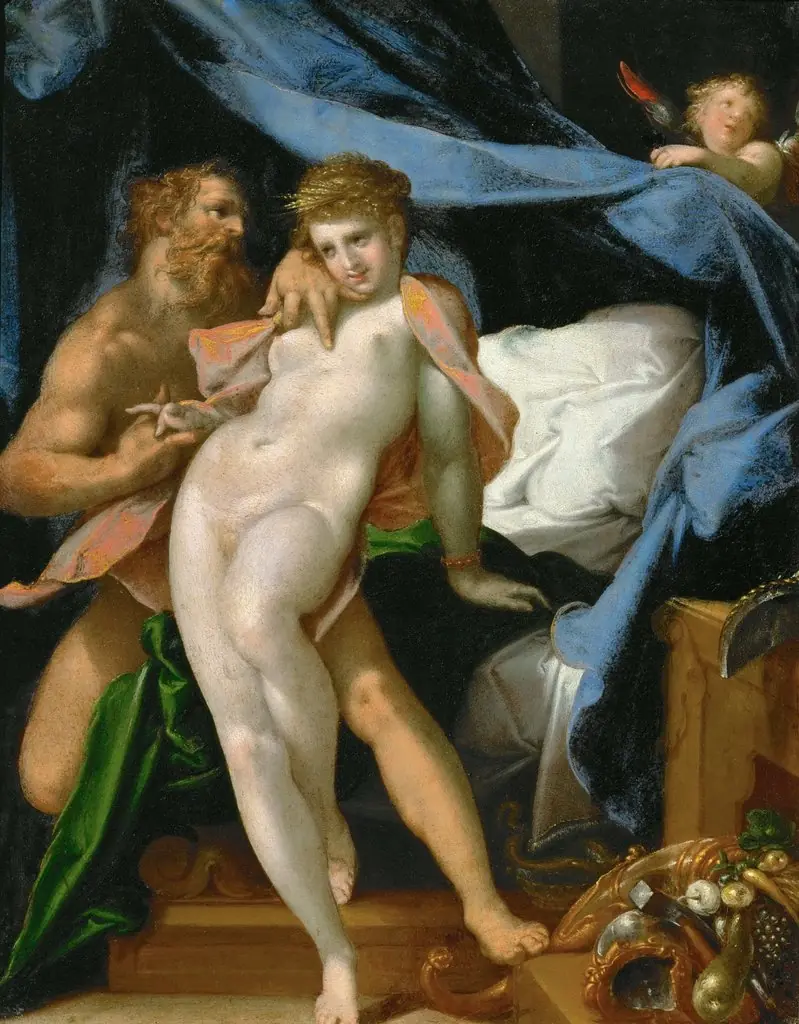
The painting depicts a pivotal moment from the biblical account of Amnon and Tamar. Amnon, in a red robe, forcefully restrains Tamar, who recoils from his grasp. A third figure observes from behind a curtain, adding to the scene's tension.
The dimly lit interior, illuminated by a single candle, intensifies the dramatic confrontation, capturing the emotional distress of the narrative.
Own this work as a print
Artist & collection
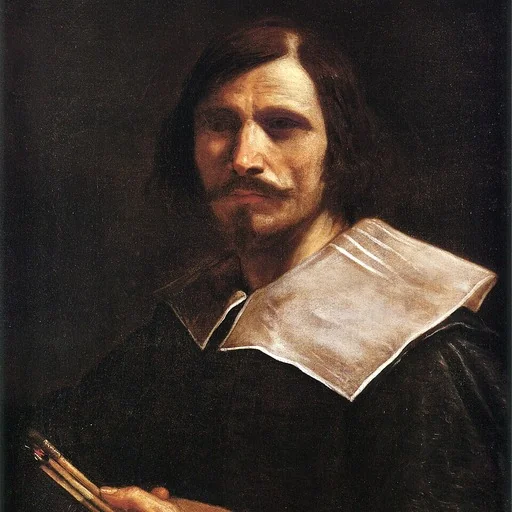
Artist
Giovanni Francesco Barbieri (8 February 1591 – 22 December 1666), better known as (il) Guercino (Italian pronunciation: ), was an Italian Baroque painter and draftsman from Cento in the Emilia region, who was active in Rome and Bologna.