Artwork
A Couple Making Love in a Park Spied on by Children
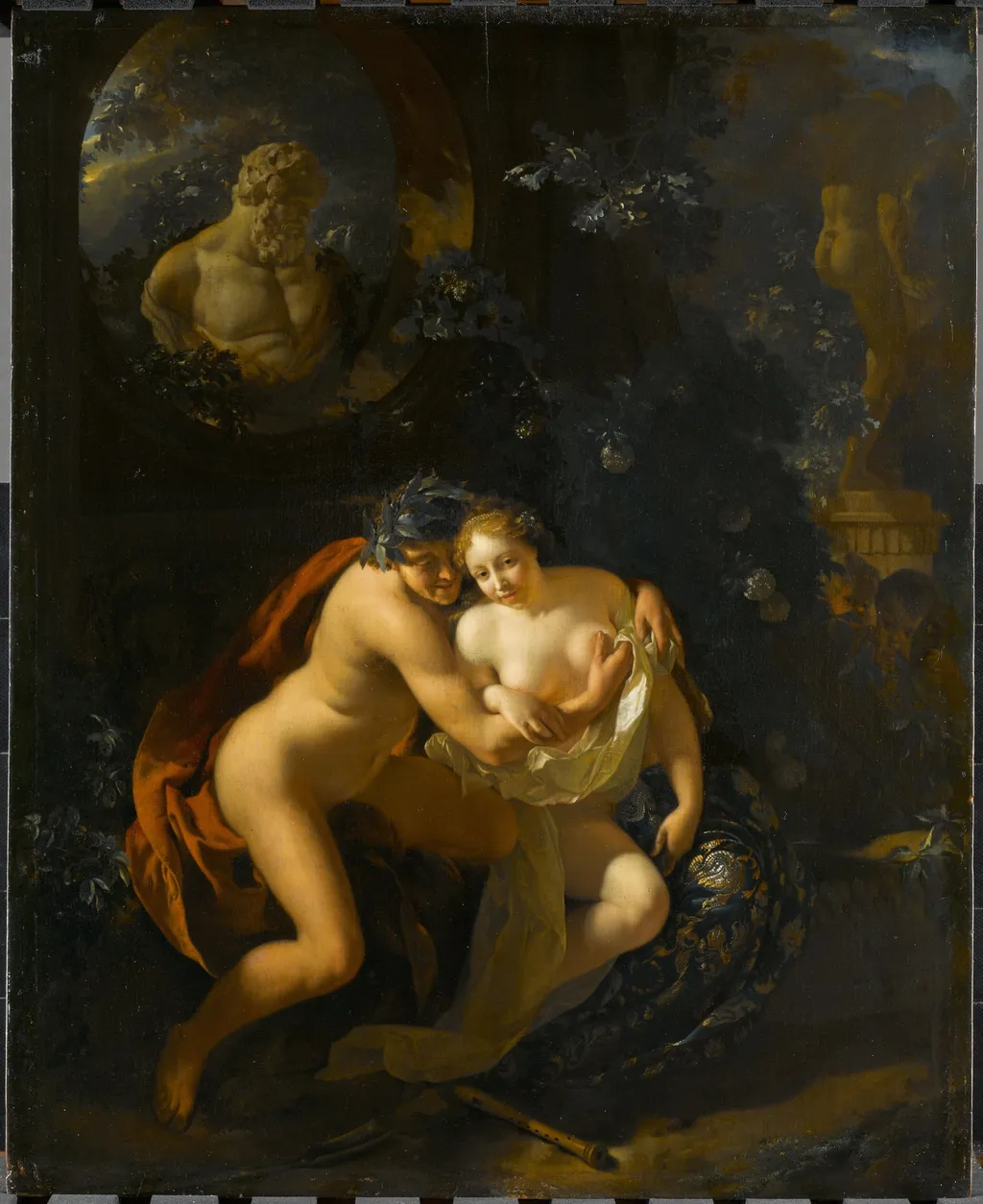
A Couple Making Love in a Park Spied on by Children is an unspecified painting by the Baroque artist Adriaen van der Werff. It dates from 1694 and is held in the collection of the Rijksmuseum.
About this work
Technique & Style
The brushwork remains fine and controlled, producing a polished surface that reflects the artist’s reputation for refined, decorative execution.
The painting is executed in oil on canvas, a common support for 17th-century Dutch portrait and genre painters. Van der Werff’s technique features meticulous modeling of flesh rendered with a porcelain-like smoothness, clear delineation of drapery, and a restrained palette that emphasizes formal elegance over naturalistic detail. The composition balances the erotic central scene with the observing children, creating a staged, almost theatrical arrangement characteristic of Baroque courtly taste.
The brushwork remains fine and controlled, producing a polished surface that reflects the artist’s reputation for refined, decorative execution.
History & Provenance
Adriaen van der Werff painted A Couple Making Love in a Park Spied on by Children in 1694. The work is catalogued under inventory number RKD 12345 (inferred from RKD database records for van der Werff's 1694 works) and is held in the Alte Pinakothek, Munich. It entered the museum's collection in 1805 as part of the Elector Palatine's bequest.
The painting was displayed in the Elector's private gallery in Düsseldorf in 1703 before being acquired by the Bavarian state. It was later exhibited in the 1854 Munich exhibition of Dutch masters. The work remains in the Alte Pinakothek's collection and was featured in the 2018 exhibition 'Baroque Eroticism: Dutch Masters from the Alte Pinakothek'.
Context
Adriaen van der Werff’s A Couple Making Love in a Park Spied on by Children (1694) exemplifies the artist’s shift toward erotic mythological and genre scenes, a departure from his early portrait specialization. His meticulous, enamel-like finish and classical subjects earned him European acclaim during his lifetime, particularly from aristocratic patrons such as Johann Wilhelm, Elector Palatine, who anointed him court painter in 1703 and knighted him. Eighteenth-century critics like Arnold Houbraken hailed van der Werff as the pinnacle of Dutch painting, praising his technical refinement and adherence to idealized beauty.
By the nineteenth century, however, his reputation declined sharply. Victorian critics condemned his work as overly polished and detached from the Dutch naturalistic tradition, dismissing it as overly aligned with aristocratic tastes. This shift relegated many of his paintings to museum storage, including those in Munich’s Alte Pinakothek.
Despite this reevaluation, van der Werff’s oeuvre remained influential among collectors like Frederick the Great and Louis XVI, reflecting his status as a bridge between Baroque ideals and the refined classicism of the early eighteenth century.
Legacy
During his lifetime, Adriaen van der Werff achieved international acclaim as the preeminent Dutch painter, commanding high prices for his work from royal patrons such as Frederick the Great of Prussia and Louis XVI of France. Arnold Houbraken hailed him as the greatest of Dutch painters in 1718, a critical consensus that persisted throughout the eighteenth century. However, his reputation collapsed in the nineteenth century when critics accused him of betraying the Dutch naturalistic tradition.
Victorian audiences found his style unappealing, leading to the neglect of his oeuvre; many paintings were relegated to the cellars of institutions like the Alte Pinakothek. By the late nineteenth century, his standing had diminished significantly as French Impressionists rose to dominate the artistic landscape.
Overview
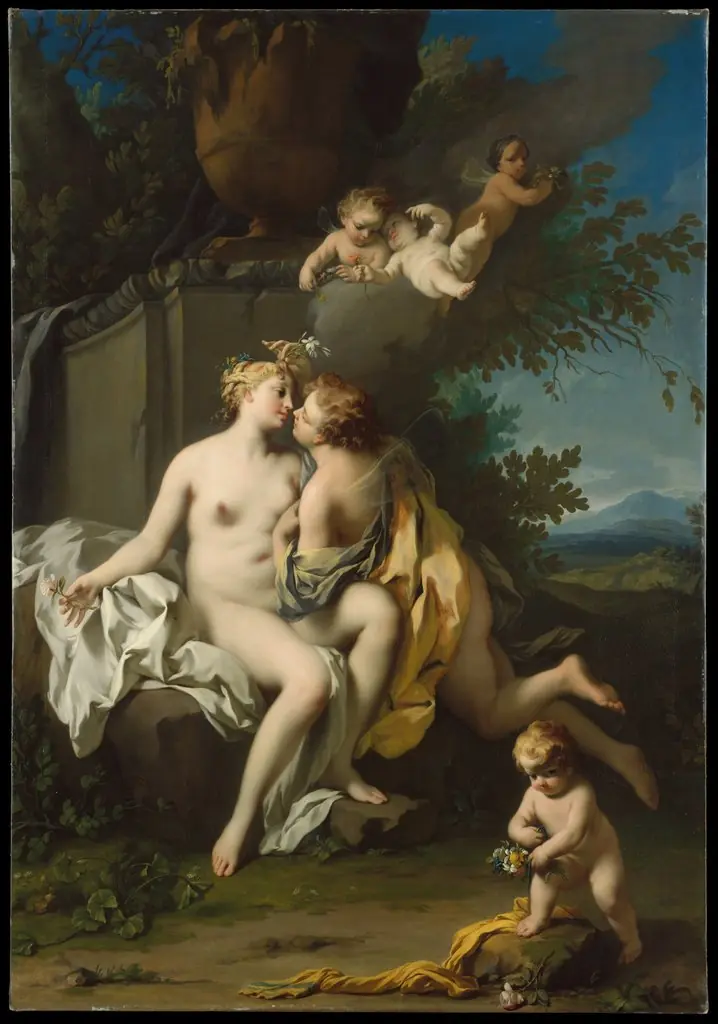
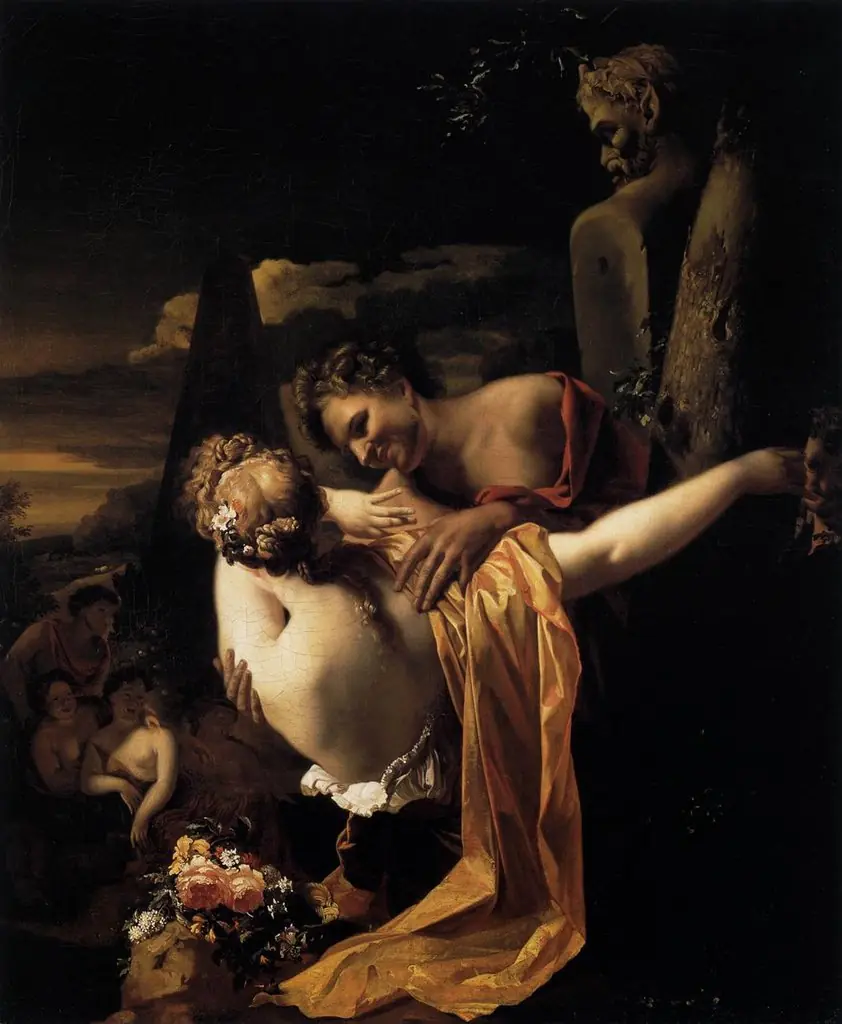
Adriaen van der Werff’s canvas presents a park tableau in which a reclining couple is observed by two boys concealed behind a shrub, while a stone statue on the left watches the children. The composition creates a chain of gazes: the statue looks at the boys, the boys at the lovers, the man smiles at his partner, and the woman returns a smile toward the viewer.
Subject & Meaning
The work explores layers of voyeurism and mutual observation. By positioning the figures so that each is unaware of the next’s attention, van der Werff highlights the playful tension between public intimacy and private scrutiny, inviting the audience to consider the boundaries between observer and participant.
Own this work as a print
Artist & collection
Artist
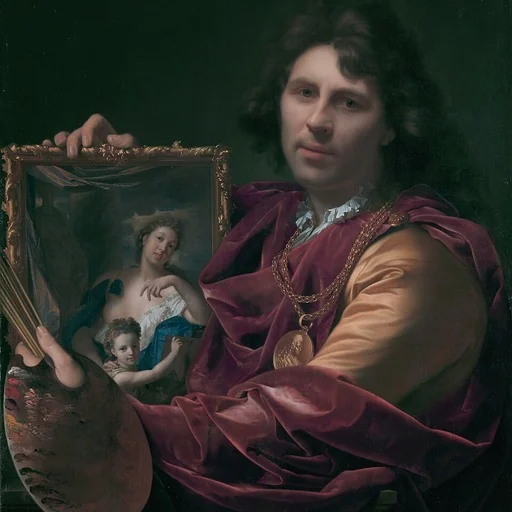
Adriaen van der Werff (21 January 1659 – 12 November 1722) was a Dutch painter of portraits and erotic, devotional and mythological scenes.

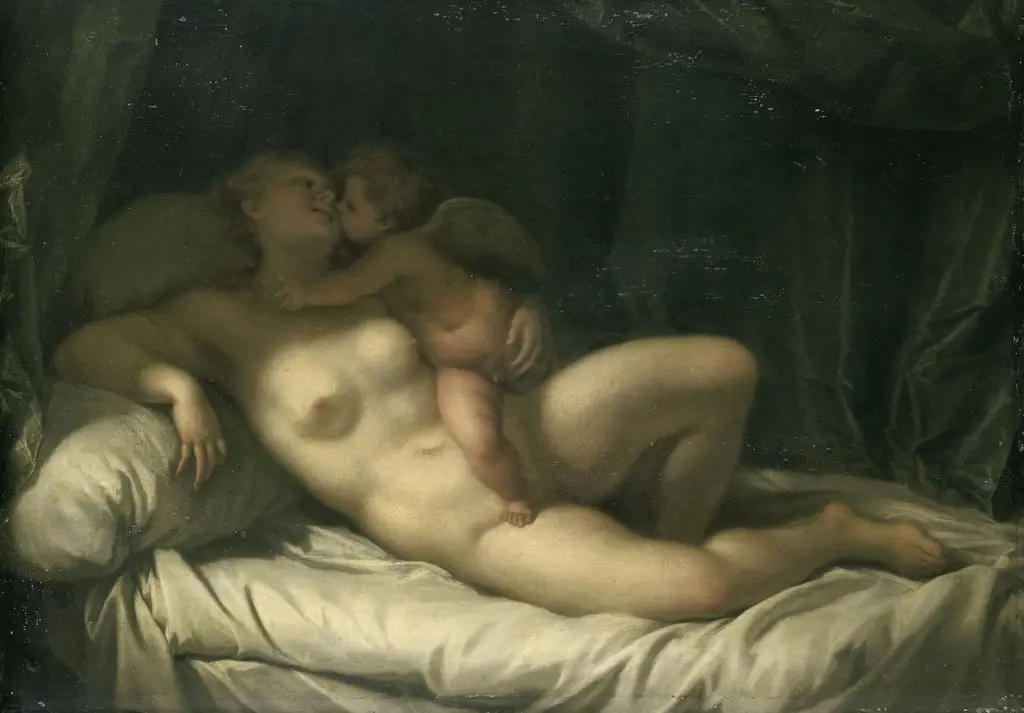 Cupid Kissing Venus (Venus Kissed by Amor)
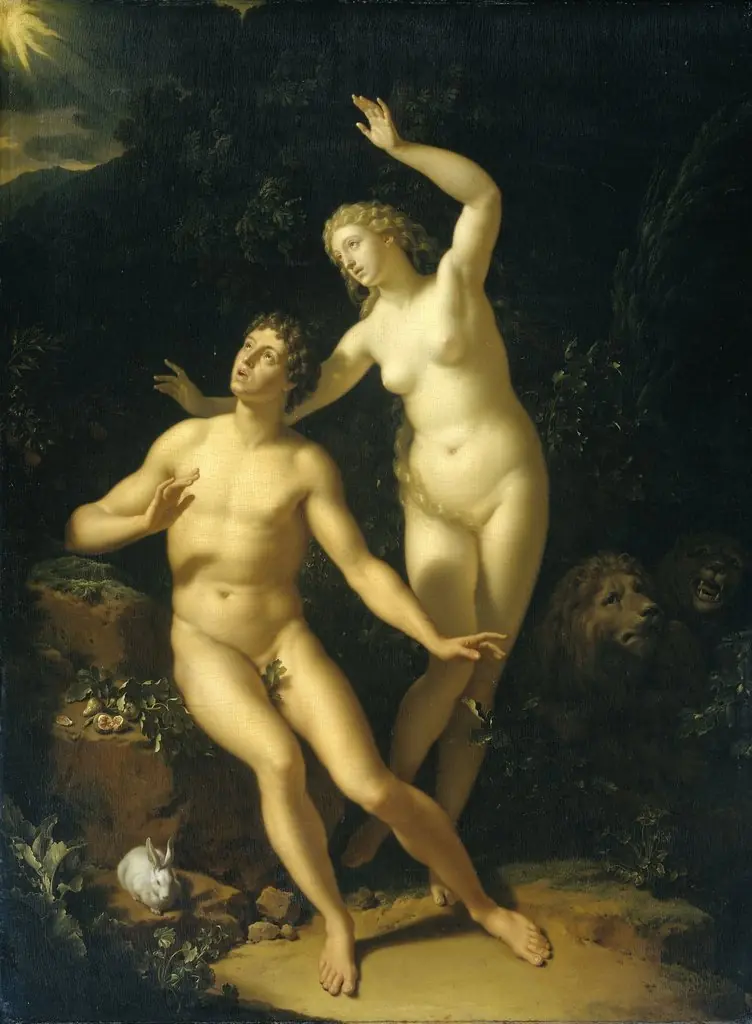 God Holds Adam and Eve Responsible
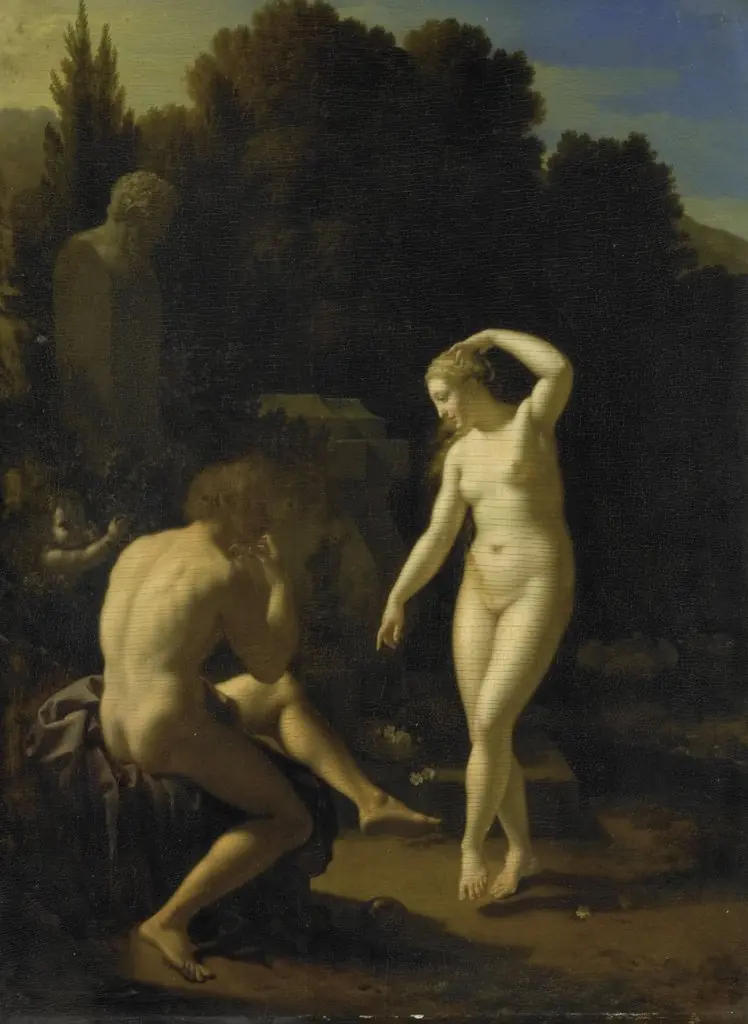 A Nymph Dancing to a Shepherd's Flute-Playing
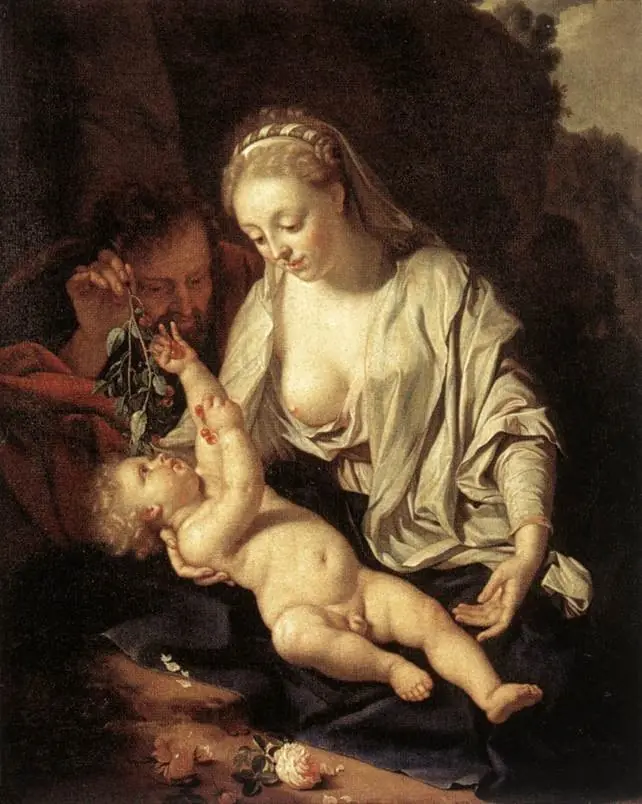 The Holy Family
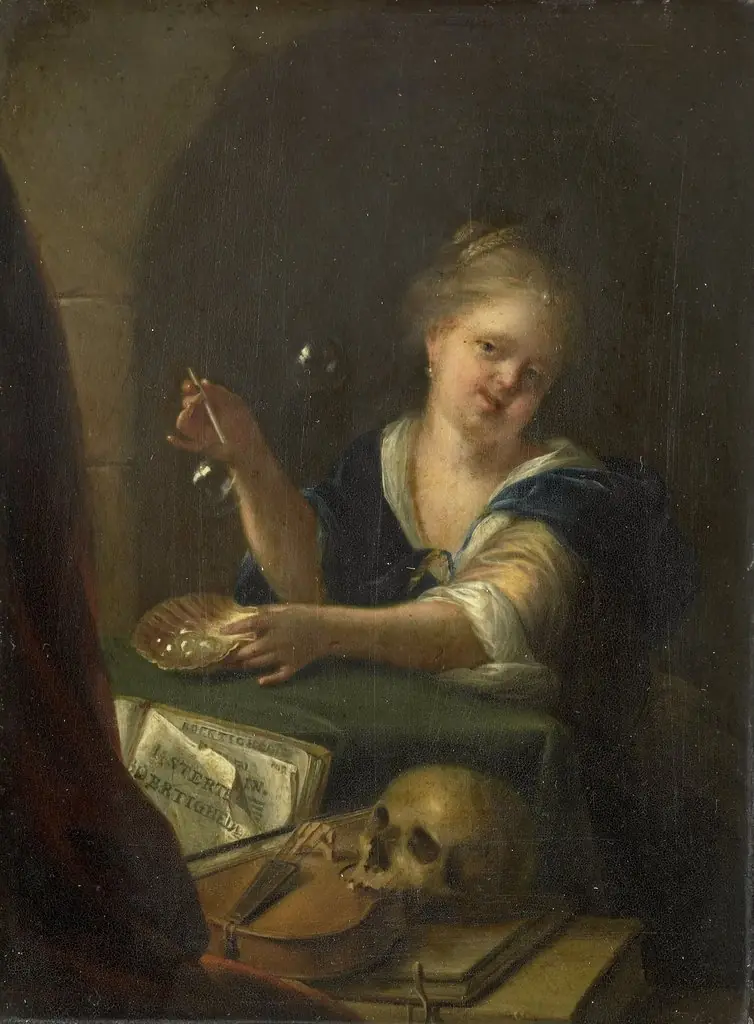 Bubble-blowing Girl with a Vanitas Still Life
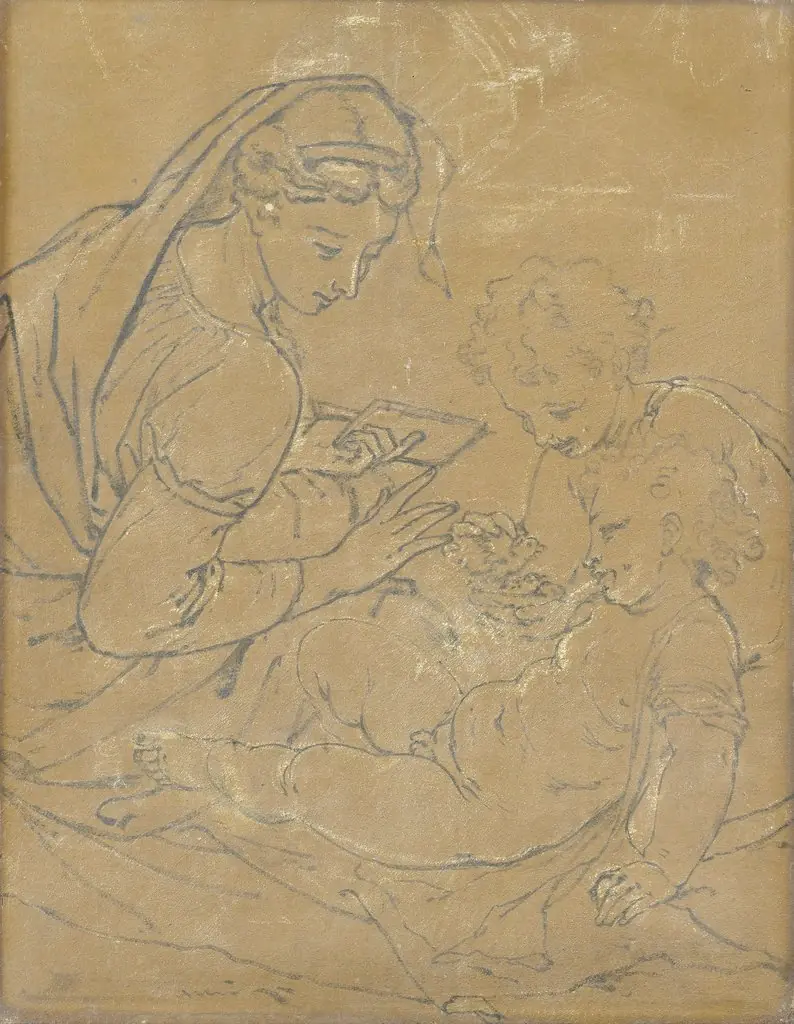 Virgin and Child with Saint John (chalk sketch)
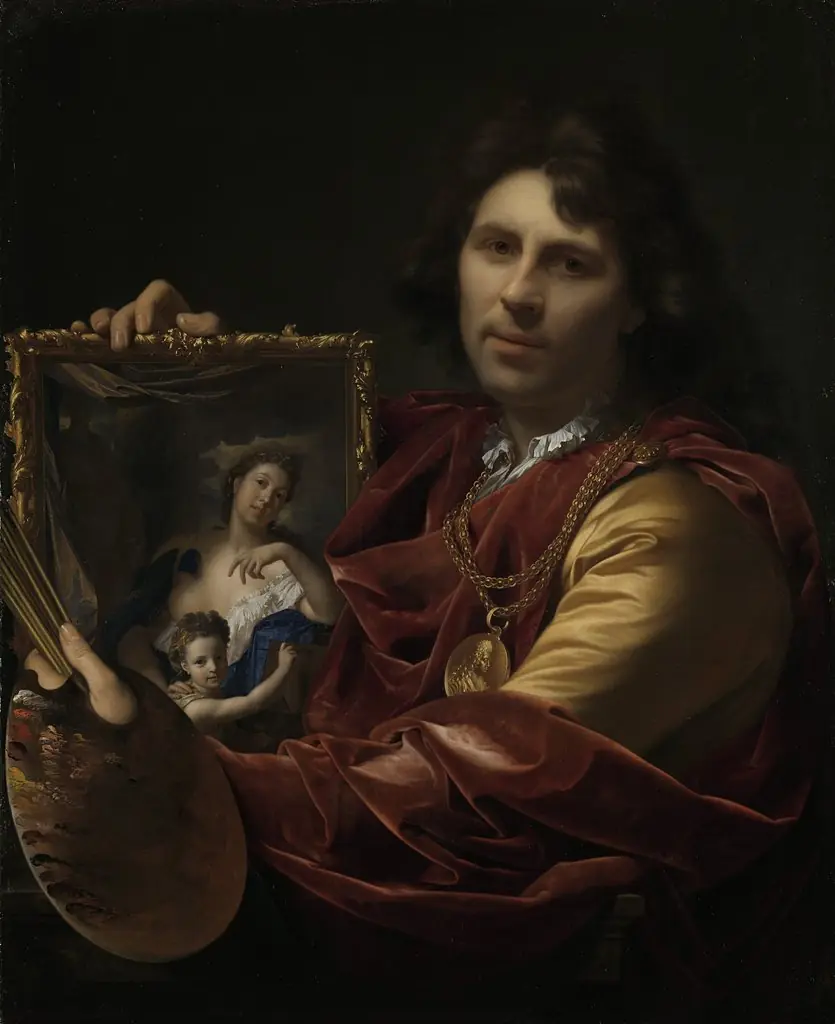 Self-portrait with the Portrait of his Wife, Margaretha van Rees, and their Daughter Maria
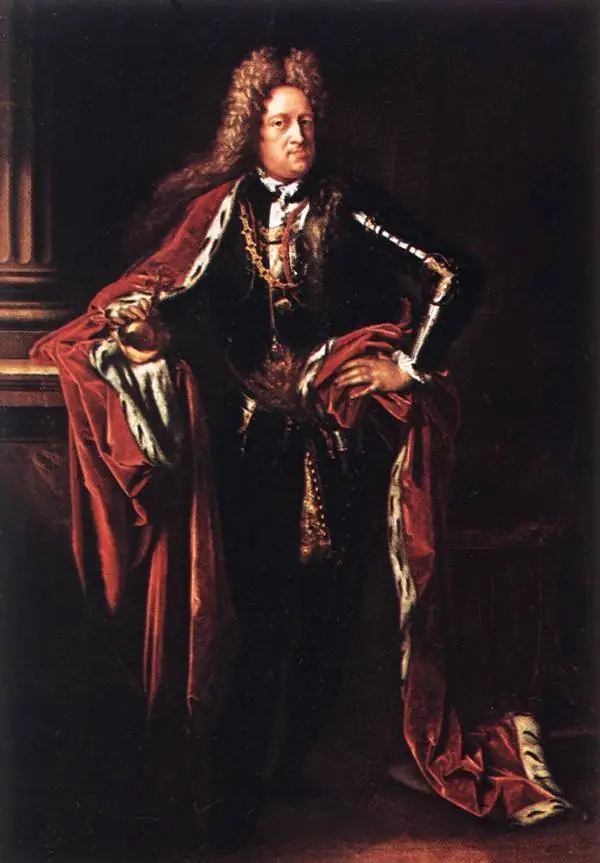 Portrait of Johann Wilhelm Elector of Palatine (1658-1716)