Artwork
Aquarell Sudhaus Brauerei Ziegelhof
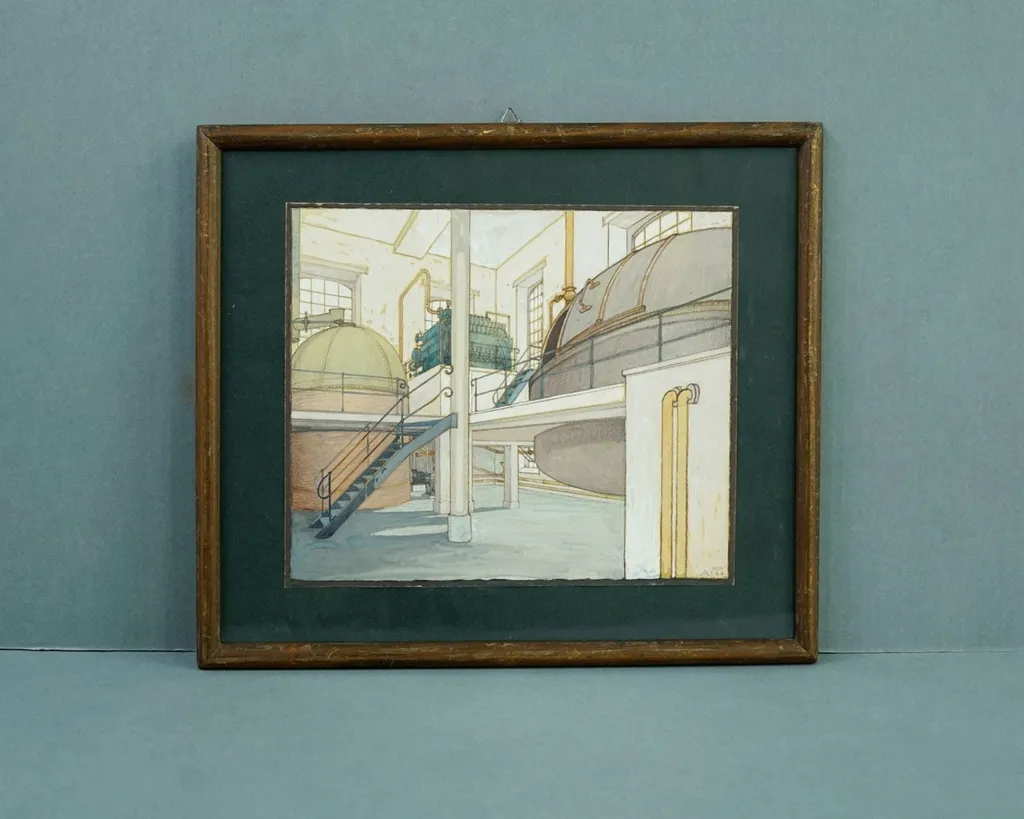
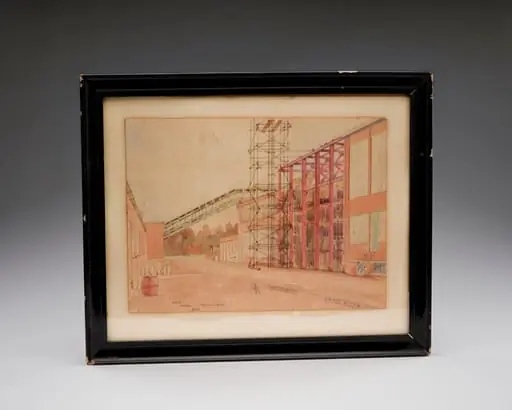
Aquarell Sudhaus Brauerei Ziegelhof is an unspecified painting by Unknown. It dates from 1950 and is held in the collection of the Archaeology and Museum Baselland. This watercolor depicts an abandoned industrial interior, likely a brewery, rendered with restrained tones and precise geometry.
About this work
Overview
The quiet atmosphere arises from the absence of detail and the dominance of clean, unadorned forms, suggesting a moment suspended between use and obsolescence.
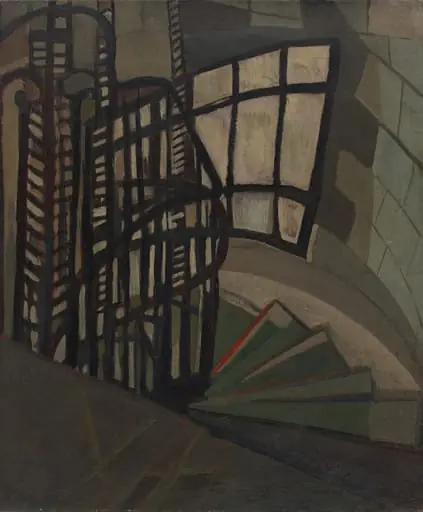
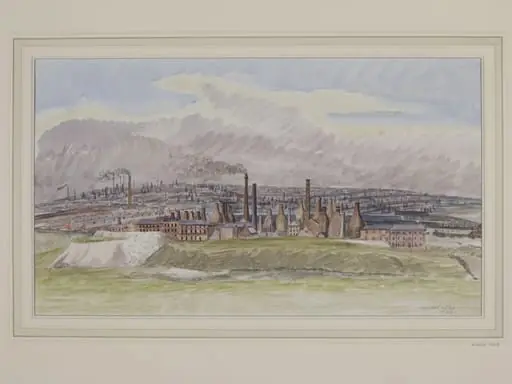
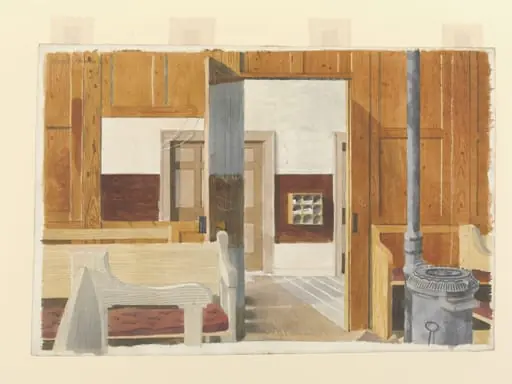
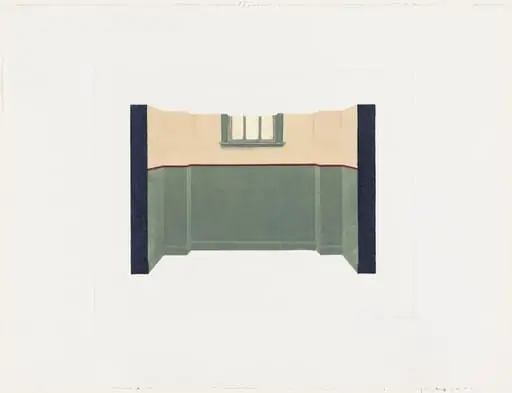
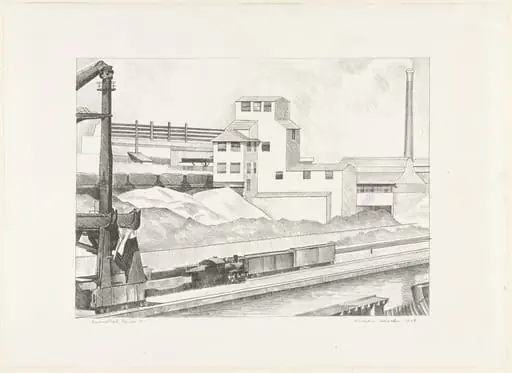
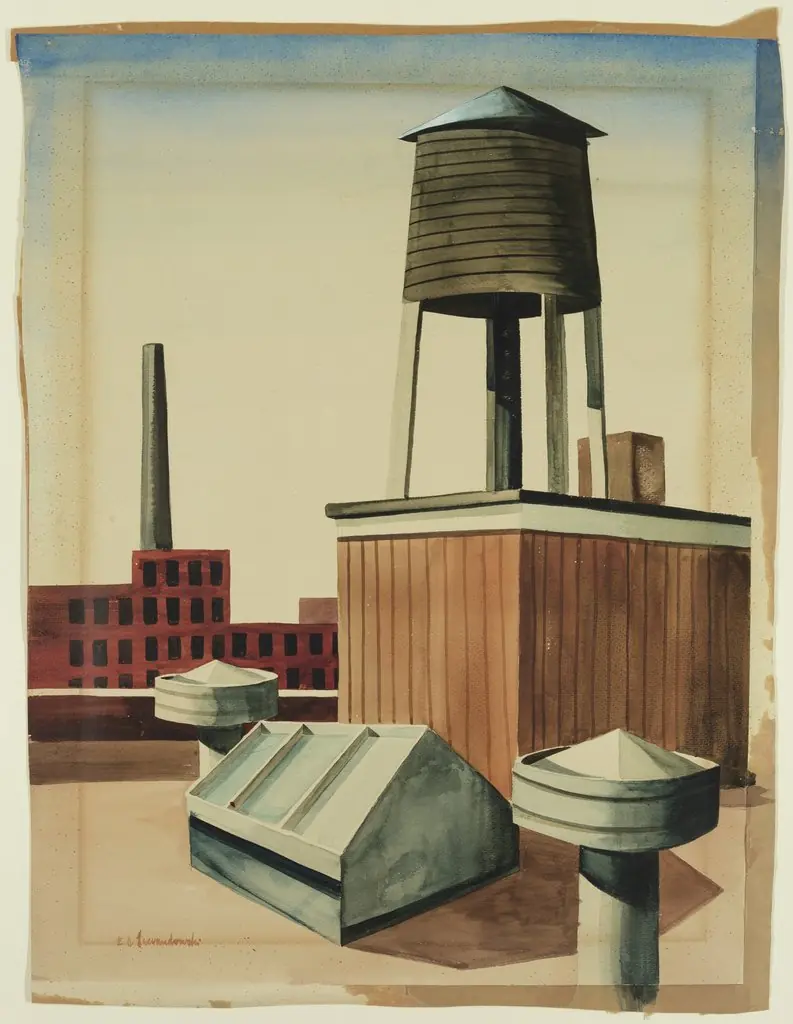
This watercolor depicts an abandoned industrial interior, likely a brewery, rendered with restrained tones and precise geometry. The composition emphasizes architectural elements, high ceilings, polished floors, metal railings, and towering equipment, without human presence. The quiet atmosphere arises from the absence of detail and the dominance of clean, unadorned forms, suggesting a moment suspended between use and obsolescence.
Subject & Meaning
The scene captures the skeletal remains of industrial labor: tanks, pipes, and staircases stand empty, their function implied but inactive. The stillness evokes a sense of transition, perhaps the end of production or the pause before repurposing. The lack of figures or signs of activity invites contemplation of the spaces once animated by work, now reduced to structure and silence.
Technique & Style
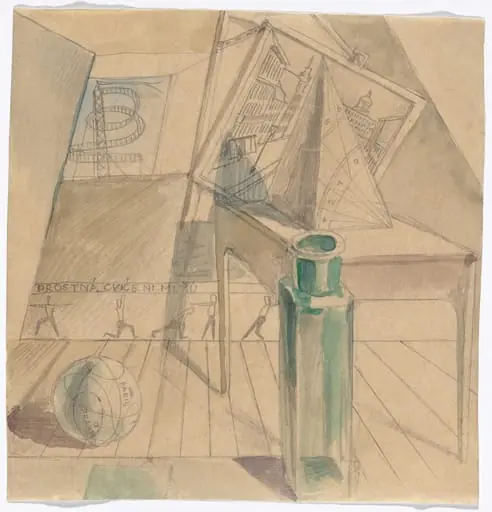
Executed in watercolor, the work employs thin washes and minimal layering to achieve a luminous, flat surface. Lines are deliberate and unembellished, with no texture or brushwork to distract from form. Colors are subdued, grays, off-whites, and pale blues, reinforcing the austerity of the setting. The effect is more diagrammatic than descriptive, aligning with a modernist preference for clarity over ornament.
History & Provenance
The painting originates from the Ziegelhof brewery, a site in Germany known for its 19th-century industrial architecture. Though the artist’s identity is not documented, the work likely dates to the early 20th century, a period when industrial spaces began to be recorded as cultural artifacts rather than mere functional sites. Its survival suggests it was preserved as a record of a changing urban landscape.
Context
During the early 1900s, European artists and ethnographers increasingly turned to industrial sites as subjects of study, viewing them as expressions of modernity. This image aligns with a broader trend of documenting factories and workshops, not for their productivity, but for their spatial logic and material presence. Such works contributed to emerging fields like industrial archaeology and urban anthropology.
Legacy
The painting remains a quiet testament to the aesthetic potential of industrial decay. Its emphasis on form over narrative influenced later generations interested in the poetry of empty spaces. Though not widely exhibited, it holds value as a visual document of a transitional era, offering insight into how architecture outlives its original purpose and acquires new meaning through absence.