Artwork
Armorial Roundel
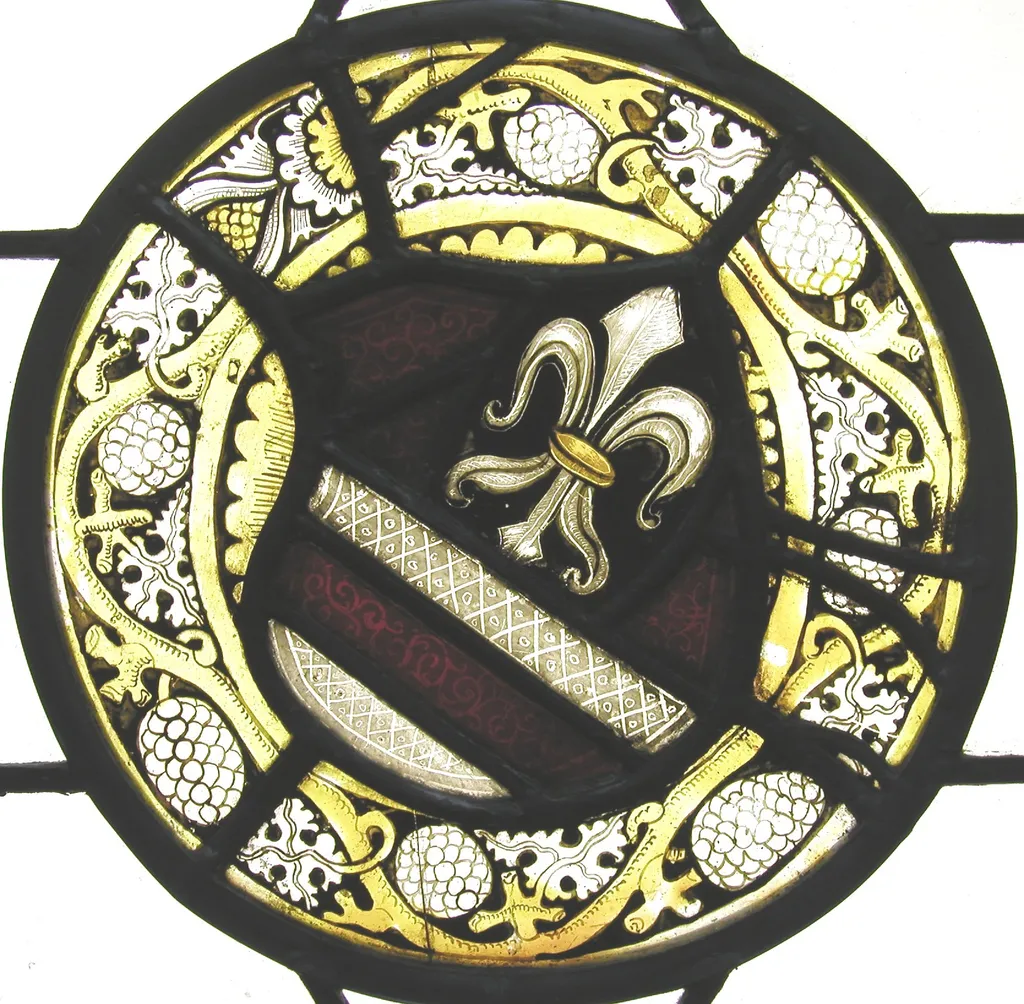
Armorial Roundel is an unspecified painting. It dates from 1500 and is held in the collection of the Metropolitan Museum of Art. The work is a roundel painted as a shield, dominated by a gold-and‑white decorative scheme.
About this work
Technique & Style
The wooden support has been prepared with a ground layer to accommodate fine brushwork, particularly evident in the rendering of heraldic motifs.
The Armorial Roundel is an oil painting on wood panel created circa 1500. It depicts a heraldic coat of arms at its center and was originally part of a decorative roundel likely intended for display in a domestic or ceremonial context. The work is attributed to an anonymous artist and is housed in the collection of the Metropolitan Museum of Art in New York.
Its formal qualities reflect the stylistic conventions of early 16th-century European painting, with careful attention to surface detail and compositional balance.
The painting’s technique involves layered application of oil pigments, producing a luminous finish typical of the period. The wooden support has been prepared with a ground layer to accommodate fine brushwork, particularly evident in the rendering of heraldic motifs. The handling of color and line demonstrates a refined approach to composition, aligning with broader Renaissance practices of symbolic representation through visual form.
Condition assessment indicates stable structural integrity, with minimal craquelure and no significant pigment loss. The surface remains well-preserved, suggesting careful handling and conservation over time. The stylistic analysis highlights the use of symmetry and geometric precision, reinforcing its function as both an artistic and symbolic object within its original cultural milieu.
Context
The armorial roundel reflects early sixteenth-century heraldic practice through its incorporation of a painted coat of arms, situating it within the decorative traditions of the period. Its attribution to an anonymous workshop underscores the collaborative nature of artistic production in the late medieval and early Renaissance eras. The work's presence in a major museum collection highlights its recognized significance within the broader narrative of European art.
Legacy
The armorial roundel entered modern scholarship through its inclusion in the Metropolitan Museum of Art collection, where it has been studied as a representative example of early 16th-century emblematic painting. Its iconography of heraldic display has informed subsequent interpretations of Renaissance visual culture, particularly in studies of identity and status that reference the work’s stylistic synthesis of devotional and secular motifs. The piece is frequently cited in art historical literature on emblem books, underscoring its enduring relevance to the field’s methodological approaches.
Overview
The work is a roundel painted as a shield, dominated by a gold-and‑white decorative scheme. A prominent, stylised “F” occupies the centre, surrounded by floral motifs, foliage and diminutive animal figures placed in the corners. The field is dark, pierced by a red stripe, while the rim is edged with additional gilded ornamentation.
Subject & Meaning
The central “F” functions as a heraldic charge, representing a family’s coat of arms and serving as a visual identifier of lineage or authority. Such emblems were employed in the medieval and early modern periods as portable symbols of status, akin to a personal insignia displayed on banners, seals or armor.
Artist & collection

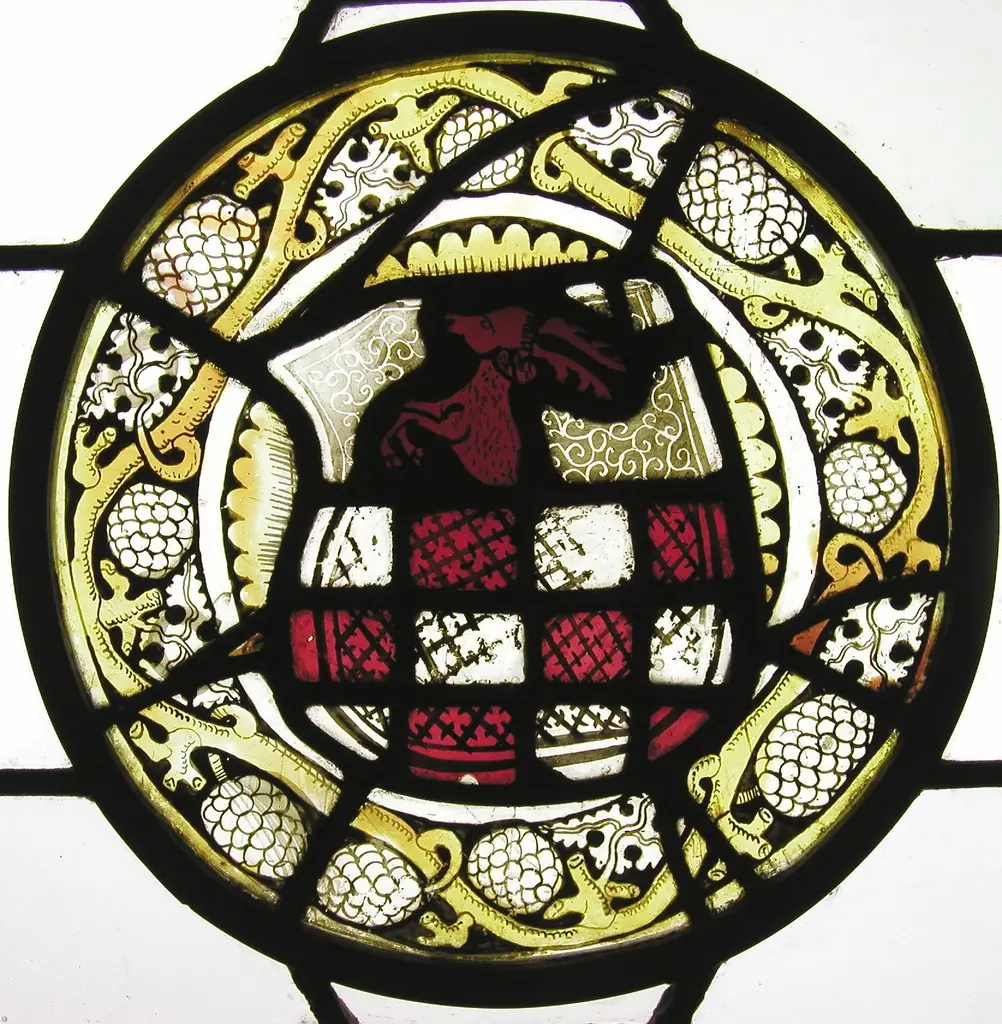
- Armorial Roundel
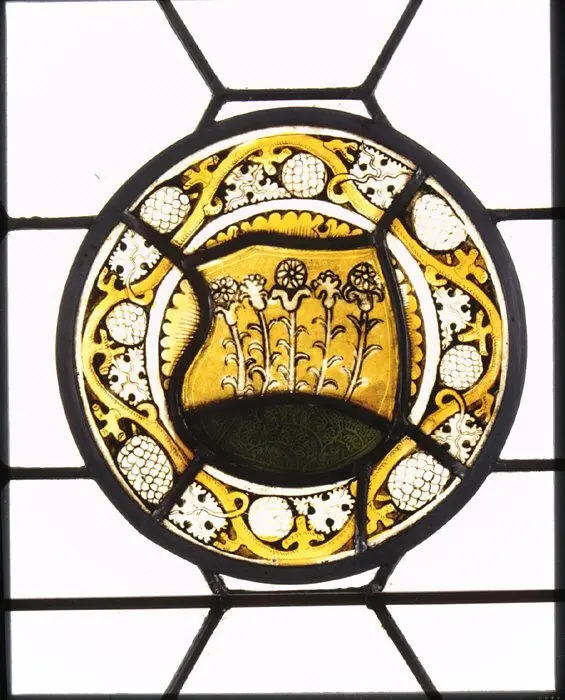 Armorial Roundel
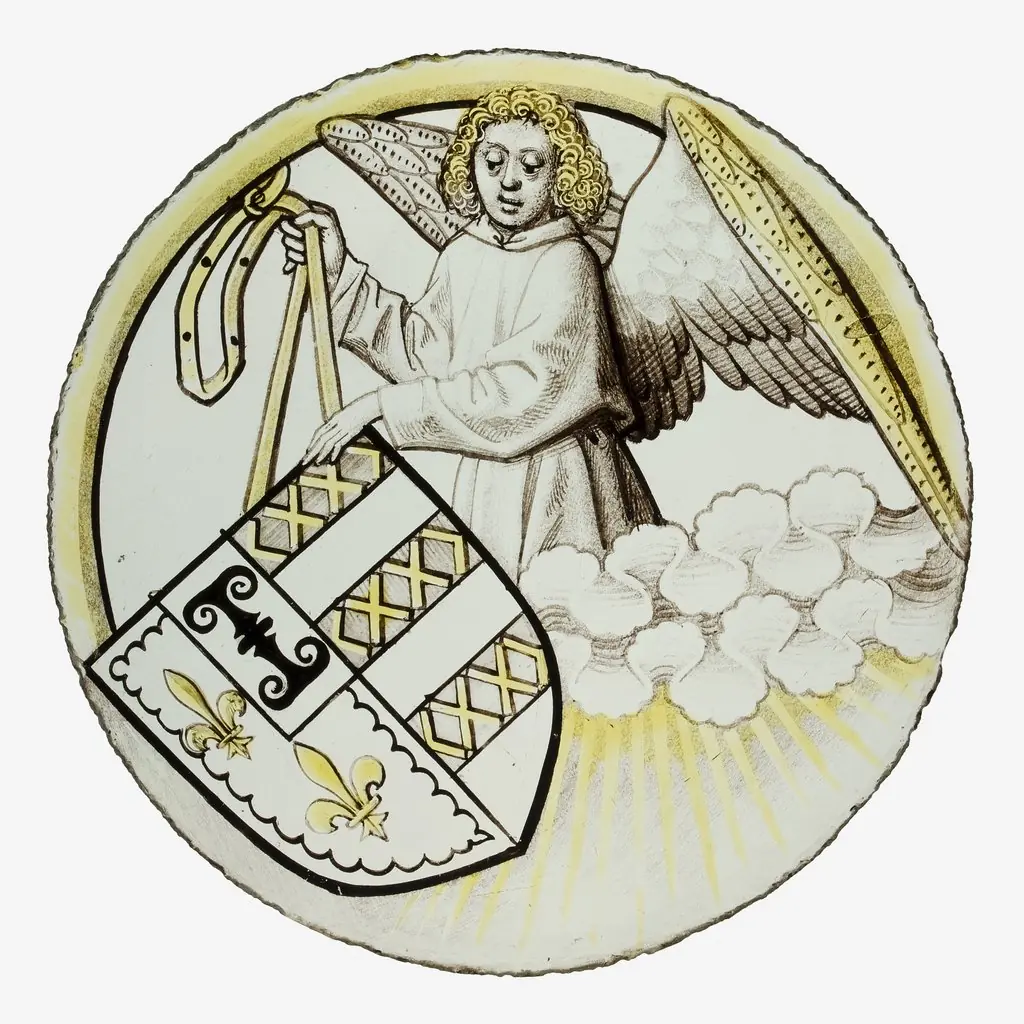 Roundel with Angel Supporting a Heraldic Shield
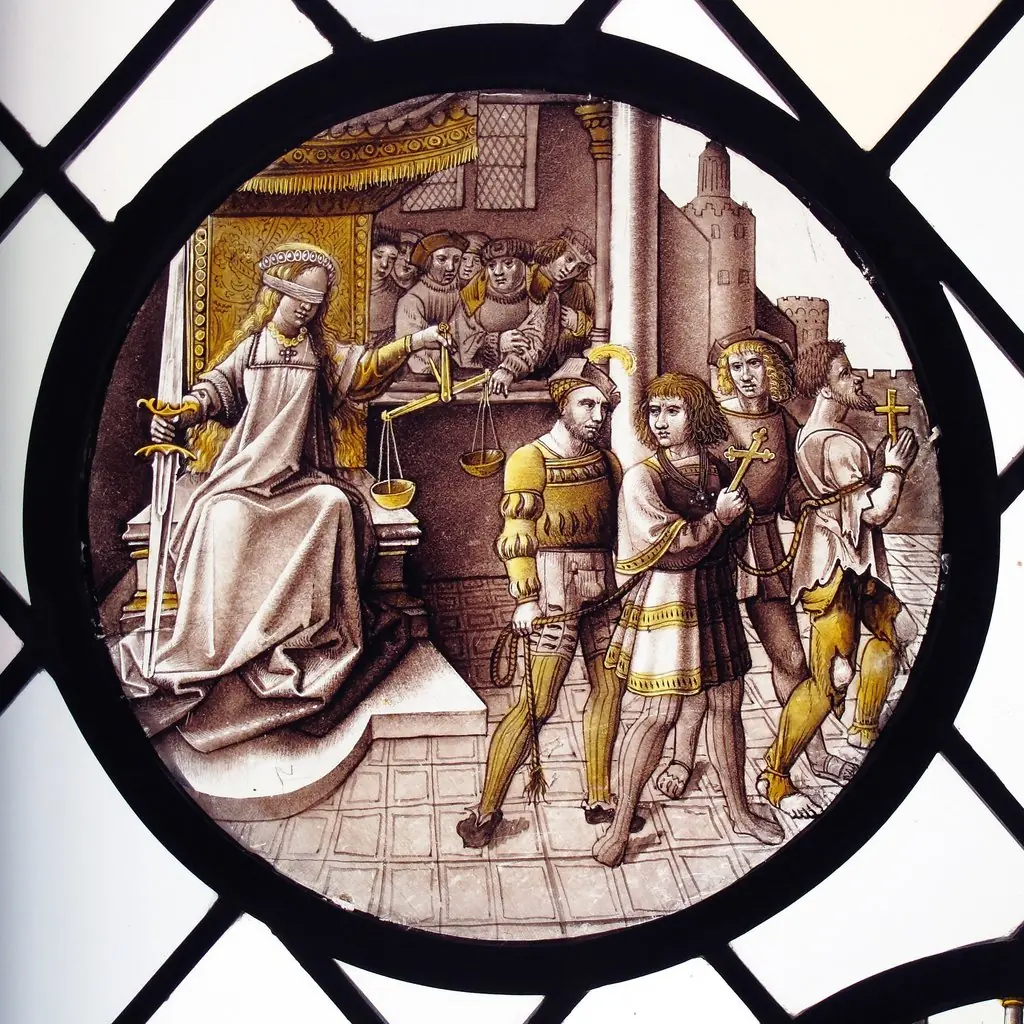 Roundel with Justice
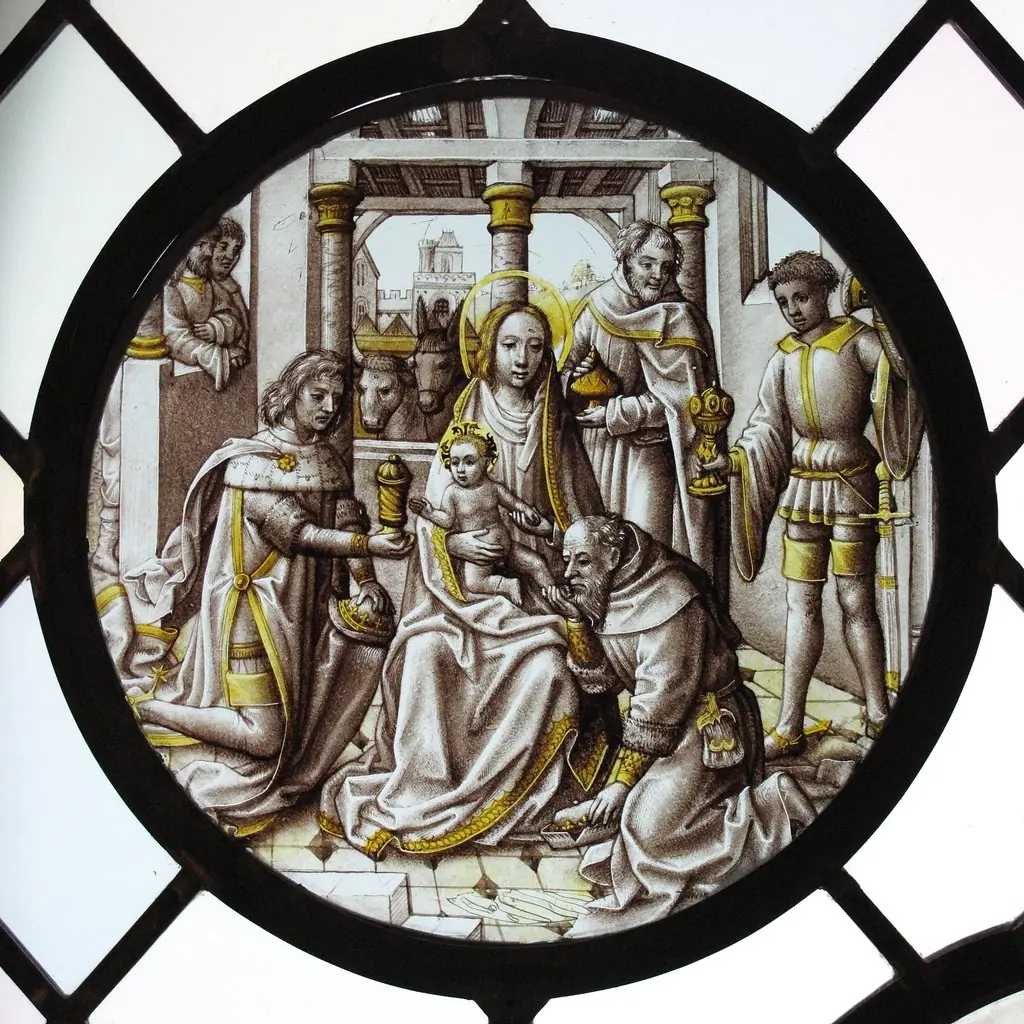 Roundel with the Adoration of the Magi
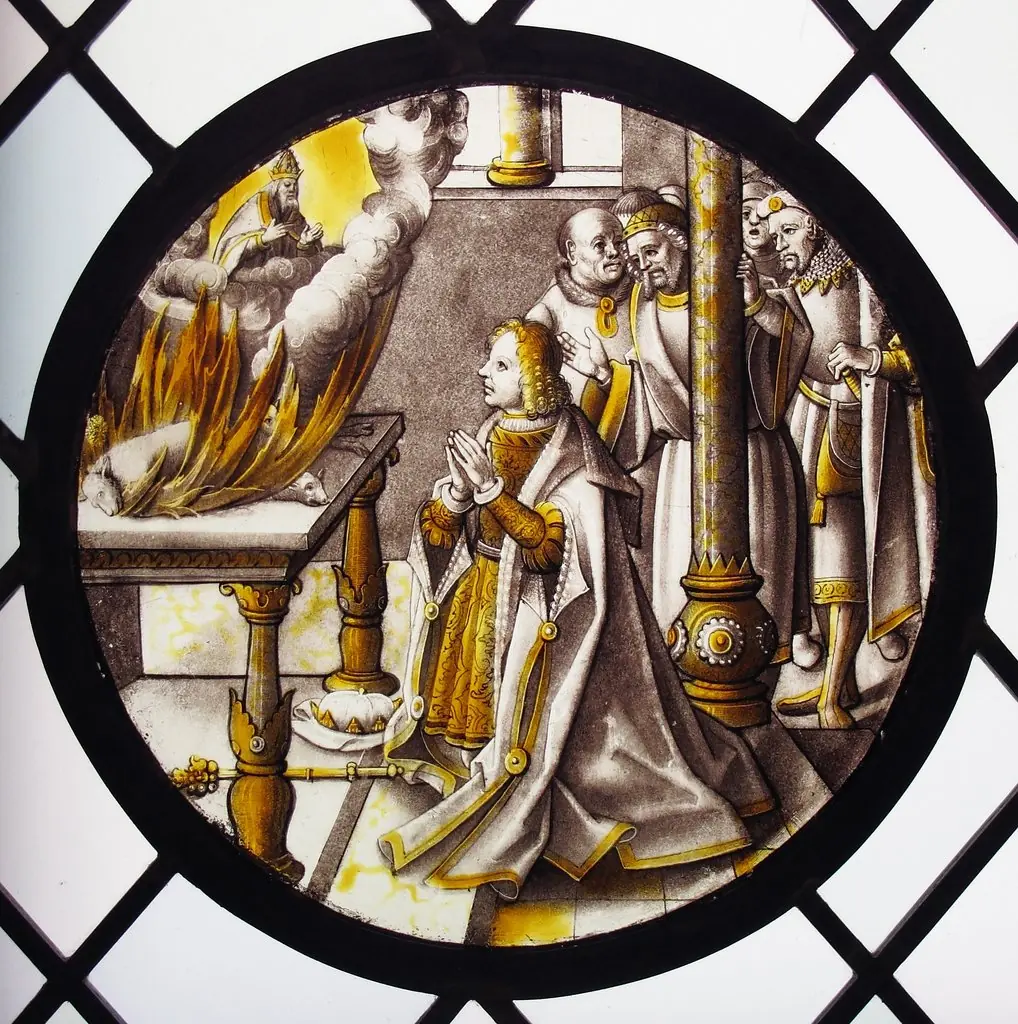 Roundel with Sacrifice in the Temple
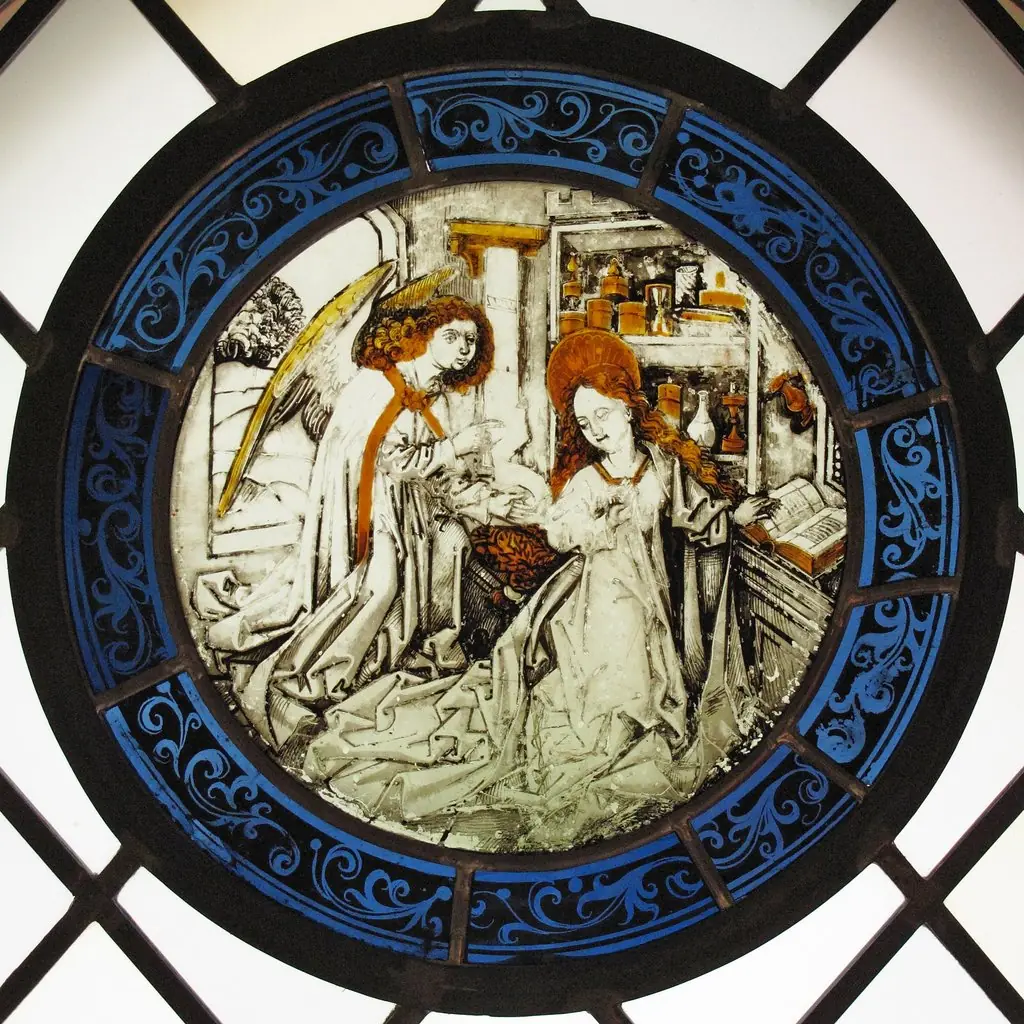 Roundel with the Annunciation
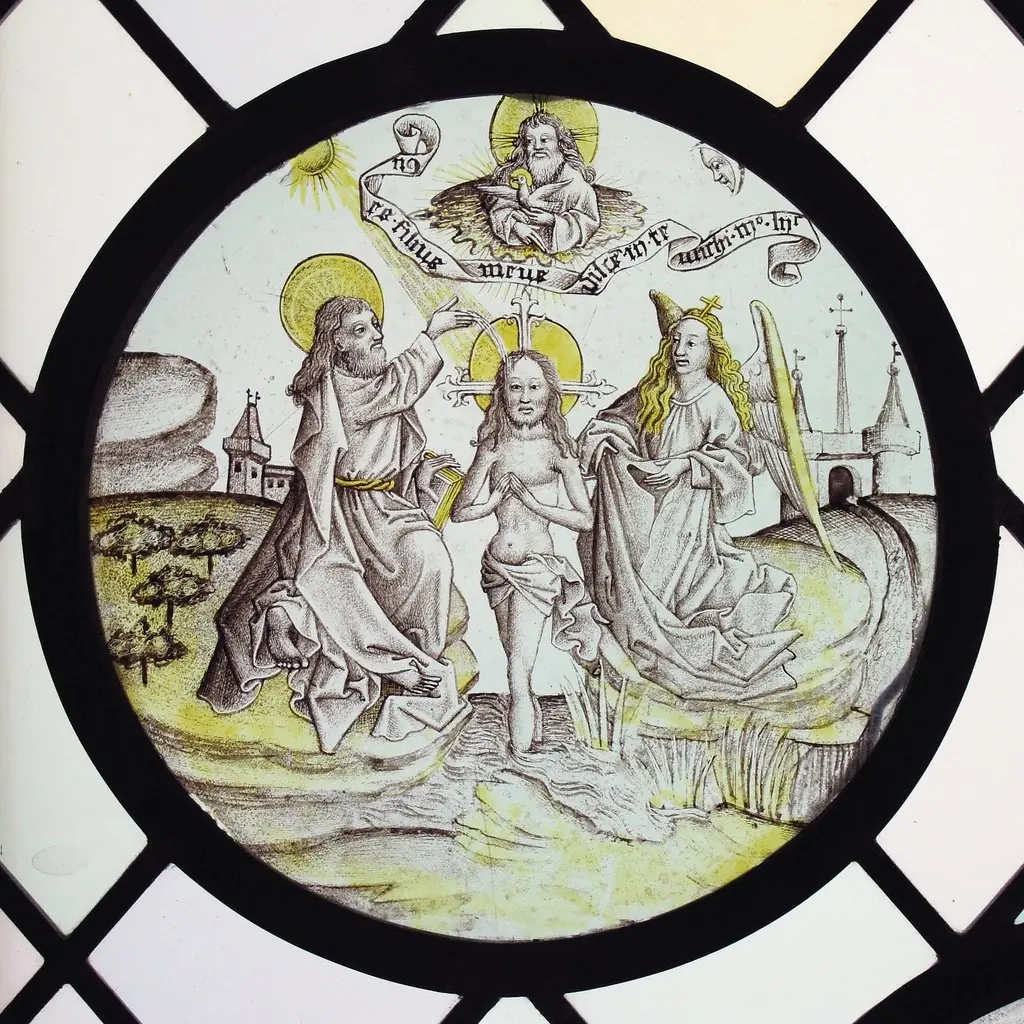 Roundel with the Baptism of Christ
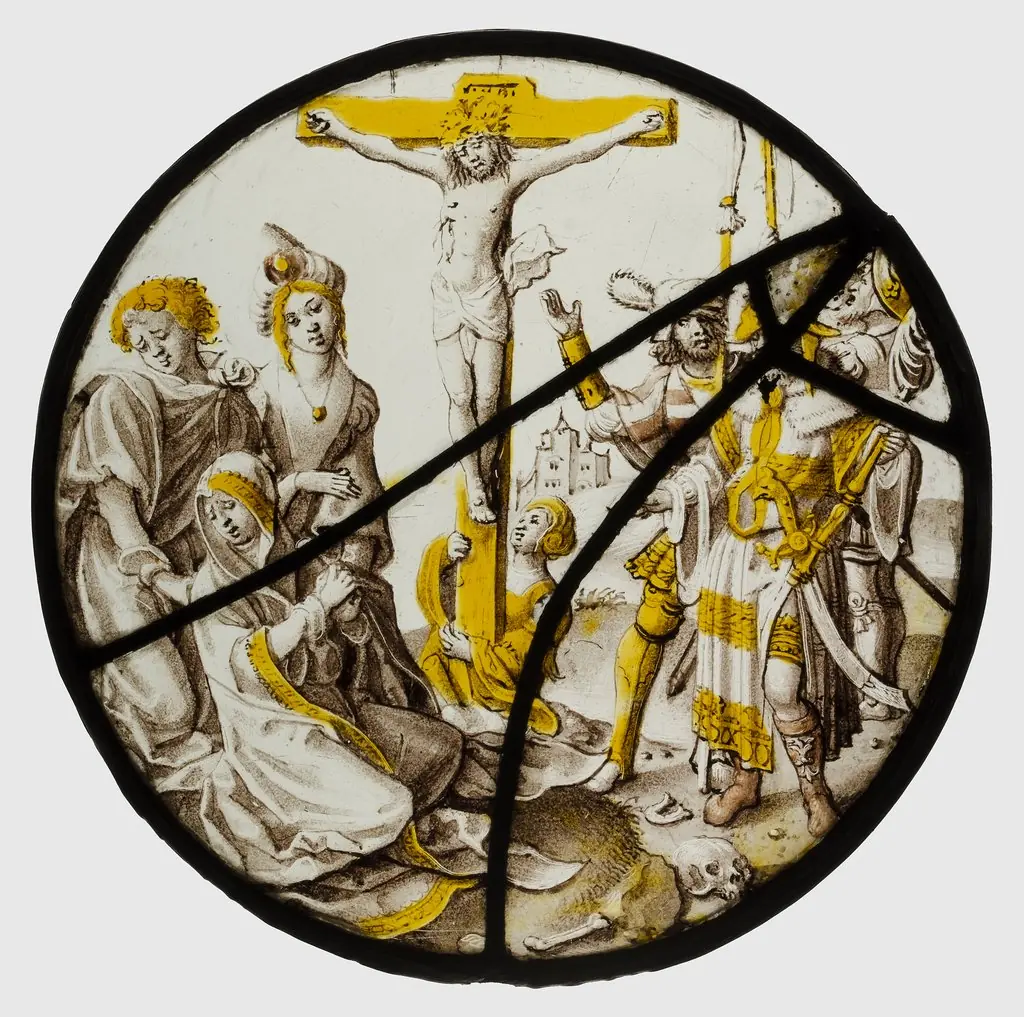 Roundel with the Crucifixion
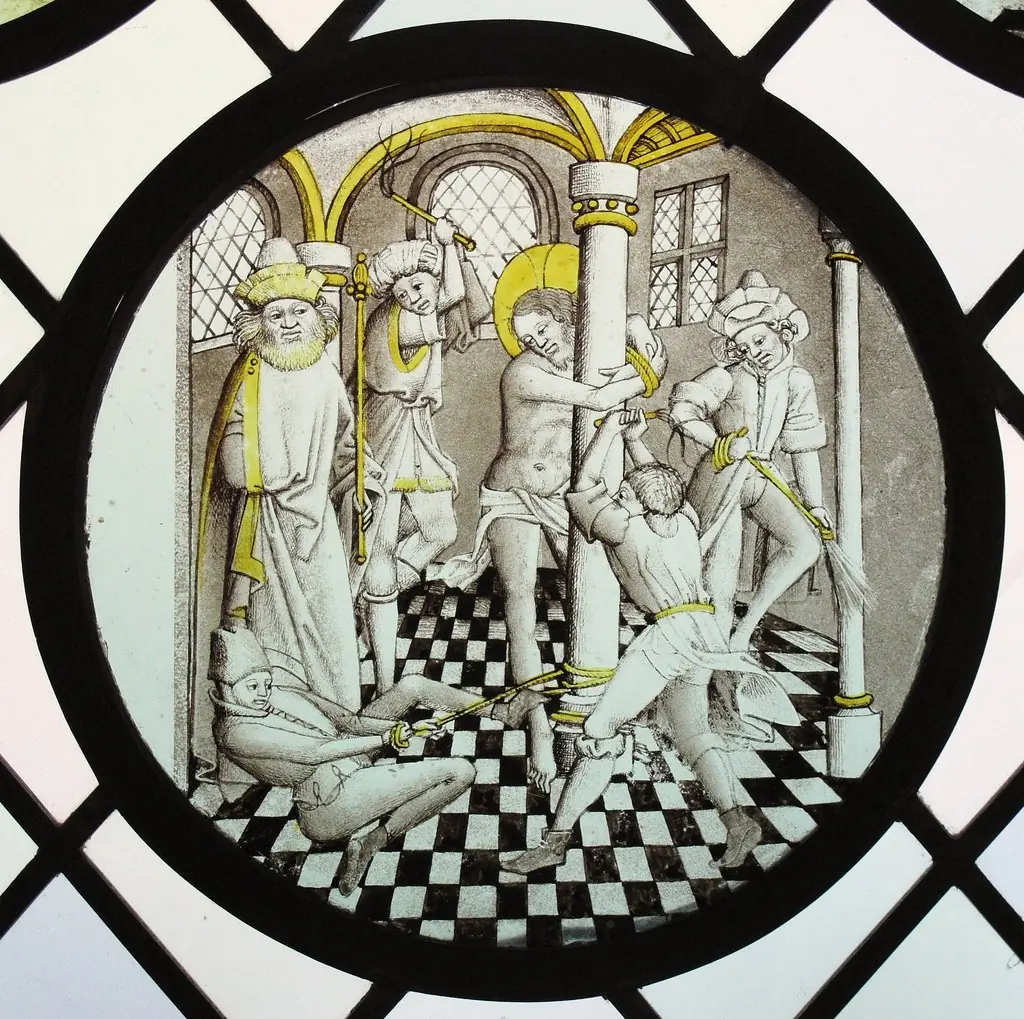 Roundel with the Flagellation
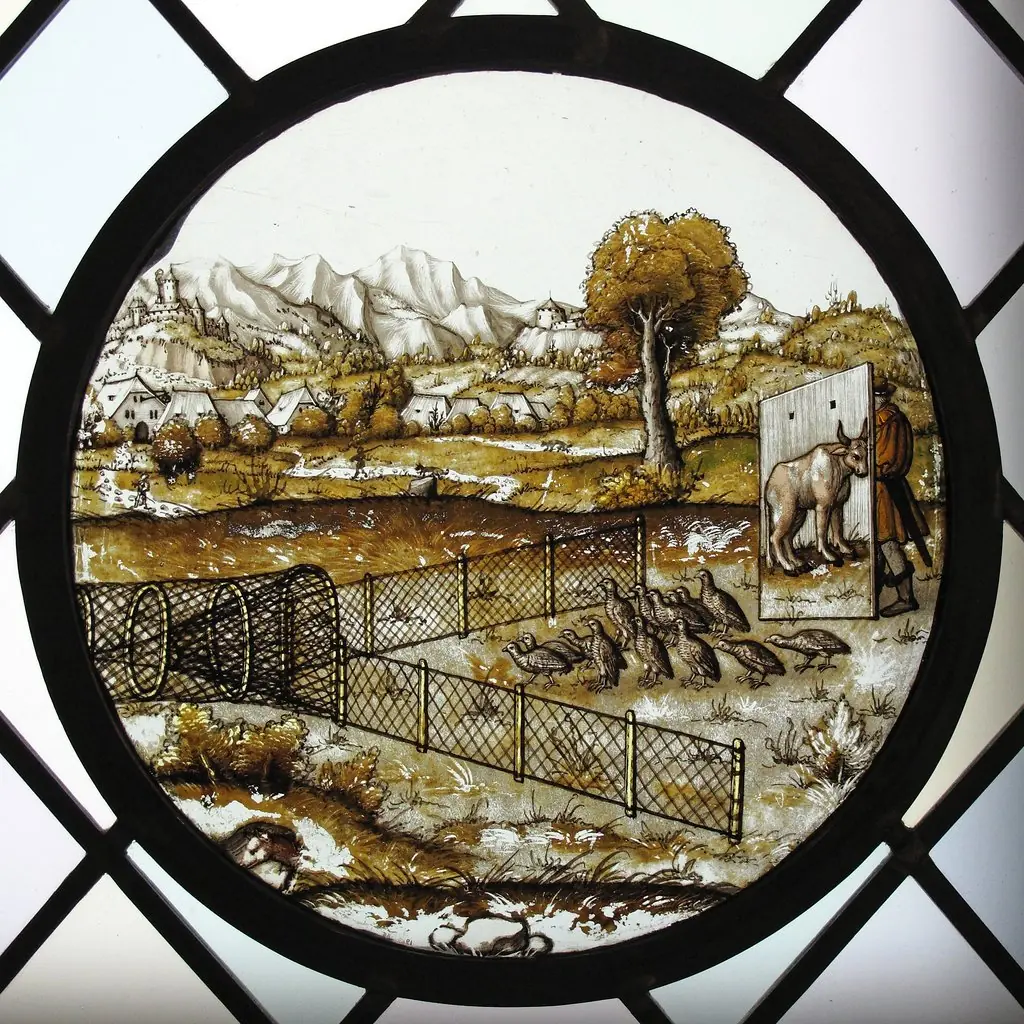 Roundel with Netting Quail
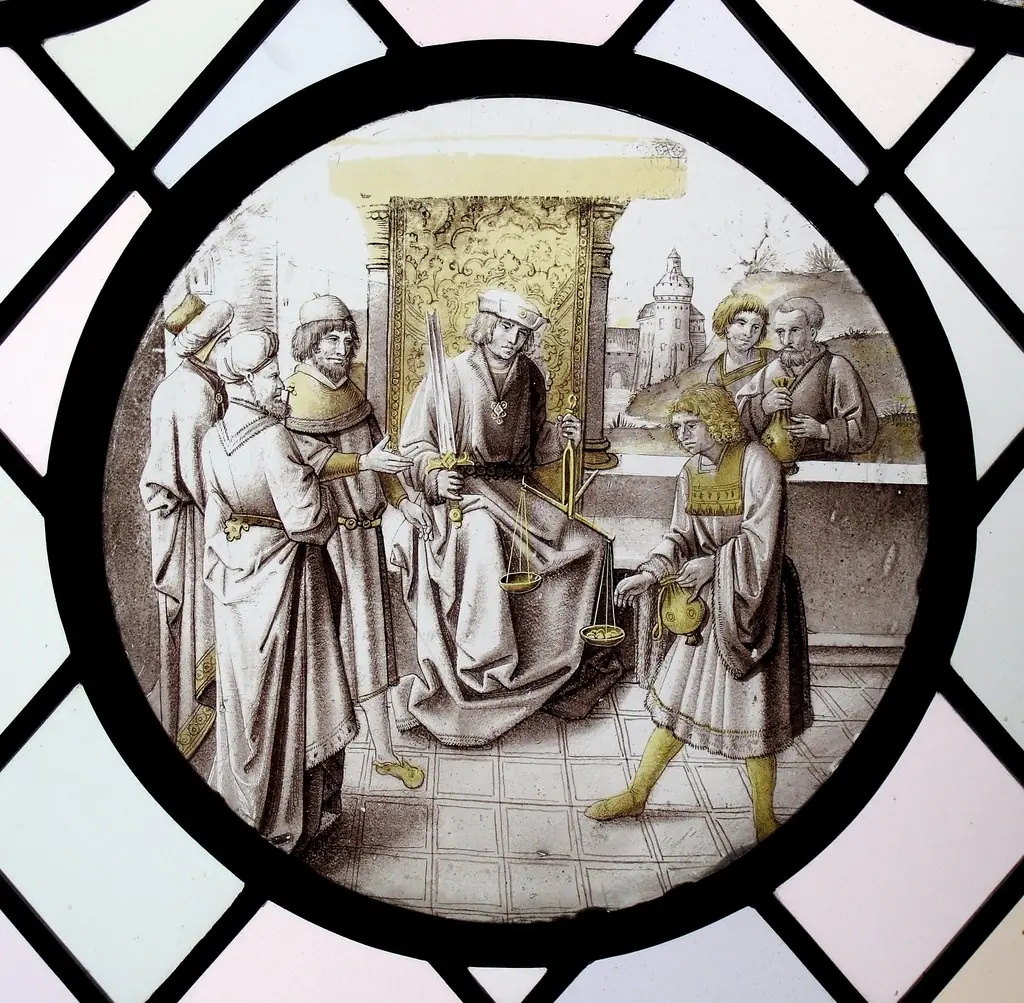 Roundel with Judgment or Allegorical Scene
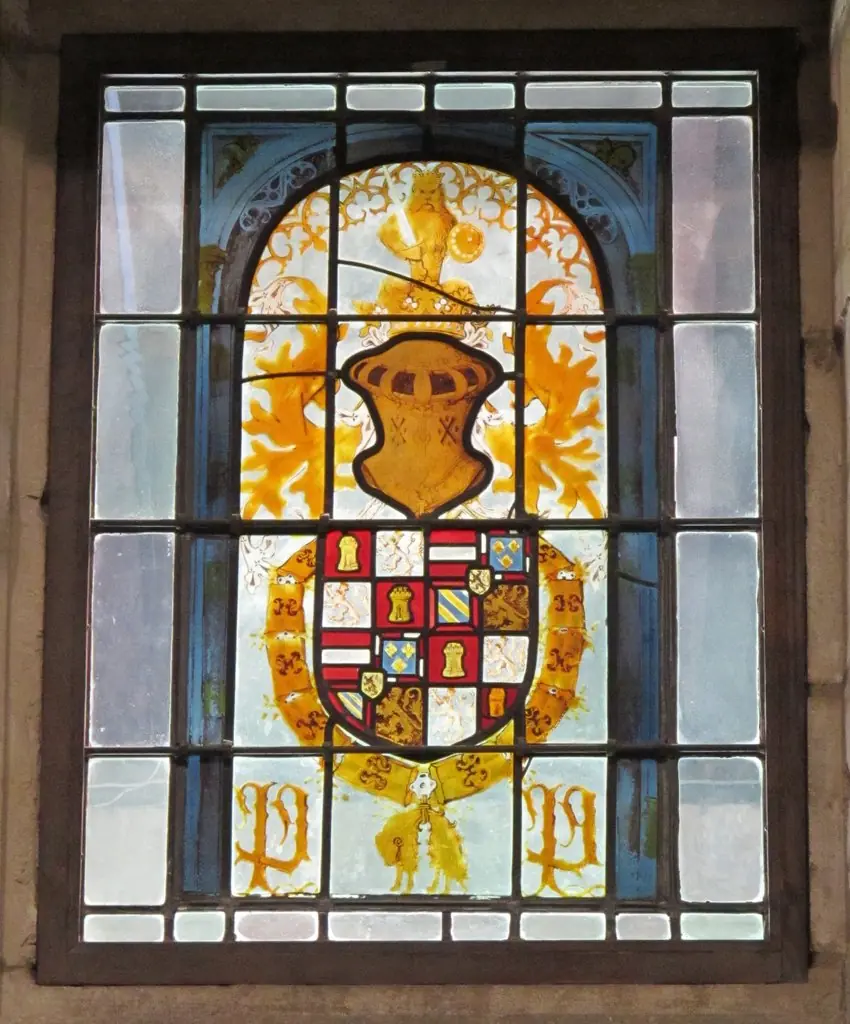 Heraldic Panel with Arms of the House of Hapsburg
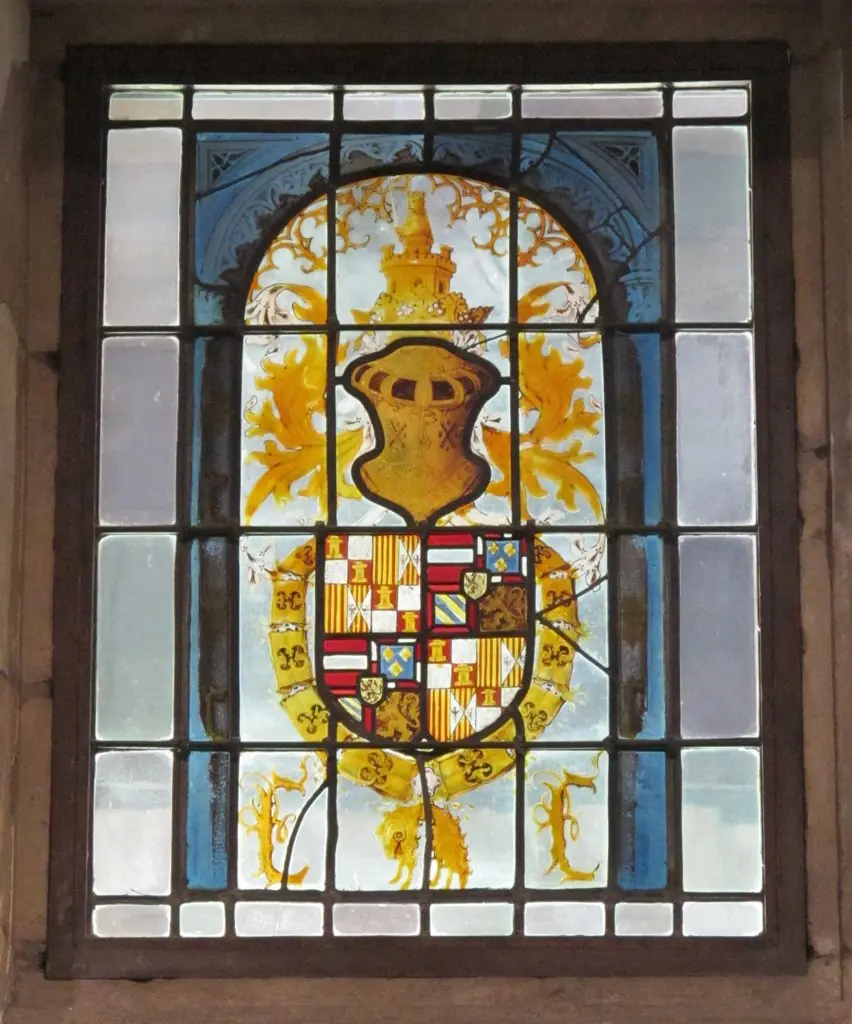 Heraldic Panel with Arms of the House of Hapsburg
 Quatrefoil-shaped Tracery Light
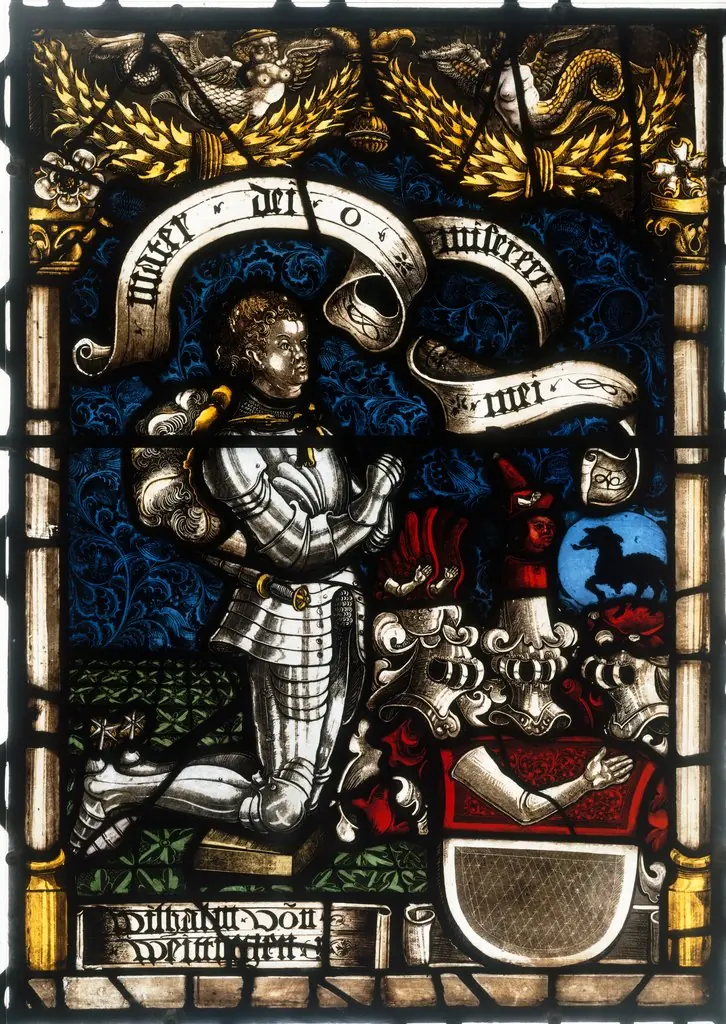 Heraldic Panel of Wilhelm von Weitingen
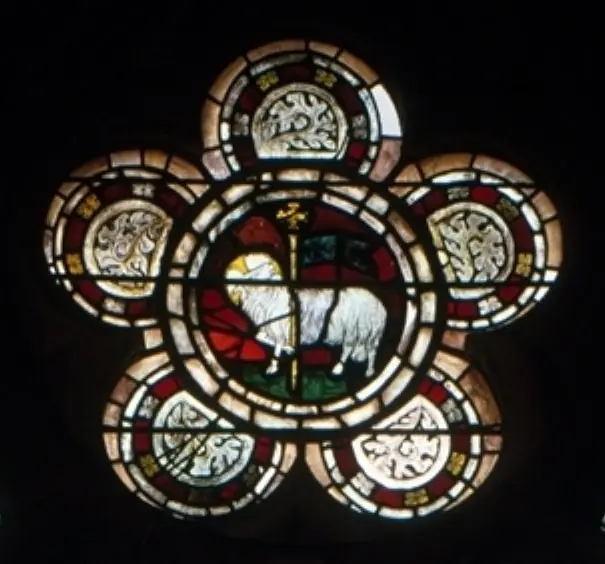 Tracery Light
 Coat of Arms of Adriana Perez
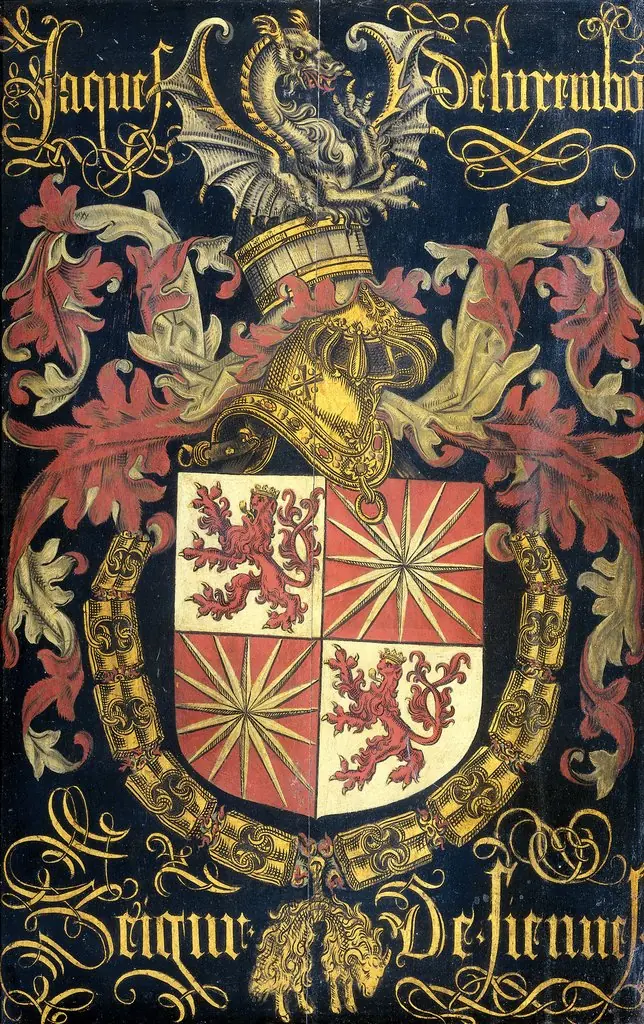 Shield of Jacob of Luxemburg (after 1441-1488), Lord of Fiennes, in his capacity as knight of the Order of the Golden Fleece
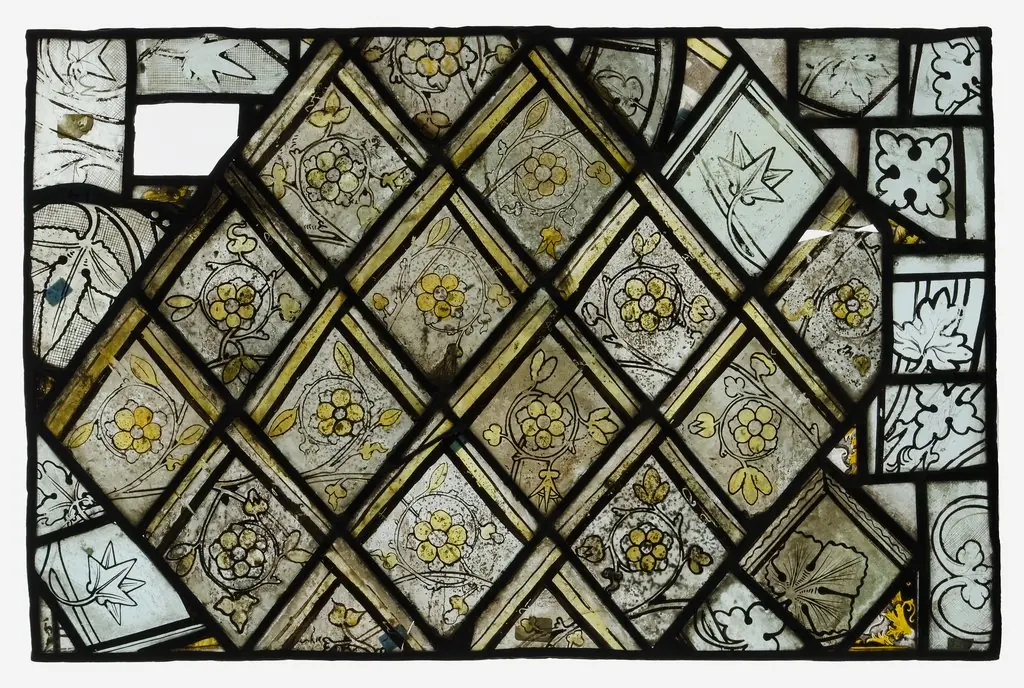 Glass panel