Artwork
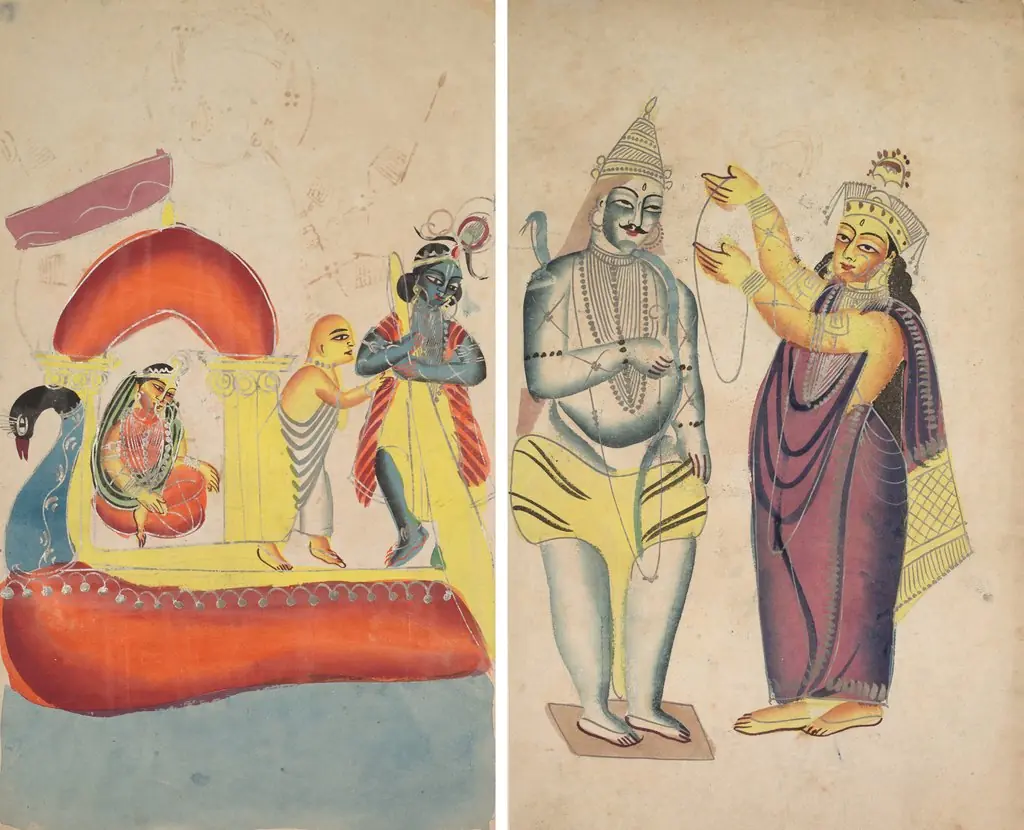
Leaf from a Kalighat album: Parvati Placing a Wedding Garland on Shiva (recto); Yasoda Churning Butter (verso)
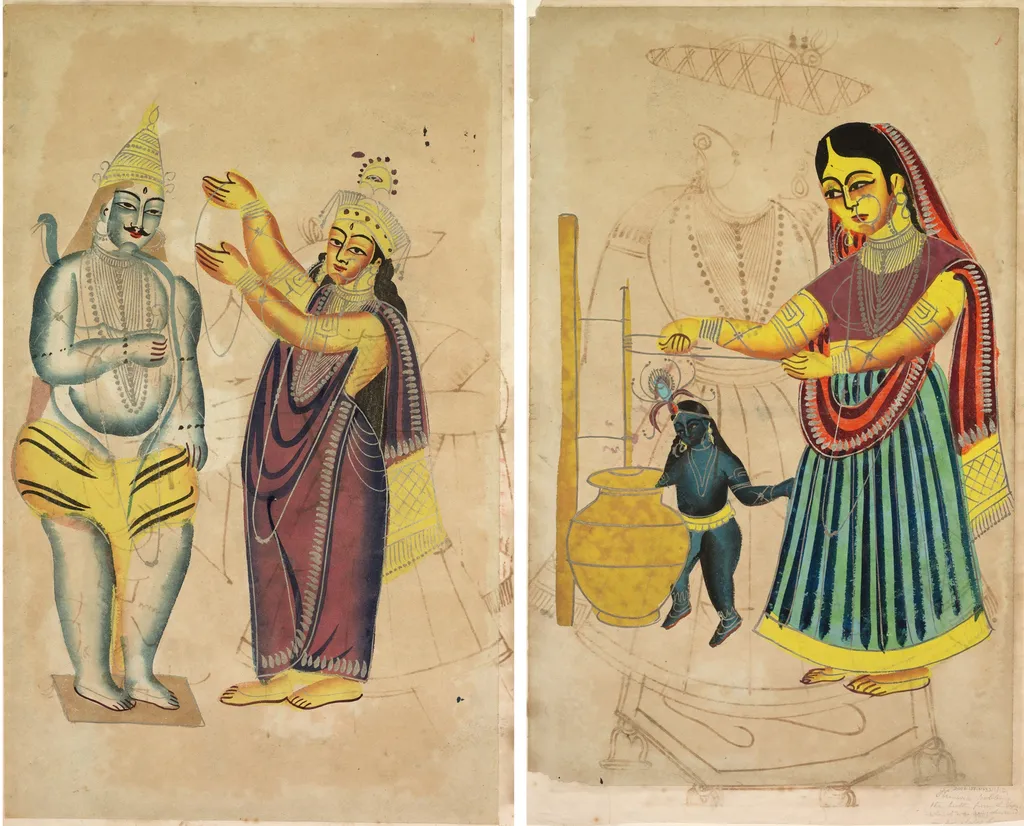
Leaf from a Kalighat album: Parvati Placing a Wedding Garland on Shiva (recto); Yasoda Churning Butter (verso) is an unspecified painting. It dates from 1896 and is held in the collection of the Cleveland Museum of Art. This double‑sided sheet from a Kalighat album presents two distinct narrative panels.
About this work
Subject & Meaning
Both sides of the leaf draw from popular devotional themes, blending sacred mythology with accessible, everyday imagery to convey moral and spiritual ideals.
The recto of this Kalighat painting depicts the Hindu deities Parvati and Shiva in a moment of marital devotion. Parvati, identified by her elaborate bridal ornamentation, places a wedding garland (varamala) around Shiva’s neck, an act symbolizing their sacred union and the sanctity of marriage in Hindu tradition. Shiva, recognizable by his matted locks, third eye, and serpent adornments, embodies asceticism and divine masculinity, while Parvati represents feminine grace and devotion.
On the verso, the scene shifts to a domestic vignette featuring Yasoda, the foster mother of the god Krishna. She is shown churning butter, a common motif in Krishna’s childhood narratives, evoking themes of maternal love, nourishment, and the playful innocence of the divine child. Both sides of the leaf draw from popular devotional themes, blending sacred mythology with accessible, everyday imagery to convey moral and spiritual ideals.
Technique & Style
Created in 1890 in Kolkata, this work is a painting executed on a leaf support, serving as a double-sided sheet within a Kalighat album. The recto depicts Parvati placing a wedding garland on Shiva, while the verso illustrates Yasoda churning butter. As a product of the Kalighat school, the piece reflects the regional style associated with the artist's location, though the specific creator remains unidentified. The work is currently held in the collection of the Cleveland Museum of Art.
History & Provenance
The leaf originates from a Kalighat album produced in Kolkata around 1890, depicting Parvati placing a wedding garland on Shiva on the recto and Yasoda churning butter on the verso. It was created by an unknown artist and entered the collection of the Cleveland Museum of Art, where it remains today.
The leaf is held by the Cleveland Museum of Art, where it was made in Kolkata and dates to 1890. Its inventory designation is 2003.108. No exhibition history is recorded in the available sources.
The Cleveland Museum of Art, where the work is held, was founded in 1913. The leaf, classified as a painting, was accessioned under the number 2003.108.
Context
Kalighat paintings emerged in 19th-century Kolkata as affordable mass-produced prints sold near the Kali temple, reflecting popular religious devotion through bold outlines and symbolic figures. This leaf exemplifies that tradition, depicting Parvati adorning Shiva with a garland and Yasoda churning butter, motifs rooted in Hindu mythology. The work's dual-sided composition highlights the album format common in these devotional prints, where multiple images were assembled for ritual or domestic use.
Scholarship identifies the style as part of Bengal's folk art tradition that influenced modern Indian artists seeking indigenous visual languages outside European frameworks.
Overview
This double‑sided sheet from a Kalighat album presents two distinct narrative panels. The recto depicts a ritualized wedding scene in which a woman crowns a man with a garland, while the verso shows a domestic tableau of a woman assisting a man as he churns butter in a large yellow vessel. Both compositions employ flat, vivid colors and simplified figures typical of the genre.
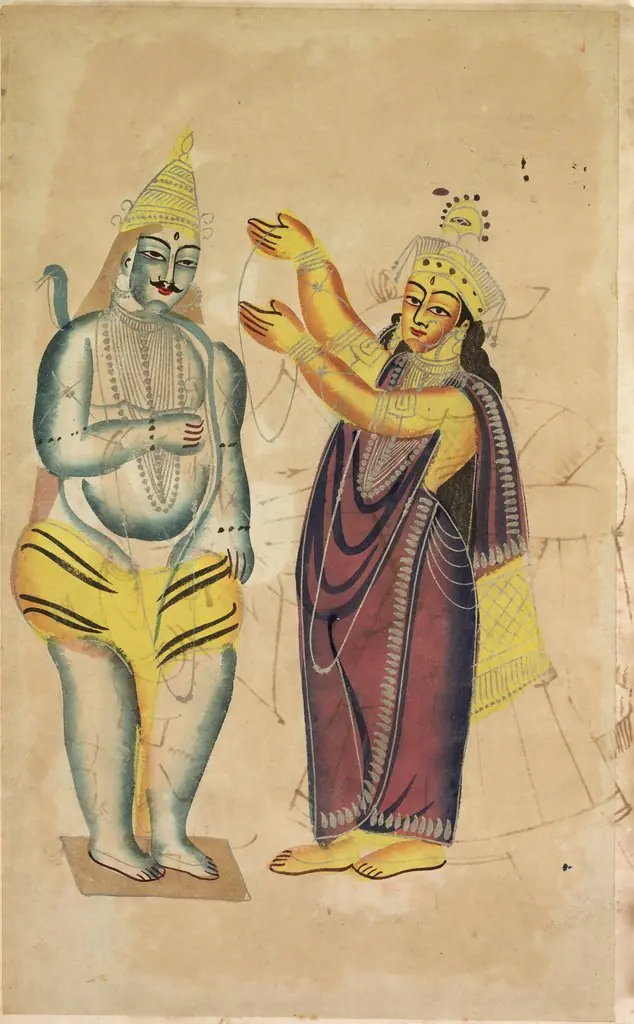
Artist & collection

- Parvati Placing a Wedding Garland on Shiva (recto), from a Kalighat album
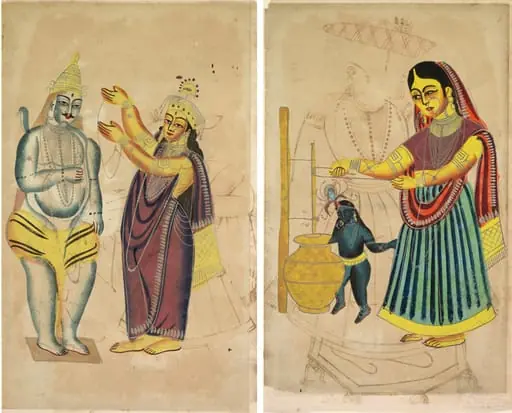 Leaf from a Kalighat album: Parvati Placing a Wedding Garland on Shiva (recto); Yasoda Churning Butter (verso)
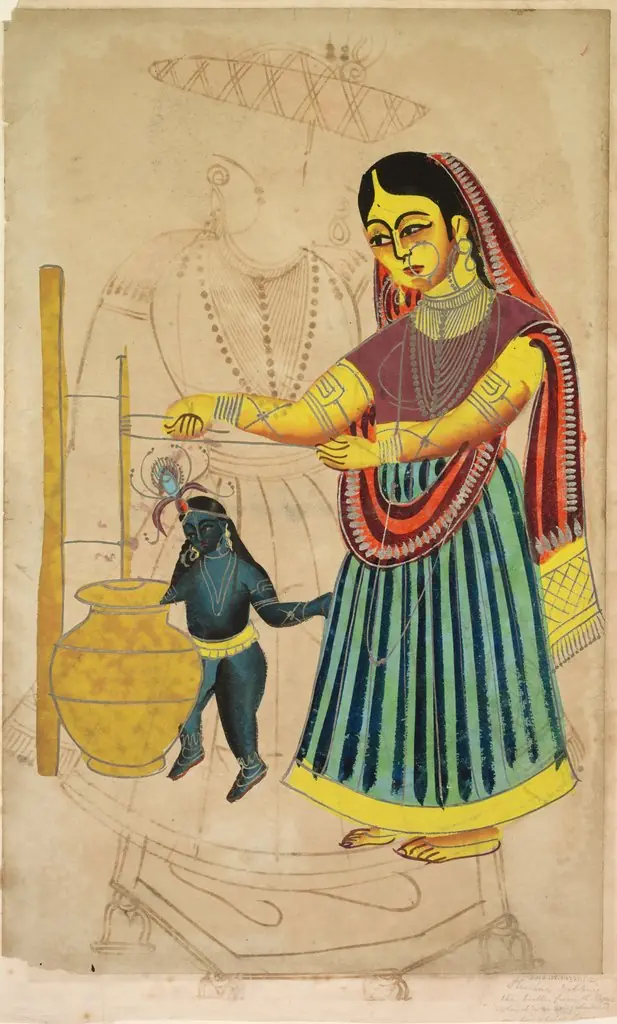 Yasoda Churning Butter (verso), from a Kalighat album
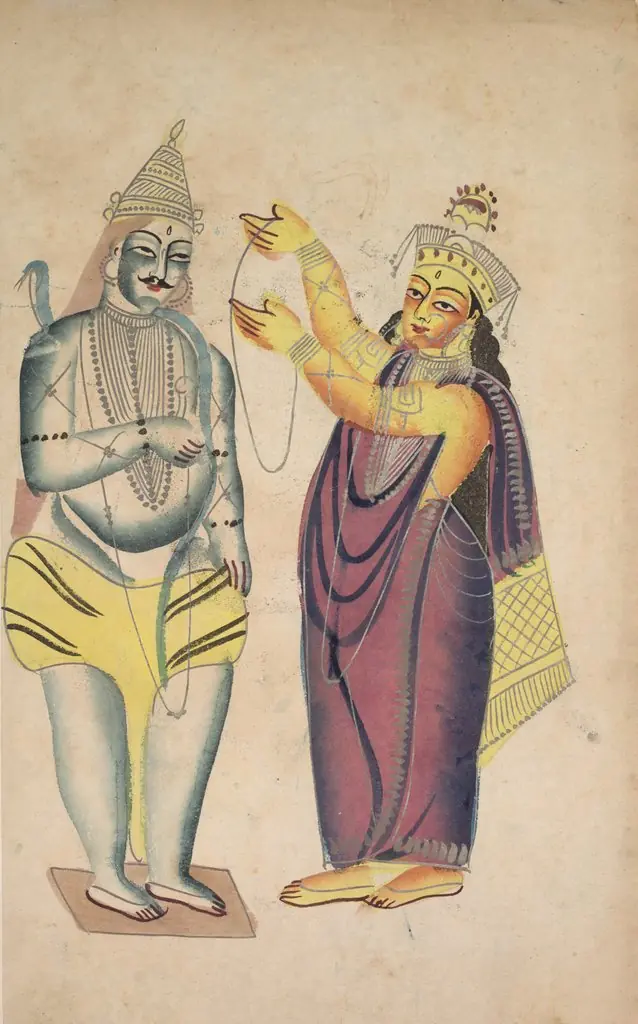 Parivati Placing a Wedding Garland on Shiva (verso)
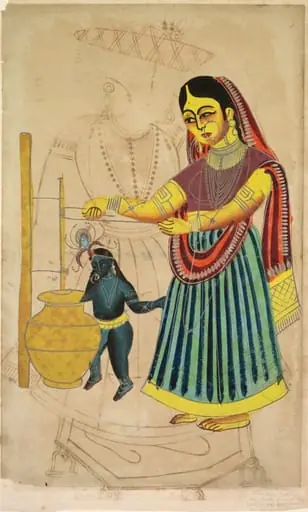 Yasoda Churning Butter (verso), from a Kalighat album
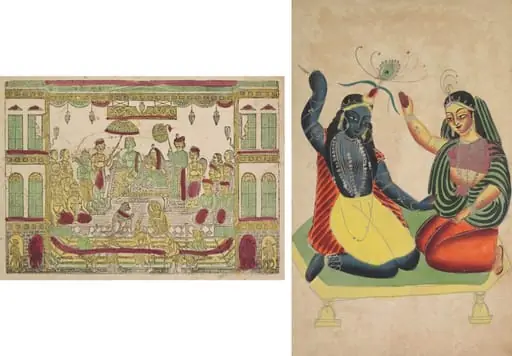 Leaf from a Kalighat album: Rama and Sita in the Royal Palace (recto); Radha and Krishna (verso)
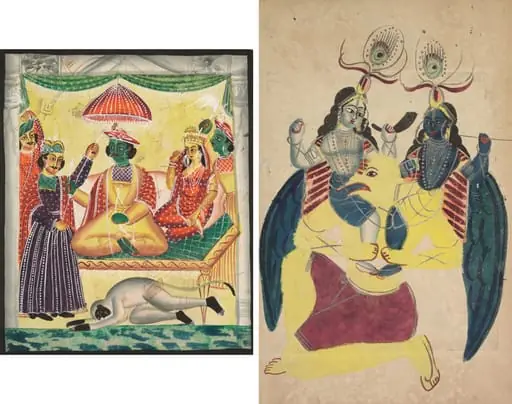 Leaf from a Kalighat album: Rama and Sita enthroned (recto); Garuda carrying Balarama and Krishna (verso)
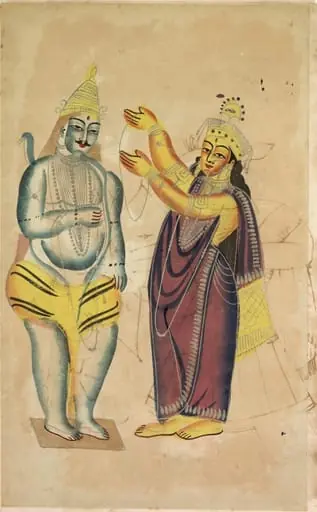 Parvati Placing a Wedding Garland on Shiva (recto), from a Kalighat album
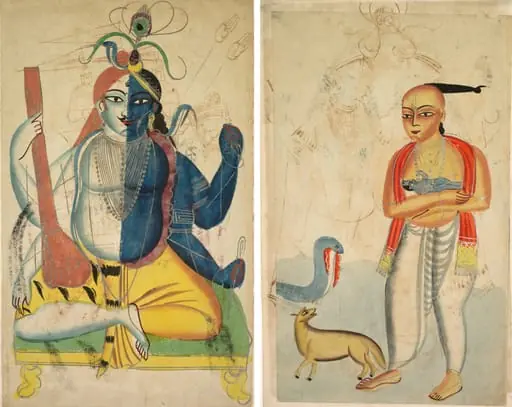 Leaf from a Kalighat album: Hari-Hara (recto); Vasudeva (Krishna's Father) Fleeing with Krishna Encounters a Cobra and a Jackal (verso)
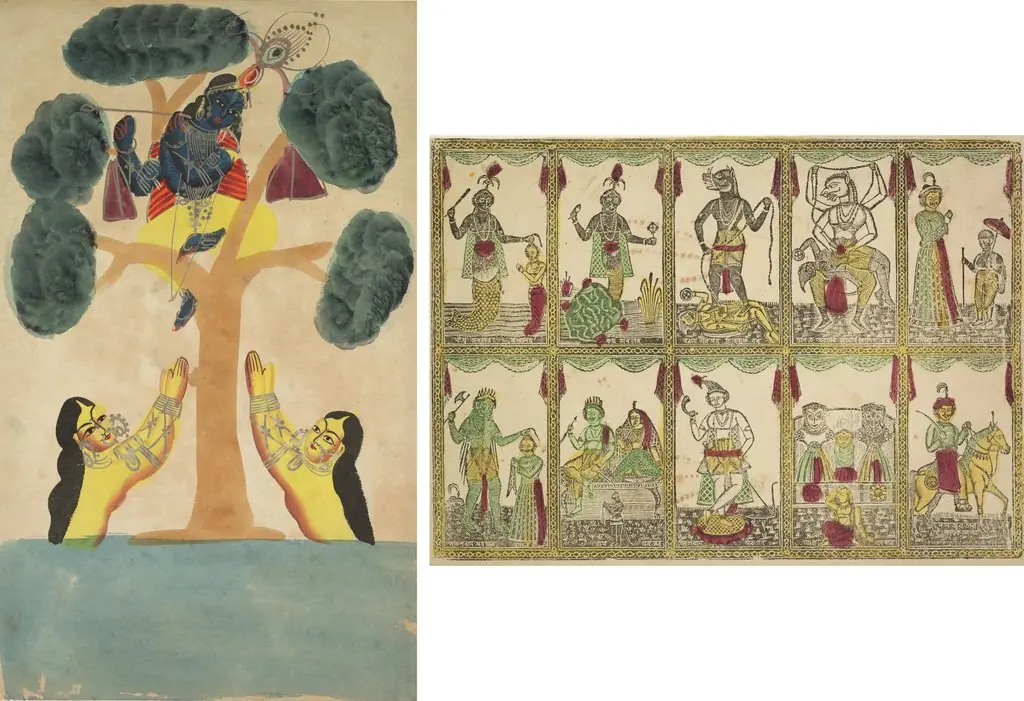 Leaf from a Kalighat album: Krishna Steals the Clothes of the Cowgirls (Gopis) (recto); Das Avataras, Ten Incarnations of Vishnu (verso)
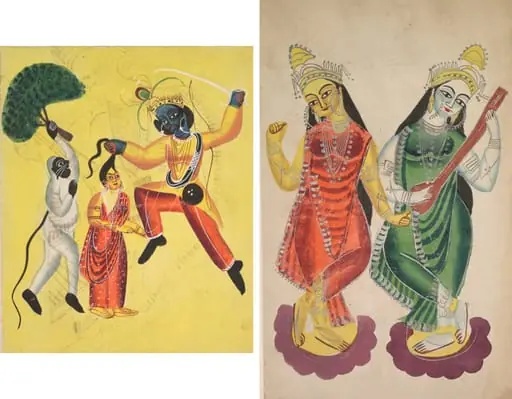 Leaf from a Kalighat album: Hanuman attacks Indrajit holding an apparition of Sita by the hair (recto); Goddesses Lakshmi and Sarasvati (verso)