Artwork
Rai Raja, from a Kalighat album
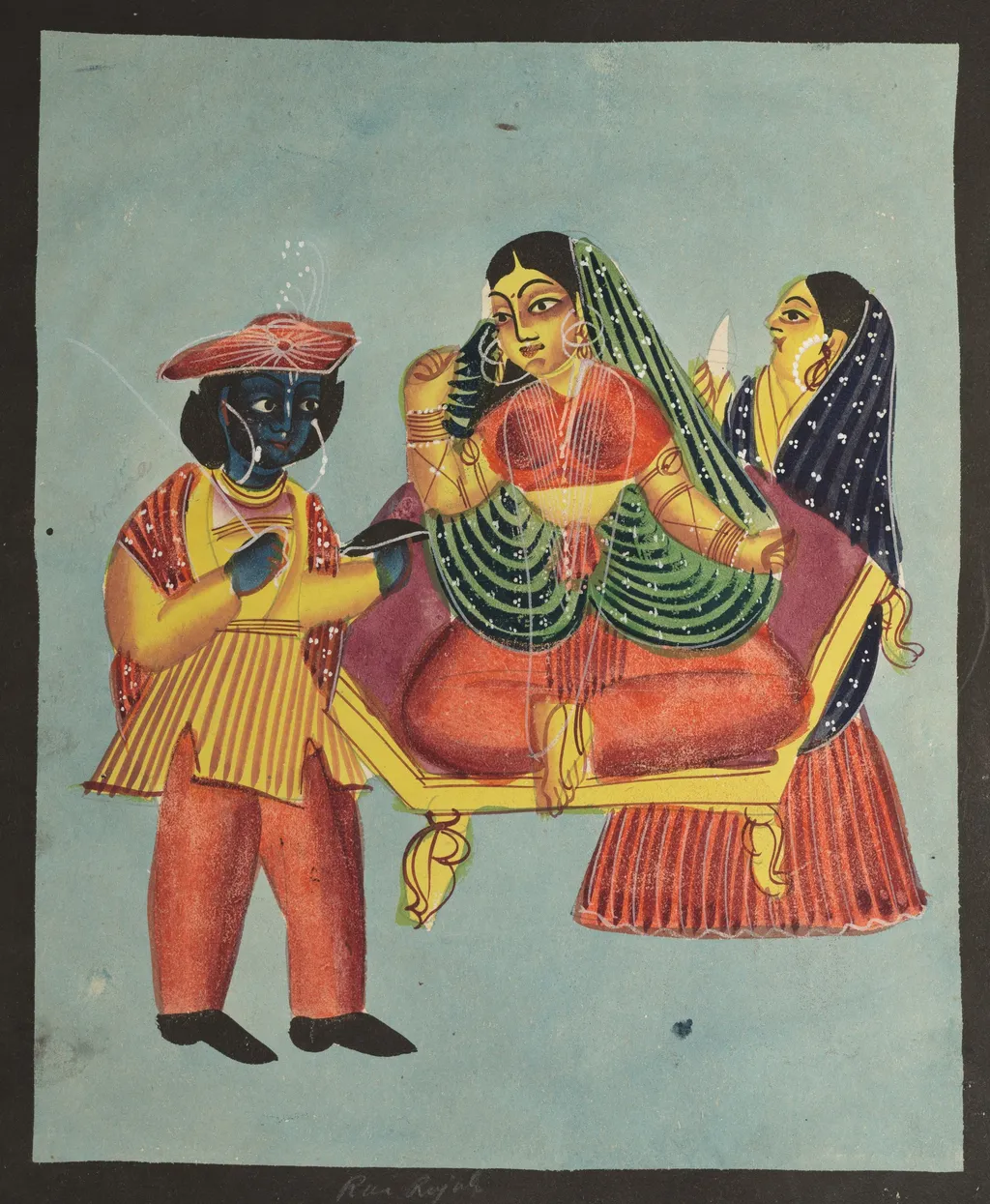
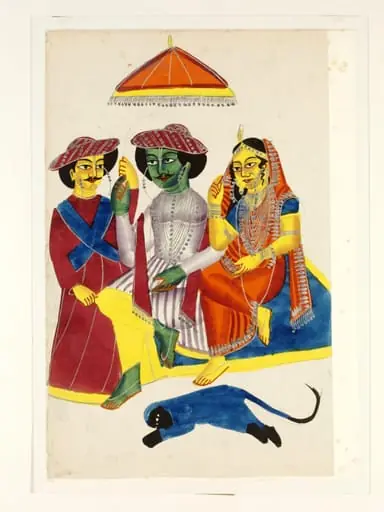
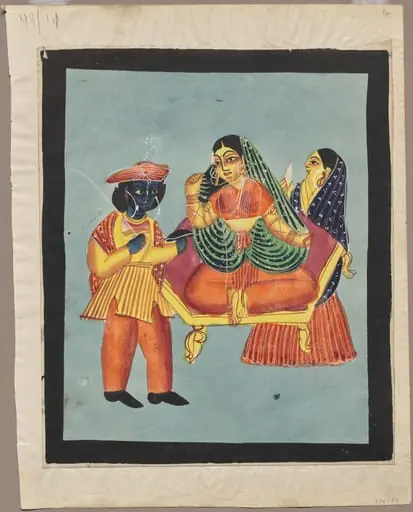
Rai Raja, from a Kalighat album is an unspecified painting. It dates from 1896 and is held in the collection of the Cleveland Museum of Art. Rai Raja, a painted work from a Kalighat album, presents three figures rendered in vivid, flat hues set against a pale blue backdrop.
About this work
Overview
Rai Raja, a painted work from a Kalighat album, presents three figures rendered in vivid, flat hues set against a pale blue backdrop.
Rai Raja, a painted work from a Kalighat album, presents three figures rendered in vivid, flat hues set against a pale blue backdrop. The leftmost figure dons a red cap and striped yellow‑red trousers, clutching a small object, while the two women beside him are clothed in red and yellow; one strums a stringed instrument and the other holds a modest pot. The composition is defined by bold outlines and stylized details.
Subject & Meaning
The scene appears to capture a domestic or ceremonial moment, with the central woman engaged in music and the other woman handling a vessel, suggesting everyday activities or ritual offerings. The presence of the instrument and pot may allude to cultural practices of performance and hospitality within the community that produced the Kalighat prints.
Technique & Style
Executed with flat washes of color and strong contour lines, the painting exemplifies the Kalighat school’s characteristic simplicity. Figures are outlined in black, lacking chiaroscuro or deep modeling, which creates a graphic, almost poster‑like effect. Facial features and hands are rendered with decorative precision, emphasizing pattern over naturalistic representation.
History & Provenance
Created as part of a Kalighat album, the work originates from the bustling Kalighat region of 19th‑century Calcutta, where itinerant artists produced inexpensive prints for a growing urban market. The piece entered the collection of the Cleveland Museum of Art, where it is displayed alongside other examples of this popular folk tradition.
Context
Kalighat paintings emerged in response to colonial influences and the rise of a literate middle class, blending traditional Indian motifs with contemporary social commentary. The bright palette and accessible subject matter reflect the genre’s aim to appeal to a broad audience, documenting everyday life and cultural rituals in an approachable visual language.
Artist & collection