Artwork
Parvati Placing a Wedding Garland on Shiva (recto), from a Kalighat album
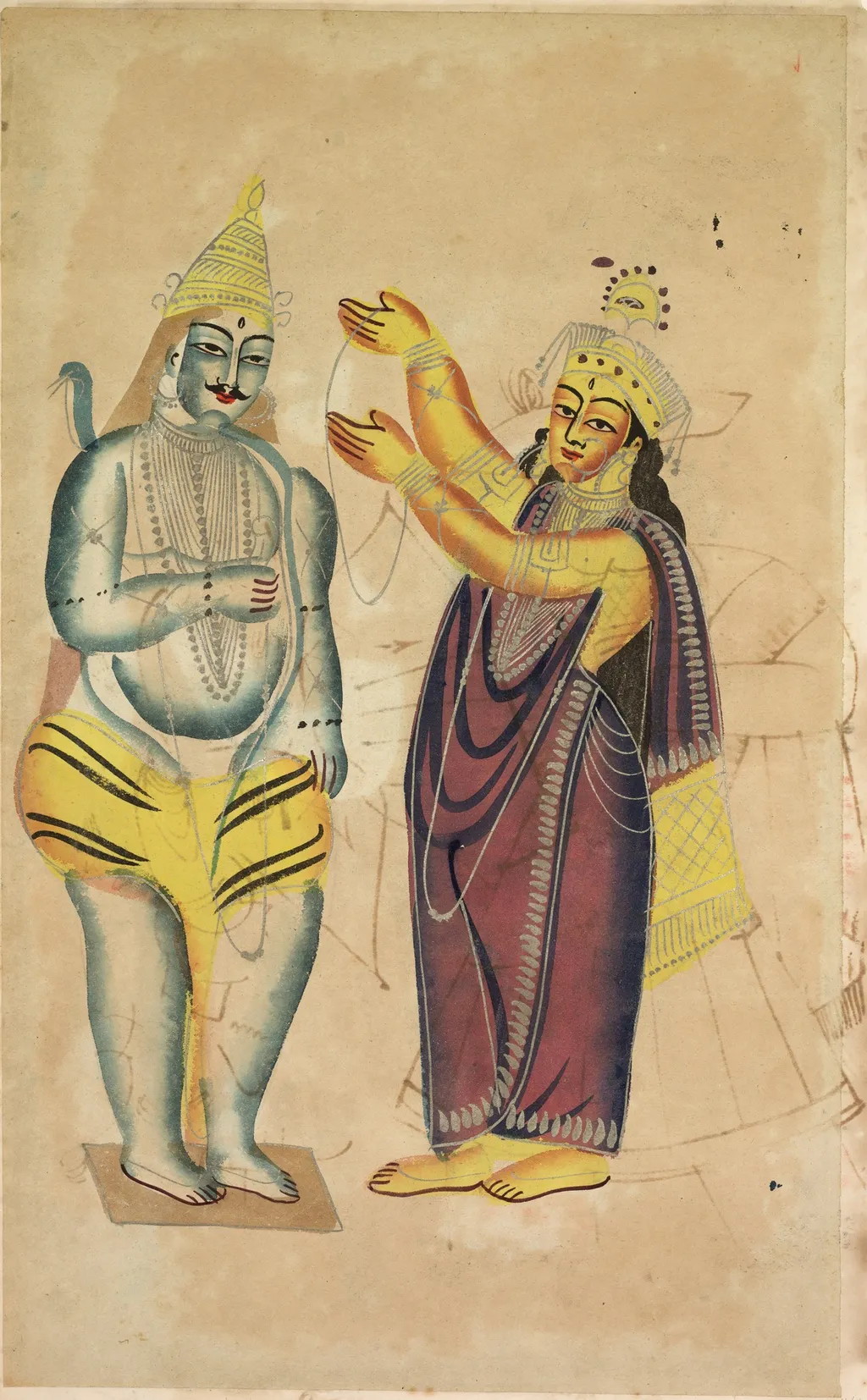
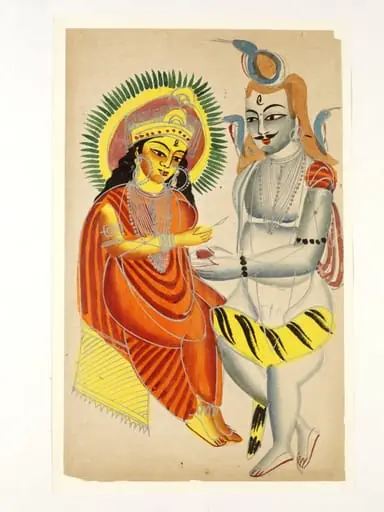
Parvati Placing a Wedding Garland on Shiva (recto), from a Kalighat album is an unspecified painting. It dates from 1896 and is held in the collection of the Cleveland Museum of Art. The work portrays a domestic scene in which a woman in a purple sari places a garland around the neck of a man dressed in a yellow dhoti.
About this work
This painting is reminiscent of the works of artists who specialize in Kalighat paintings, a style of Indian folk art that originated in the 19th century.
The painting depicts a woman and a man in traditional Indian attire. The woman, dressed in a purple sari, is placing a garland on the man's neck. The man, wearing a yellow dhoti, has a snake wrapped around his neck and a conical hat on his head.
The painting is done in a folk art style, with bold lines and bright colors. The background is a light brown color, which complements the vibrant hues of the figures.
This painting is reminiscent of the works of artists who specialize in Kalighat paintings, a style of Indian folk art that originated in the 19th century.
Subject & Meaning
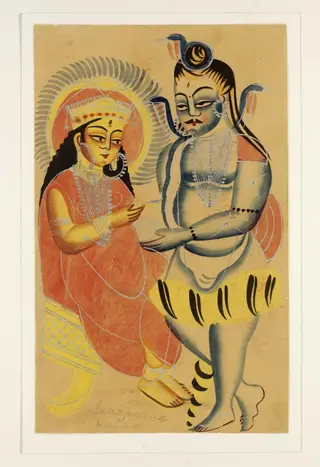
The painting depicts the Hindu goddess Parvati placing a wedding garland around the neck of the god Shiva, a scene that visualizes their mythic union.
In Kalighat style, the figures are rendered with bold outlines and minimal shading, emphasizing the ritual gesture central to the narrative. Parvati’s right hand holds the garland while her left gently touches Shiva’s shoulder, underscoring the intimacy and sacredness of the moment. Shiva stands composed, his matted locks and third eye standard attributes, while Parvati wears a red-and-white sari and floral jewelry, signaling bridal iconography.
The scene represents marital harmony and divine partnership, themes revered in Shaiva–Shakta traditions. By portraying the act of marriage, the work evokes blessings for conjugal felicity and spiritual unity.
History & Provenance
Created in Kolkata in 1890, this painting was produced by an unidentified artist. The work, which depicts Parvati placing a wedding garland on Shiva, entered the collection of the Cleveland Museum of Art, where it is held under the accession number 2003.108.a. While the specific circumstances of its commission and the details of its ownership prior to museum acquisition are not recorded in the available sources, its inception is firmly established at the close of the nineteenth century.
The painting Parvati Placing a Wedding Garland on Shiva (recto), created circa 1890 in Kolkata, is held in the collection of the Cleveland Museum of Art. The work is cataloged under the accession number 2003.108.a. No specific exhibition history for this piece is recorded in the available sources.
Context
Parvati Placing a Wedding Garland on Shiva (recto), from a Kalighat album, was created in 1890 in Kolkata by an unknown artist.
The work is held in the Cleveland Museum of Art collection.
Scholarly attention focuses on its role within 19th-century Bengali popular print traditions, particularly Kalighat paintings that blended religious narrative with contemporary social commentary.
Contextual analysis situates the piece within the artist's broader practice of depicting Hindu mythological moments, reflecting both devotional practice and evolving visual cultures in colonial India.
Overview
The work portrays a domestic scene in which a woman in a purple sari places a garland around the neck of a man dressed in a yellow dhoti. The male figure wears a conical hat and a snake coils around his neck, while the background is rendered in a muted brown that allows the vivid costumes to dominate the composition.
Technique & Style
Executed in the Kalighat folk tradition, the painting relies on bold, fluid outlines and a limited palette of saturated colors. The flat, decorative background and the stylized rendering of clothing and accessories reflect the commercial print culture of 19th‑century Kolkata, where such works were produced for a popular audience.
Artist & collection

- Parvati Placing a Wedding Garland on Shiva (recto), from a Kalighat album
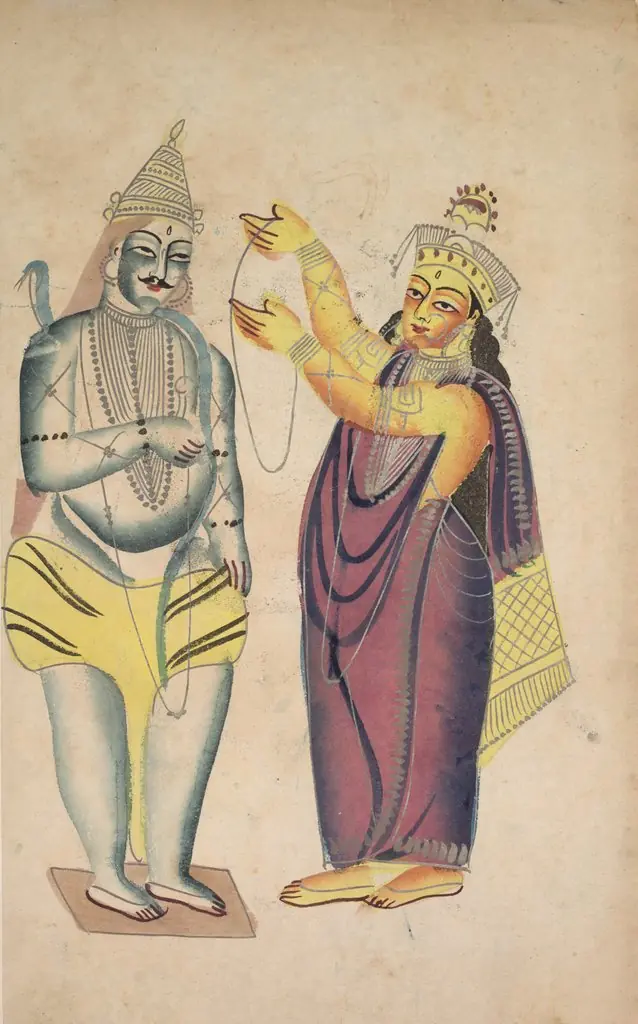 Parivati Placing a Wedding Garland on Shiva (verso)
 Parivati Placing a Wedding Garland on Shiva (verso)
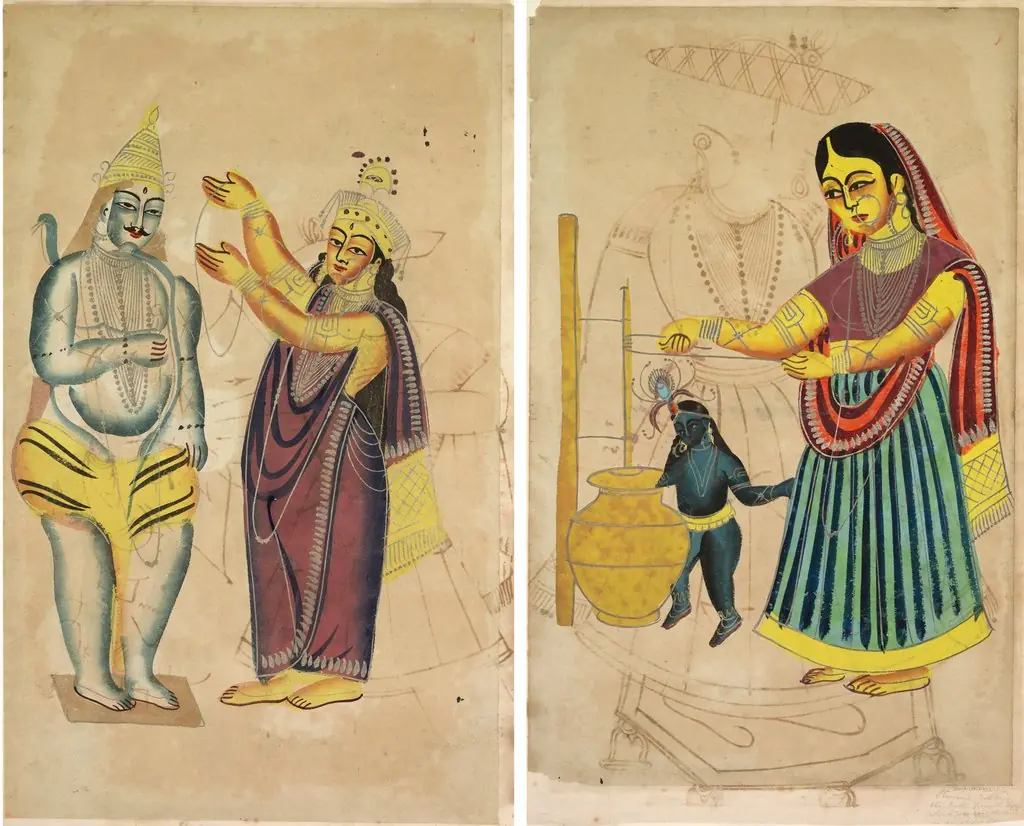 Leaf from a Kalighat album: Parvati Placing a Wedding Garland on Shiva (recto); Yasoda Churning Butter (verso)
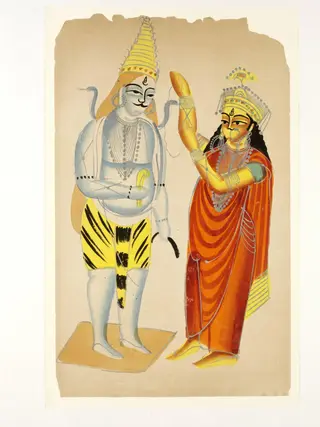 Parvati and Shiva
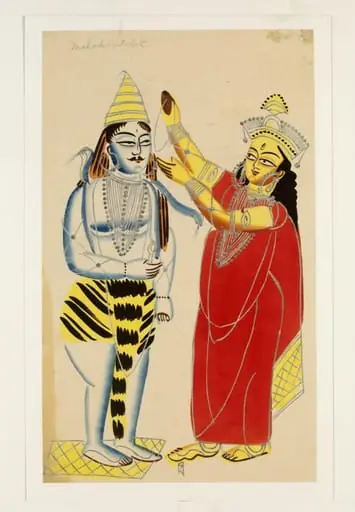 Parvati and Shiva
 Leaf from a Kalighat album: Parvati Placing a Wedding Garland on Shiva (recto); Yasoda Churning Butter (verso)
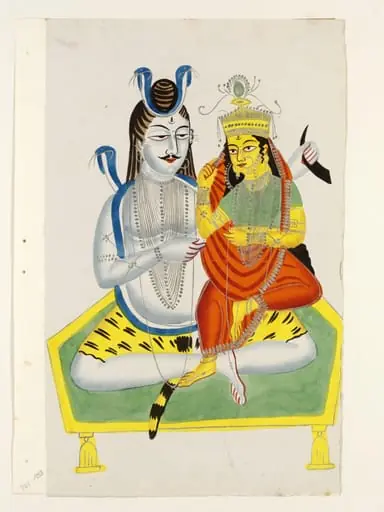 Shiva and Parvati
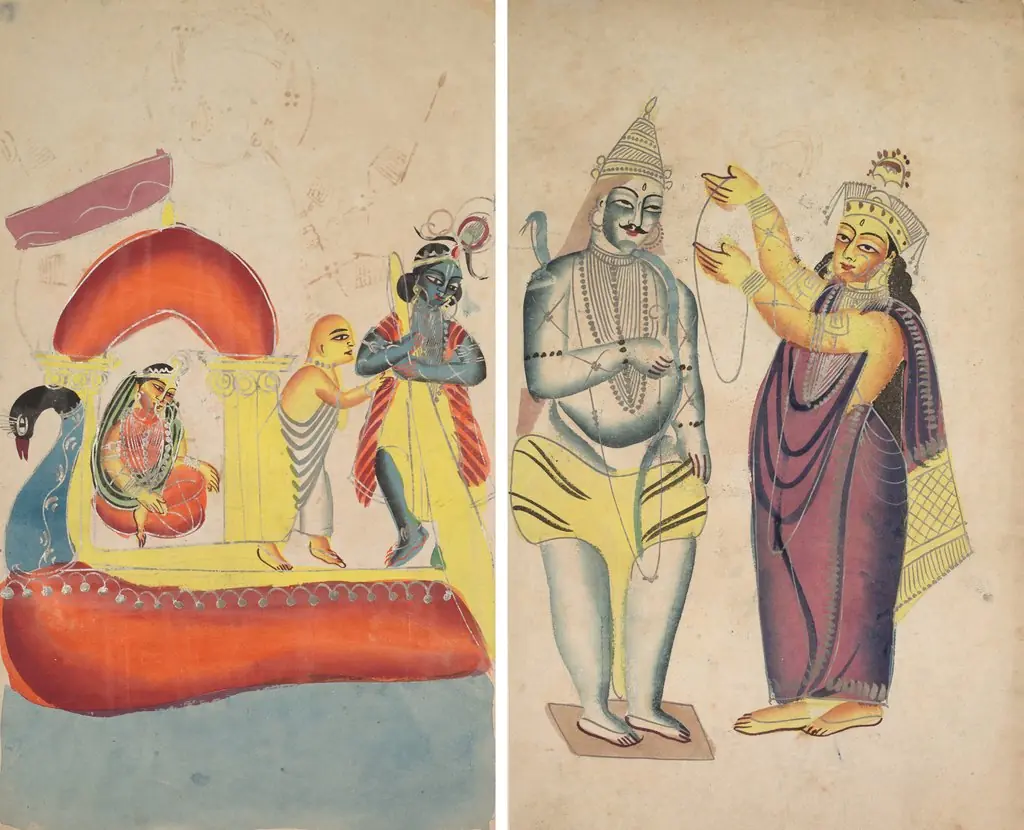 Krishna Ferrying Radha Across the Yamuna River (recto); Parivati Placing a Wedding Garland on Shiva (verso)
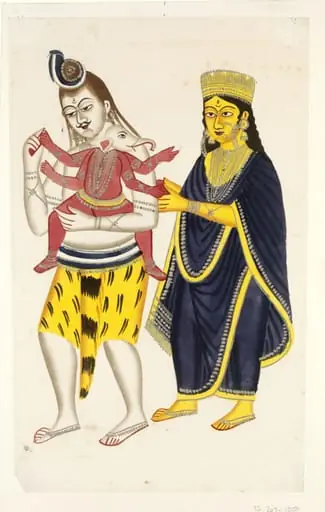 Shiva, Parvati and Ganesha
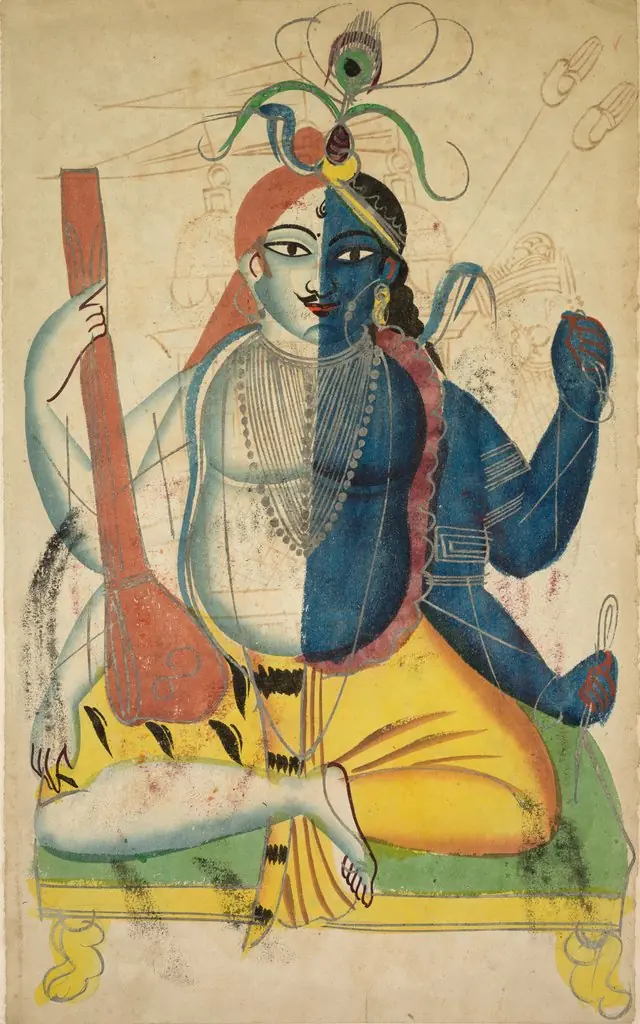 Hari-Hara (recto), from a Kalighat album