Artwork
Balthazar, one of the three Magi, with a servant
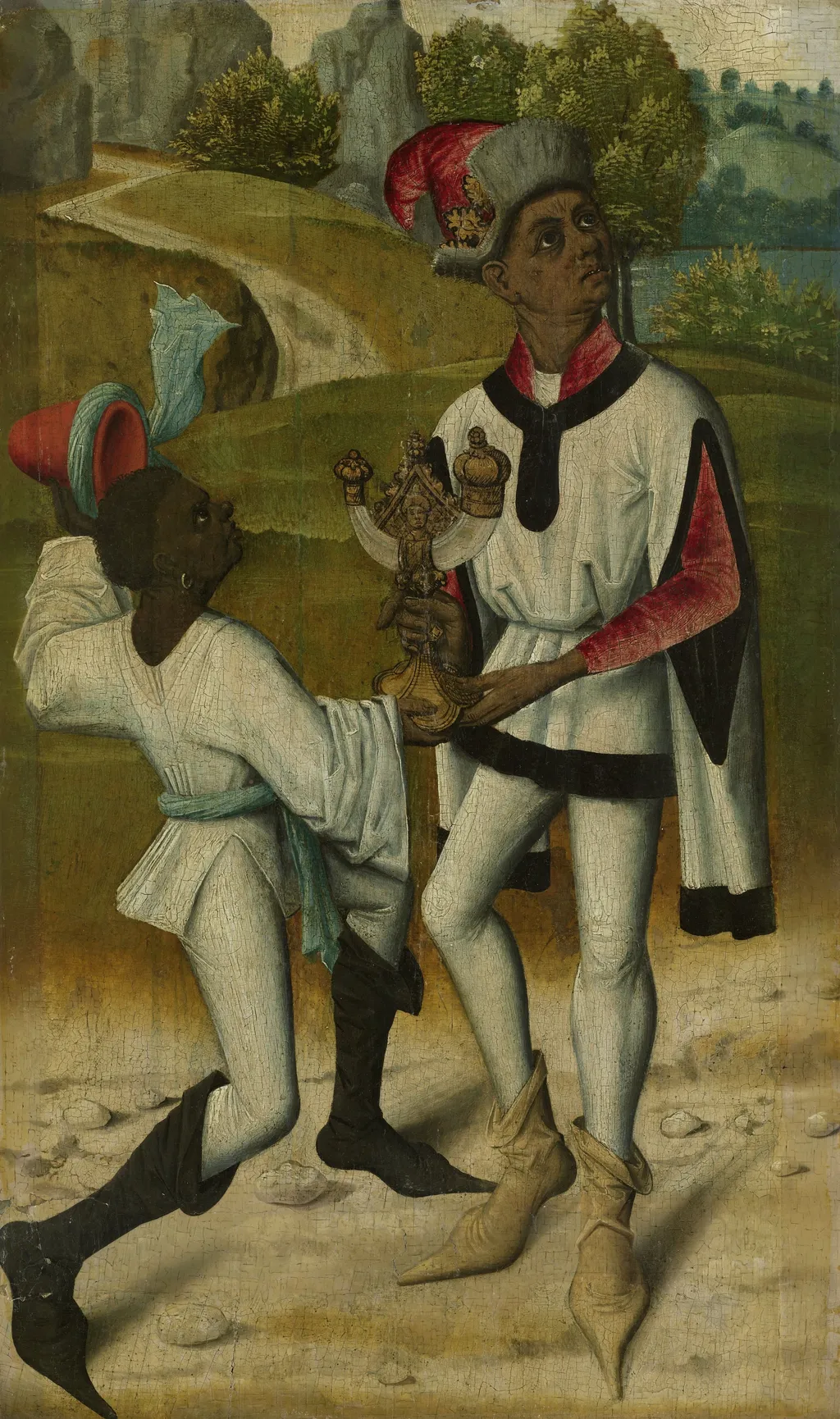
Balthazar, one of the three Magi, with a servant is an oil painting. It dates from 1490 and is held in the collection of the Rijksmuseum. The oil painting depicts two figures standing in an open landscape.
About this work
Subject & Meaning
The piece serves as a representation of the Magi tradition, isolating one of the three kings to emphasize his individual role in the narrative.
The painting depicts Balthazar, identified as one of the three Magi, accompanied by a servant. As a work of religious art created in 1480, the subject focuses specifically on this biblical figure rather than the full Adoration scene. The composition highlights Balthazar as the main subject, presenting him alongside his attendant within a devotional context.
The piece serves as a representation of the Magi tradition, isolating one of the three kings to emphasize his individual role in the narrative.
Technique & Style
Created around 1480, this anonymous religious painting is executed in oil paint on a wooden panel. The work measures 40 cm in height and 24 cm in width. As a depiction of Balthazar, one of the three Magi, accompanied by a servant, the piece exemplifies late 15th-century panel painting techniques utilized for devotional subjects.
The application of oil media on a rigid support was characteristic of the period's approach to preserving detailed religious imagery.
History & Provenance
Balthazar, one of the three Magi, with a servant is an anonymous oil-on-panel painting dated to 1480. The work measures 40 cm in height and 24 cm in width and depicts the Magus Balthazar accompanied by a servant. It entered the collection of Cornelis Hoogendijk before being acquired by the Rijksmuseum, where it is now housed at Museum Arnhem in Arnhem.
Later records indicate it passed to Maria Ida Adriana Hoogendijk. No information about the original commission is recorded in the available sources.
The painting is held by the Rijksmuseum in Amsterdam, with a documented association to Museum Arnhem. According to the Wikidata record, the work is part of the Rijksmuseum collection and has been owned successively by Cornelis Hoogendijk, Maria Ida Adriana Hoogendijk, and the Rijksmuseum itself. No specific inventory or accession number is recorded in the available sources, and no exhibition history is documented.
Overview
The oil painting depicts two figures standing in an open landscape. The principal figure, identified as Balthazar, one of the three Magi, wears a tall, elaborately decorated hat of red and gold, a white and red robe, and holds a golden chalice topped with two smaller vessels. To his left, a servant in a simple white tunic and a modest red cap leans forward, suggesting deference.
Context
During the era when European artists frequently depicted the Magi, such scenes served both devotional and decorative purposes. The portrayal of Balthazar with opulent attire and a servant reflects contemporary interests in exoticism and the display of material wealth associated with the biblical visitors.
Artist & collection

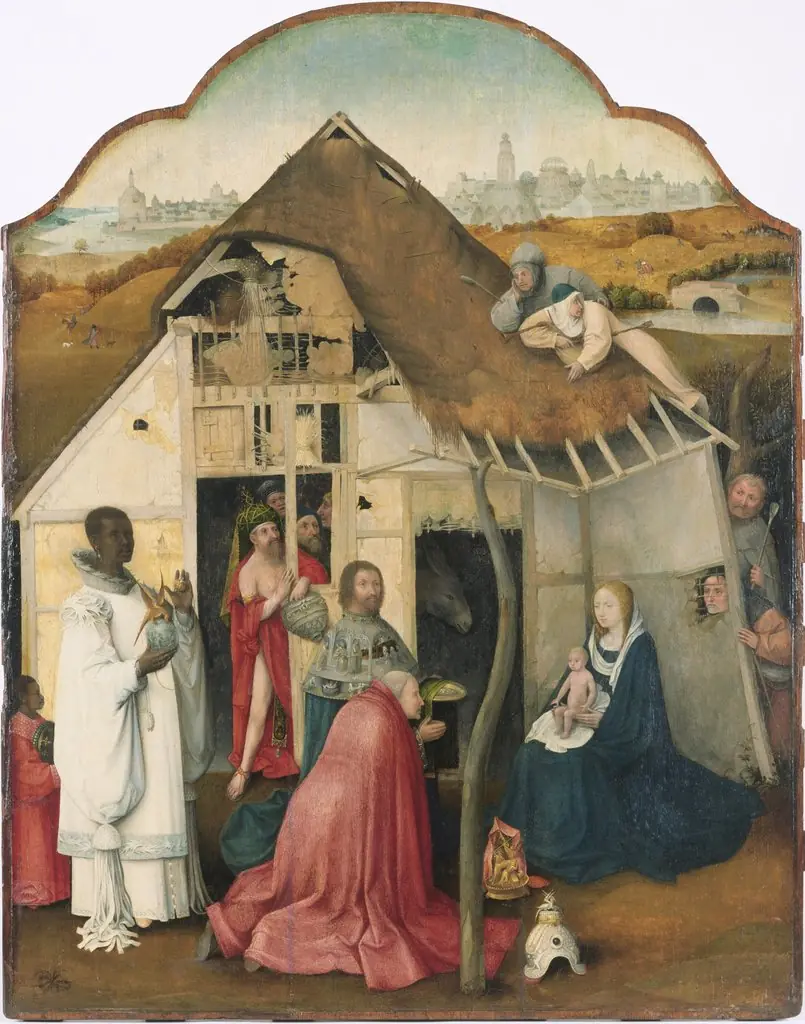 The Adoration of the Magi
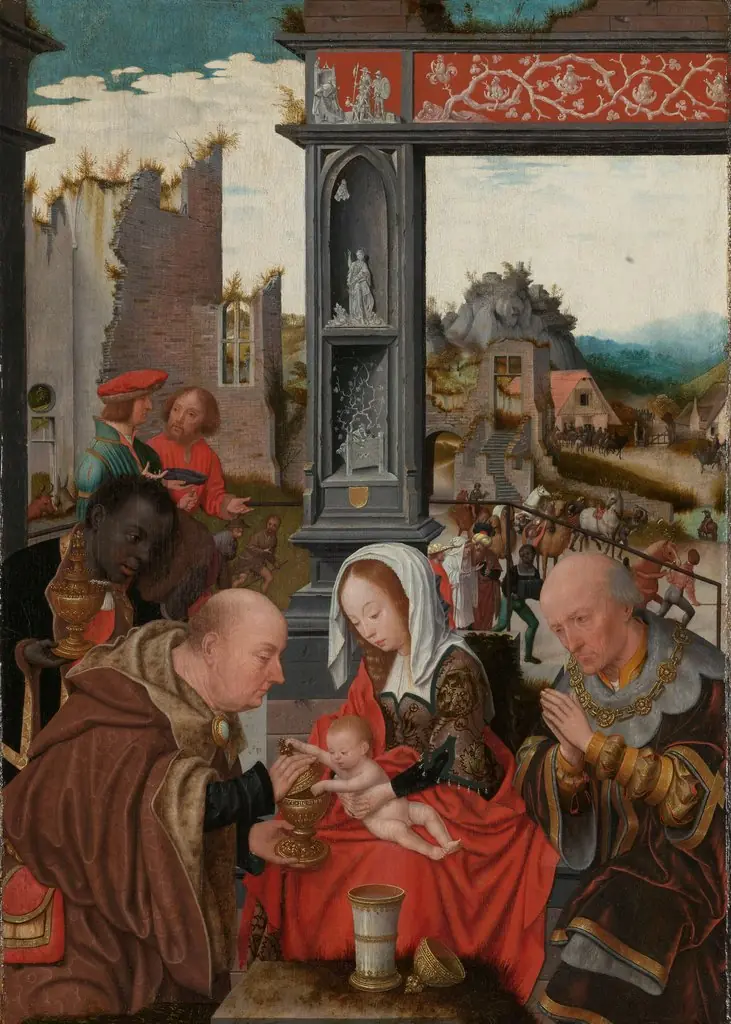 The Adoration of the Magi
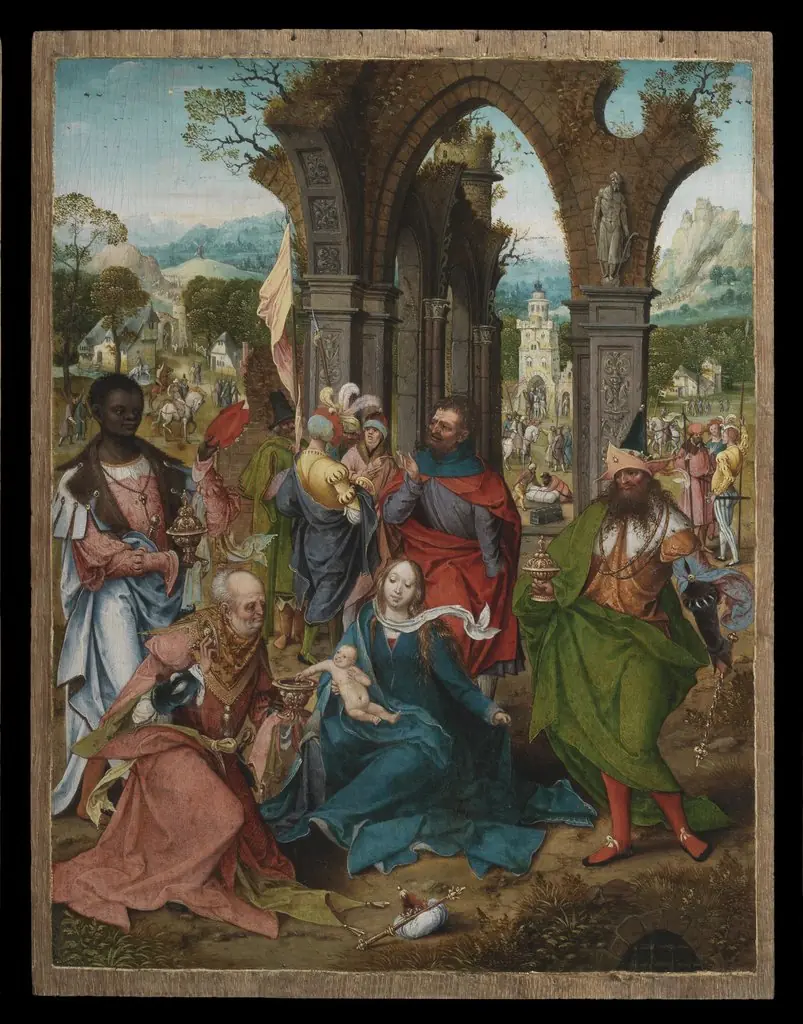 The Adoration of the Magi
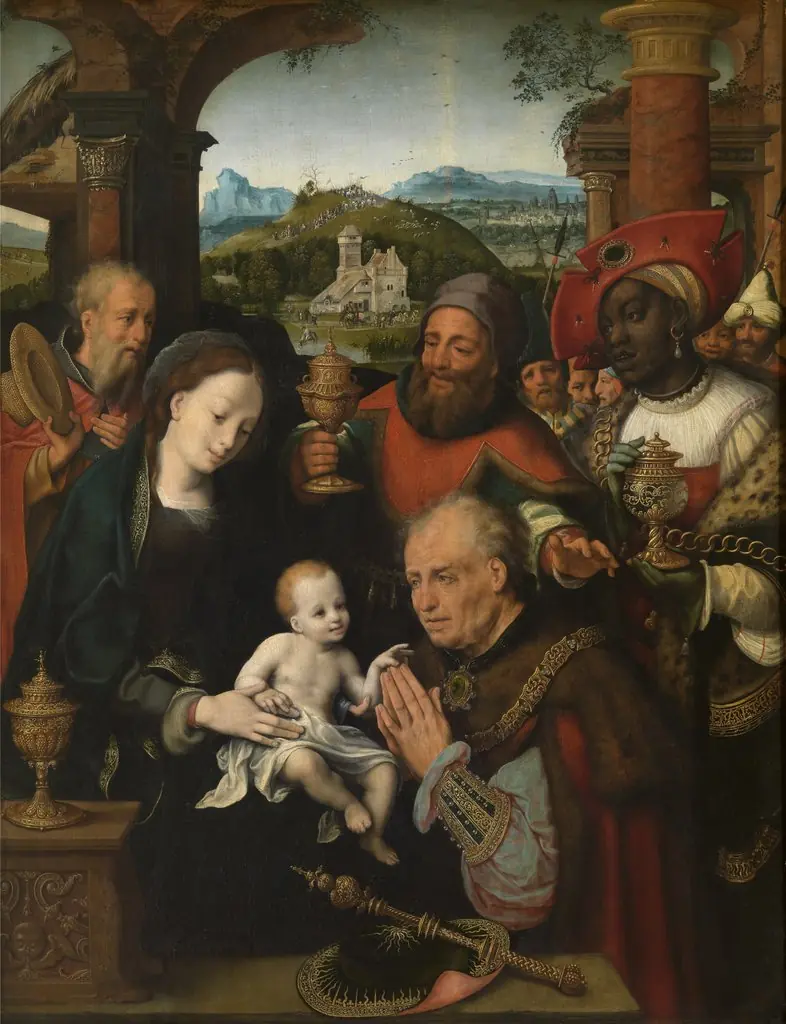 The Adoration of the Magi
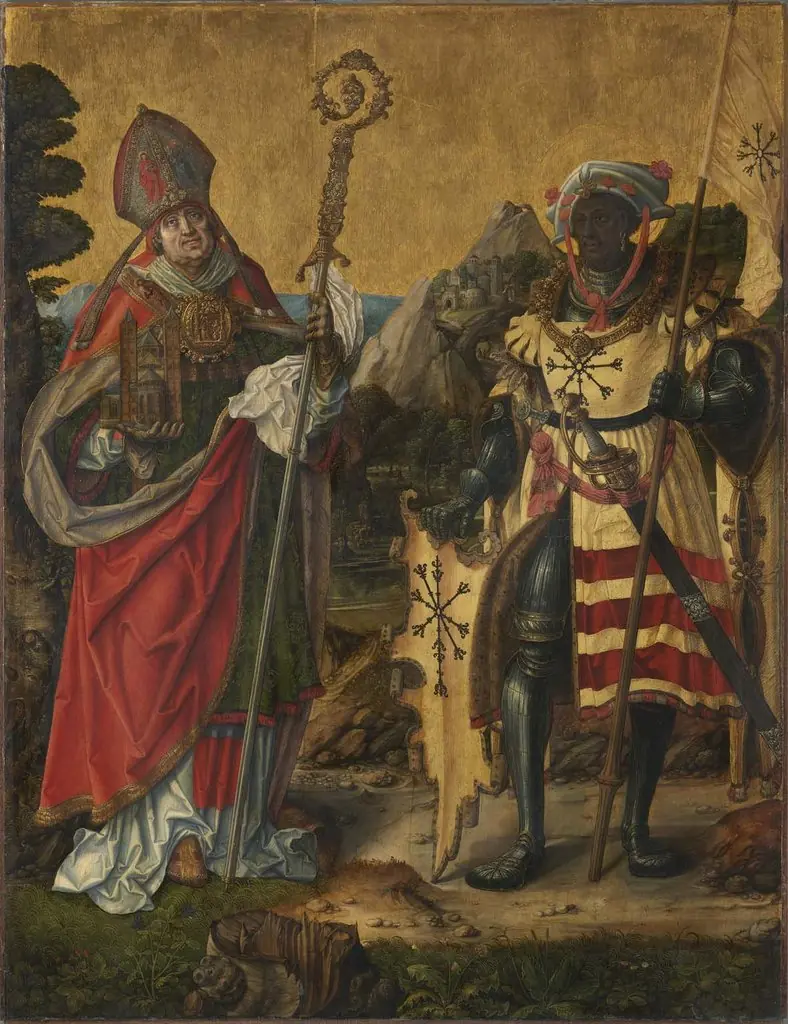 Saints Anno and Gregor the Moor
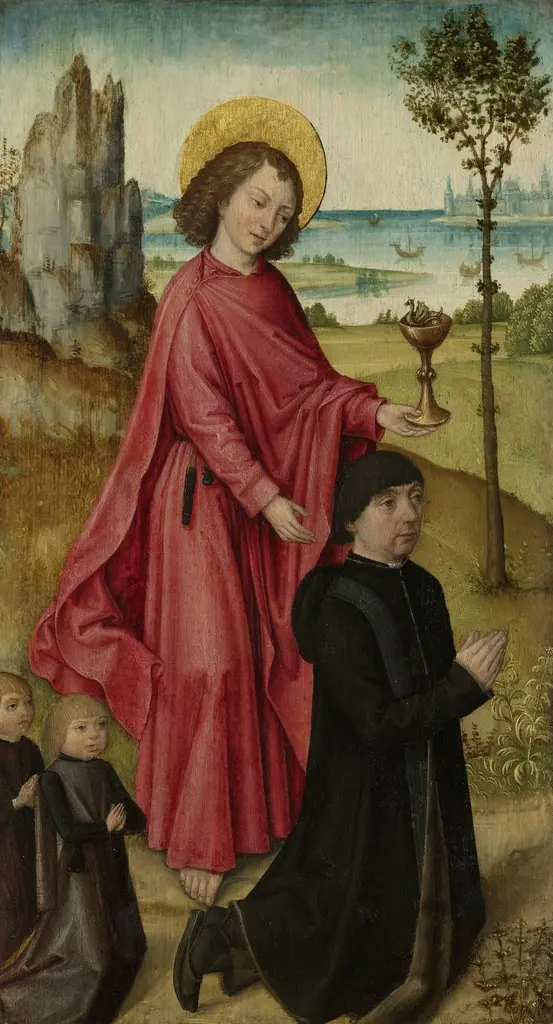 Inner left wing of a triptych with the donor, his two sons and St John the Evangelist
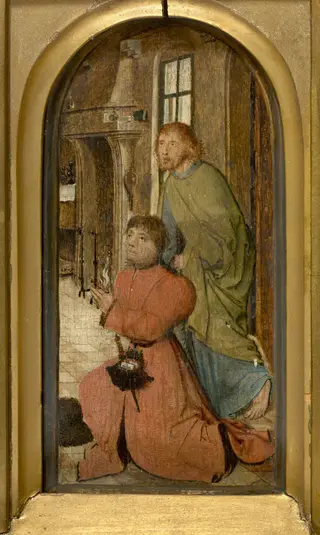 Donor and his Patron, Saint Simon Zelotes
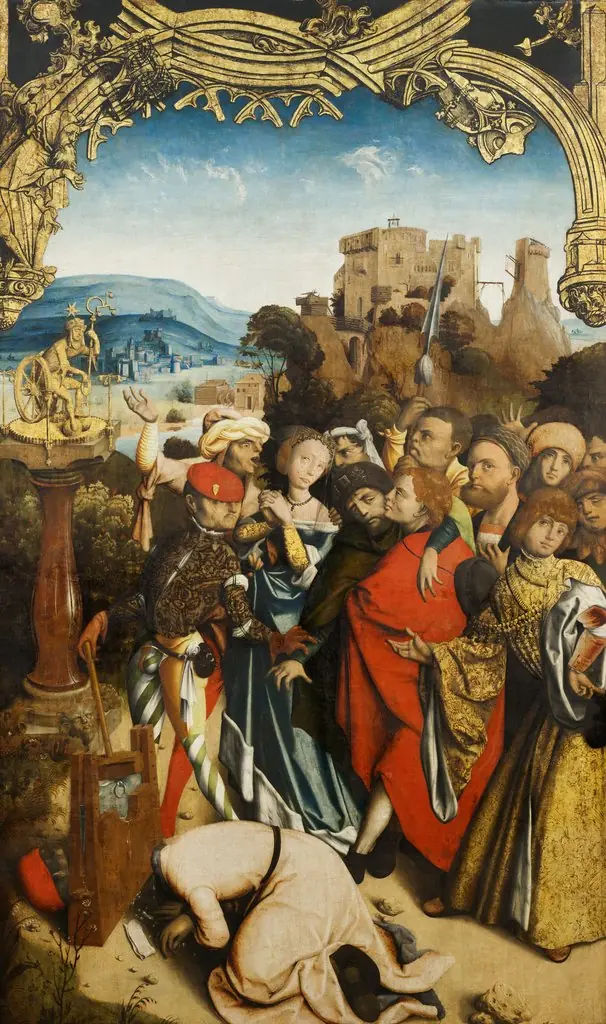 Martyrium der hll. Cantius, Cantianus und Cantianilla (Innenseite); Auferstehung Christi (Außenseite)
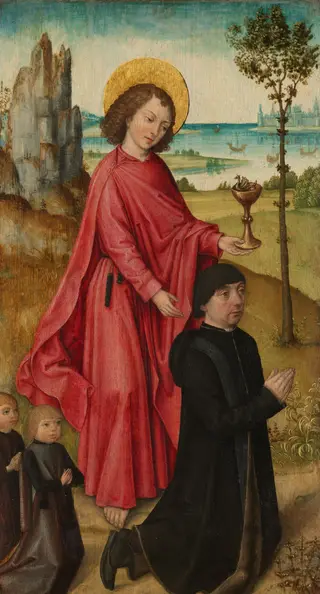 A Donor and his two Sons with Saint John the Evangelist, inner left wing of a triptych
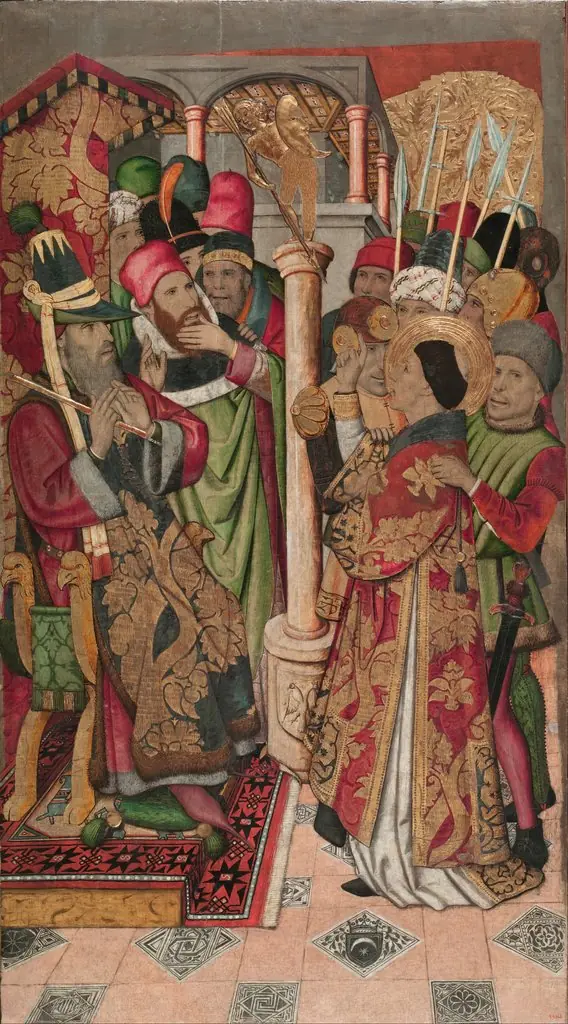 Saint Vincent before Dacian
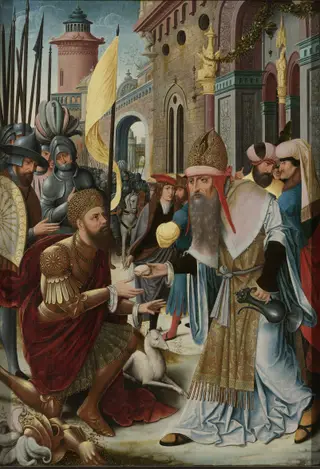 Left wing of an altarpiece with the meeting of Abraham and Melchizedek (inner wing) and Synagoga (outer wing)
- Balthazar, the African Magus