Artwork
The Adoration of the Magi
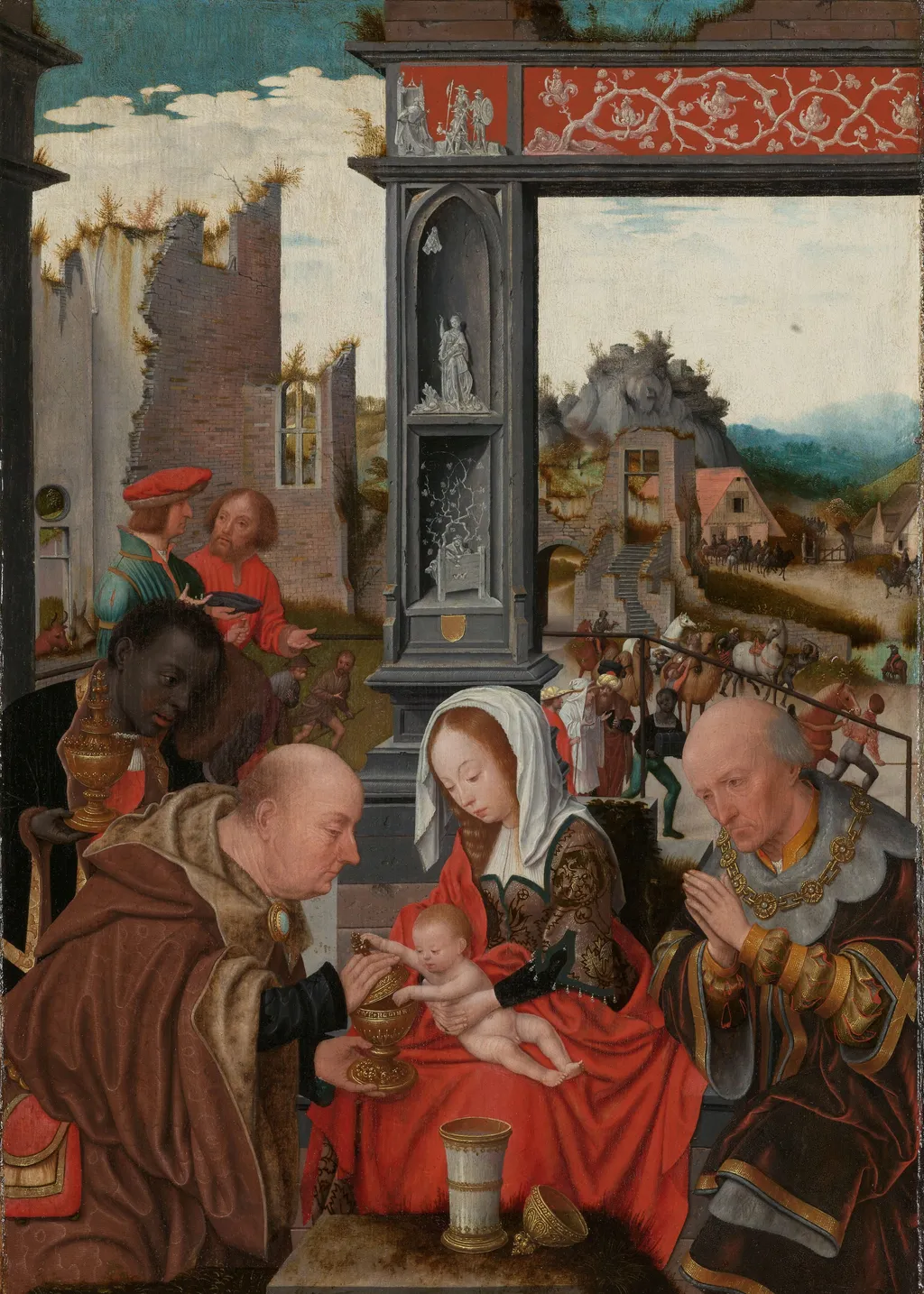
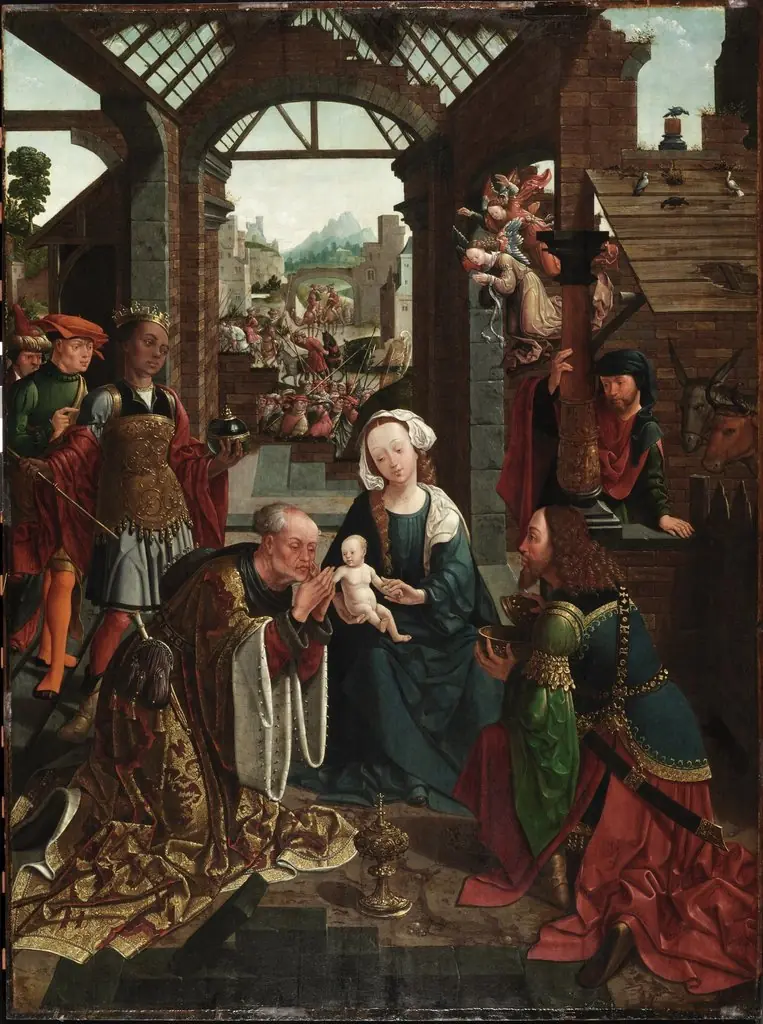
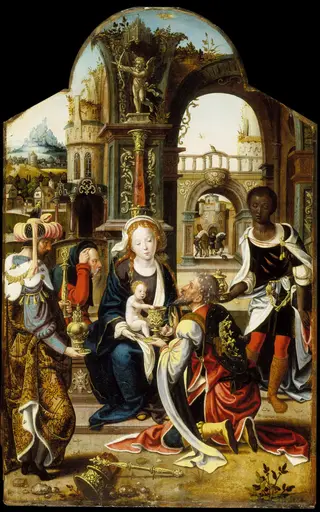
The Adoration of the Magi is an oil painting by the Northern Renaissance artist Jan Mostaert. It dates from 1525 and is held in the collection of the Rijksmuseum.
About this work
Subject & Meaning
Another rare scene depicts King David refusing water brought by his warriors, serving as a typological precursor to the Magi's offering.
The painting illustrates the Biblical narrative of the Magi presenting gifts to the Christ Child, who is seated with Mary amidst the ruins of an elaborate palace. This architectural setting symbolizes the Palace of King David and the decay of the Old Covenant, while the inclusion of the ox and ass adheres to traditional iconography. The three kings represent the three ages of man and the known continents: Melchior (middle-aged, Asia), Caspar (elderly, Europe), and Balthazar (youthful, Africa). Unusually, Melchior appears as a portrait of the commissioner, peering into a goblet inscribed with "Ave Maria."
Small relief scenes embedded in the background architecture deepen the theological meaning. These include the Tree of Jesse, illustrating Jesus's genealogy, and the Tiburtine Sibyl showing Emperor Augustus a vision of the Virgin and Child, a legend prefiguring the Incarnation. Another rare scene depicts King David refusing water brought by his warriors, serving as a typological precursor to the Magi's offering.
Technique & Style
Executed in oil on oak panel, the painting measures 51 cm in height by 36.5 cm in width, with the painted surface slightly reduced to 48.5 cm by 34 cm.
The composition centers on a half-length group of figures arranged across the lower third of the vertical format, emphasizing intimacy while allowing space above for architectural ruins and a receding landscape. Mary and the Christ Child occupy a shallow foreground plane, framed by the ruins of an elaborate palace that symbolizes the Old Covenant. The Magi are depicted in rich but restrained costumes, with Melchior wearing a Spanish-style travelling cloak and hood, and the Christ Child gazing into an inscribed incense goblet.
Small narrative scenes appear as sculpted reliefs on the architecture behind the group, including an unusual rendering of King David and the water drawn from Bethlehem, the Tree of Jesse, and the Tiburtine Sibyl's vision of Augustus.
The handling shows careful modeling of faces and drapery, with restrained colorism and attention to surface detail, consistent with early sixteenth-century Haarlem practice.
History & Provenance
The Adoration of the Magi by Jan Mostaert is dated to the early 1520s, with 1525 given as the year of completion in the artist's record.
The painting descended through the Van Renesse van Elderen family: it was owned by Anna van Renesse van Elderen, then by her descendants Georges Frederik and Anne Marguerite Joseph, and by Frederik Karel Theodoor baron d'Isendoorn a Blois before entering the collection of the Rijksmuseum, Amsterdam, where it remains; it was noted on display in room 0.1 in 2020. The panel measures 51 cm by 36.5 cm. The small scale and intimate composition indicate it was commissioned for private devotion rather than a public setting.
Context
The Adoration of the Magi (1525) by Jan Mostaert is a small oil on panel religious work housed in the Rijksmuseum, noted for its private commissioning and intimate composition. Scholarship emphasizes its relation to Netherlandish traditions, the half‑length format, and distinctive iconography such as the Melchior portrait and the biblical relief scenes. Critical reception highlights its role in early Dutch Renaissance portraiture and its significance within the broader Adoration motif, distinguishing it from larger Mannerist versions.
The painting fits within Mostaert's oeuvre of devotional works and reflects Haarlem workshop practices, underscoring its place in Dutch art history.
Legacy
The Adoration of the Magi (1525) by Jan Mostaert is part of the Rijksmuseum collection and was exhibited in room 0.1 of the museum in 2020. The oil on panel measures 51 cm by 36.5 cm and is commonly referred to as the Mostaert Amsterdam Adoration to distinguish it from other versions of the subject. Art historical analysis notes its compositional similarities to contemporary Netherlandish Adorations while highlighting unusual iconographic choices, such as the inclusion of specific Old Testament scenes and a private commissioning context.
The work's scholarly visibility has contributed to ongoing studies of early Netherlandish depictions of the Magi and of private devotional painting in the sixteenth century.
Overview
Jan Mostaert, a Dutch Renaissance painter, created The Adoration of the Magi in the early 1520s. This oil on panel work, sometimes called the Mostaert Amsterdam Adoration to distinguish it, is housed in the Rijksmuseum, Amsterdam. The painting measures 51 by 36.5 centimeters, with the painted surface slightly smaller.
It depicts the biblical scene of the three Magi presenting their offerings to the Christ child, set within an elaborate, yet ruined, architectural space.
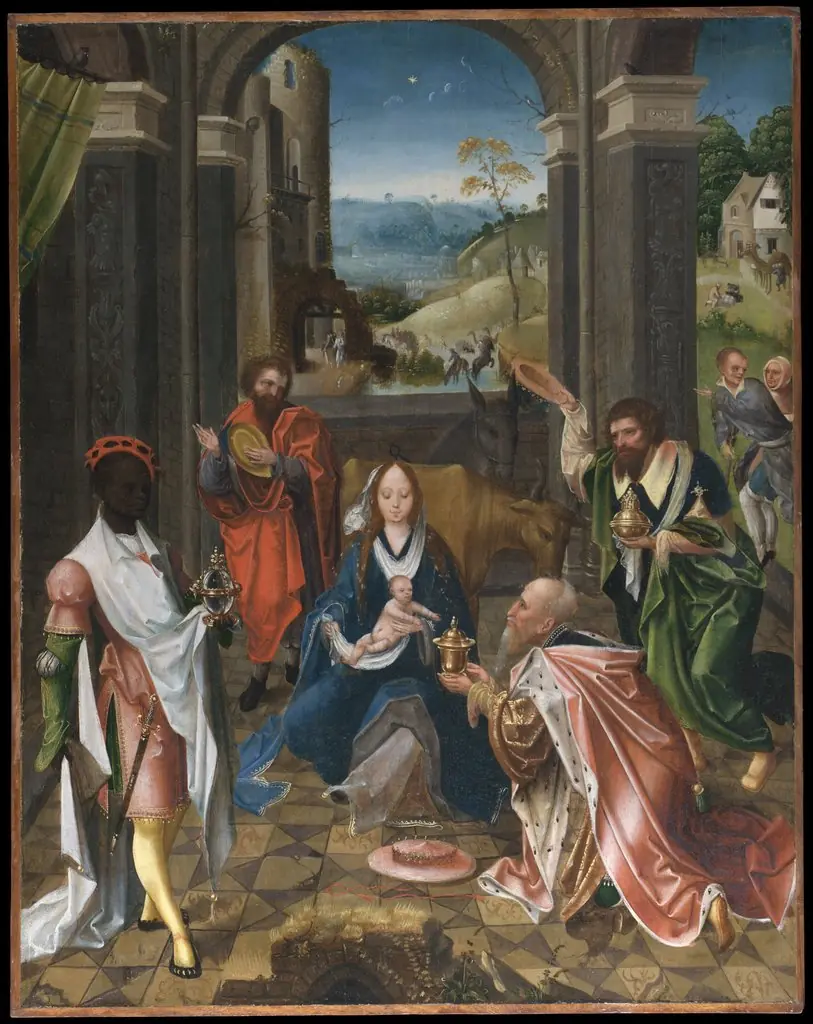
Own this work as a print
Artist & collection
Artist
Jan Mostaert (c. 1475 – 1552/1553) was a Dutch Renaissance painter who is known mainly for his religious subjects and portraits. One of his most famous creations was the Landscape with an Episode from the Conquest of…

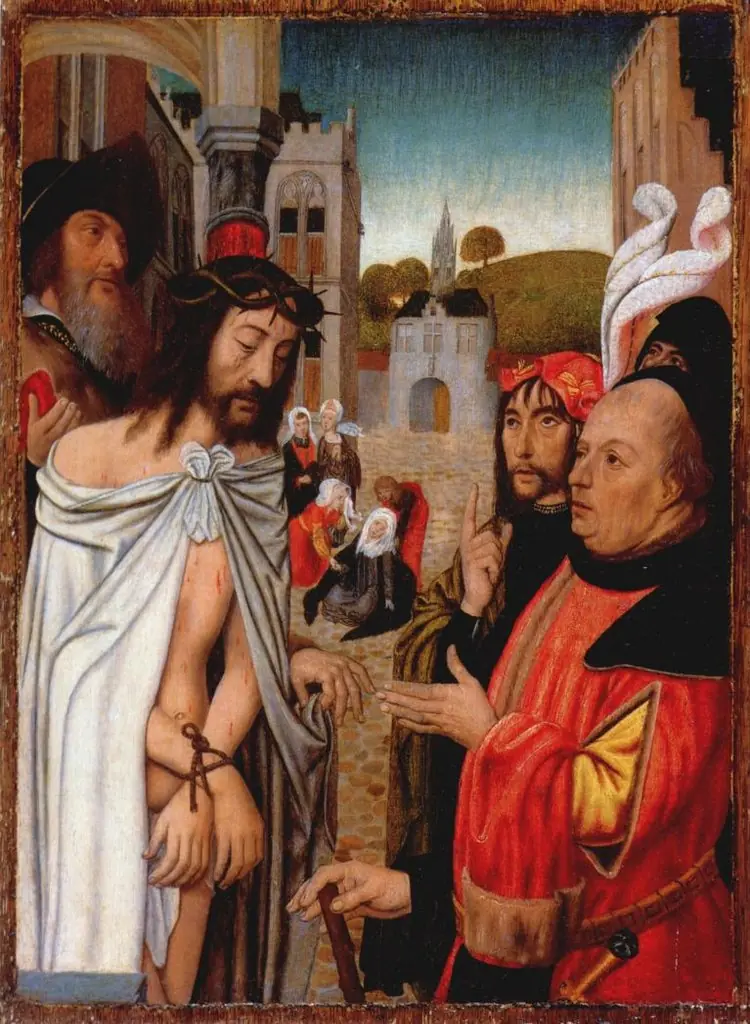 Christ Shown to the People
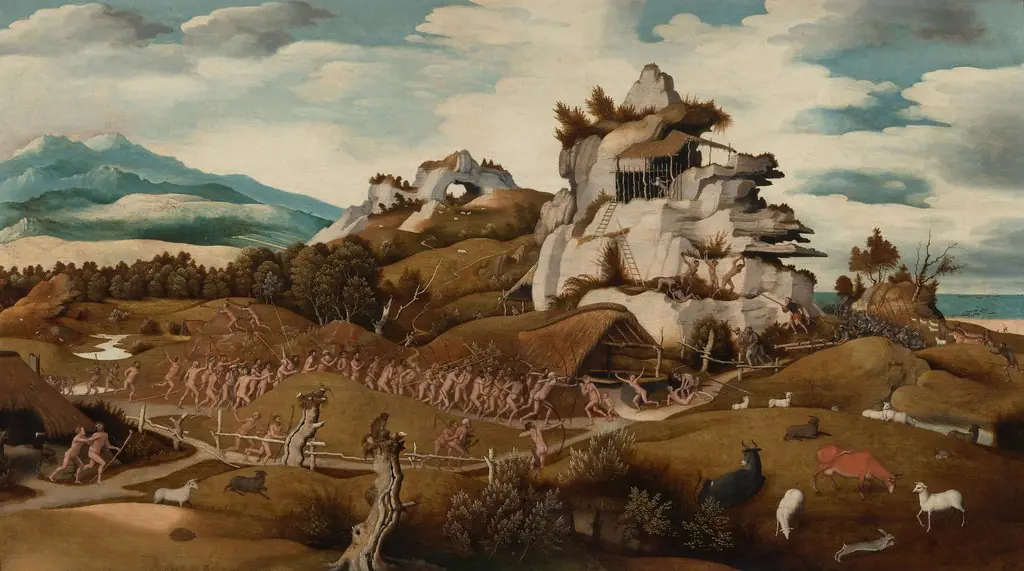 Landscape with a Scene of the Conquest of America
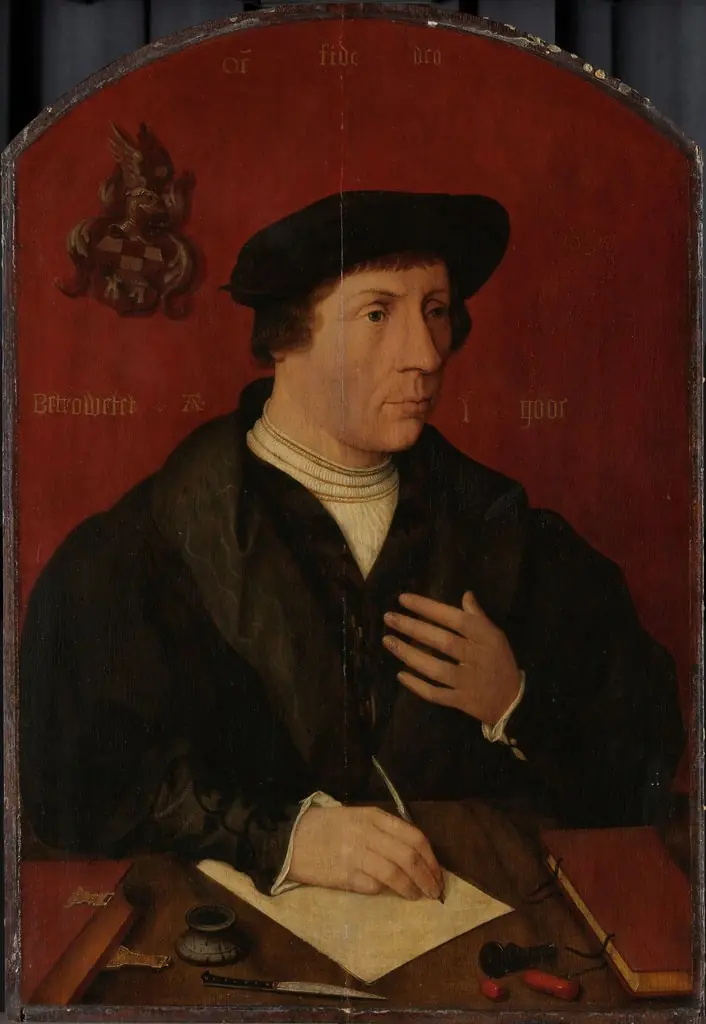 Portrait of a man
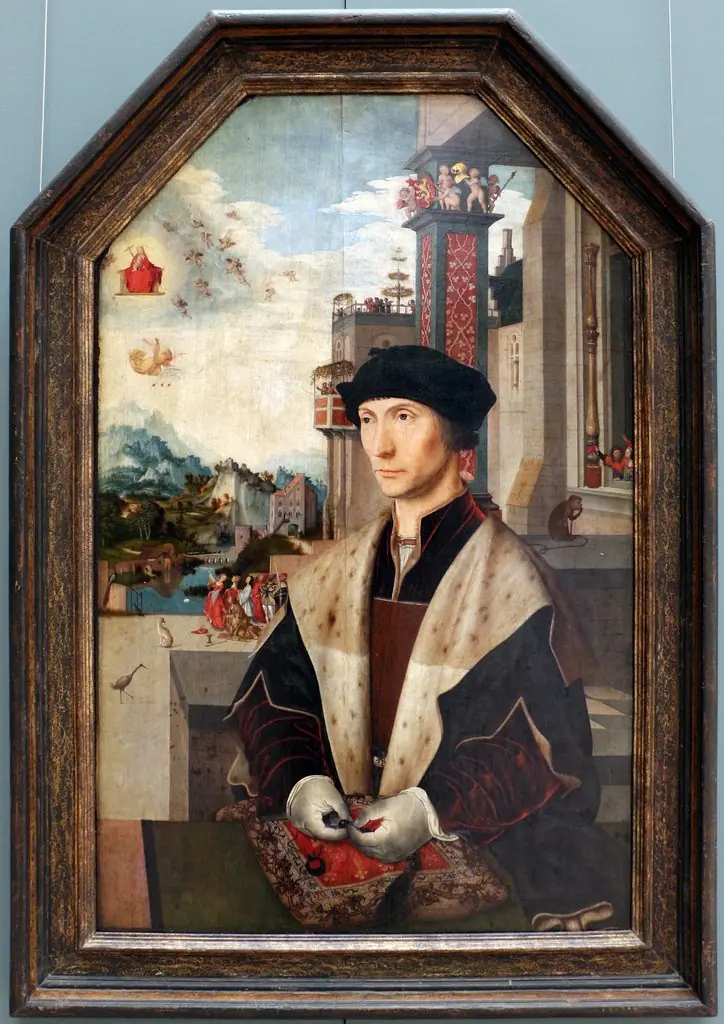 Portrait of the knight Abel van Coulster (1477-1548), representative to the Hof van Holland in 1512
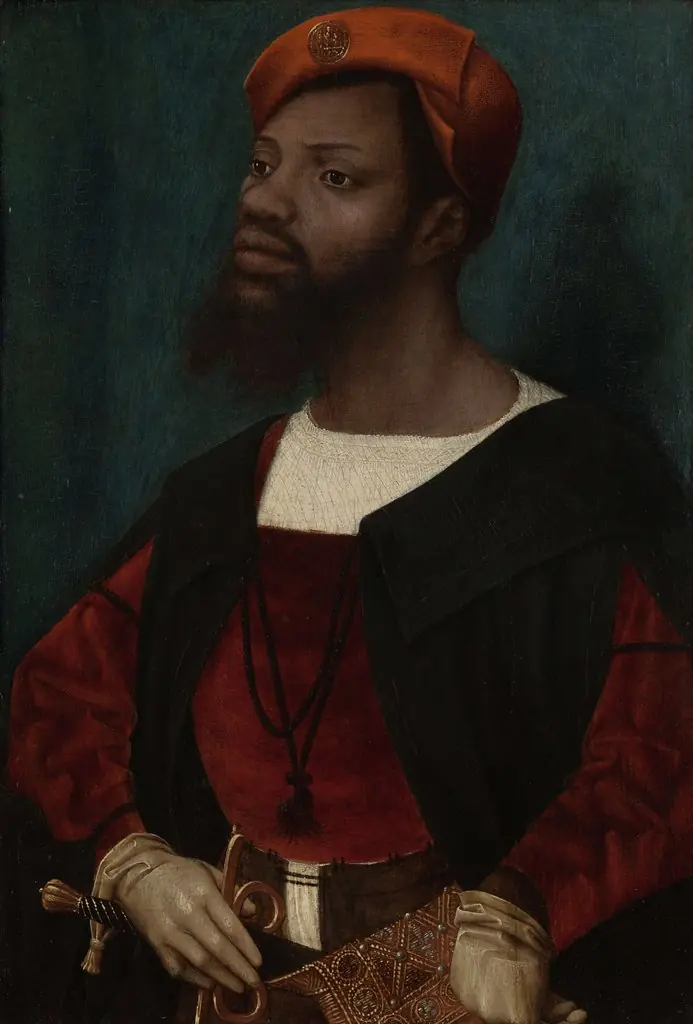 Portrait of an African Man (Christophle le More?)
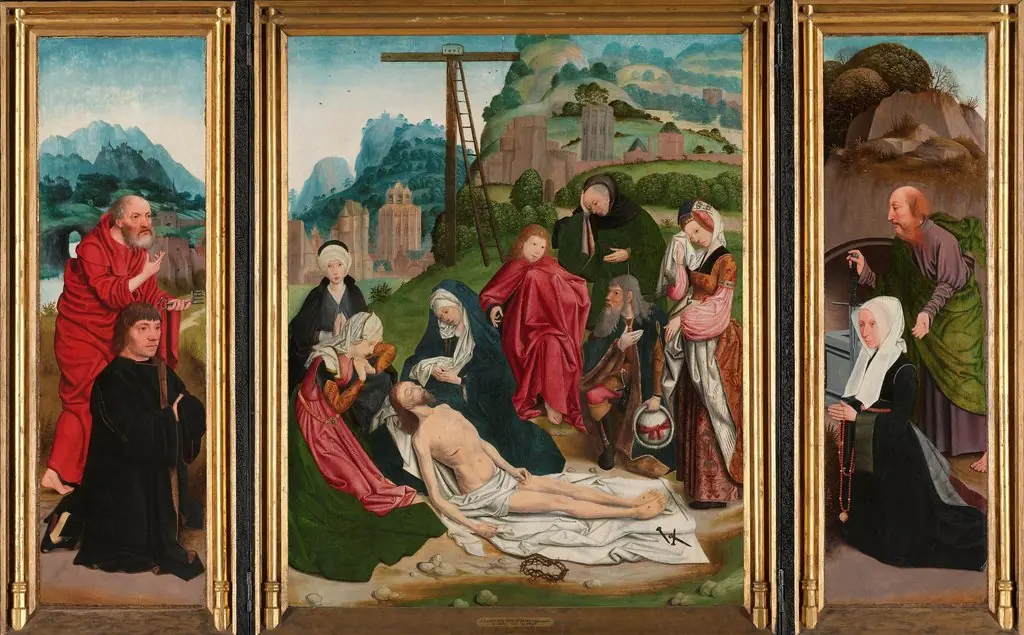 Triptych with the Lamentation (centre panel), the donor with St Peter (inner left wing), the donor’s wife with St Paul (inner right wing) and the donors’ coats of arms (outer wings)
 A Woman
- The Adoration of the Magi
 The Adoration of the Magi
 The Adoration of the Magi
 The Adoration of the Kings
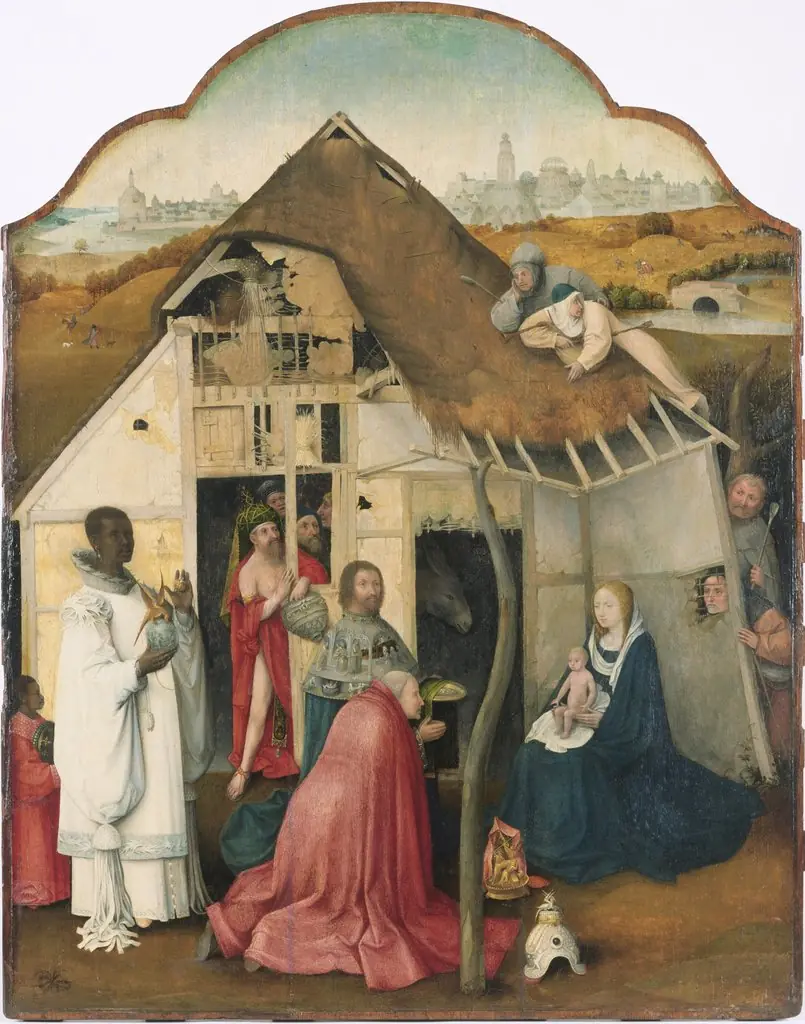 The Adoration of the Magi
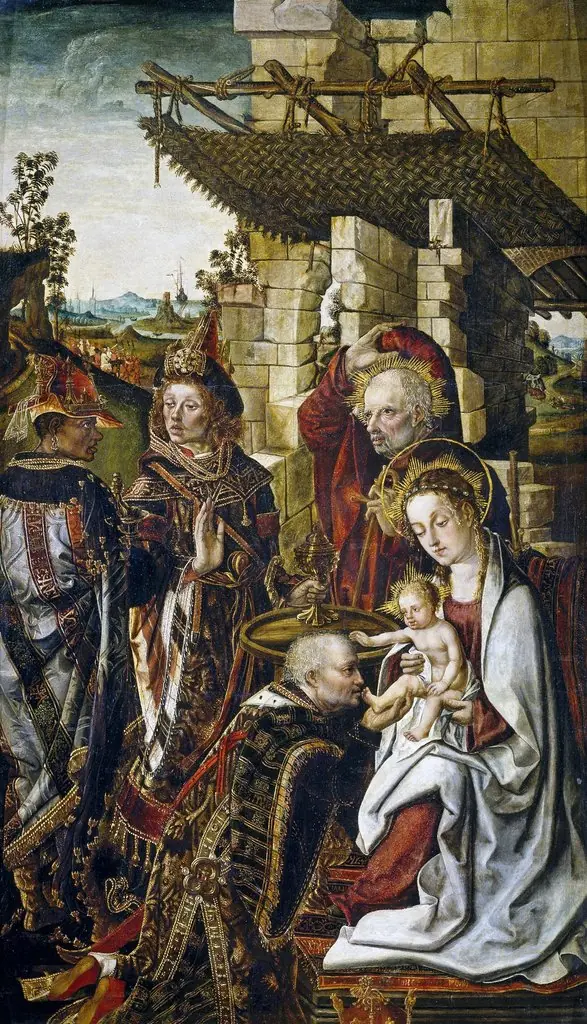 The Adoration of the Magi
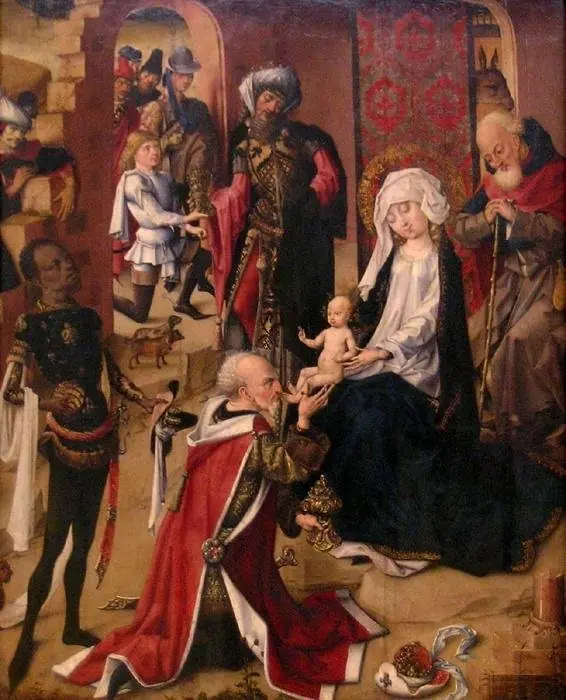 The Adoration of the Magi
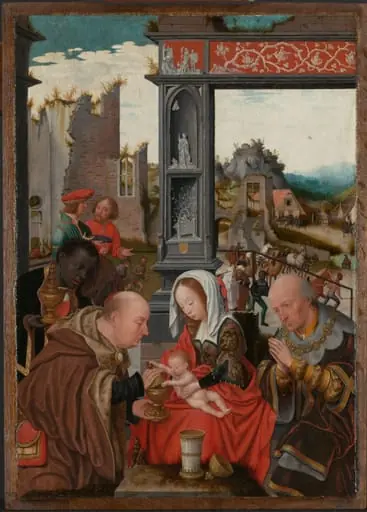 De aanbidding van de koningen
 The Adoration of the Magi
 The Adoration of the Magi
 The Adoration of the Magi
 The Adoration of the Kings