Artwork
Bejeweled Buddha Preaching
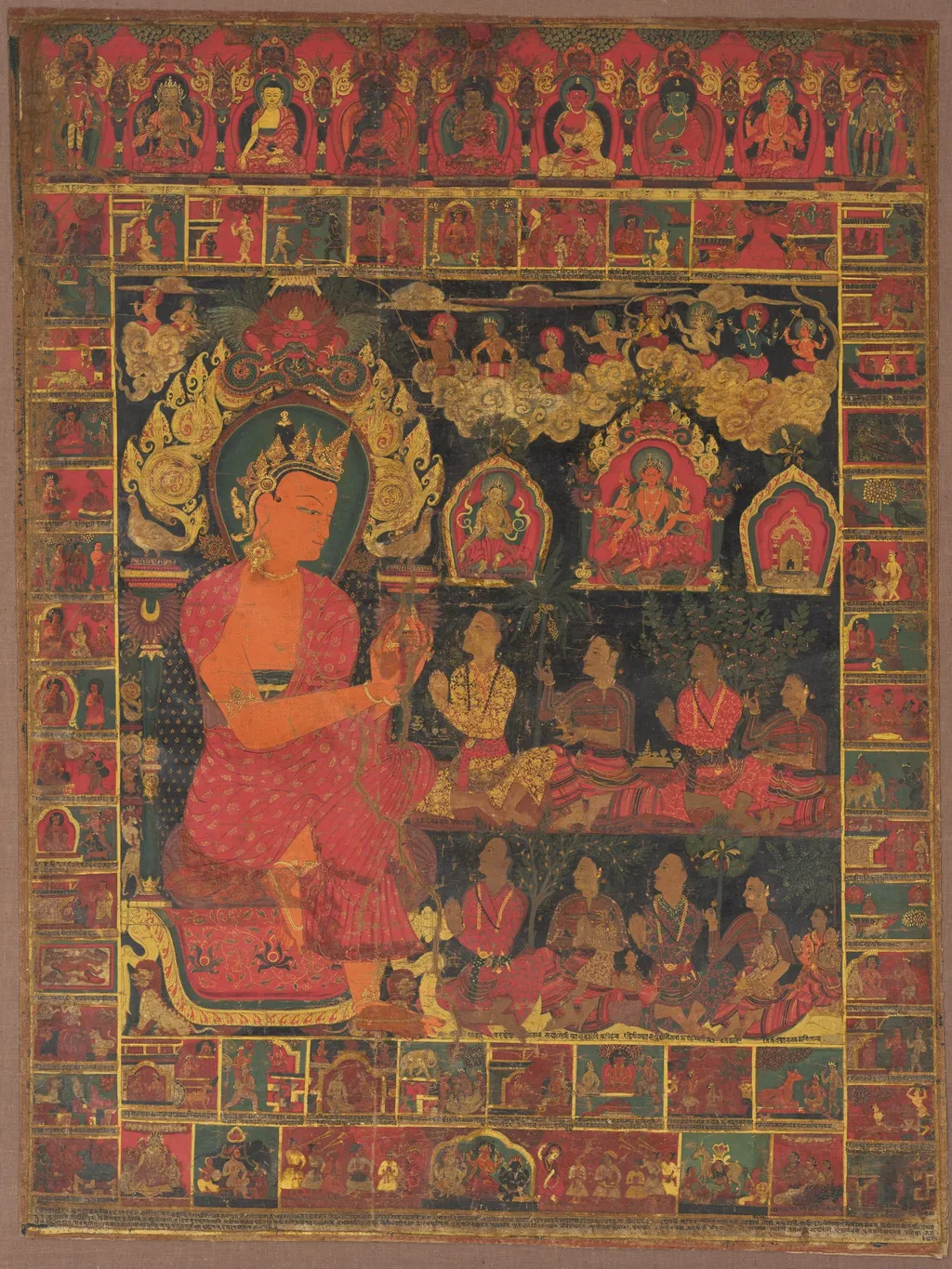
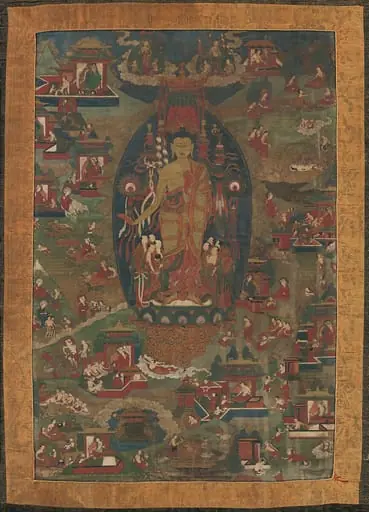
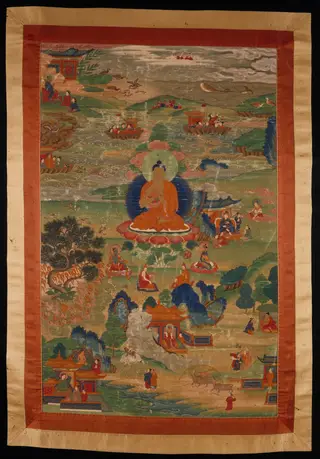
Bejeweled Buddha Preaching is an unspecified painting. It dates from 1648 and is held in the collection of the Cleveland Museum of Art. The work is a vibrant painted composition dominated by a central figure of the Buddha, clothed in a red robe and holding an object.
About this work
History & Provenance
The available sources do not provide information about any earlier owners, patrons, commissioning circumstances, or later transfers of the piece.
Bejeweled Buddha Preaching is a painting created in 1648 by an unidentified artist in Nepal. The work’s inception date is recorded as 1648-01-01, and it is classified as a painting within the museum’s holdings. It is presently housed in the Cleveland Museum of Art, where it bears the accession number 1973.69.
The available sources do not provide information about any earlier owners, patrons, commissioning circumstances, or later transfers of the piece.
The painting Bejeweled Buddha Preaching, created in 1648 in Nepal, is held in the collection of the Cleveland Museum of Art in Cleveland. The museum assigned the work the accession number 1973.69. No specific exhibition history is recorded in the provided sources.
Overview
The work is a vibrant painted composition dominated by a central figure of the Buddha, clothed in a red robe and holding an object. He is surrounded by a multitude of smaller vignettes that depict people, animals and architectural elements, each set within gold‑lined frames. A dark, cloud‑filled sky forms the backdrop, while the outer margins contain a series of tiny boxed scenes.
Subject & Meaning
At the heart of the painting the Buddha sits serenely, his expression tranquil despite the surrounding activity. The ancillary panels likely illustrate narratives or teachings associated with the Buddha, as suggested by seated figures on thrones and gesturing characters that appear to be delivering discourse. The juxtaposition of the central calm and the bustling peripheral scenes reflects the dissemination of Buddhist doctrine.
Technique & Style
The artist employs a rich palette of bright hues, contrasting them against a somber, cloud‑laden background to create a dramatic chiaroscuro effect. Gold detailing outlines the peripheral frames and accents the Buddha’s robe, adding a luminous quality. The composition is densely populated, with each miniature scene rendered in fine detail within its own bordered compartment.
Context
The painting belongs to a tradition of Buddhist visual narratives that combine a central icon with surrounding illustrative episodes. Such works were often used for devotional or instructional purposes, allowing viewers to contemplate the Buddha while simultaneously accessing related stories. The use of gold framing and vivid coloration aligns with the aesthetic preferences of courtly or monastic patronage in the region where this style flourished.
Artist & collection

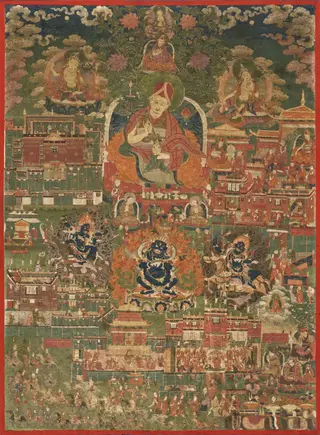 Kunga Tashi and Incidents from His Life (Abbot of Sakya Monastery, 1688-1711)
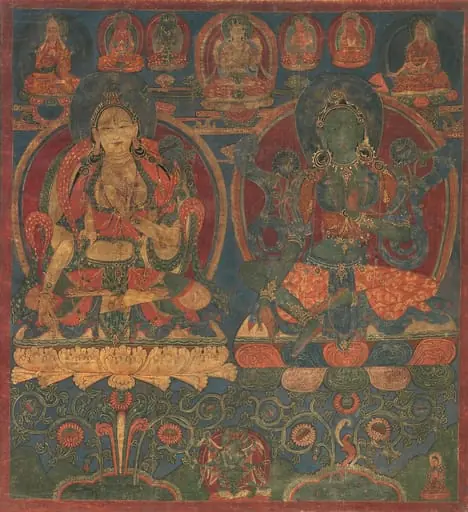 Untitled
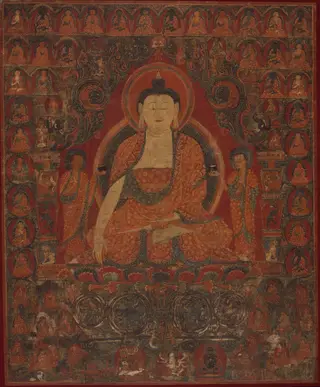 Shakyamuni with the Thirty-Five Buddhas of the Confession of Sins and the Eighteen Arhats
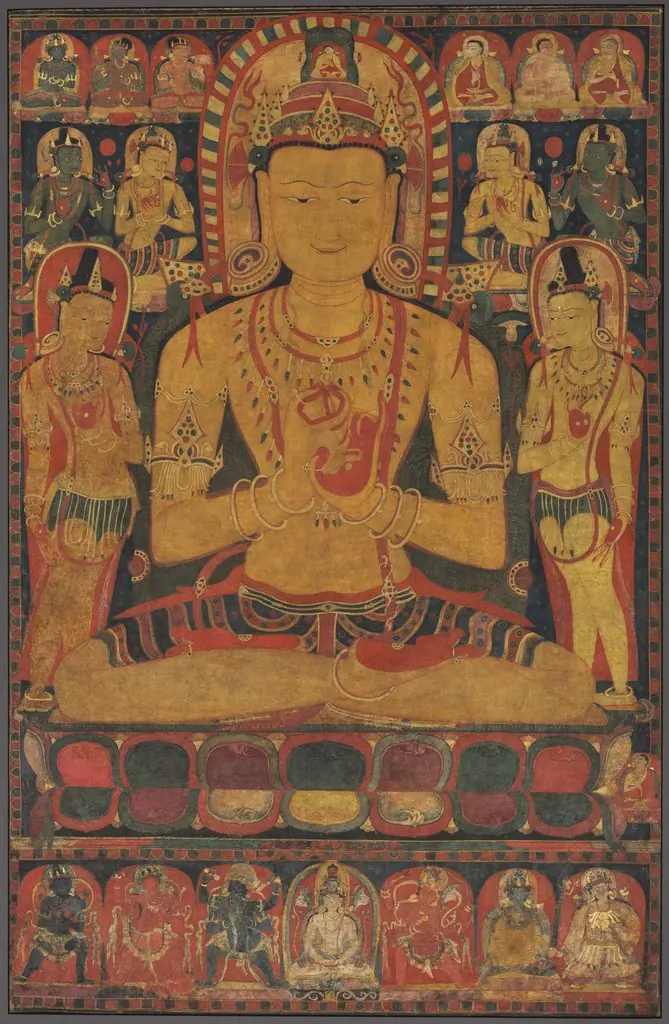 Tantric Buddha Vairochana as Vajrasattva
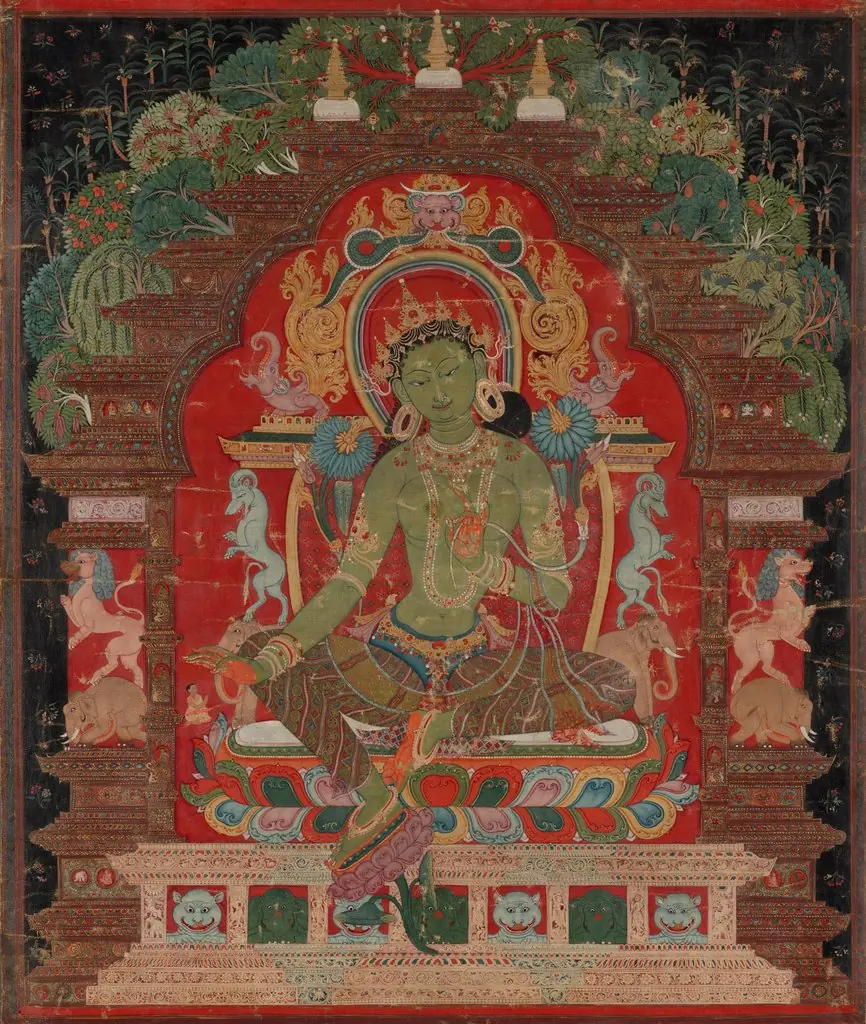 Green Tara
 Untitled
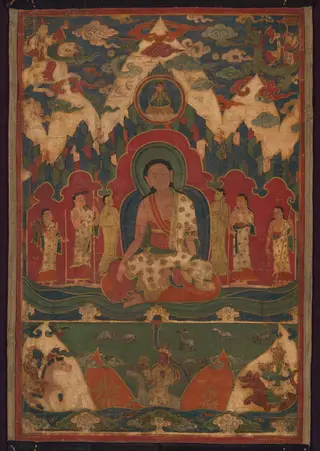 Milarepa on Mount Kailash
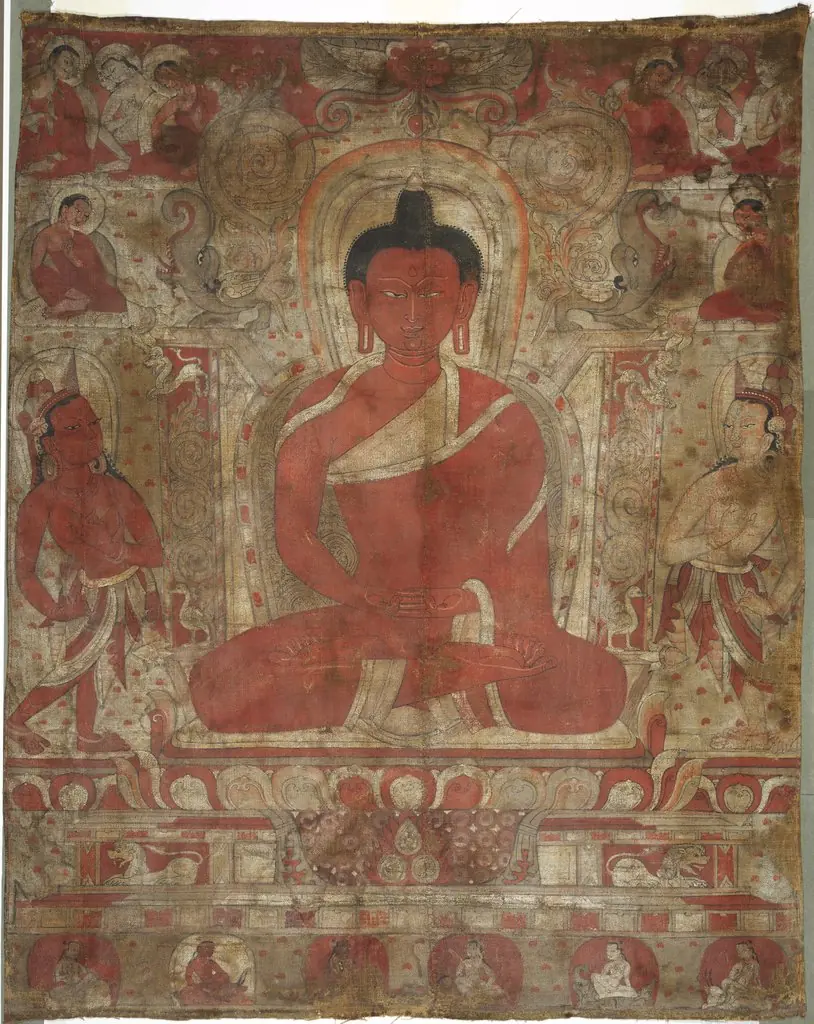 Seated Amitabha with Attendants
 Previous Birth Stories of the Buddha