Artwork
Bild
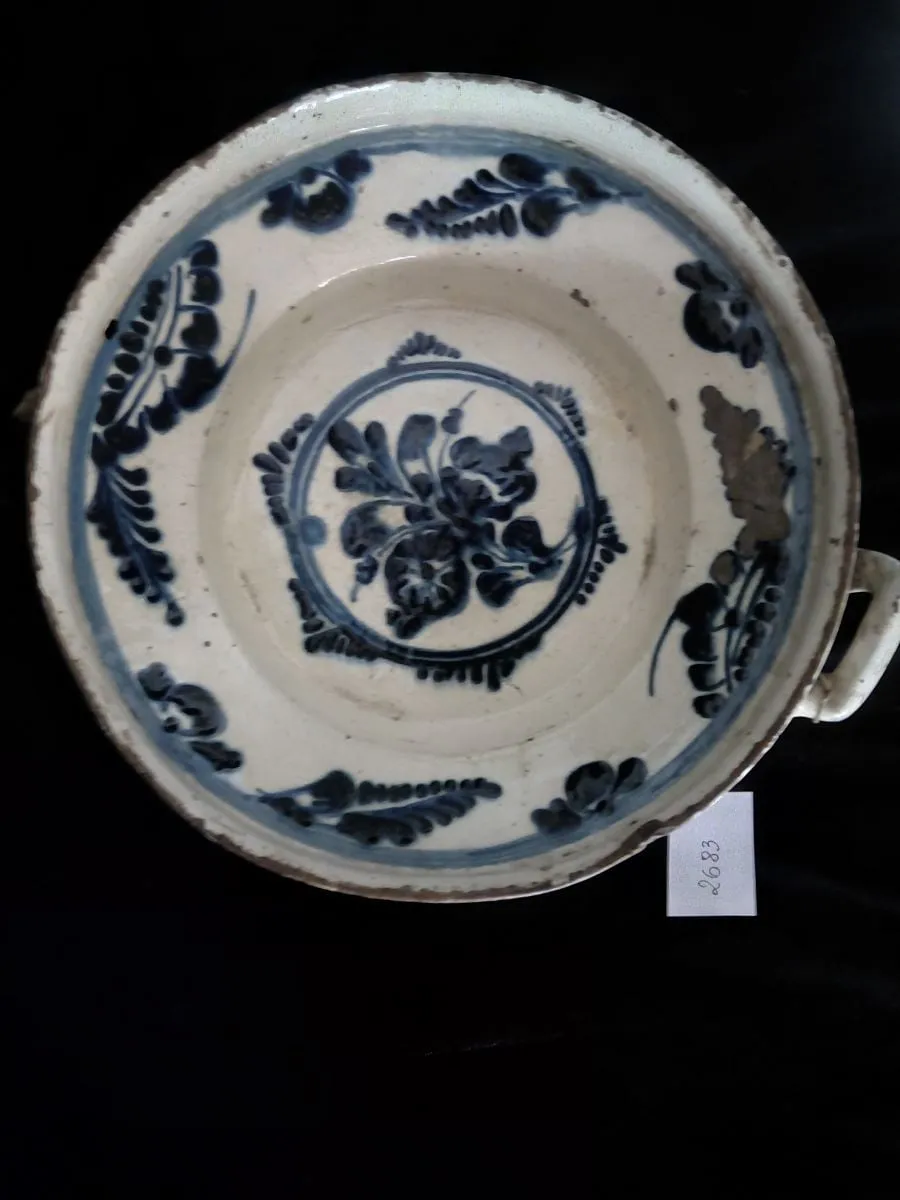
Bild is a print by Unknown. It dates from 1850 and is held in the collection of the Bistrita-Năsăud Museum Complex. This artifact is a handcrafted ceramic plate, distinguished by its irregular edges and gradual transition from a dark rim to a pale center.
About this work
Overview
This artifact is a handcrafted ceramic plate, distinguished by its irregular edges and gradual transition from a dark rim to a pale center. Its unglazed surface and asymmetrical form suggest it was shaped manually, likely on a slow-turning wheel or by hand, without industrial molds. The simplicity of its design reflects utilitarian craftsmanship rather than decorative intent.
Subject & Meaning
The plate serves no symbolic or ceremonial purpose; its meaning lies in its function as an everyday vessel. It represents the quiet persistence of domestic life in pre-industrial societies, where objects were made to last through repeated use, not to impress. Its wear and irregularities speak to the rhythms of daily labor and the absence of mass production.
Technique & Style
The plate was formed using traditional hand-building methods, evidenced by uneven thickness and a naturally fading rim color, possibly from uneven firing or ash deposition in a wood-fired kiln. No glaze or painted decoration is present, indicating a focus on utility over ornamentation. The dark edges may result from prolonged exposure to heat or organic residues absorbed during use.
History & Provenance
Though exact origins are undocumented, similar objects are found in ethnographic collections from rural European and Mediterranean communities in the 18th and 19th centuries. Its construction aligns with regional pottery traditions where families or local artisans produced household wares from locally sourced clay, often without formal training or standardized tools.
Context
This plate belongs to a broader category of domestic ceramics made before industrialization, when most households relied on locally produced goods. Its presence in museum collections underscores a shift in cultural value, from discarded utility to preserved evidence of everyday life, offering insight into material conditions and labor practices of past communities.
Legacy
Today, such objects are studied to understand pre-industrial craftsmanship and subsistence economies. They inform contemporary discussions about sustainability, handmade production, and the loss of vernacular skills. Museums preserve them not for aesthetic value, but as tangible links to ordinary lives long past.
Artist & collection








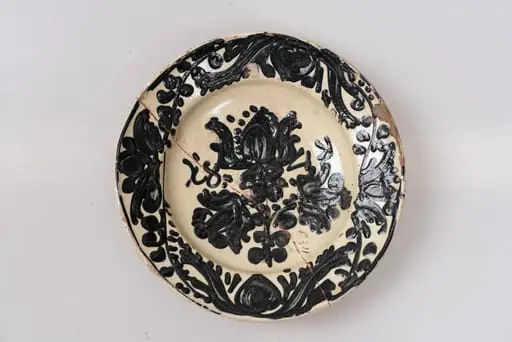 Farfurie de formă semi-adâncă, cu buză lată, evazată; piesa este angobată pe fața interioară cu un strat de humă albă, peste care este pictat cu cornul și cu pensula decorul monocromatic, format din motive florale și fitomorfe stilizate (tulpină cu trei flori de lalea și frunze, reprezentate central pe fundul farfuriei, și un șir continuu format din patru flori de lalea cu frunze, așezate diametral opus pe buza farfuriei). Muchia buzei este marcată cu o dungă de culoare albastră. Pe fundul farfuriei, de o parte și de alta a decorului floral, este înscris cu pensula anul fabricării piesei: 18 48. Cromatica: alb, albastru-închis. Farfuria este acoperită pe fața decorată cu un strat de smalț transparent.
 farfurie
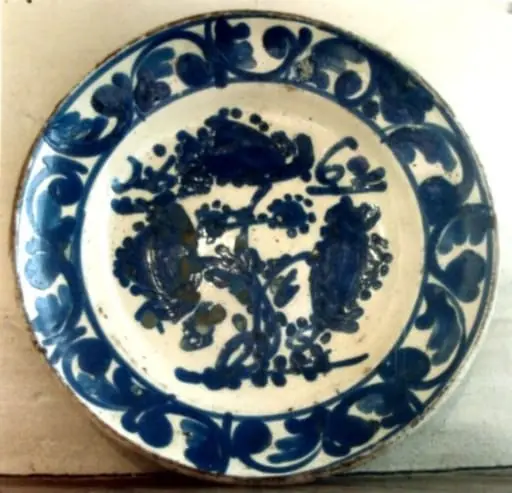
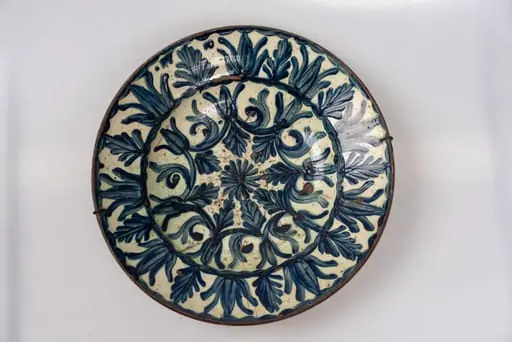 Farfurie semi-adâncă, cu fund îngust și buza lată, evazată. Piesa este acoperită pe suprafața interioară cu un strat de angobă albă peste care este pictat cu pensula decorul monocromatic, format din motive florale și vegetale stilizate ce acoperă întreaga suprafață a piesei: opt lalele împreună cu vrejuri și frunze așezate în formă de stea, acoperă zona centrală a farfuriei, iar buza acesteia conține un șir continuu format din flori de lalea intercalate cu frunze. Bordura interioară a farfuriei și muchia buzei sunt marcate de câte o linie albastră ușor ondulată. Cromatica: alb, albastru. Suprafața ornamentată a farfuriei este acoperită cu un strat de smalț transparent.
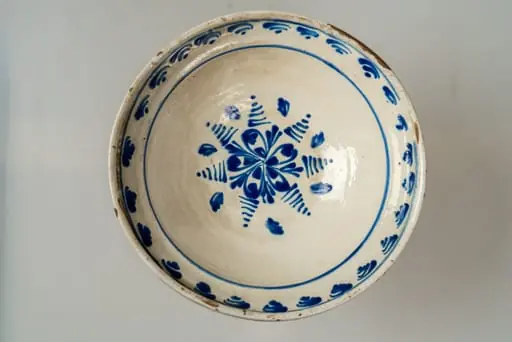 Farfurie adâncă, de tip castron, modelată la roata olarului și angobată cu humă albă pe fața interioară. Decorul este realizat prin pictare cu cornul și cu pensula, cu pigment albastru pe bază de oxid de cobalt, și este format din motive decorative florale (o floare cu 5 petale, dispusă central, pe fundul farfuriei, completată de 7 grupuri de câte 6 linii paralele, descrescătoare, dispuse în formă de stea) și geometrice (grupuri de câte trei linii paralele, concave și descrescătoare ca mărime, dispuse într-un șir continuu pe buza farfuriei, încadrate de două linii sub formă de cerc). Fața decorată a farfuriei este acoperită cu un strat de smalț transparent. Cromatica: alb, albastru.
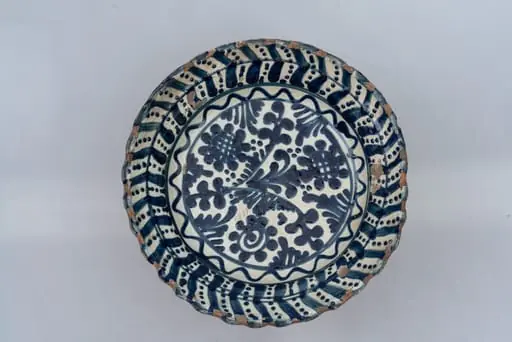 Farfurie semi-adâncă, cu fund larg, buză evazată și muchia buzei ondulată. Este acoperită pe suprafața interioară cu un strat de angobă albă peste care este pictat cu pensula și cu cornul decorul monocromatic format din motive geometrice și florale stilizate: registrul central de pe fundul farfuriei conține un buchet format din trei flori cu petale rotunde și mijlocul umplut cu linii hașurate intersectat, una dintre flori având mijlocul dintr-o linie spiralată, și din frunze; acest registru este încadrat între două linii circulare simple și o linie circulară ondulată și este completat cu șase motive formate din grupuri de linii crescătoare și descrescătoare, dispuse sub formă de triunghi și cu puncte. Registrul decorativ marginal de pe buza farfuriei este decorat cu un șir continuu de frunze duble între care se găsesc motive punctate (linii). Muchia buzei este marcată cu o dungă albastră. Suprafața ornamentată a farfuriei este acoperită cu un strat de smalț transparent. Cromatica: alb, albastru.
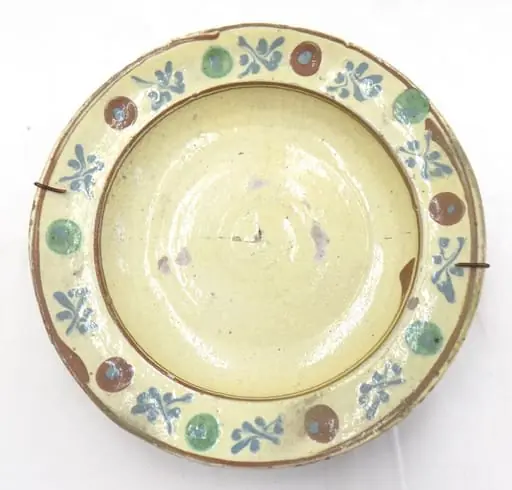
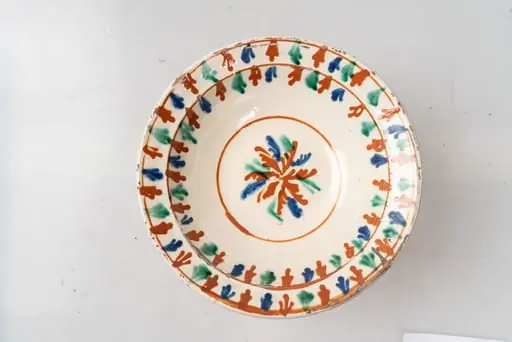 Farfurie adâncă, cu buză mai îngustă și răsfrântă; piesa este modelată la roata olarului și angobată cu humă albă pe fața interioară. Decorul este realizat prin pictare cu cornul și se compune din motive vegetale stilizate: în registrul central de pe fundul farfuriei este pictată o floare cu petale alungite de culoare albastru și siena-arsă și cu frunze verzi, înscrisă într-un cerc de culoare siena-arsă. Registrul marginal, de pe buza și bordura interioară a farfuriei, conține motive vegetale foarte stilizate (grupuri de frunze) înșiruite în două rânduri paralele de-a lungul a două linii circulare concentrice. Cromatica: alb, verde, albastru, siena-arsă. Farfurie este acoperită pe fața ornamentată cu un strat de smalț transparent.
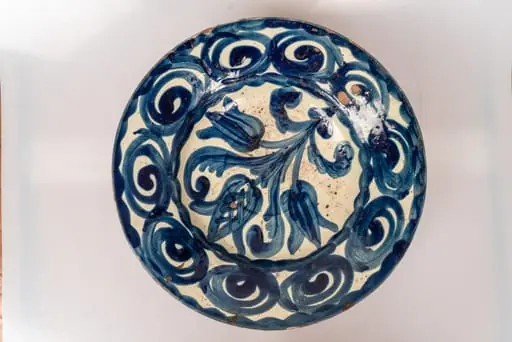 Farfurie mare, adâncă, cu buza răsfrântă; piesa este modelată la roata olarului și angobată pe fața interioară cu humă albă. Decorul monocromatic, este realizat prin pictare cu pensula, cu linii groase, și se compune din motive florale stilizate (trei flori de lalele cu frunze, dispuse central, pe fundul farfuriei) și motivul spiralei, ce acoperă întreaga suprafață a buzei, într-un șir continuu. Bordura interioară a farfuriei și muchia buzei sunt marcate de câte o linie vălurită. Pe fața ornamentată farfuria este acoperită cu un strat de smalț transparent. Cromatica: alb, albastru.
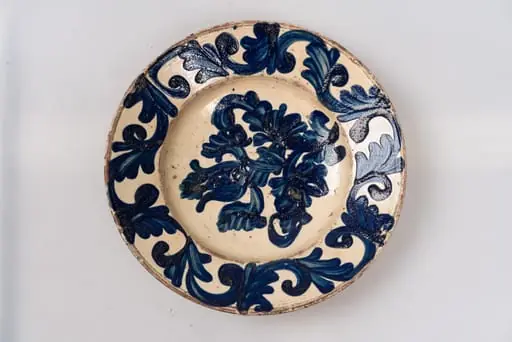 Farfurie adâncă, cu buza evazată; este angobată pe fața interioară cu un strat de humă albă, peste care este pictat cu pensula, cu linii groase, decorul monocromatic format din motive florale și fitomorfe stilizate (tulpină cu o floare de lalea și frunze, reprezentate pe centrul farfuriei și un șir continuu compus din elemente vegetale, ce decorează buza acesteia). Cromatica: alb, albastru. Farfuria este acoperită pe fața decorată cu un strat de smalț transparent.
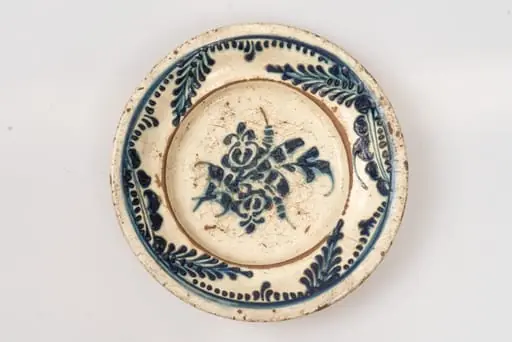 Farfurie semi-adâncă, cu fund larg și buză evazată; este acoperită pe fața interioară cu un strat de angobă albă, peste care este pictat cu cornul decorul monocromatic format din motive vegetale și florale stilizate: un buchet cu două flori și frunze, ce formează registrul decorativ central, de pe fundul farfuriei, iar buza acesteia este decorată cu patru motive vegetale (frunze) formate din linii în formă de brăduț, completate cu motive formate din puncte și șiruri de linii mici, sub formă de virgulă. Marginea buzei este marcată de o linie albastră. Cromatica: alb, albastru. Fața ornamentată a farfuriei este acoperită cu un strat de smalț transparent.
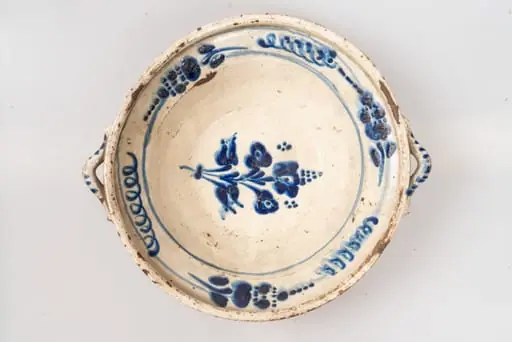 Farfurie de tip castron, cu două torți laterale de prindere; este angobată pe fața interioară și pe exteriorul buzei cu un strat de humă albă peste care este pictat cu pensula și cu cornul decorul monocromatic, format din motive florale stilizate: central pe fundul farfuriei este pictată o tulpină cu cinci flori și frunze; buza farfuriei este decorată cu trei motive vegetale alternate cu trei motive formate dintr-o linie buclată. Bordura interioară a farfuriei este marcată cu o linie albastră iar torțile sunt decorate cu linii scurte albastre. Fața ornamentată a farfuriei este acoperită cu un strat de smalț transparent. Cromatica: alb, albastru.
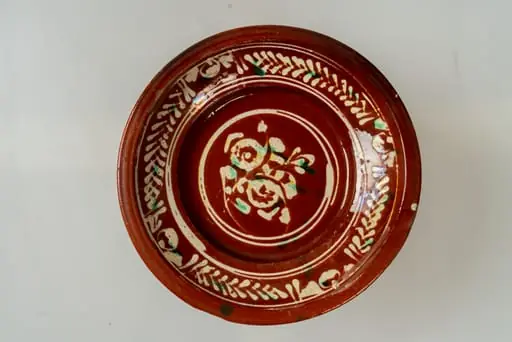 Farfurie adâncă, modelată la roata olarului, cu suprafața interioară neangobată. Decorul este pictat cu cornul și cu pensula și constă în motive decorative florale (un buchet de flori central) și vegetale stilizate, pe buza farfuriei. Pe fața interioară a farfuriei este aplicat un strat de smalț transparent. Cromatica decorului: alb, pe fondul roșu al lutului ars.
- Talger