Artwork
Death of St. Cecilia
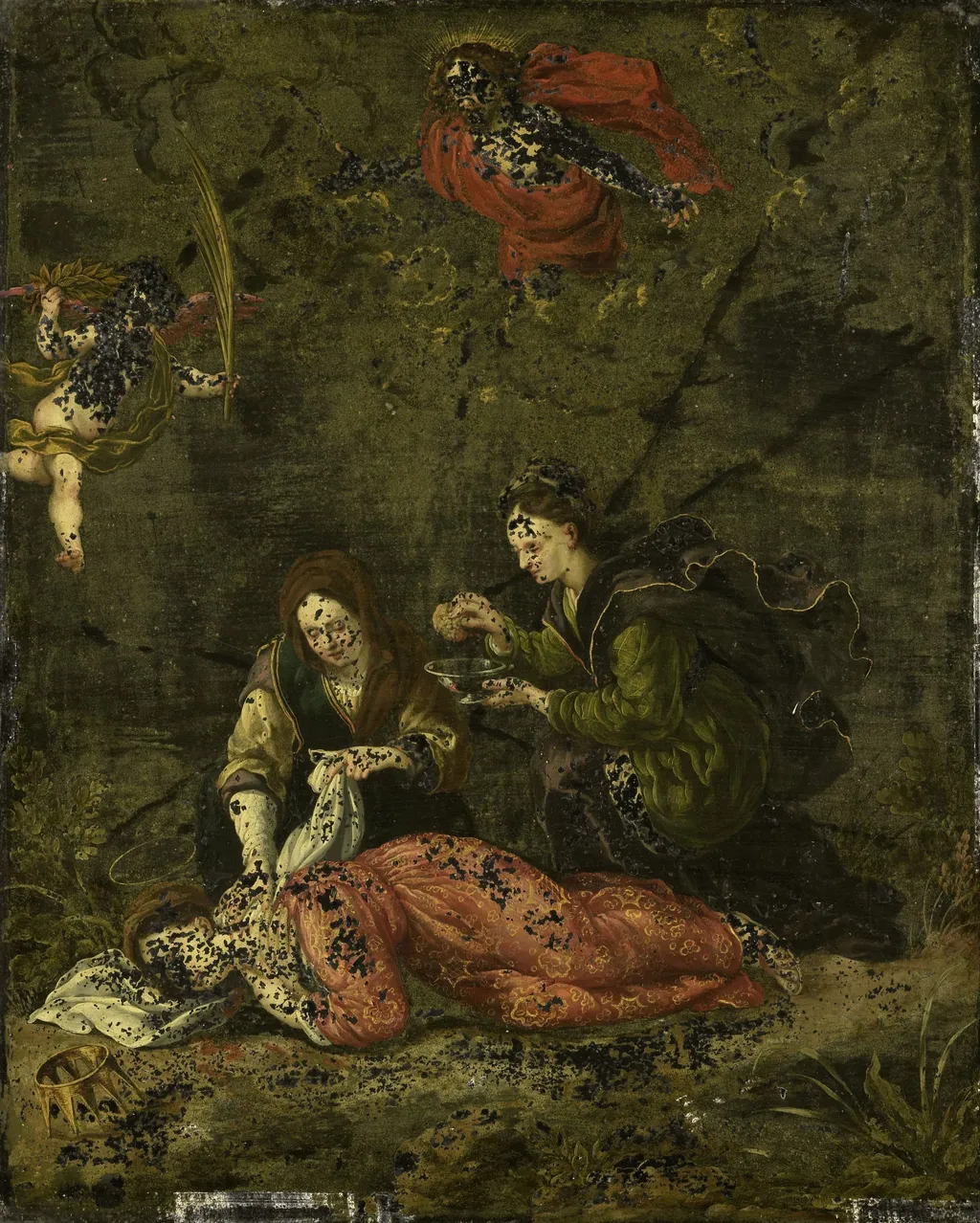
Death of St. Cecilia is an oil painting. It dates from 1600 and is held in the collection of the Rijksmuseum. The work, titled Death of St.
About this work
Subject & Meaning
As a work of religious art from the Southern Netherlands, the piece focuses entirely on the saint's final moments, illustrating the narrative of her sacrifice.
The artwork depicts the martyrdom of Saint Cecilia, serving as a religious representation of her death. The composition is understood to be a painting executed after an engraving by Hieronymus Wierix. As a work of religious art from the Southern Netherlands, the piece focuses entirely on the saint's final moments, illustrating the narrative of her sacrifice.
The subject matter is explicitly identified as the martyrdom of Saint Cecilia, emphasizing the hagiographic theme central to the image.
Technique & Style
The work is an oil painting executed on a rectangular slate support measuring 44 cm by 35 cm, created in the Southern Netherlands around 1600. Its surface shows the characteristic handling of oil paint layered over slate, producing a luminous finish that emphasizes the martyrdom of Saint Cecilia. The composition follows a religious genre, drawing on an engraving by Hieronymus Wierix and reflecting the stylistic conventions of early‑Baroque sacred art.
History & Provenance
Created in 1600 within the Southern Netherlands, this slate painting depicts the martyrdom of Saint Cecilia. The work was executed in oil paint and measures 44 cm in height by 35 cm in width. Its composition derives directly from an earlier engraving by Hieronymus Wierix. The piece is currently held in the collection of the Rijksmuseum.
The painting Death of St. Cecilia, created in 1600, is held in the collection of the Rijksmuseum. The work is executed in oil paint on slate and depicts the martyrdom of Saint Cecilia, a subject rendered after an engraving by Hieronymus Wierix. While the source material confirms its presence in the museum's holdings and notes its dimensions of 44 cm in height and 35 cm in width, no specific inventory or accession number is provided in the available records. Furthermore, the provided sources do not contain information regarding a history of exhibitions for this specific artwork.
Context
The painting Death of St. Cecilia, created in 1600 in the Southern Netherlands, portrays the martyrdom of Saint Cecilia and is classified as a religious work in the painting genre. Executed on slate using oil paint, the 44 cm by 35 cm artwork was part of the collection at the Rijksmuseum and is regarded as a painting after an engraving by Hieronymus Wierix, situating it within the broader context of religious art production in the early 17th century. Scholarship emphasizes its technical and thematic significance within the artist's oeuvre and the period's devotional practices, while its provenance and material choices reflect the era's artistic conventions.
Overview
The work, titled Death of St. Cecilia, is executed on slate and depicts a compact scene of three figures arranged on a moss‑covered, rocky surface. One figure holds a small bowl, another extends a bunch of grapes, while a third, positioned behind them, plays a stringed instrument. The composition is set against a dark backdrop that heightens the visual impact of the figures.
Artist & collection

- Finding of Moses
 Judith with the Head of Holofernes
 Kreuzabnahme
 Den heliga Maria Magdalena
 Return of the prodigal son
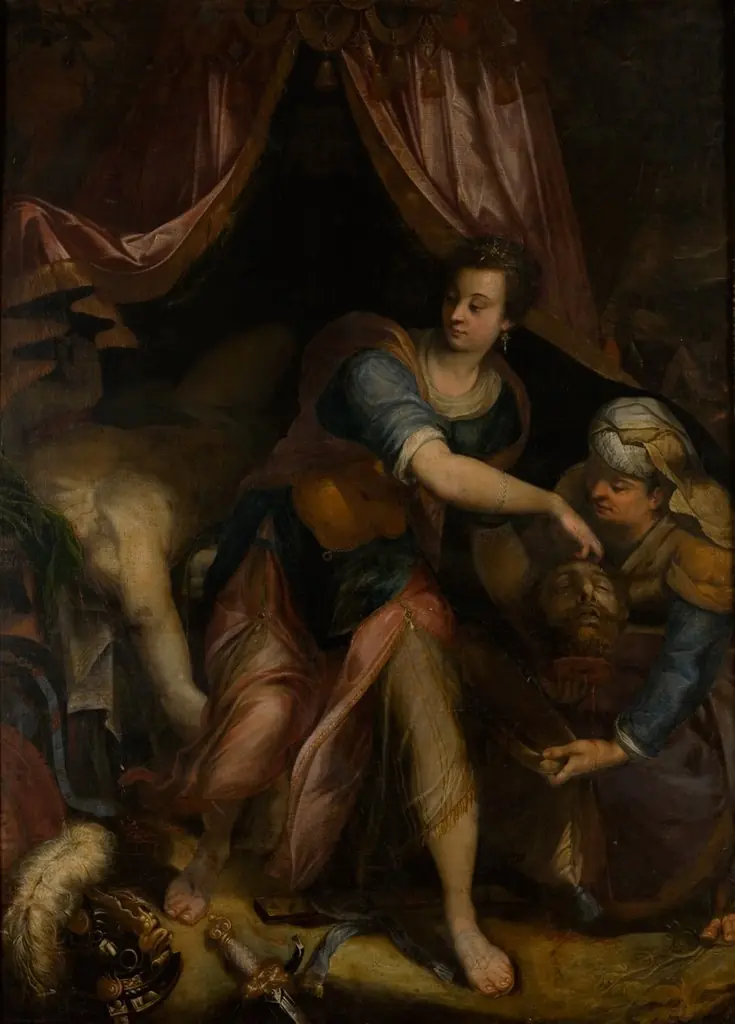 Judith with the Head of Holofernes
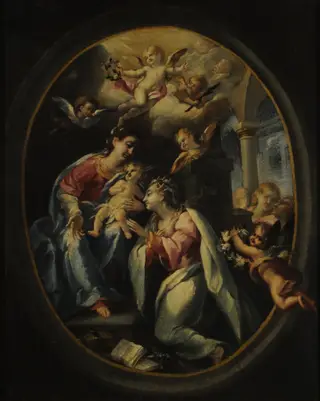 Mystical weddings of Santa Catalina
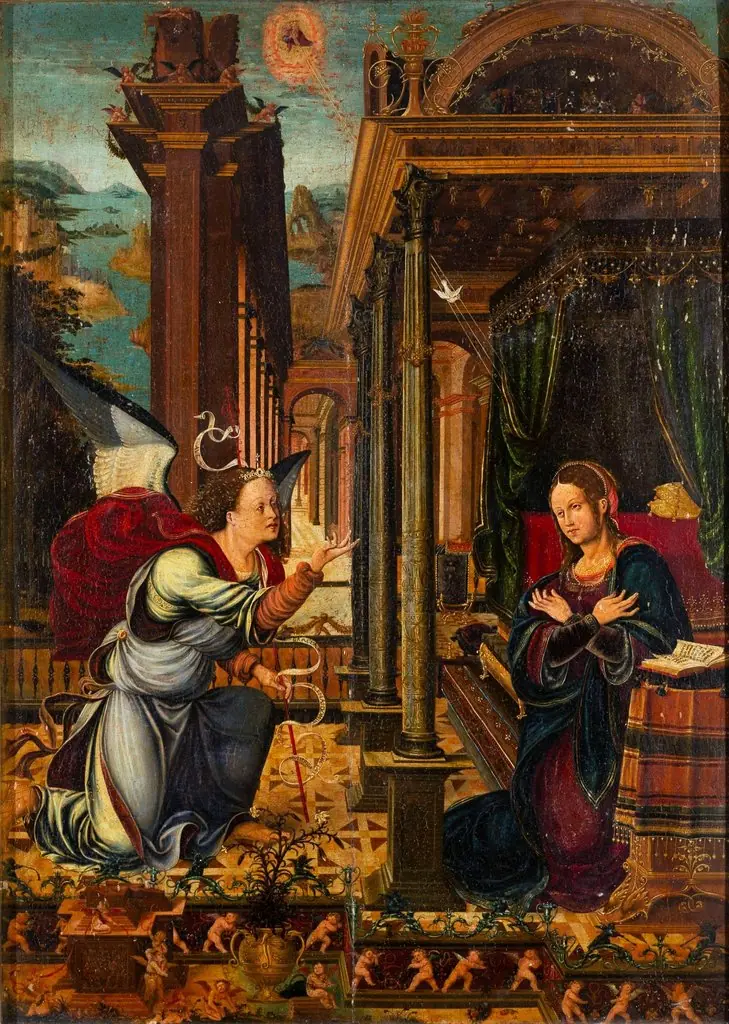 Annunciation
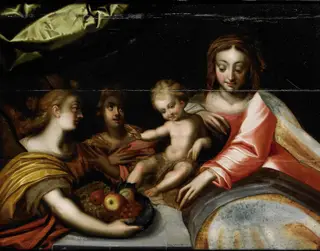 Holy Virgin with Child
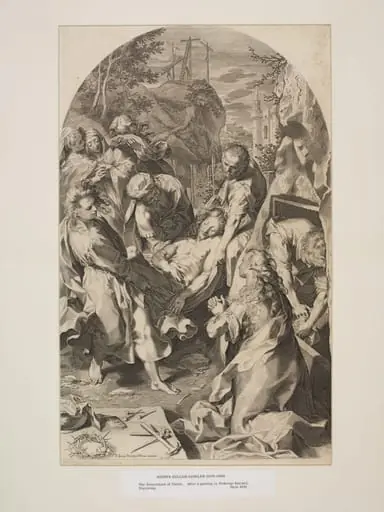 The Entombment of Christ
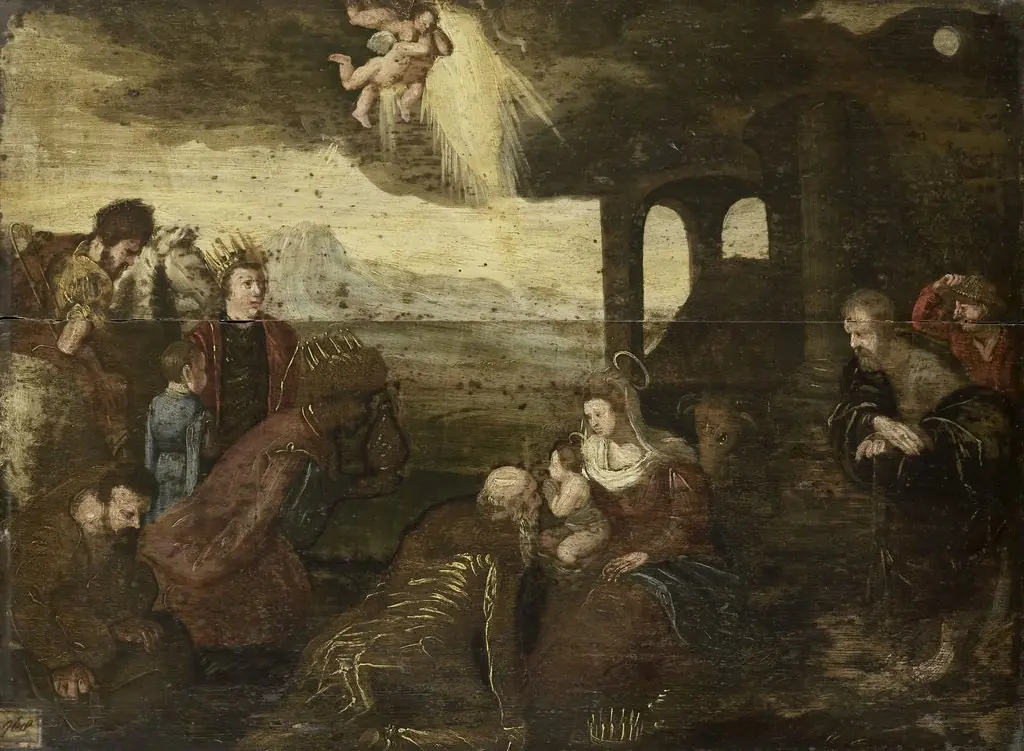 Adoration of the Magi
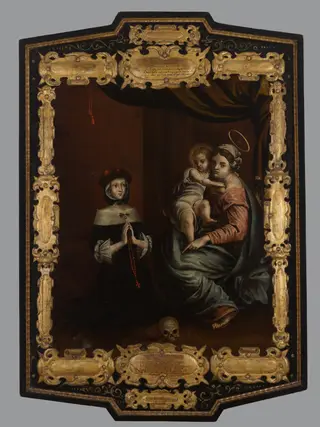 Epitaph of Katarzyna Jurgiewic, from the St Mary's Church in Krakow