Artwork
Egyptian Revival Triptych
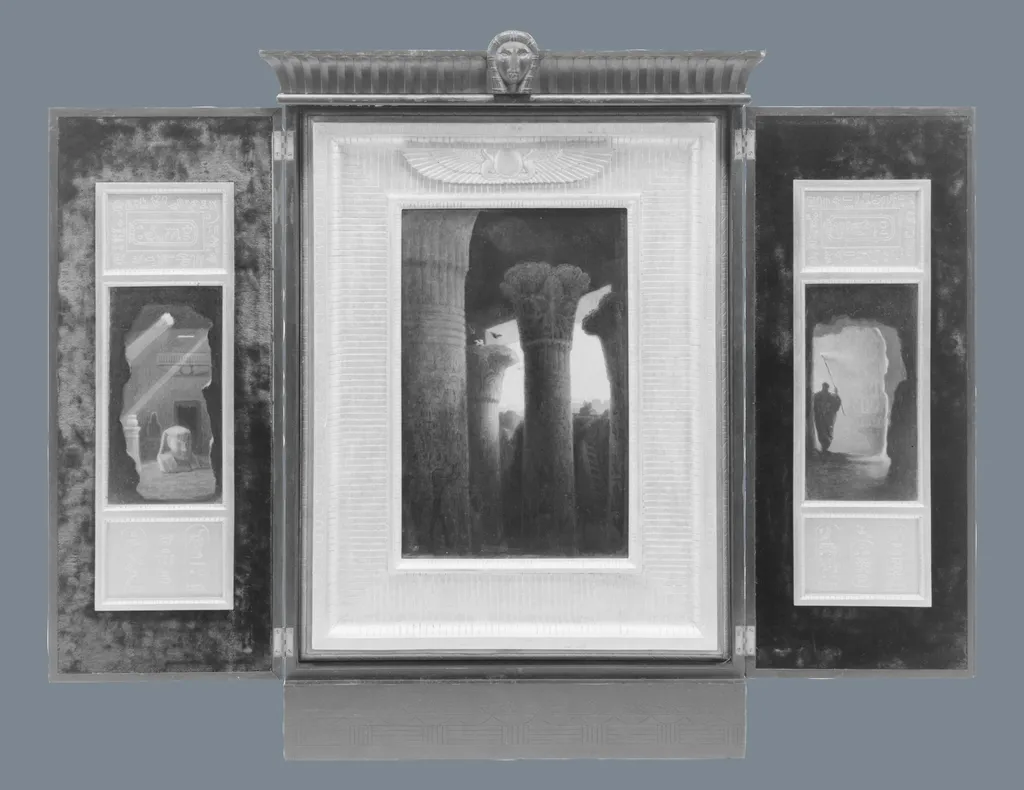
Egyptian Revival Triptych is an oil painting. It dates from 1893 and is held in the collection of the Metropolitan Museum of Art. The work consists of three oil‑on‑canvas panels set within a dark wooden frame, forming a triptych.
About this work
Subject & Meaning
The work reflects the broader Egyptian Revival movement of the 1880s, in which artists reinterpreted ancient Egyptian forms for contemporary audiences.
The Egyptian Revival Triptych is an oil painting attributed to Samuel Colman, dated 1885 and held by the Metropolitan Museum of Art. According to the available cataloguing, the work depicts a column, situating its subject firmly within the architectural vocabulary of ancient Egypt. By isolating a single columnar form as the central motif of the triptych, the painting draws on the nineteenth-century fascination with pharaonic monuments, presenting the column both as a structural element and as a symbol of Egyptian civilization's enduring legacy.
The triptych format itself, with its three-paneled structure, evokes the ritual and ceremonial associations of Egyptian art, lending the architectural subject a sense of monumentality and reverence.
The work reflects the broader Egyptian Revival movement of the 1880s, in which artists reinterpreted ancient Egyptian forms for contemporary audiences. By focusing on the column, Colman distilled the visual language of Egypt into a singular, recognizable emblem, transforming an architectural feature into a meditation on antiquity, continuity, and the symbolic power of classical design.
Technique & Style
Created in 1885, this work is an oil painting executed on a canvas support. The piece functions as a triptych within the Egyptian Revival style, featuring architectural columns as its primary subject matter. The composition measures 79.7 cm in height and 55.2 cm in width.
While the work is attributed to Samuel Colman, it is held within the collection of the Metropolitan Museum of Art.
History & Provenance
The work is held by the Metropolitan Museum of Art, New York, where it is accessioned as 2017.164. It was painted circa 1885.
The triptych has been exhibited at the Metropolitan Museum of Art, New York, in the installation "The Metropolitan Museum of Art Guide" (2017–2018).
Overview
The work consists of three oil‑on‑canvas panels set within a dark wooden frame, forming a triptych. The central panel presents a solitary, elongated figure positioned between two stylised columns, topped by a radiant, sun‑like disc. Flanking panels depict modest interior scenes: a seated individual in a shadowed room on the left and a figure advancing toward a doorway on the right. The overall palette is dominated by deep tones punctuated by selective highlights.
Context
Created during the period of Egyptian Revival, the piece aligns with a broader European interest in ancient Egypt sparked by archaeological discoveries. The triptych format, traditionally reserved for religious subjects, is repurposed here to explore secular or mythic themes through the lens of historicist aesthetics.
Artist & collection

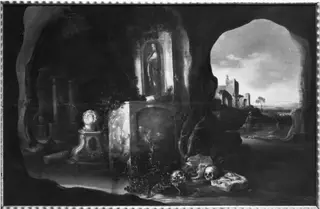
- A Mountain Cave
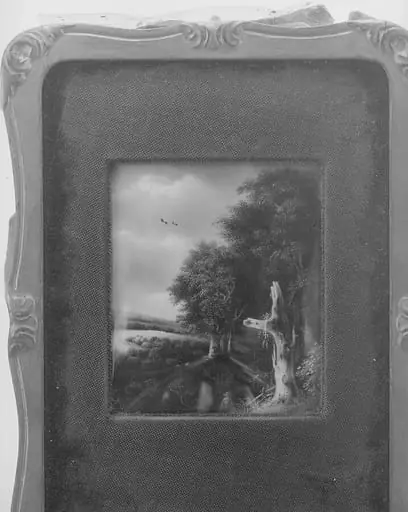 The Stump (after Ruisdael)
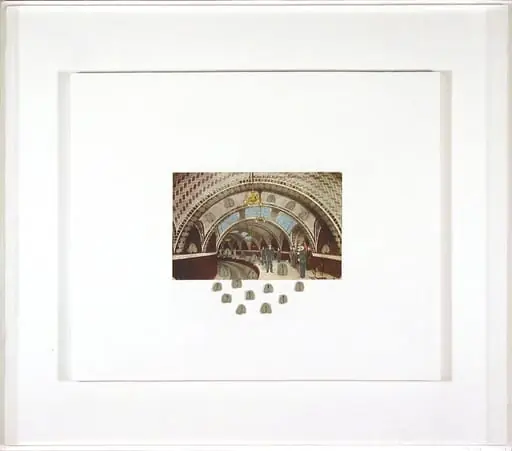 Untitled
![The Rest on the Flight into Egypt (recto); Sketch of a Sphinx [?] (verso), by Luc-Olivier Merson](https://artifactworldgallery.com/img/luc-olivier-merson--the-rest-on-the-flight-into-egypt-recto-sketch-of-a-sphinx-v--25f9a663b49091e6-w320.webp) The Rest on the Flight into Egypt (recto); Sketch of a Sphinx [?] (verso)
The Rest on the Flight into Egypt (recto); Sketch of a Sphinx [?] (verso)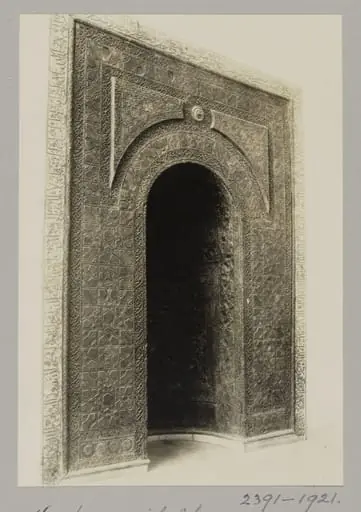 The wooden mihrab of the Madrasa Halawiyya, Aleppo
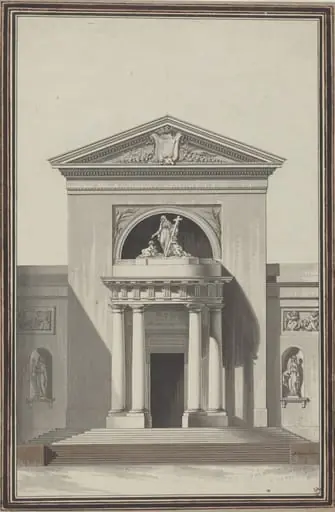 Facade for a Church with a Sculpture Representing Faith
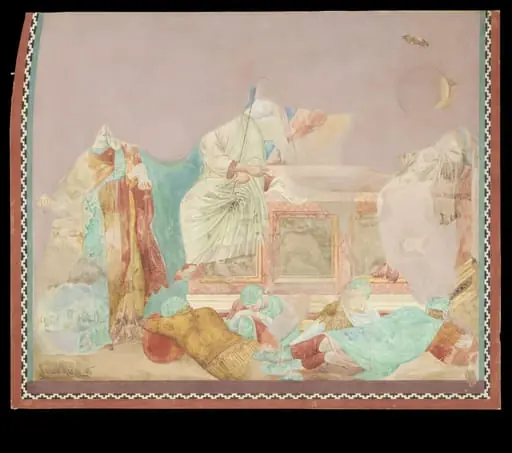 Copy after the painting The Maries at the Sepulchre attributed to the Isaac Master in the Upper Church, San Francesco, Assisi
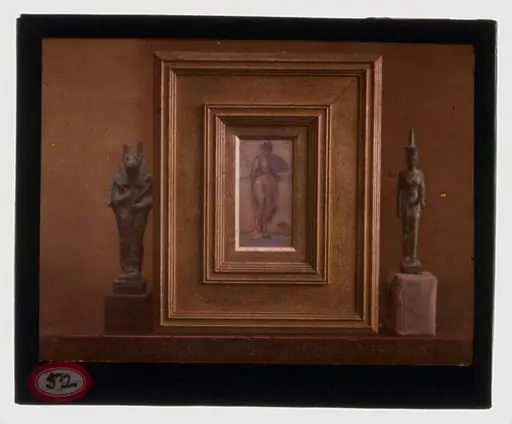 'Figure of Anubis', Egypt, 664-525 BCE, 'Resting', ca 1870-1873 by James McNeil Whistler and 'Figurine of the Goddess Neith', 664-525 BCE or later, from the Charles Lang Freer Collection
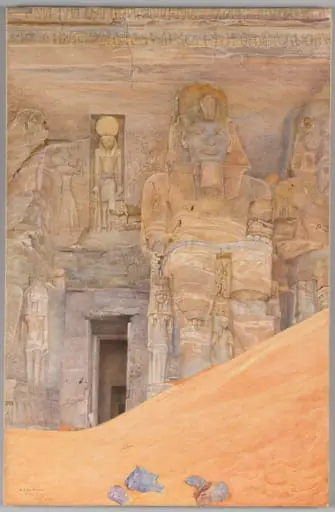 Abu Simbel
 Grotto. Fantasy
 Δήλος
Δήλος Hindu Stone Sculptures