Artwork
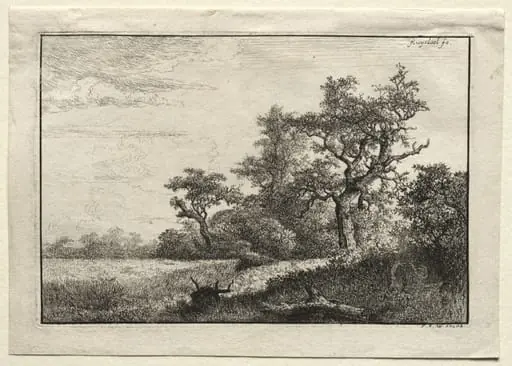
The Stump (after Ruisdael)
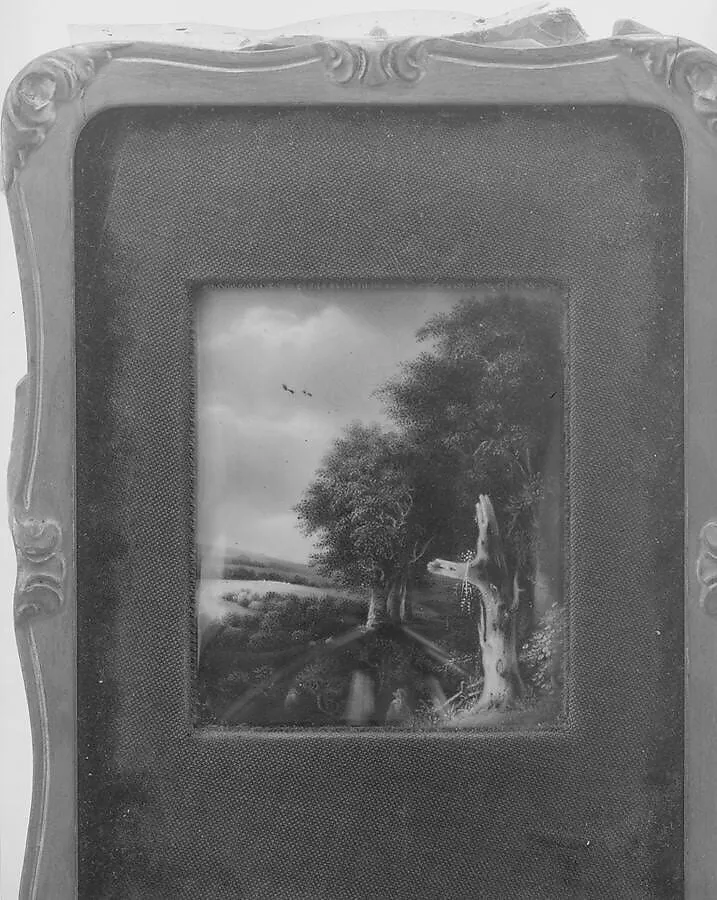
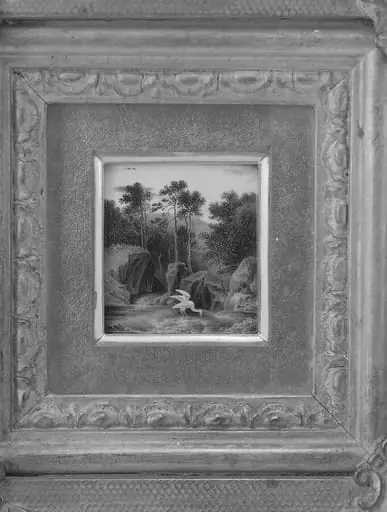
The Stump (after Ruisdael) is a copper painting by the American Impressionist artist William Russell Birch. It dates from 1815 and is held in the collection of the Metropolitan Museum of Art.
- Accession no.
- 2006.235.14
- Credit line
- Dale T. Johnson Fund, 2006
About this work
Subject & Meaning
By isolating this element, Birch highlights a specific detail of the woodland setting, offering a study of form and texture within the broader landscape genre.
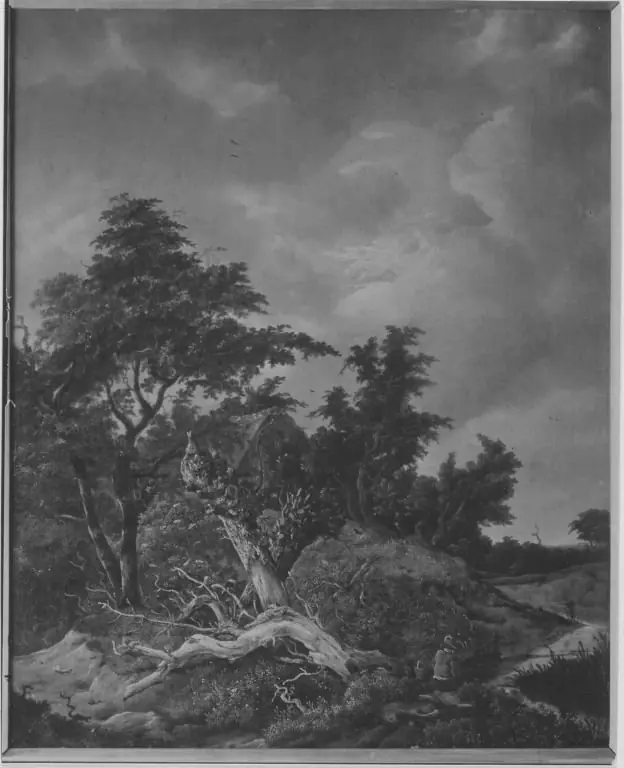
The Stump (after Ruisdael) shows a solitary tree stump placed within a modest landscape scene. As indicated by its title, the work pays homage to Jacob van Ruisdael's landscape tradition, which Birch emulates in his composition. The painting is a landscape genre piece, executed in enamel on copper and dated 1815, focusing on the tree stump as its central natural motif.
By isolating this element, Birch highlights a specific detail of the woodland setting, offering a study of form and texture within the broader landscape genre.
Technique & Style
Created in 1815 by William Russell Birch, this work is executed as an enamel painting on a copper support. The piece is classified as a landscape genre work, formally depicting a tree and its surrounding environment. It is small in scale, measuring approximately 7.6 × 6.4 cm. The application of enamel on metal distinguishes its material composition from traditional oil-on-canvas landscapes, reflecting a specific technical approach to miniature painting prevalent in the artist's practice during this period.
History & Provenance
The work titled The Stump (after Ruisdael) was created by the American artist William Russell Birch in 1815. Executed as an enameled copper piece, it measures 7.6 cm in height and 6.4 cm in width. The artwork is currently held within the collection of the Metropolitan Museum of Art, specifically designated for the American Wing.
While the title indicates it is a copy or interpretation of a landscape by Jacob van Ruisdael, the specific commission details or the exact timeline of its production beyond the 1815 date are not detailed in the available records. No specific accession number or exhibition history is provided in the available documentation.
Overview
William Russell Birch, an English artist known for his enamel work and engravings, created The Stump (after Ruisdael) in 1815. This enameled copper landscape presents a solitary tree stump within a quiet field, reflecting Birch's adaptation of European artistic traditions. The piece draws inspiration from the Dutch master Jacob van Ruisdael, yet Birch reinterprets the subject with a simplified aesthetic, aligning it with the emerging American landscape sensibility of the early 19th century.
Context
Created in 1815, The Stump (after Ruisdael) exemplifies William Russell Birch's engagement with both European artistic heritage and his adopted American environment. By explicitly referencing the Dutch landscape painter Jacob van Ruisdael, Birch situated his work within a respected tradition. However, he transformed the original, translating it into a smaller, less complex composition.
This adaptation reflects a broader trend among artists in early America to interpret established European themes through a lens that resonated with the continent's distinct natural character.
Artist & collection

Artist
William Russell Birch (9 April 1755 – 7 August 1834) was an English miniature painter, enameler, and landscape engraver and designer.