Artwork
Head of a Girl
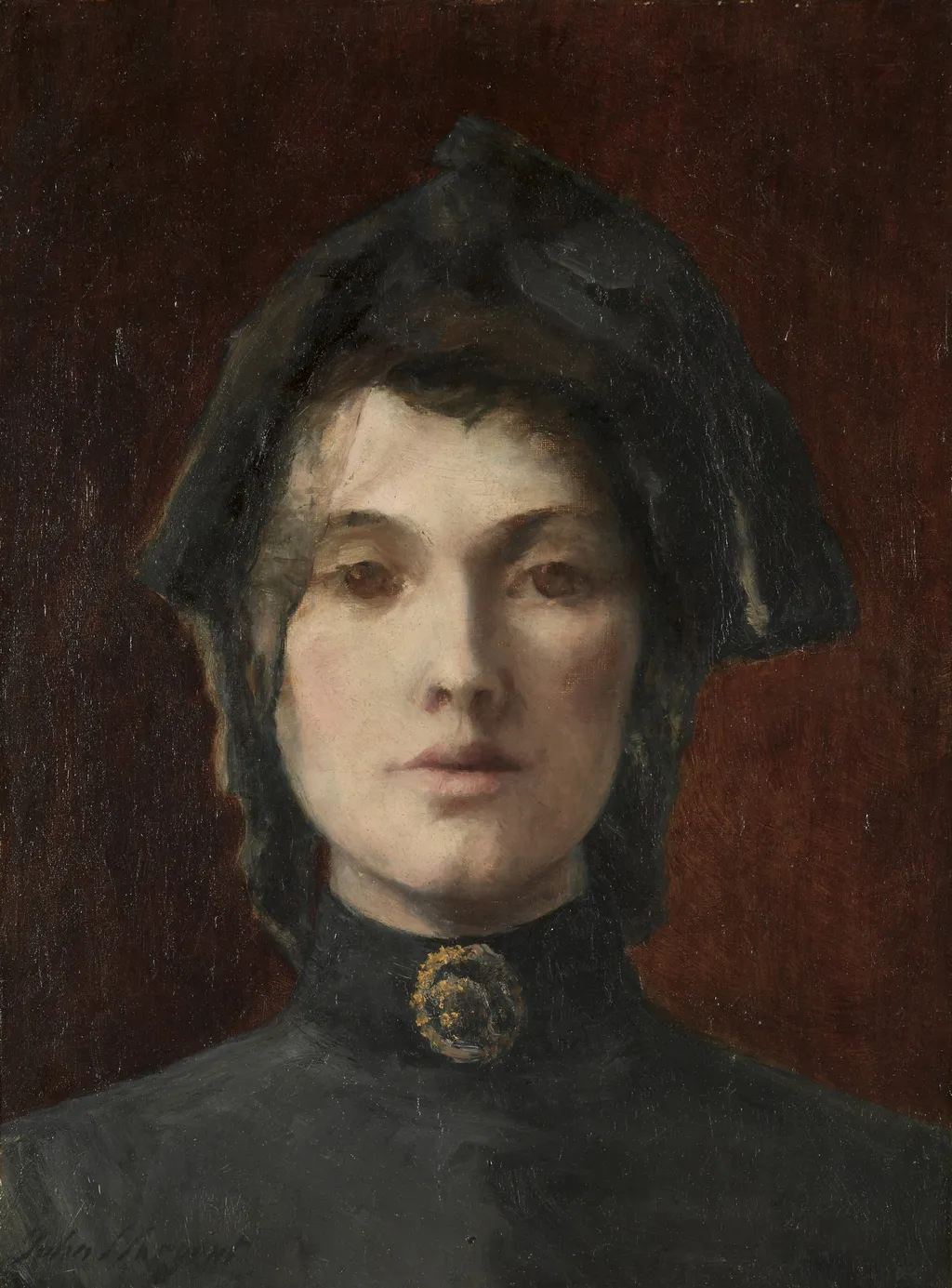
Head of a Girl is an oil painting. It dates from 1904 and is held in the collection of the Cleveland Museum of Art. The work presents a young female portrait rendered in oil, her face and upper shoulders set against a deep, almost black background.
About this work
Subject & Meaning
Its naturalistic treatment emphasizes the girl’s individuality rather than invoking any conventional iconographic motifs.
The work portrays the head of a young girl, rendered as a close‑up portrait in oil on canvas. The title, Head of a Girl, indicates that the sitter is a female child, though her identity is unknown. The painting focuses on facial features and expression, presenting a straightforward study of youth and appearance without additional narrative or allegorical elements. Its naturalistic treatment emphasizes the girl’s individuality rather than invoking any conventional iconographic motifs.
Technique & Style
The work is executed in oil paint on canvas, measuring 41.0 by 30.9 centimeters. It belongs to the early twentieth-century portrait tradition, characterized by a restrained palette and closely modeled facial features rendered with smooth brushwork. The handling emphasizes a precise, almost sculptural delineation of the girl's head and shoulders, while the stylistic approach reflects a blend of academic realism and emerging modernist simplification of form.
History & Provenance
Head of a Girl is an oil painting on canvas created in 1904. While the specific identity of the artist remains unknown, the work's inception is firmly established as occurring in that year. The painting eventually entered the collection of the Cleveland Museum of Art, where it is currently housed and maintained as part of their holdings.
The work is held by the Cleveland Museum of Art, where it carries the accession number 1928.579.
It was first exhibited in 1928 by the Cleveland Museum of Art as part of its annual May Show, where it appeared under the title Head of a Girl.
Overview
The work presents a young female portrait rendered in oil, her face and upper shoulders set against a deep, almost black background. Her hair is gathered back, and she wears a dark, high‑collared garment accented by a modest, reflective brooch. The composition isolates the sitter, drawing the eye to her expression while the surrounding darkness recedes.
Context
The painting aligns with a tradition of portraiture that foregrounds psychological depth through minimal setting, a practice common among artists exploring the interplay of light and form in the 17th to 19th centuries. By limiting decorative elements and focusing on tonal contrast, the work reflects a broader interest in capturing the essence of the sitter rather than elaborate narrative scenes.

Artist & collection

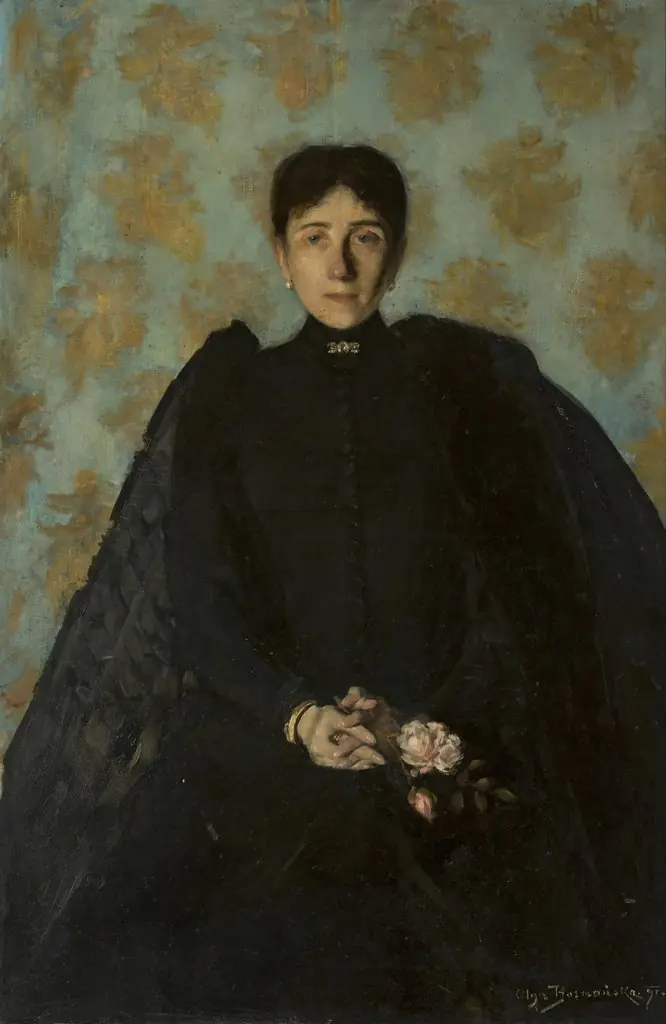 Portrait of a woman
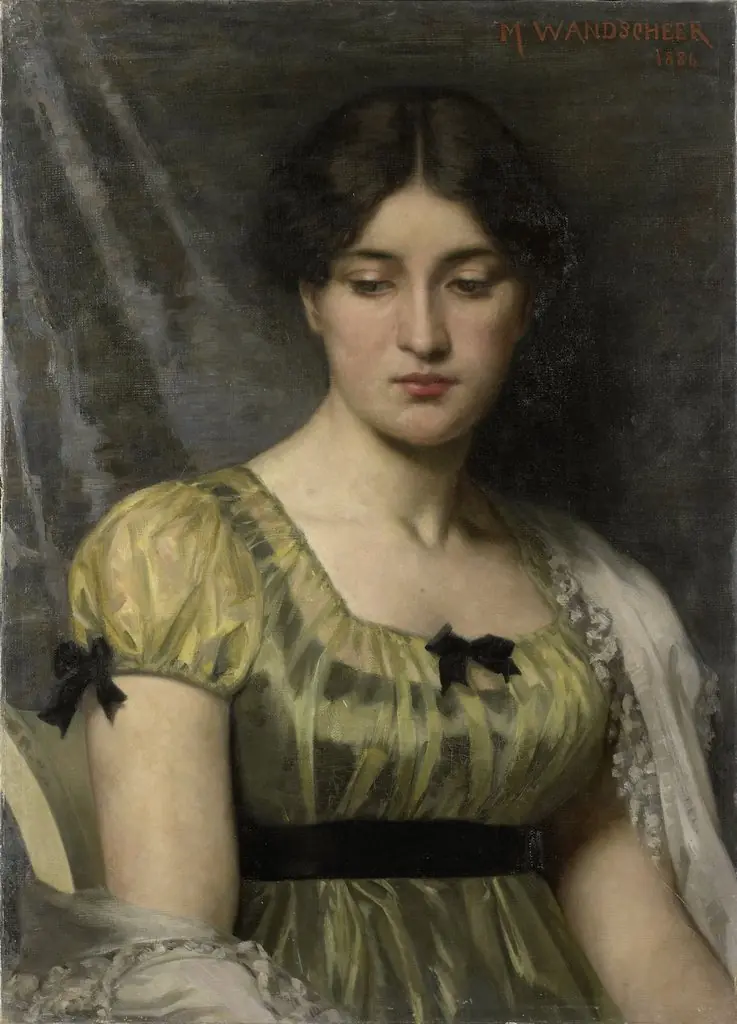 Portrait of a Woman
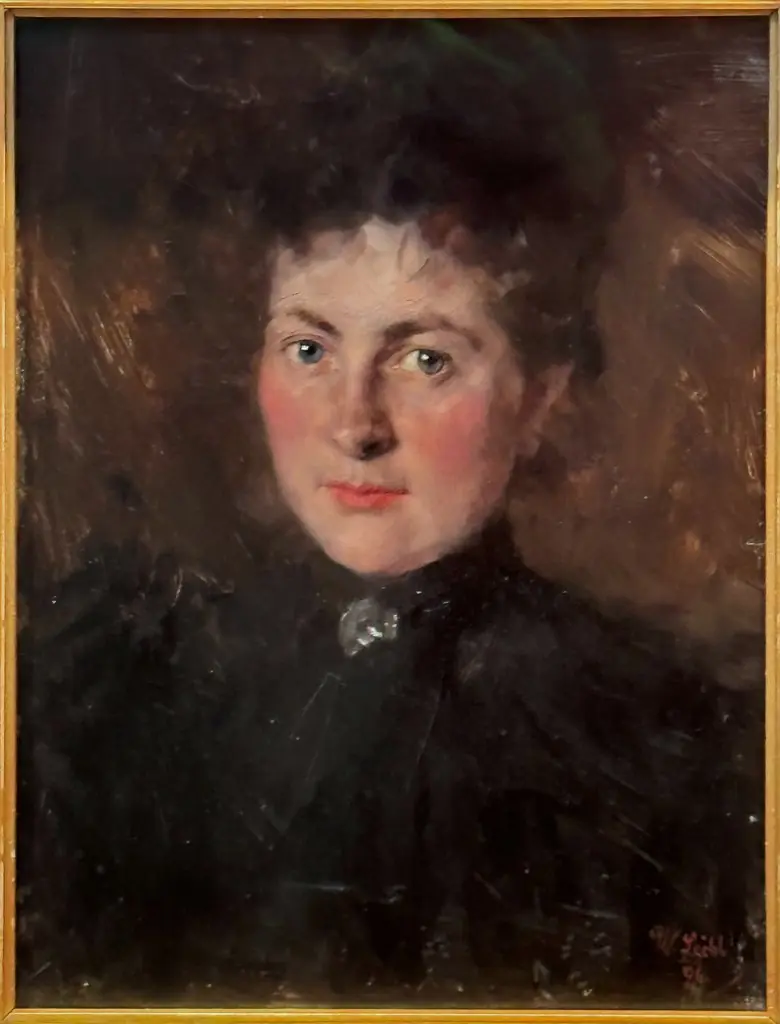 Felicia Kirchdorffer, die Nichte des Künstlers
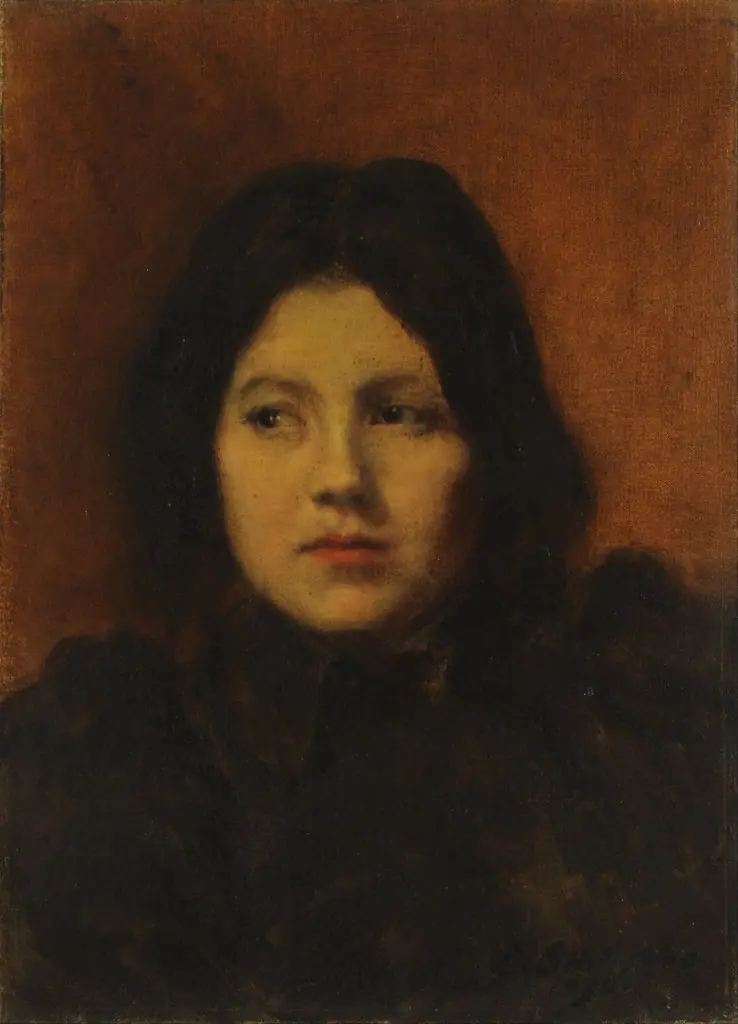 Margot
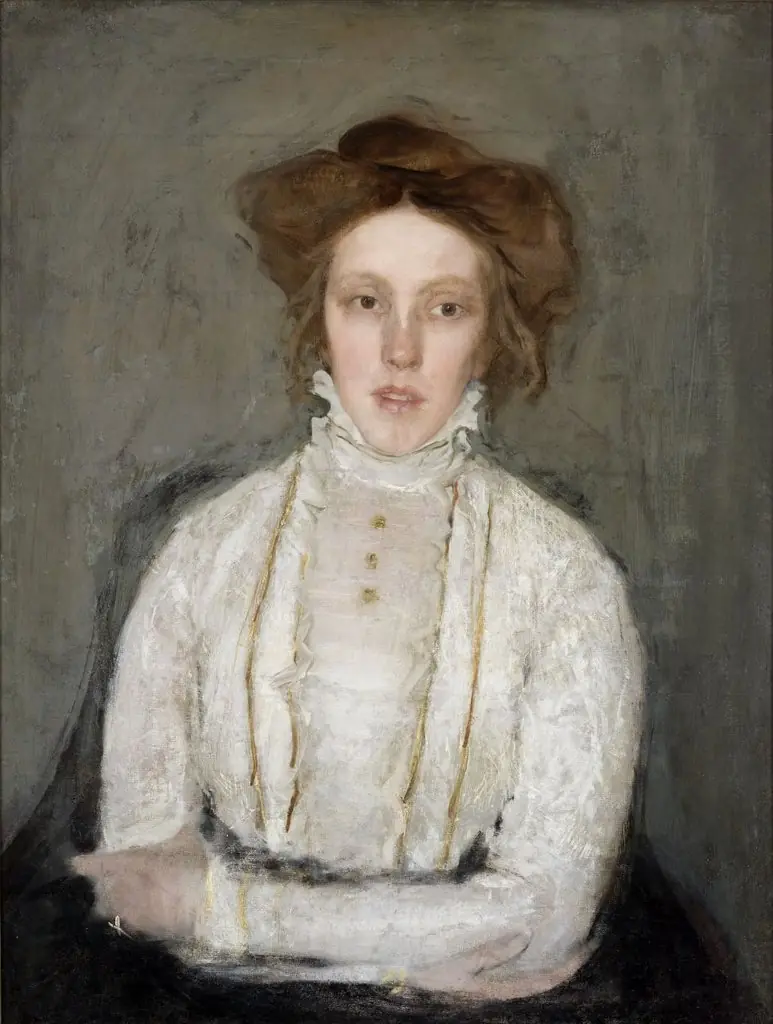 Portrait of Jadwiga Gaszczyńska
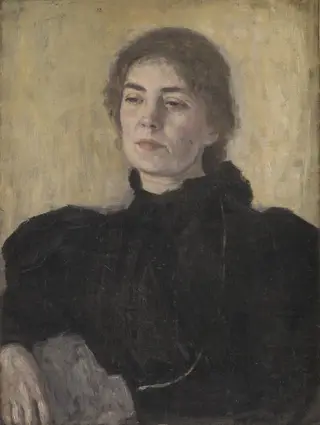 Thora Bendix, née Anne Victoria Sundberg
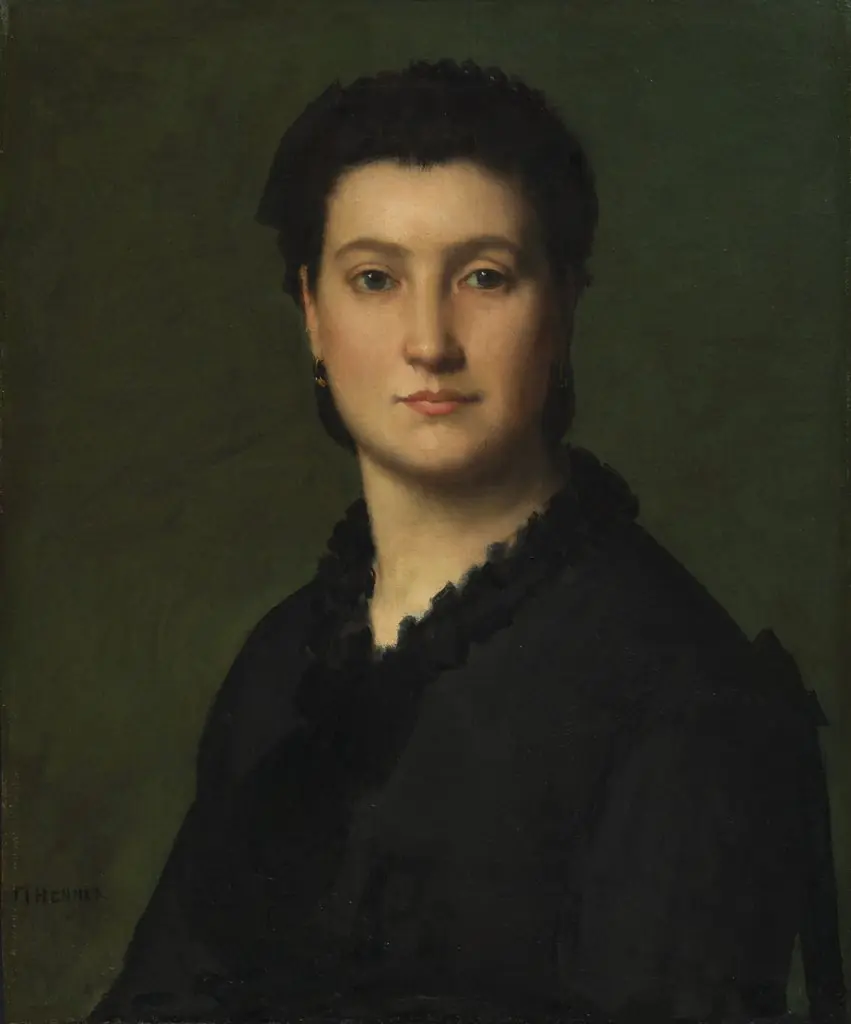 Portrait of a Woman
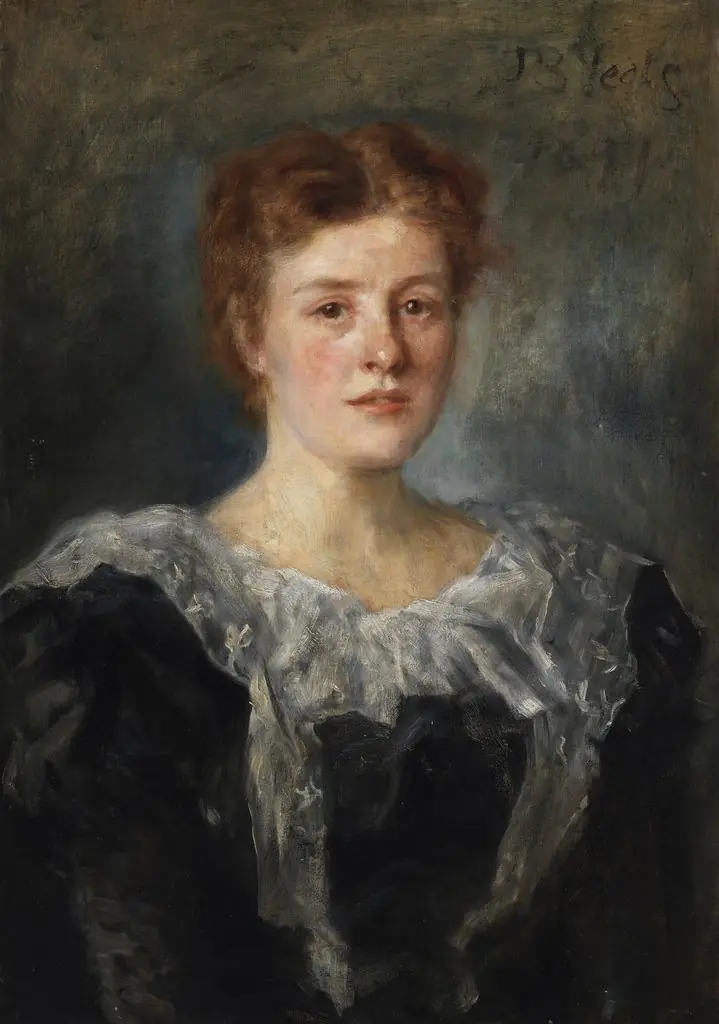 Portrait of Susan Mitchell (1866-1926), Poet
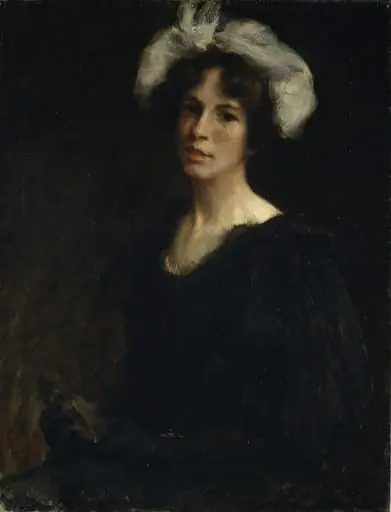 Bessie Potter
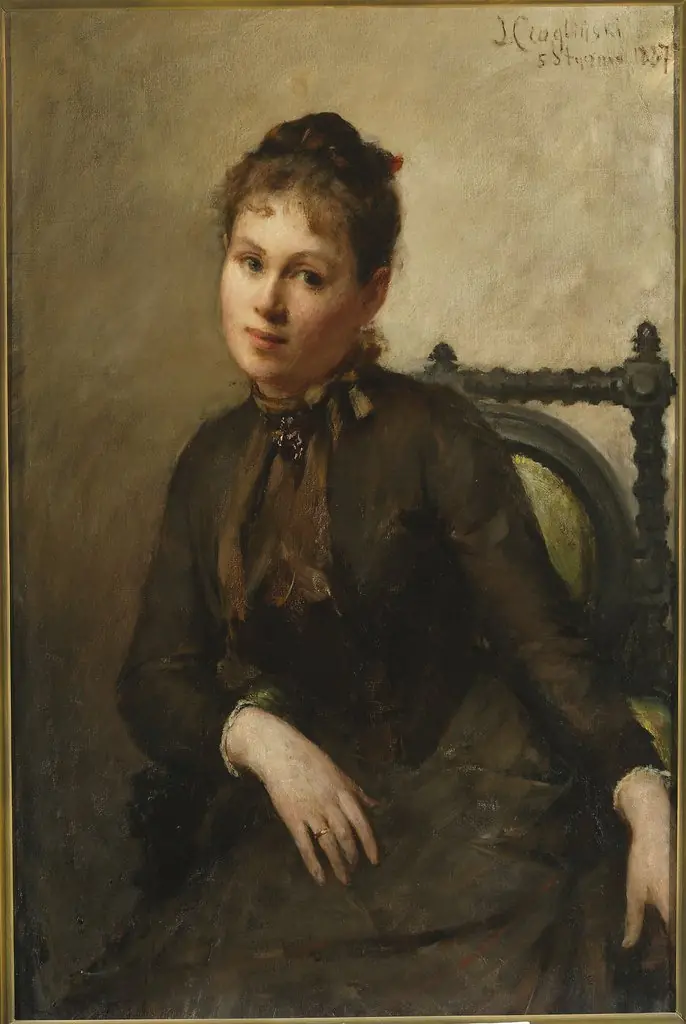 Portrait of Helena Piltz née Rymowicz
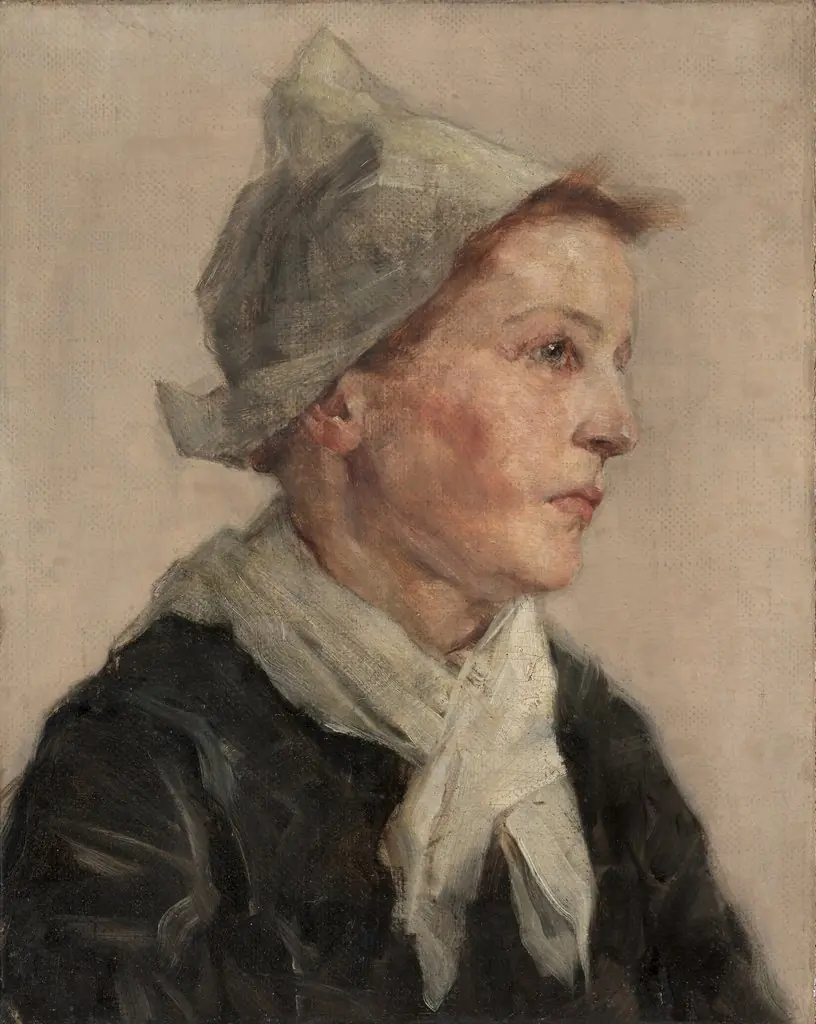 Head of a Woman
- Head of a Girl