Artwork
Jaffa Last view of the Holy Land
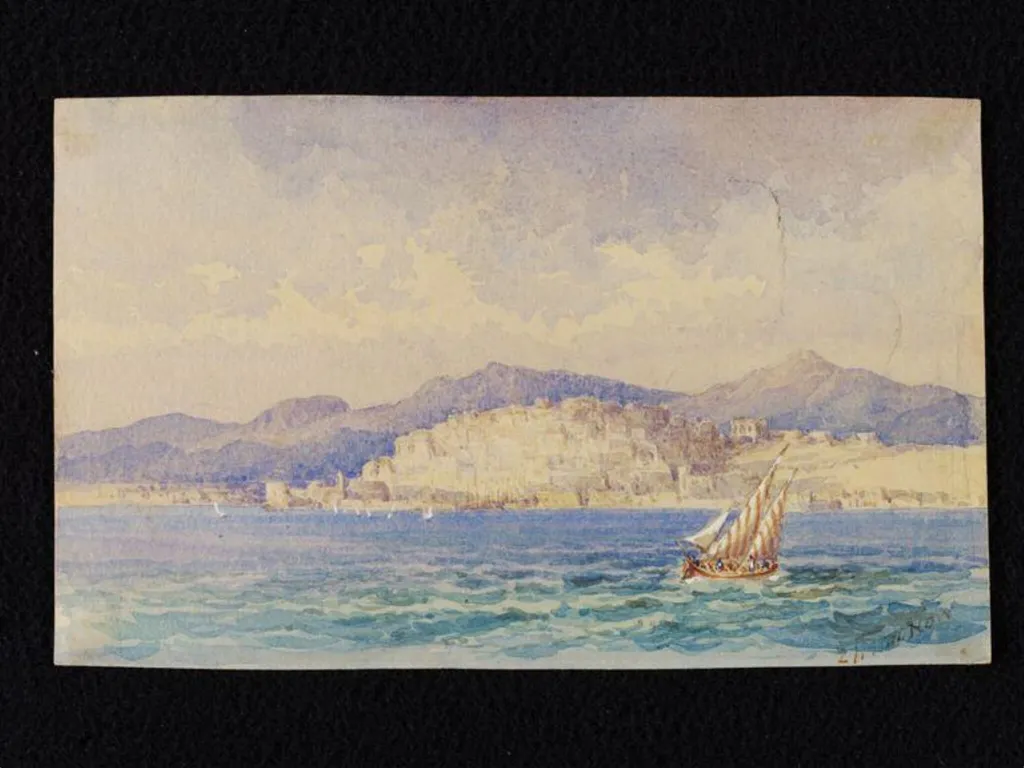
Jaffa Last view of the Holy Land is a watercolor work on paper by Unknown. It dates from 1850 and is held in the collection of the Victoria and Albert Museum. Created in 1850, this watercolour depicts Jaffa as seen from the sea, titled Last View of the Holy Land.
About this work
Overview
The composition balances foreground motion with a distant shoreline, rendered in delicate washes that suggest both distance and stillness.
Created in 1850, this watercolour depicts Jaffa as seen from the sea, titled Last View of the Holy Land. Once attributed to E. A. Goodall based on the Searight Archive, the work captures a quiet moment of departure, with a single sailboat gliding toward the horizon. The composition balances foreground motion with a distant shoreline, rendered in delicate washes that suggest both distance and stillness.
Subject & Meaning
The scene portrays Jaffa’s port at twilight, likely symbolizing the end of a journey through the Holy Land. The lone vessel, sails full, moves away from the city’s clustered buildings, evoking themes of departure and reflection. No figures are present, emphasizing solitude and the passage of time.
The title suggests a personal or spiritual transition, common in 19th-century travel imagery tied to pilgrimage or colonial exploration.
Technique & Style
Executed in watercolour, the painting uses soft, layered washes to model light and form. The water’s surface is suggested through subtle gradations of blue and grey, with faint ripples indicating movement. Buildings in the background are rendered with loose, minimal strokes, avoiding detail to preserve atmospheric perspective. The muted palette, pale ochres, soft blues, and greys, enhances the tranquil, contemplative mood.
History & Provenance
The work was recorded in the Searight Archive under the attribution to E. A. Goodall, though this remains unverified by broader scholarly consensus. Its provenance is otherwise undocumented, with no known exhibition history or collector lineage prior to its inclusion in archival records. The painting’s survival suggests it was privately held, possibly by a traveler or amateur artist familiar with Levantine landscapes.
Context
In the mid-19th century, European travelers increasingly documented the Levant through sketchbooks and watercolours, often as part of religious or archaeological expeditions. Jaffa, a key port on the route to Jerusalem, was a frequent subject. This work aligns with a broader trend of quiet, observational landscapes, less focused on grandeur than on personal experience and the subtleties of light and place.
Legacy
Though not widely exhibited or reproduced, the painting contributes to a modest but persistent body of 19th-century watercolours that record the Holy Land’s coastal towns with restraint and sensitivity. Its attribution remains tentative, yet its quiet composition reflects a broader artistic impulse: to capture fleeting moments of transition, not as spectacle, but as memory.
Artist & collection









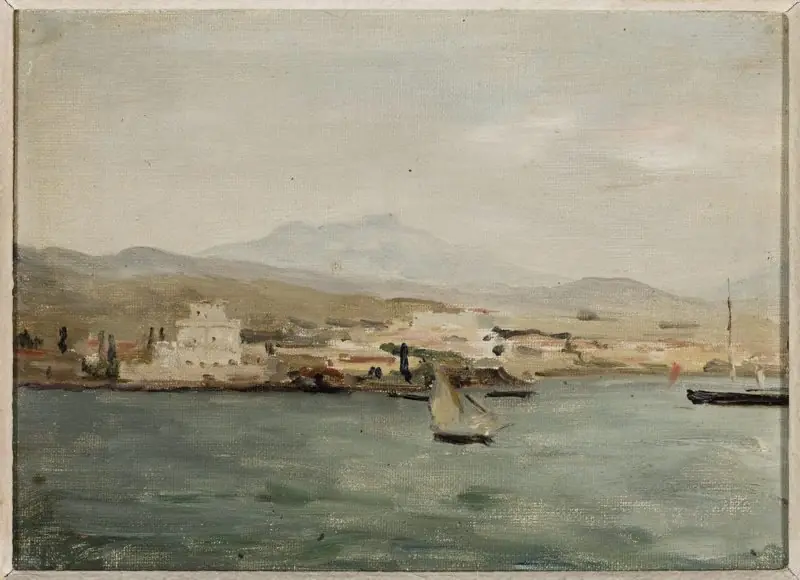
- View of the port in Saloniki. From the journey to Palestine
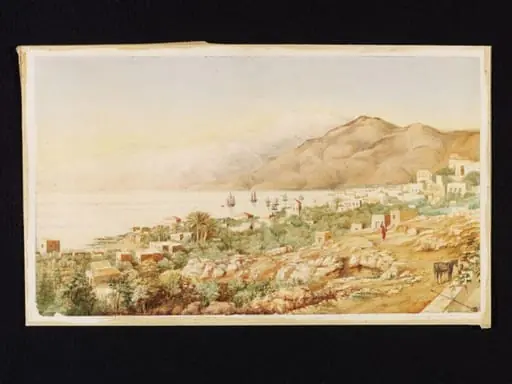 The Town and Bay of Beirut
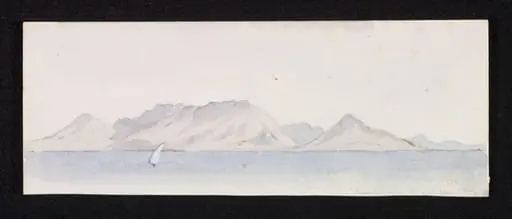 Coast of Arabia. W. of Aden
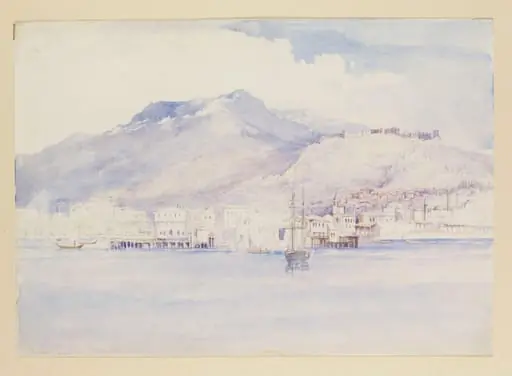 Smyrna
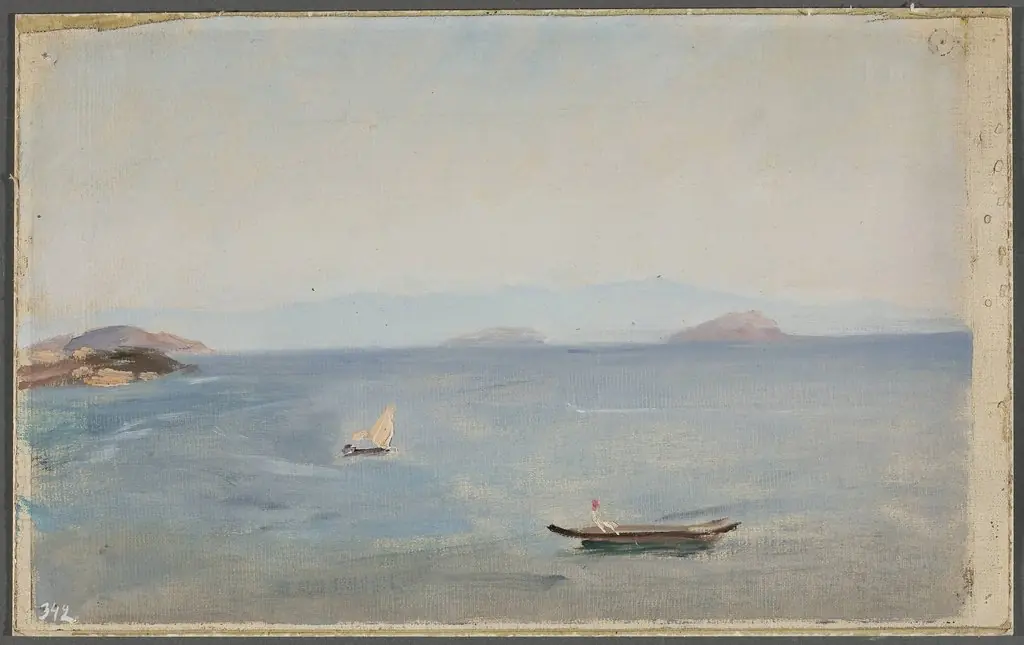 View of the mountainous seaside. From the journey to Constantinople
![Tiberais [sic], by Mary Parker](https://artifactworldgallery.com/img/mary-parker--tiberais-sic--e6f3a288c102ee52-w320.webp) Tiberais [sic]
Tiberais [sic]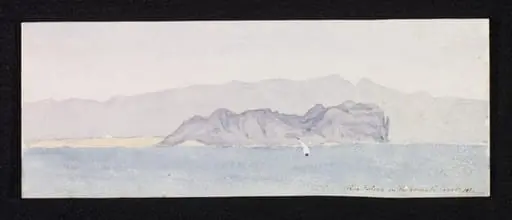 Ras Falook on the Somali Coast
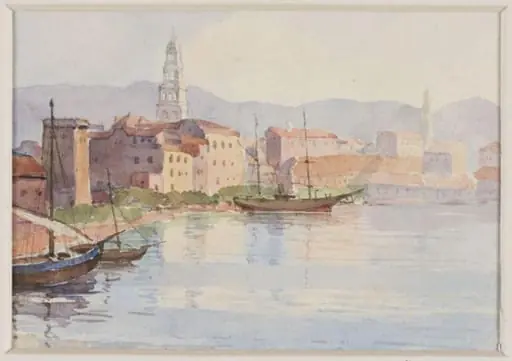 Spalato
![Looking towards Leanders Tower and the Sultans New Palace [Dolmabahçe] From Scutari, by Michael Anthony Shrapnel Biddulph](https://artifactworldgallery.com/img/michael-anthony-shrapnel-biddulph--looking-towards-leanders-tower-and-the-sultans-new-palace-do--77513ba4e146ed32-w320.webp) Looking towards Leanders Tower and the Sultans New Palace [Dolmabahçe] From Scutari
Looking towards Leanders Tower and the Sultans New Palace [Dolmabahçe] From Scutari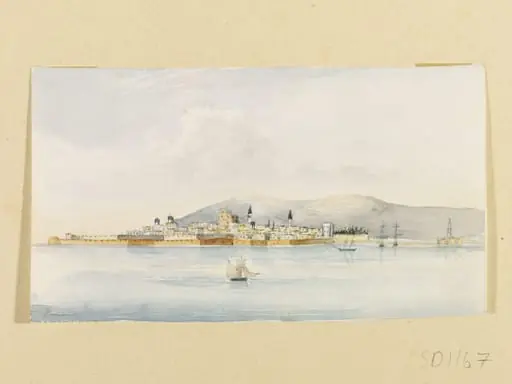 Acre
Acre An oriental port
 The Rock of Aden