Artwork
Kakubha Ragini
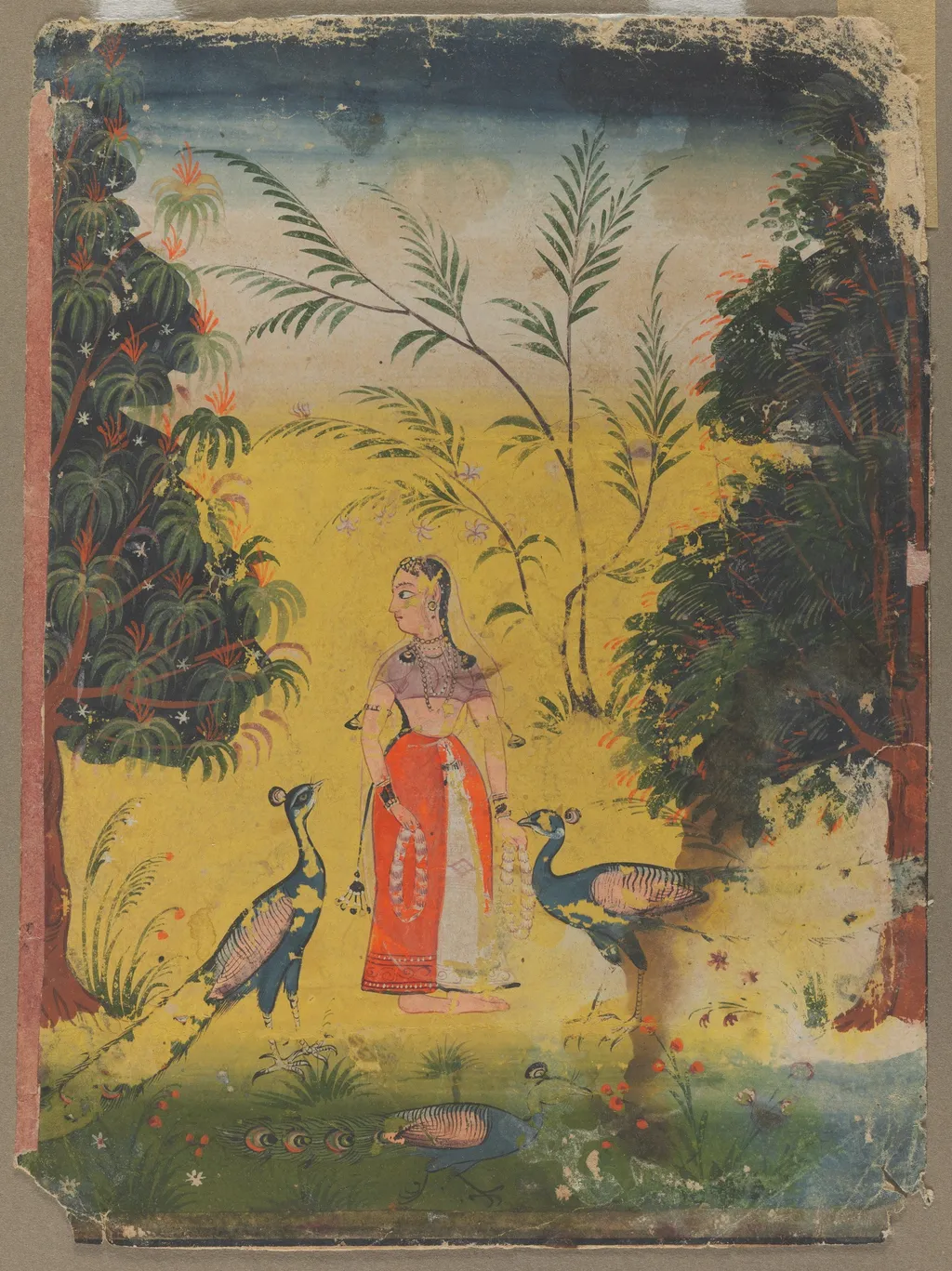
Kakubha Ragini is an unspecified painting. It dates from 1610 and is held in the collection of the Cleveland Museum of Art.
About this work
Technique & Style
The work has been noted for its delicate handling of line and color, producing a composition that balances naturalism with stylized ornamentation.
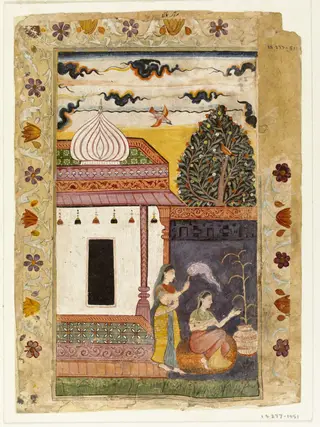
The painting is executed in the Mughal court style, depicting a figure in a courtly setting with intricate detailing characteristic of early 17th‑century Indian miniature painting. It is created using tempera and ink on paper, applied to a compact support that allows fine brushwork and subtle tonal modulation. The work has been noted for its delicate handling of line and color, producing a composition that balances naturalism with stylized ornamentation. Its current condition is stable, with only minor surface wear observed in recent conservation reports.
History & Provenance
Kakubha Ragini is a painting created in 1610 within the Mughal Empire. The work is attributed to an unknown artist. It is currently held in the collection of the Cleveland Museum of Art, where it is cataloged under the accession number 1960.50.
The specific circumstances regarding its original commission or the detailed chain of ownership prior to its acquisition by the museum are not detailed in the available records.
Kakubha Ragini is held by the Cleveland Museum of Art, accessioned under inventory number 1960.50. It was created in 1610 within the Mughal Empire and has been exhibited at the museum as part of its collection display, though specific exhibition titles are not documented in the source.
The work entered the Cleveland Museum of Art's collection in 1960, reflecting its provenance from the Mughal period to its current custodianship.
Overview
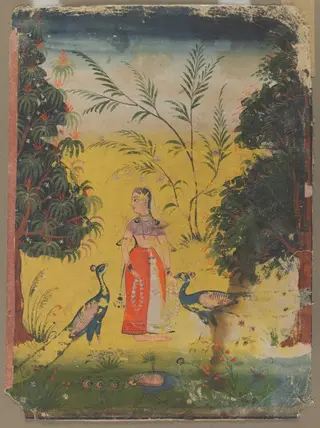
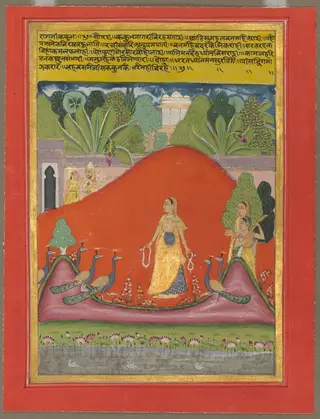
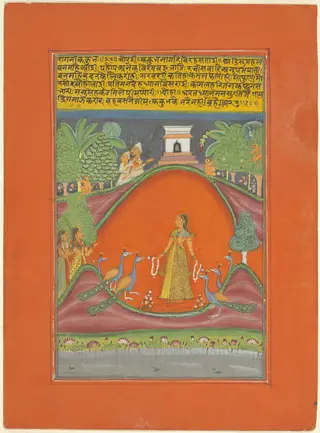
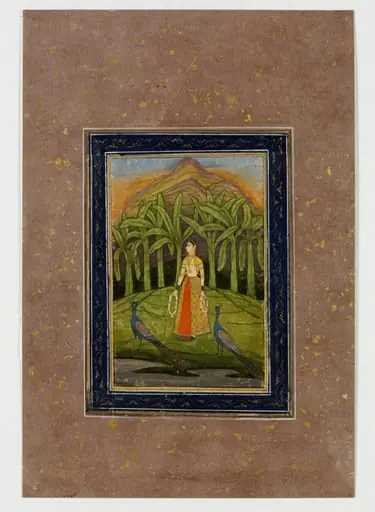
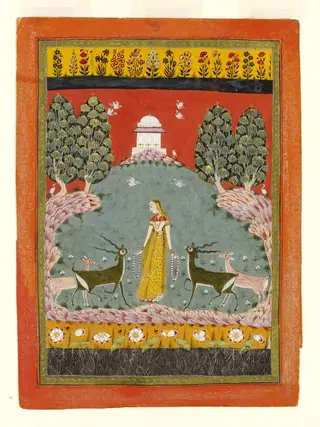
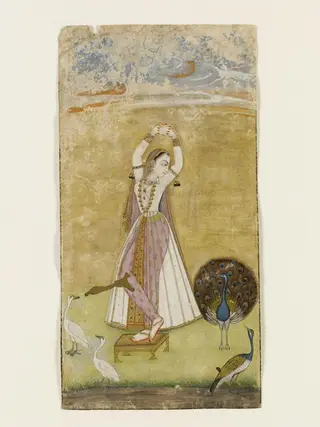
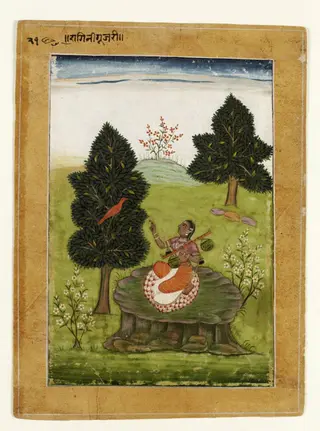
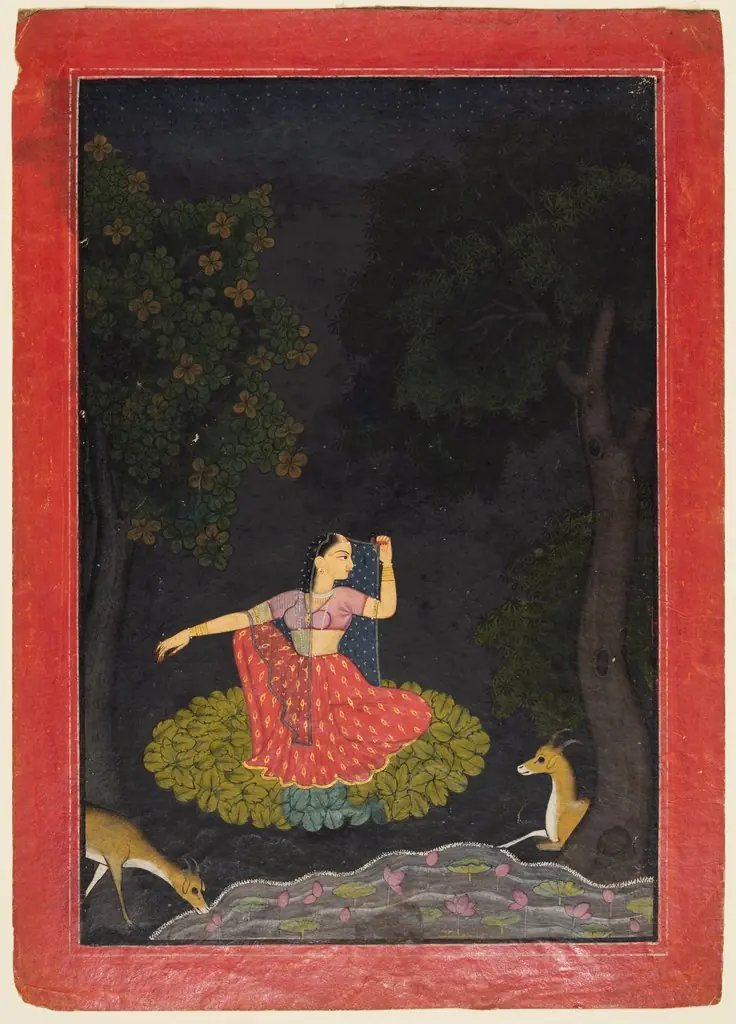
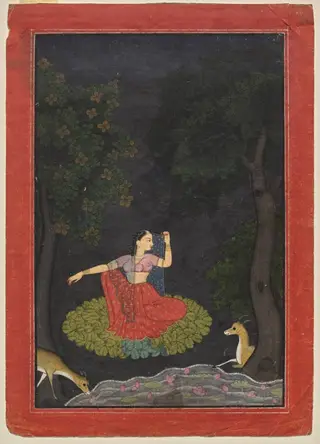
Kakubha Ragini is a painted work that portrays a solitary woman situated in a verdant outdoor environment. The composition places her amid foliage, trees and birds, against a warm yellow backdrop that recedes into a blue sky. Her attire consists of an orange‑and‑white sari, and she holds a string of beads in her right hand while her left hand rests on her hip, suggesting a moment of quiet contemplation.
Subject & Meaning
The central figure is a female figure rendered with long dark hair and adorned with jewelry, indicating cultural identity and personal adornment. The surrounding natural elements, plants, trees, and avian life, frame her in a tranquil setting, inviting interpretations of harmony between humanity and nature, as well as an introspective pause within a lush landscape.
Context
The work reflects a tradition of Indian genre painting that often celebrates everyday life and natural surroundings. The use of a sari and traditional ornaments situates the piece within a cultural context that values domestic serenity and the aesthetic integration of human figures with their natural settings.
Legacy
Kakubha Ragini contributes to the visual documentation of regional attire and landscape aesthetics, offering insight into the artistic approaches that blend portraiture with environmental motifs. Its compositional calm and color harmony continue to inform studies of mid‑20th‑century Indian painting practices.
Artist & collection