Artwork
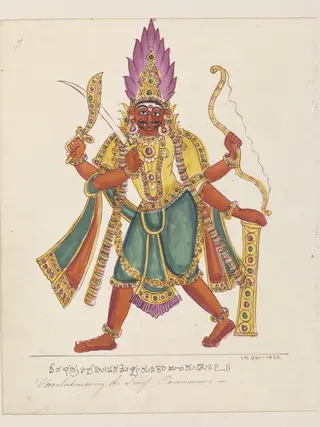
Khadgaroma, Son of Ravana
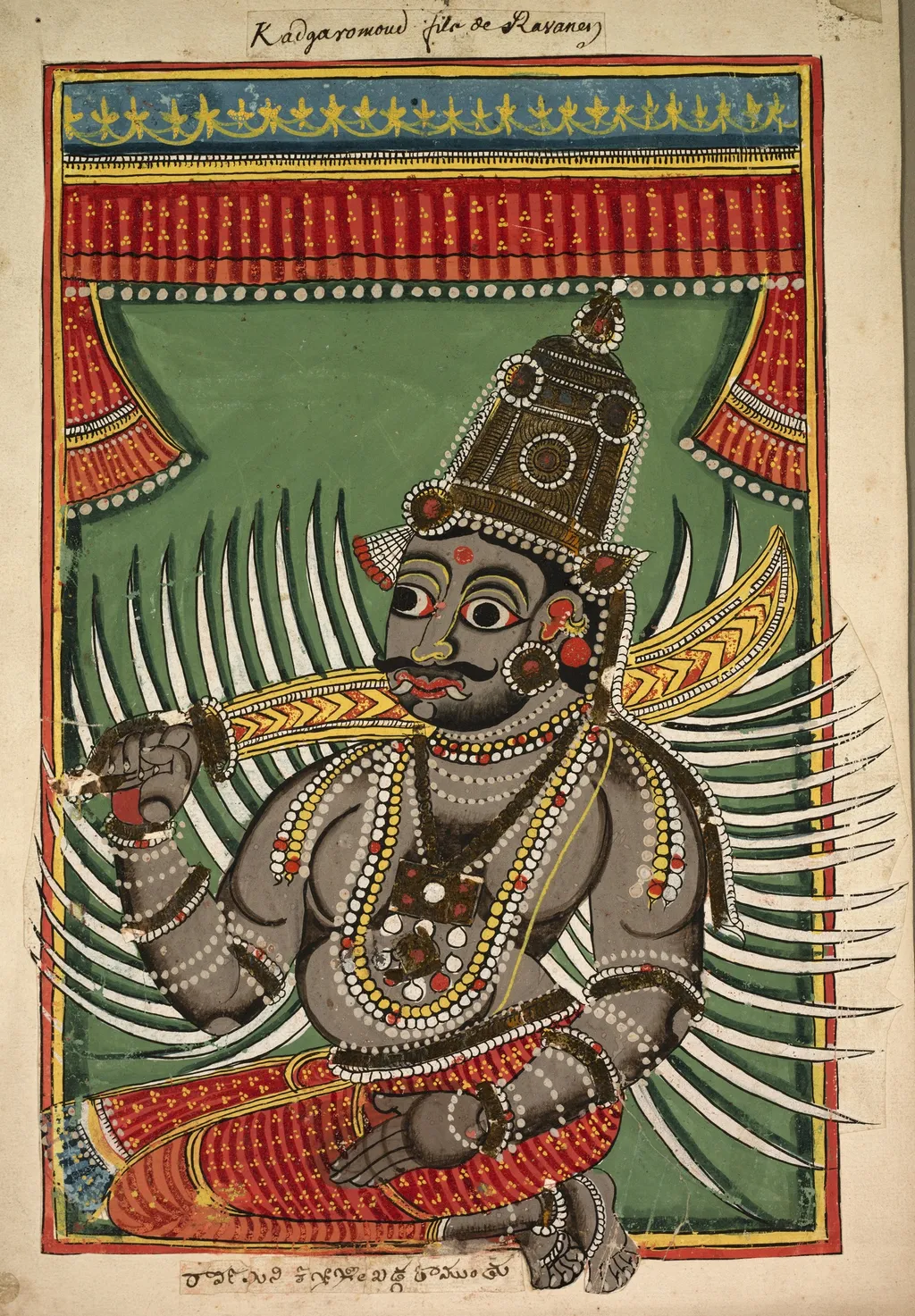
Khadgaroma, Son of Ravana is an unspecified painting. It dates from 1720 and is held in the collection of the Cleveland Museum of Art. The painting portrays a seated figure on an ornate red‑and‑gold throne, adorned with abundant jewelry and a jeweled belt.
About this work
Subject & Meaning
Khadgaroma, Son of Ravana portrays a mythic figure drawn from Hindu epics, embodying the lineage and heroic qualities associated with Ravana's descendants.
Khadgaroma, Son of Ravana portrays a mythic figure drawn from Hindu epics, embodying the lineage and heroic qualities associated with Ravana's descendants. The subject is identified through iconographic attributes linked to Ravana's family, conveying themes of power and heritage. This painting is part of the Cleveland Museum of Art collection and was created in 1720.
The work reflects cultural narratives of divine ancestry within the Indian artistic tradition, using visual cues to communicate mythological significance.
The painting is part of the Cleveland Museum of Art collection and was created in 1720.
History & Provenance
Khadgaroma, Son of Ravana is a painting attributed to an unknown artist, created in 1720. It entered the collection of the Cleveland Museum of Art, where it has been housed since its acquisition. The work is catalogued under the accession number 2001.163 and is part of the museum's permanent holdings.
Its creation date aligns with early 18th-century Indian artistic production, reflecting thematic elements drawn from the Ramayana narrative.
The painting Khadgaroma, Son of Ravana is held in the collection of the Cleveland Museum of Art. The work is identified within the museum's records by the accession number 2001.163. Created in 1720, the piece is classified as a painting by an unknown artist.
The provided sources confirm its location and inventory designation but do not list specific past exhibitions or loan history.
Context
Khadgaroma, Son of Ravana is a 1720 painting held in the Cleveland Museum of Art collection, reflecting the artistic milieu of its time through its subject matter and compositional techniques characteristic of early 18th-century Indian miniature traditions. Scholarly attention has focused on its narrative depth and stylistic significance within the corpus of Indian miniature painting, though precise attribution remains uncertain due to the anonymity often associated with works from this period. The piece is contextualized within broader discussions of Mughal and post-Mughal artistic production, emphasizing its role in illustrating mythological themes prevalent in Rajput court patronage.
Its reception history underscores its importance as a representative example of narrative painting in South Asian artistic traditions.
Overview
The painting portrays a seated figure on an ornate red‑and‑gold throne, adorned with abundant jewelry and a jeweled belt. He wears a tall, spiked crown, his dark face marked by striking red dots for eyes, and holds a club in one hand and a snake in the other. A small animal lies beneath his feet, while a green canopy with red stripes frames the composition.
Technique & Style
Executed with vivid pigments and bold, clean outlines, the work employs a decorative aesthetic typical of South Asian manuscript illustration. The use of contrasting reds, greens, and gold creates a striking visual impact, and the flat treatment of space focuses attention on the figure rather than on realistic depth.
Artist & collection

![Rama and Lakshmana Fighting Ravana, from a Dashavatara (Ten Incarnations [of Vishnu]) series](https://artifactworldgallery.com/img/rama-and-lakshmana-fighting-ravana-from-a-dashavatara-ten-in--44f1c99a2c65cc54-w320.webp)