Artwork
Krishna Steals the Clothes of the Cowgirls (Gopis) (recto), from a Kalighat album
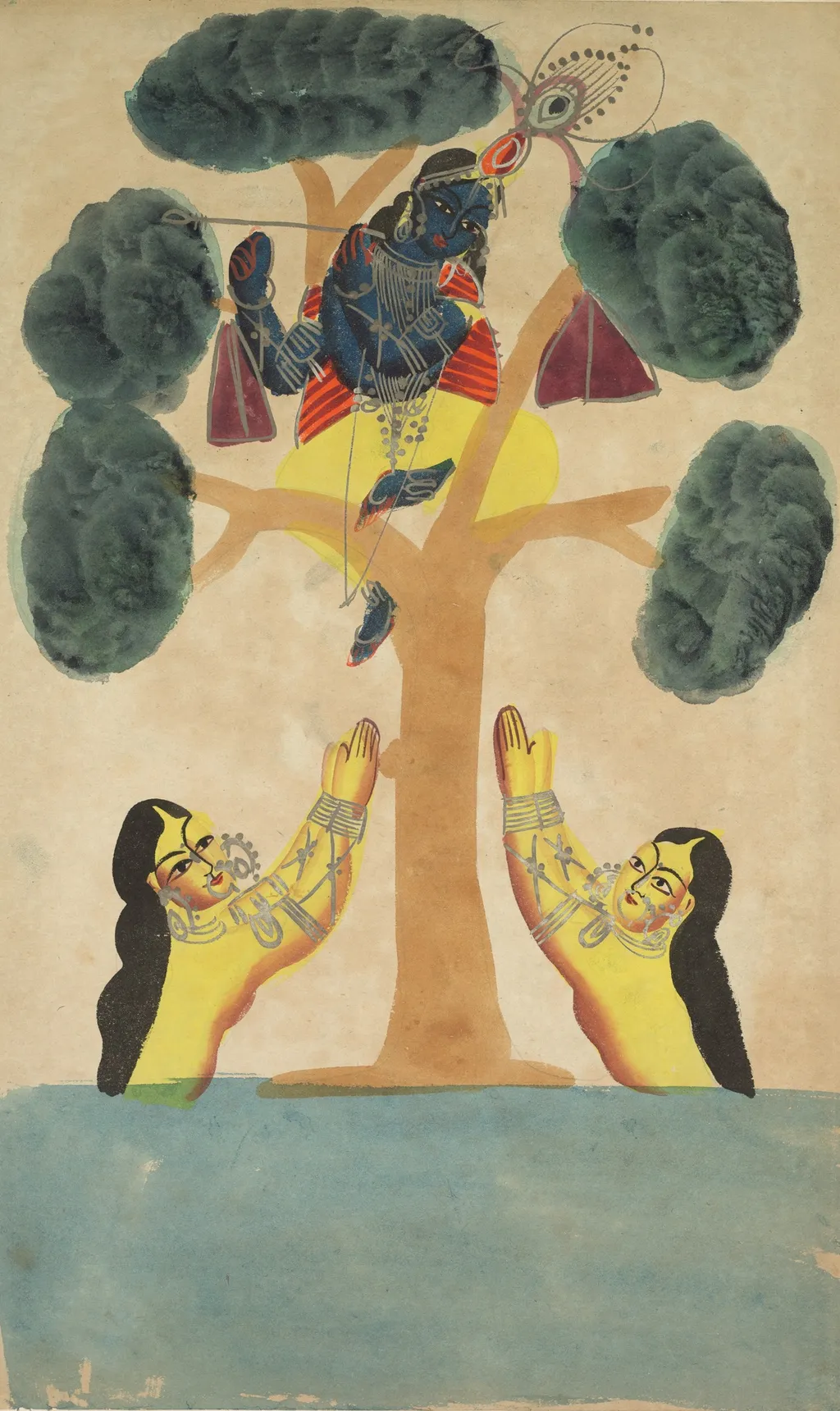
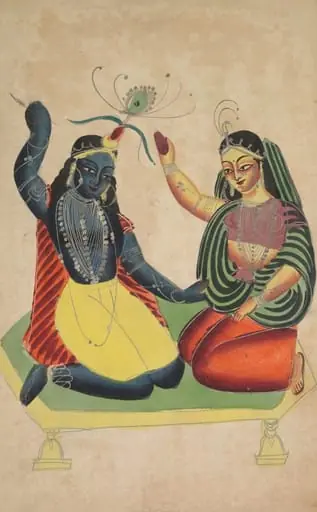
Krishna Steals the Clothes of the Cowgirls (Gopis) (recto), from a Kalighat album is an unspecified painting. It dates from 1896 and is held in the collection of the Cleveland Museum of Art. This painting, titled Krishna Steals the Clothes of the Cowgirls (Gopis), originates from a Kalighat album.
About this work
Subject & Meaning
The imagery centers on the moment of vulnerability and the subsequent spiritual engagement between Krishna and the Gopis.
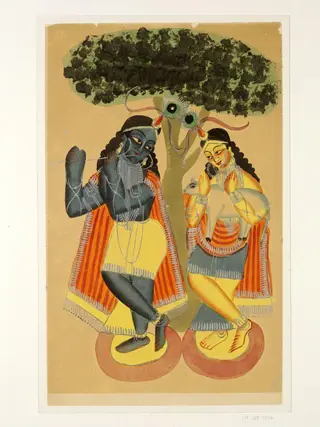
The painting depicts the Hindu deity Krishna in the act of stealing the garments of the cowgirls, known as the Gopis. The scene illustrates an episode from Krishna's life in which he ascends a tree to take the clothes of the bathing women, a narrative often interpreted as a divine test of devotion or a playful demonstration of his power to induce surrender. As a work from the Kalighat tradition produced in Kolkata around 1896, the piece visualizes this mythological interaction through the distinct stylistic conventions of the region.
The imagery centers on the moment of vulnerability and the subsequent spiritual engagement between Krishna and the Gopis.
History & Provenance
The painting Krishna Steals the Clothes of the Cowgirls (Gopis) (recto), created in 1896, is held in the collection of the Cleveland Museum of Art under accession number 2003.114.a. It is attributed to an unknown artist and was made in Kolkata. The available sources do not contain information regarding a specific exhibition history for the work.
Overview
This painting, titled Krishna Steals the Clothes of the Cowgirls (Gopis), originates from a Kalighat album. It illustrates a well-known episode from Hindu mythology involving the deity Krishna and the Gopis. The artwork is distinguished by its vivid colors and simplified forms, characteristic of the Kalighat painting style, which frequently depicted both religious narratives and scenes from daily life with directness and vibrancy.
Technique & Style
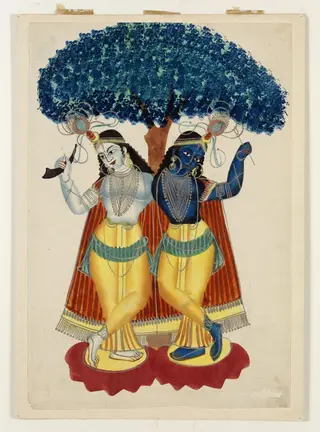
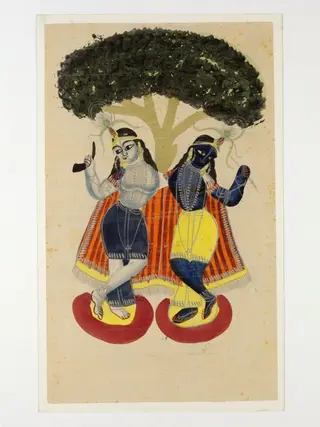
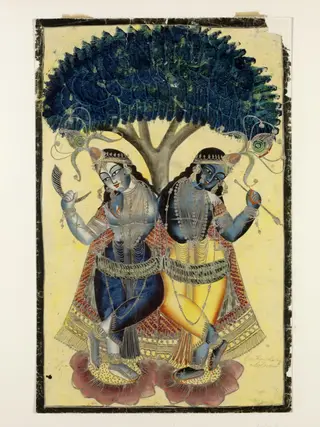
The painting utilizes a striking palette, featuring bright yellow for the Gopis' attire and gold for their jewelry, set against Krishna's distinctive blue skin. The composition is characterized by its simple, flat shapes and decorative elements. A pale sky frames the scene, accented by green, cloud-like forms at the edges.
This direct approach to color and form imbues the artwork with a lively quality, typical of the accessible visual storytelling found in the Kalighat school.
Artist & collection

- Krishna Steals the Clothes of the Cowgirls (Gopis) (recto), from a Kalighat album
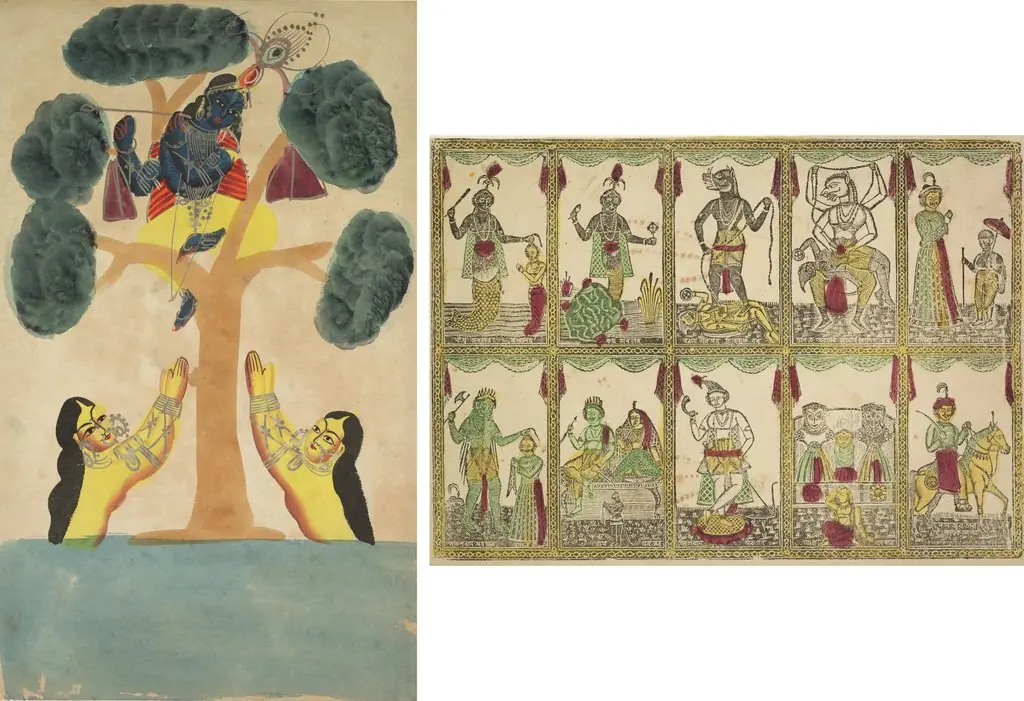 Leaf from a Kalighat album: Krishna Steals the Clothes of the Cowgirls (Gopis) (recto); Das Avataras, Ten Incarnations of Vishnu (verso)
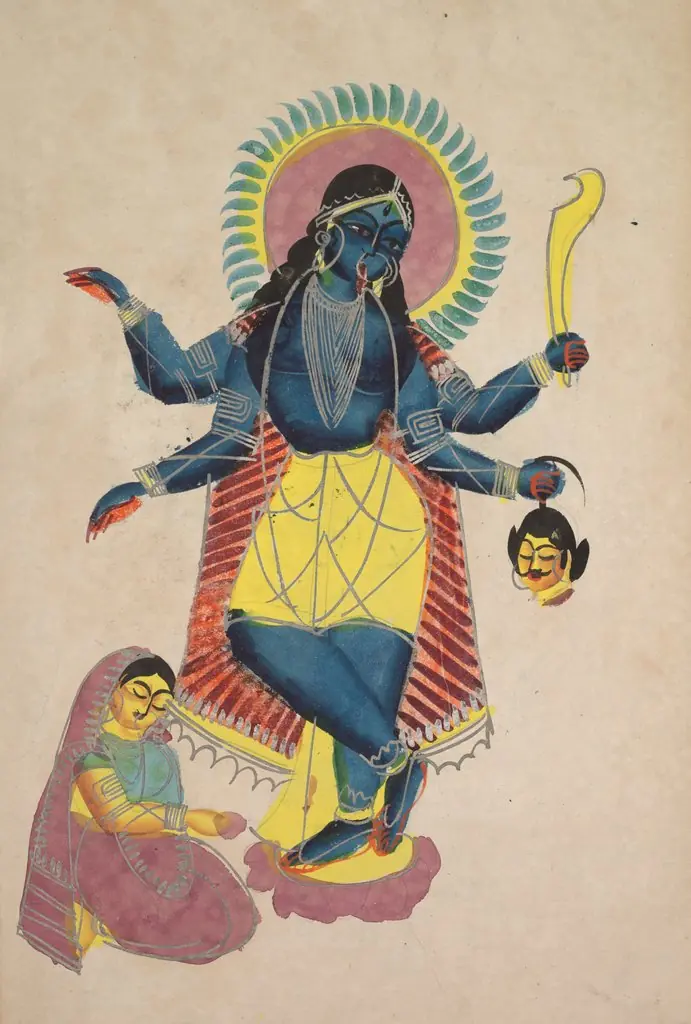 Krishna as Kali worshipped by Radha (recto), from a Kalighat album
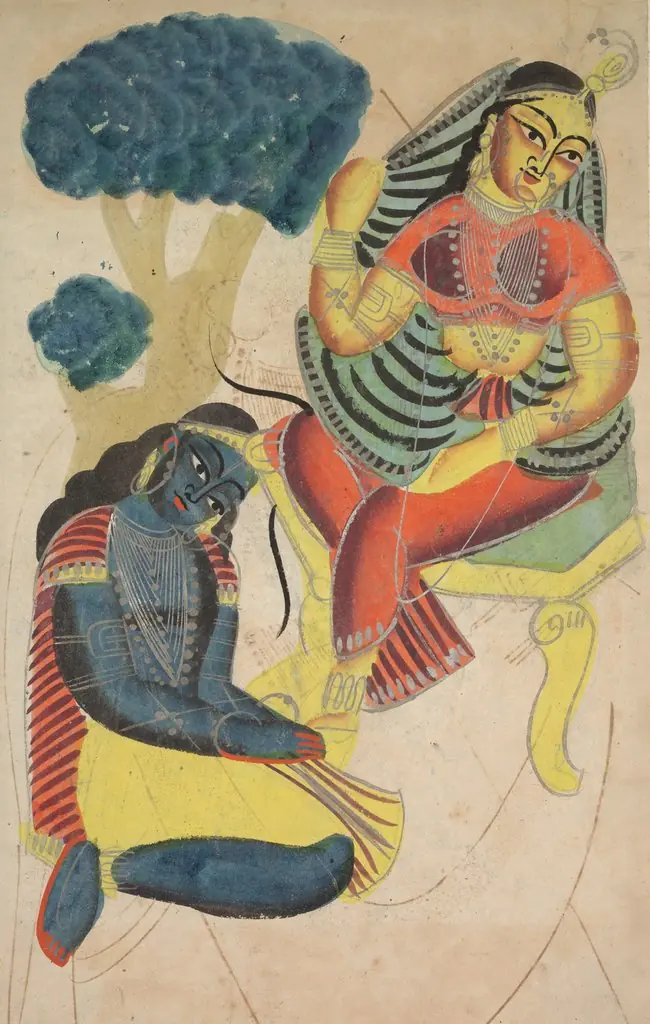 Krishna Stroking Radha's Feet (verso), from a Kalighat album
 Krishna Stroking Radha's Feet (verso), from a Kalighat album
 Radha and Krishna (verso), from a Kalighat album