Artwork
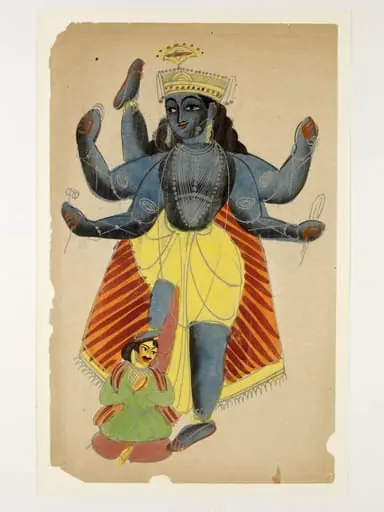
Krishna as Kali worshipped by Radha (recto), from a Kalighat album
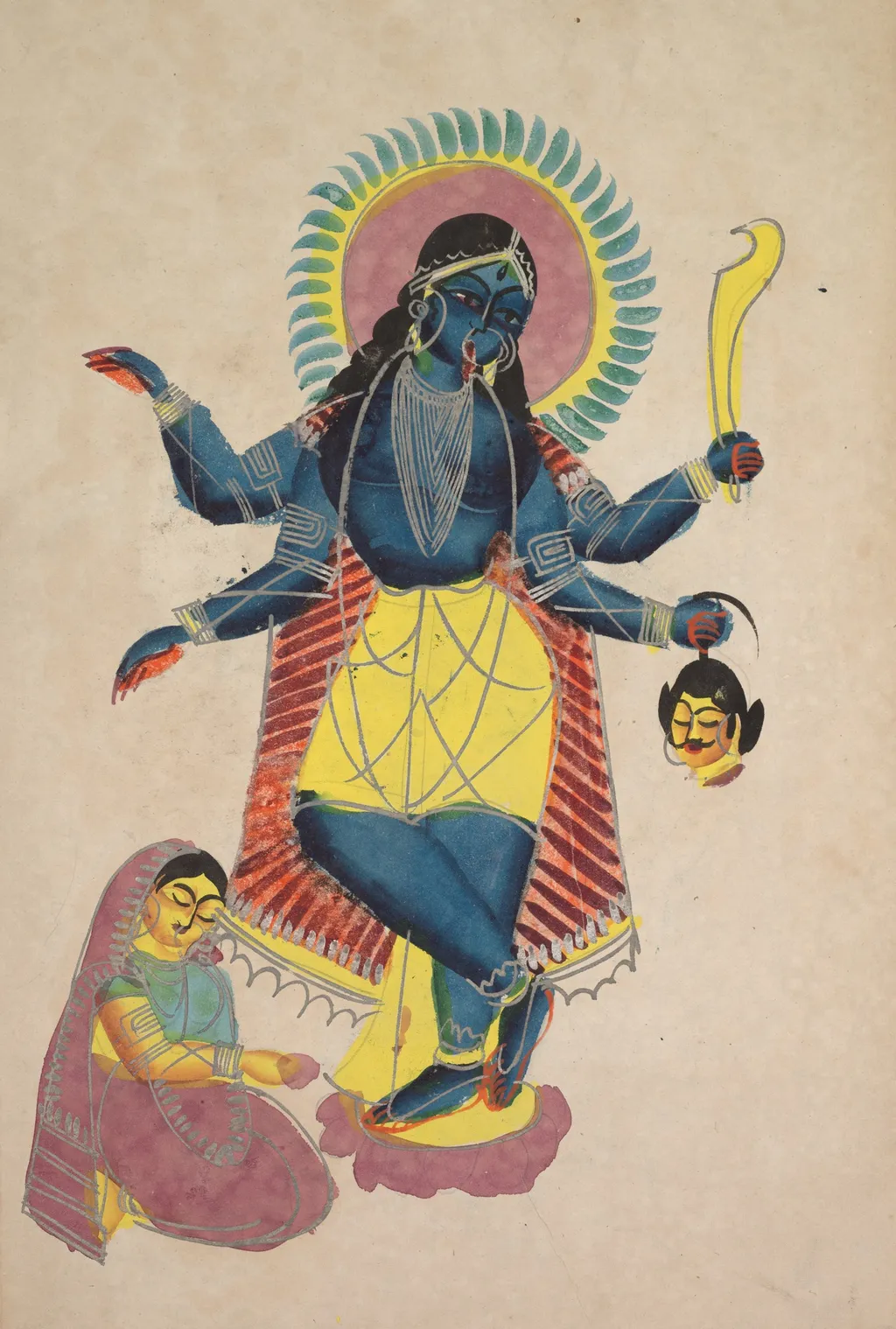
Krishna as Kali worshipped by Radha (recto), from a Kalighat album is an unspecified painting. It dates from 1896 and is held in the collection of the Cleveland Museum of Art. This painting, titled Krishna as Kali worshipped by Radha, originates from a Kalighat album.
About this work
History & Provenance
Its provenance is documented only through the museum’s acquisition records, which note its arrival as part of a donated Kalighat album.
The work titled 'Krishna as Kali worshipped by Radha' is a recto sheet from a Kalighat album. It was created in 1890 in Kolkata, depicting the Hindu god Krishna in a Kali‑worshipping context. The piece is attributed to an unidentified artist; the attribution appears in internal cataloguing records.
The artwork entered the collection of the Cleveland Museum of Art, where it remains on view. Its provenance is documented only through the museum’s acquisition records, which note its arrival as part of a donated Kalighat album. No earlier owners or commissioning details have been recorded.
The painting Krishna as Kali worshipped by Radha (recto) is part of a Kalighat album dated to 1890 and made in Kolkata, is held in the Cleveland Museum of Art in Cleveland, Ohio, under accession number 2003.113.a. The work entered the museum’s collection in 2003, as indicated by the accession number. It is classified as a painting. The available sources do not record any exhibition history for this specific Kalighat painting.
Legacy
The painting Krishna as Kali worshipped by Radha, created in 1890 in Kolkata, exemplifies the Kalighat folk tradition. Its inclusion in the Cleveland Museum of Art collection has ensured scholarly attention to the work, positioning it as a documented example of 19th‑century Bengal popular art. The piece is recorded as a painting by an unknown artist, reflecting the anonymous production typical of the genre.
As part of a museum’s holdings, it contributes to the ongoing appreciation of Kalighat imagery within both Indian art history and broader studies of colonial‑era visual culture.
Overview
This painting, titled Krishna as Kali worshipped by Radha, originates from a Kalighat album. It presents a distinctive devotional scene featuring a blue-skinned, four-armed deity standing on a lotus, receiving homage from a kneeling figure. The artwork is particularly notable for its syncretic portrayal, blending iconographic elements of the Hindu deities Krishna and Kali, a practice occasionally observed in Indian devotional art.
Subject & Meaning
The central blue figure embodies a fusion of Krishna and Kali, displaying four arms, one holding a conch shell and another a small face, while two others gesture. This composite deity, adorned in a red-and-yellow skirt and a feathered headpiece, stands on a lotus. Below, a smaller figure, likely Radha, kneels in an act of worship, dressed in green and red and holding a red cloth, signifying her devotion.
Context
The deliberate combination of Krishna and Kali within a single divine form exemplifies a practice sometimes found in Indian devotional art. Such artistic syntheses often aim to convey the ultimate unity of the divine or to underscore shared attributes and philosophical connections between various manifestations of godhead within Hindu tradition. This specific blend highlights the multifaceted nature of divinity.
Artist & collection

- Krishna as Kali worshipped by Radha (recto), from a Kalighat album
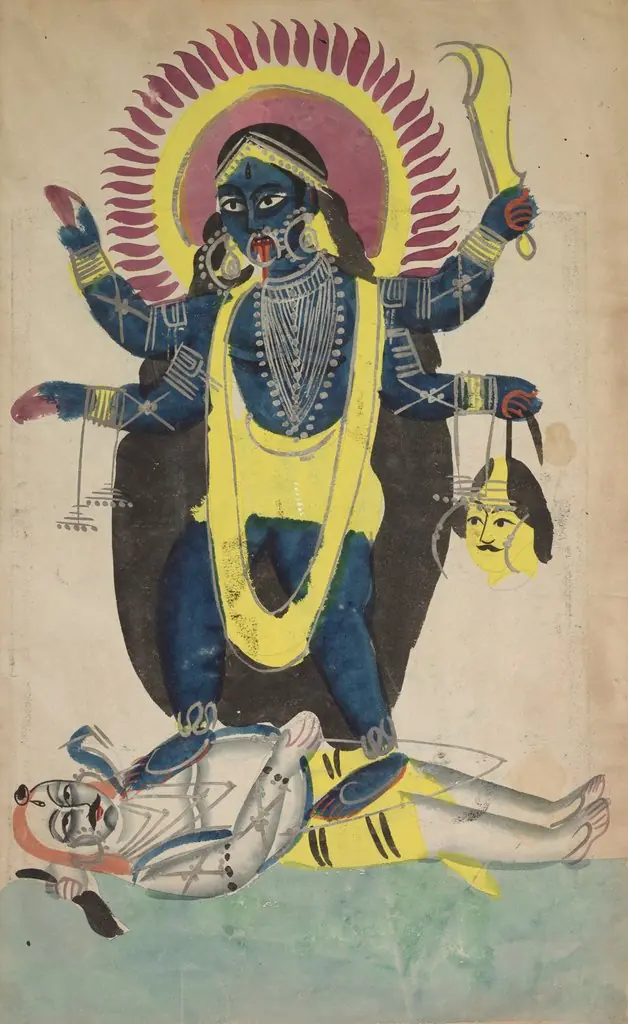 Kali Dancing on Shiva (recto), from a Kalighat album
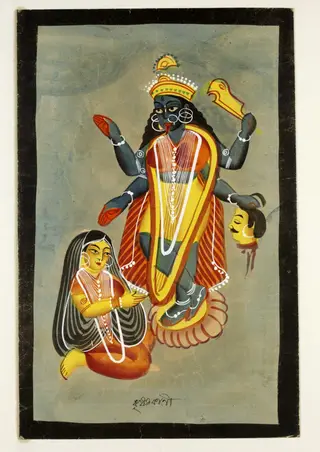 Krishna as Kali, and Radha
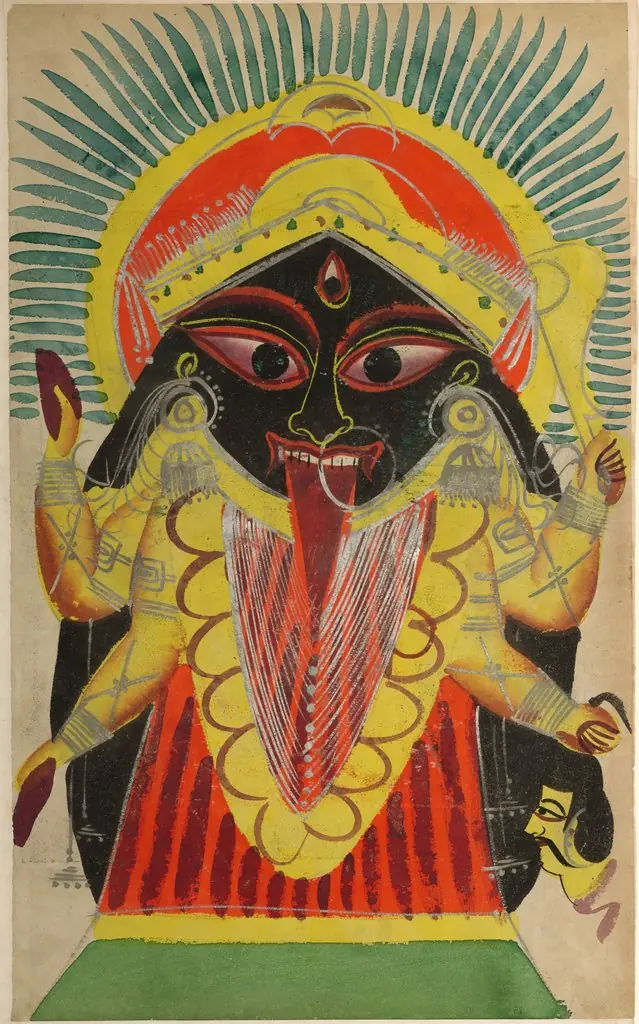 The Goddess Kali (recto), from a Kalighat album
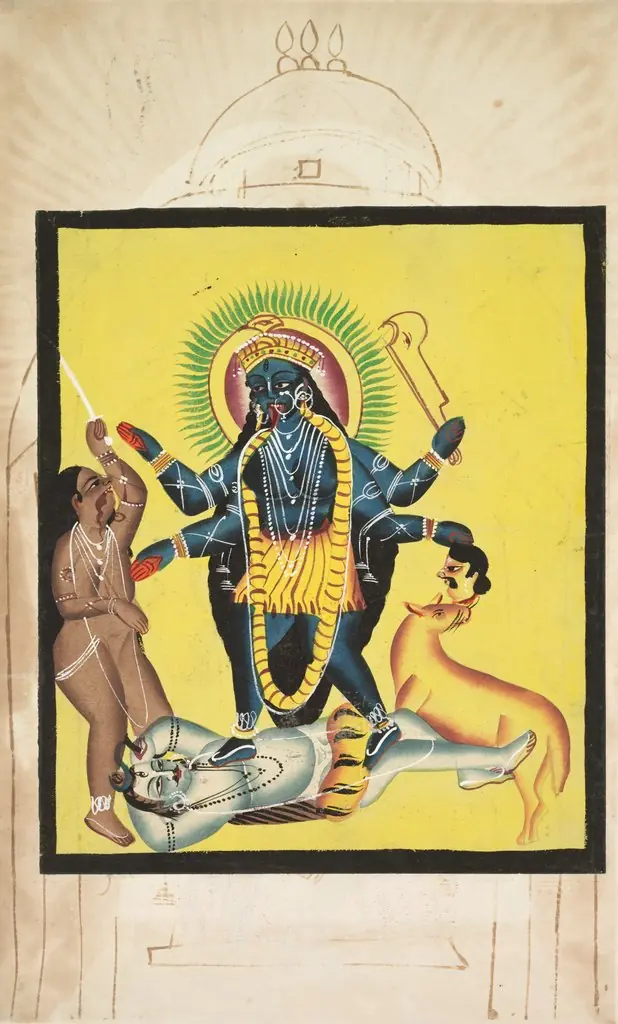 Kali Standing on Shiva (verso), from a Kalighat album
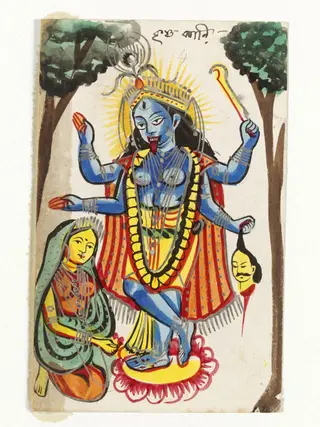 Radha and Krishna-Kali
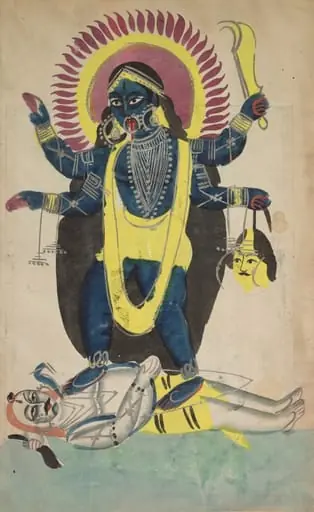 Kali Dancing on Shiva (recto), from a Kalighat album
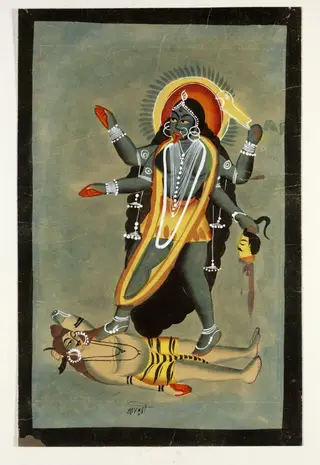 Krishna as Kali, and Shiva
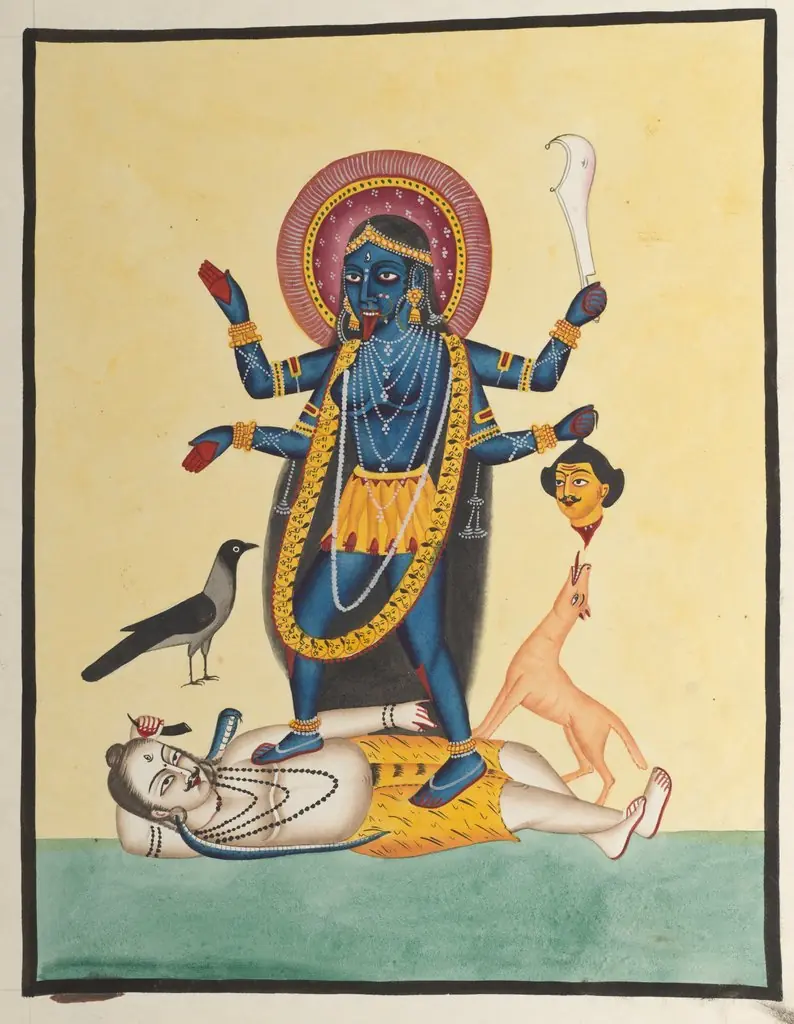 Kali, from a Kalighat album
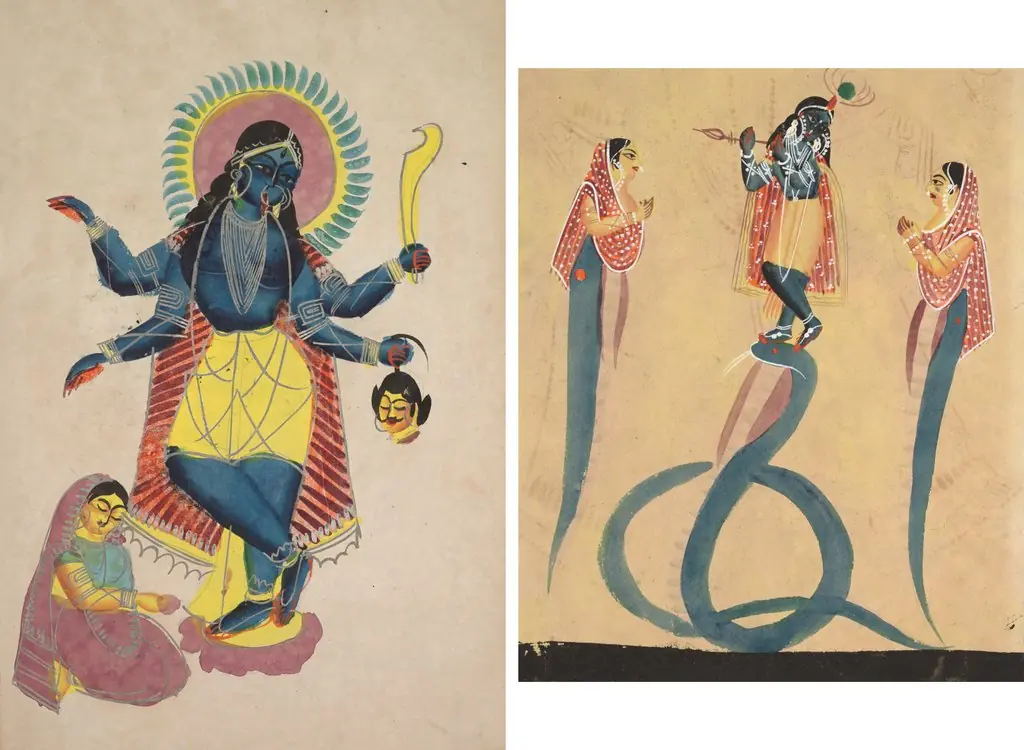 Leaf from a Kalighat album: Krishna as Kali worshipped by Radha (recto); Krishna quells the serpent Kaliya (verso)
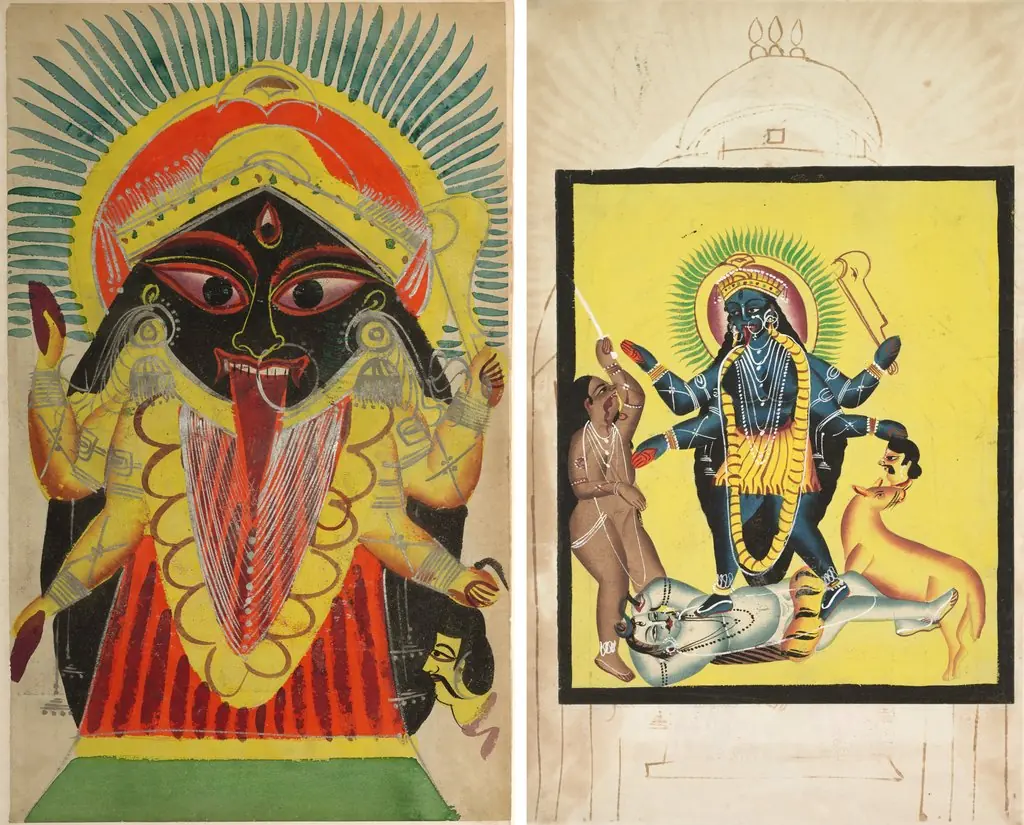 Leaf from a Kalighat album: The Goddess Kali (recto); Kali Standing on Shiva (verso)