Artwork
Landscape of the Four Seasons
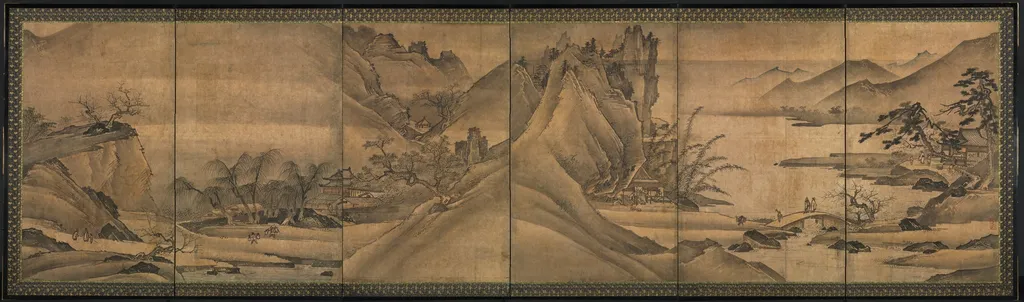
Landscape of the Four Seasons is an unspecified painting. It dates from 1424 and is held in the collection of the Cleveland Museum of Art.
About this work
History & Provenance
The work is held in the collection of the Cleveland Museum of Art in Cleveland, where it is cataloged under accession number 1976.
The painting known as Landscape of the Four Seasons was created in Korea in 1424. It is attributed to the Korean artist Yi Sumun, who was born around 1404, though some records classify the artist as unknown. The work is held in the collection of the Cleveland Museum of Art in Cleveland, where it is cataloged under accession number 1976.92, and is classified as a landscape painting originating from Korea.
Legacy
Landscape of the Four Seasons, a 1424 Korean painting attributed to Yi Sumun, entered the collection of the Cleveland Museum of Art, where its inclusion signals scholarly recognition of the work's significance within East Asian landscape traditions. Its early date and rarity as a surviving example contribute to discussions of early Korean landscape painting, and its presence in a major museum's permanent holdings underscores a sustained reputation that extends beyond initial acquisition to ongoing study and exhibition.
Overview
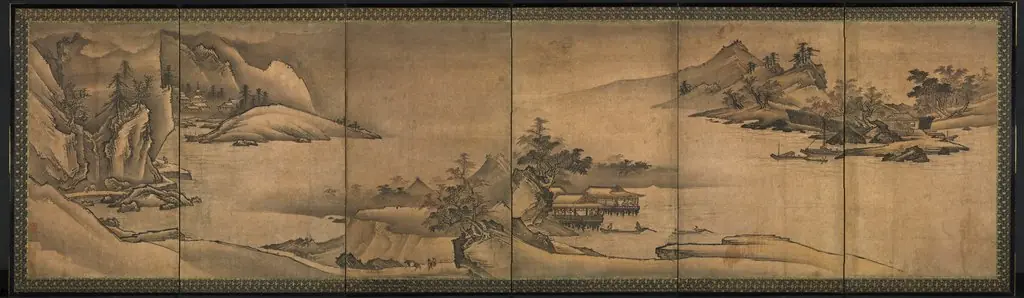
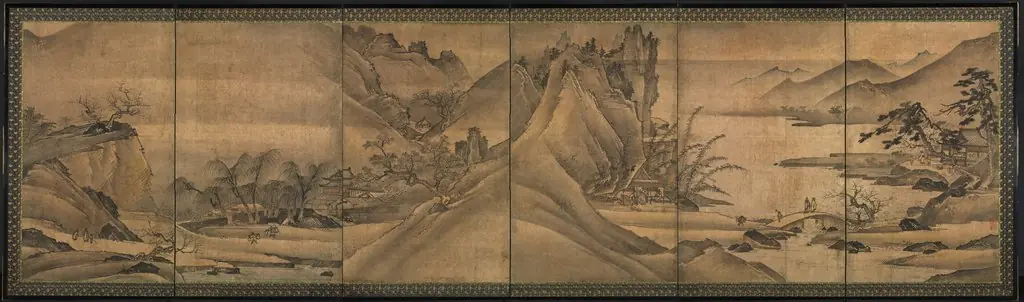
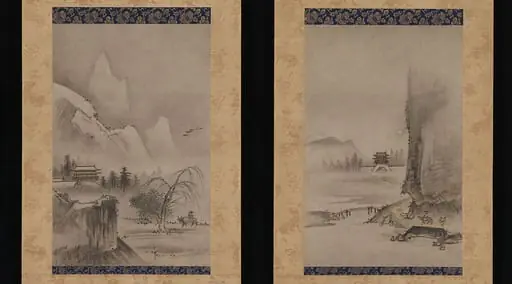
This painting, titled Landscape of the Four Seasons, presents an expansive natural vista across six individual panels. The composition depicts a continuous scene of mountains, forests, and modest human structures. Rendered primarily in a palette of browns and grays, the work conveys a sense of serene depth and intricate detail, inviting close observation of its layered world.
Subject & Meaning
The artwork portrays a sweeping landscape that subtly transitions through the seasons, though specific seasonal markers are implied rather than explicit. Small figures and animals navigate paths alongside rivers and cliffs, suggesting human interaction within a vast, natural environment. This depiction evokes a contemplative atmosphere, emphasizing the enduring presence of nature and the cycles of life within a quiet, expansive setting.
Technique & Style
The artist employed a refined approach to detail, meticulously rendering elements such as the contours of hills and the posture of trees responding to wind. The color scheme relies on muted browns and grays, enhanced by precise dark outlines and delicate washes. This technique, reminiscent of chiaroscuro, effectively creates a sense of depth and volume through the interplay of light and shadow, contributing to the painting's layered visual texture.
Artist & collection

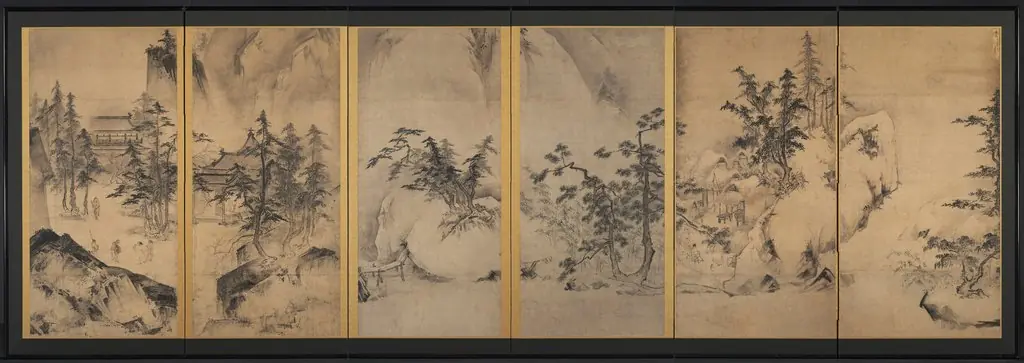 Winter and Spring Landscape
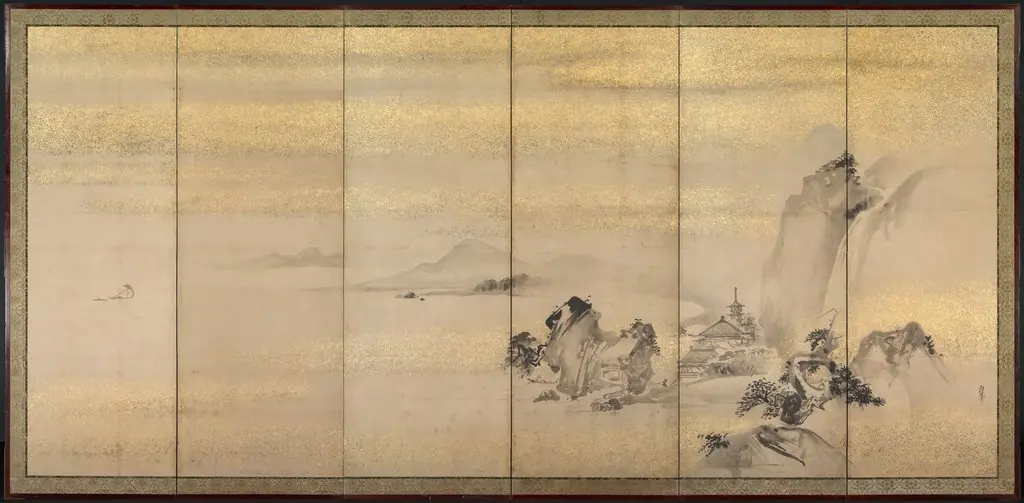 Summer and Winter Landscapes
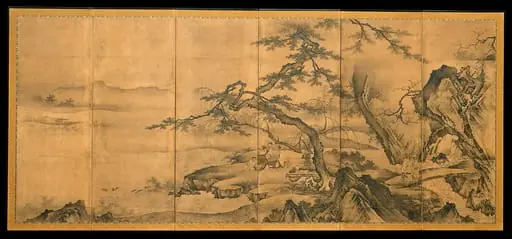 琴棋書画図屏風|The Four Accomplishments
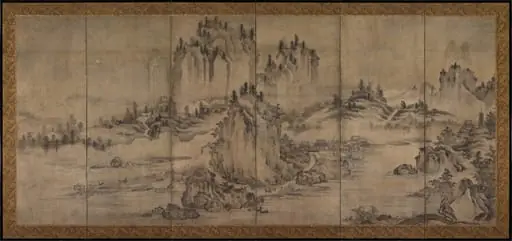 Landscape
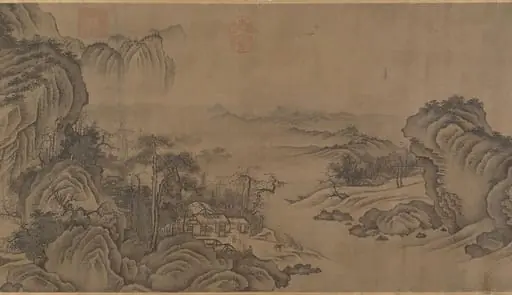 元/明 佚名 舊傳 燕文貴 秋山蕭寺圖 軸|Buddhist Temples amid Autumn Mountains
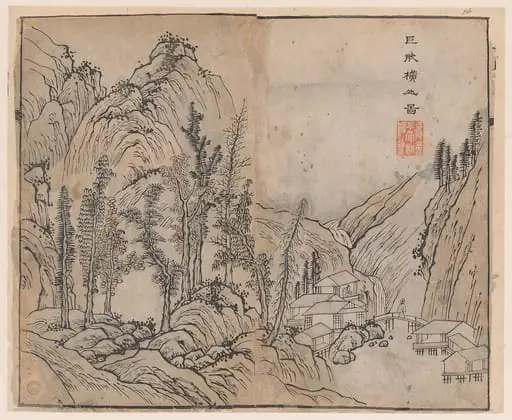 清 王槩 設計,李漁出版 芥子園畫傳 版本|Mt. Heng, after Juran (active ca. 960–965), from the Mustard Seed Garden Manual of Painting
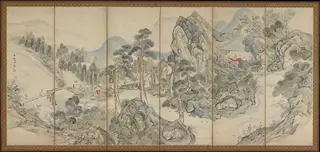 池大雅筆 蘭亭曲水図屏風 秋社図屏風|Orchid Pavilion Gathering; Autumn Harvest Festival
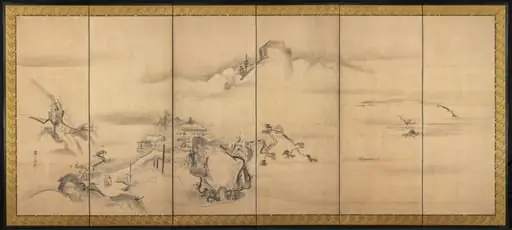 Eight Views of the Xiao and Xiang Rivers
 鑑貞筆 瀟湘八景中の二景図|Two Views from the Eight Views of the Xiao and Xiang Rivers