Artwork
琴棋書画図屏風|The Four Accomplishments
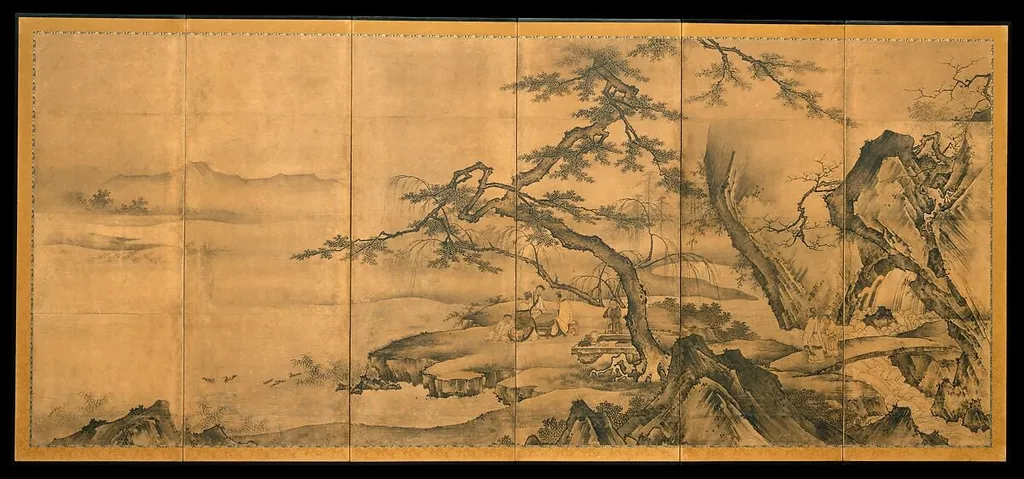
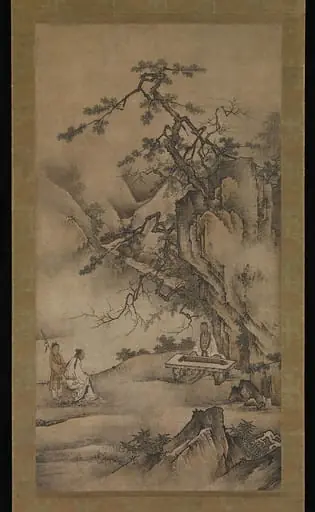
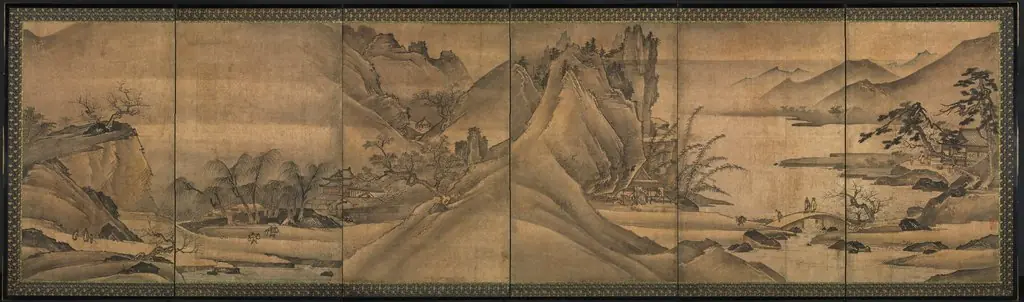
琴棋書画図屏風|The Four Accomplishments is an ink painting by the Kanō school artist Kano Motonobu. It dates from 1550 and is held in the collection of the Metropolitan Museum of Art.
About this work
Subject & Meaning
By depicting a man in association with a tree, the work symbolizes the integration of aesthetic and moral cultivation characteristic of the literati ideal.
The folding screen titled 琴棋書画図屏風|The Four Accomplishments, attributed to Kano Motonobu and dated to the mid‑16th century, portrays a solitary figure standing beside a tree within a landscape format. The composition aligns with the genre of landscape painting and reflects the thematic program of the four scholarly arts, music (qin), strategy (qi), calligraphy (shu) and painting (hua), collectively known as the Four Accomplishments. By depicting a man in association with a tree, the work symbolizes the integration of aesthetic and moral cultivation characteristic of the literati ideal.
History & Provenance
The pair of six-panel folding screens titled The Four Accomplishments was created by the artist Kanō Motonobu during the mid-16th century. Executed in ink and color on paper, these landscape paintings depict figures and trees. The works are currently held in the collection of the Metropolitan Museum of Art in New York, where they are cataloged under the accession numbers 1991.480.1 and 1991.480.2.
While the specific commission details and the original ownership chain prior to the museum's acquisition are not detailed in the available records, the attribution to Motonobu and the mid-16th-century dating remain consistent across sources. The screens represent a significant example of the artist's work within the landscape genre.
The pair of folding screens titled 琴棋書画図屏風 (The Four Accomplishments) is housed in the Metropolitan Museum of Art, New York, under accession numbers 1991.480.1 and 1991.480.2. The work was acquired by the museum in 1991 as part of its collection of Japanese screen paintings. It is catalogued as a landscape painting in the Kanō school, depicting a man and a tree.
Exhibition records from the museum do not list this piece in major traveling or special exhibitions, and no documented public display beyond routine collection rotations has been recorded.
Overview
The Four Accomplishments is a pair of six-panel folding screens created in 1550 by the renowned Japanese artist Kano Motonobu. Executed in ink and color on paper, the work illustrates the four traditional scholarly pursuits of the literati: playing the qin (lute), playing weiqi (chess), calligraphy, and painting. The composition features four scholars engaged in these respective activities beneath sprawling pine trees, set against a landscape background.
Motonobu, a pivotal figure who synthesized Chinese ink painting traditions with Japanese aesthetic sensibilities, utilizes the expansive format of the folding screen to create a continuous, immersive environment. The pine trees, rendered with characteristic vigor, frame the figures and symbolize longevity and scholarly endurance. This work exemplifies the Kano school's mastery of the screen format during the Muromachi period, serving both as a decorative element for elite residences and as a didactic representation of the ideal cultivated life.
The painting reflects the cultural importance of these four arts in 16th-century Japan, where proficiency in them was considered essential for a gentleman's education. Motonobu's handling of the medium demonstrates his ability to balance detailed figural representation with the atmospheric depth of the surrounding nature, solidifying his legacy as a bridge between earlier ink monochrome styles and the more colorful, decorative works that would follow.
Technique & Style
Executed with ink and color on paper, the screens exemplify the distinctive brushwork associated with the Kano school. Motonobu’s rendering of the pine trees is particularly notable, characterized by quick, overlapping strokes that create a textured, almost feathery appearance. This stylistic approach contributed to the school's visual identity and influenced subsequent generations of Japanese painters.
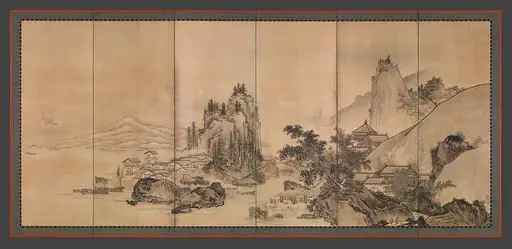
Artist & collection

 明/清 佚名 李遠(僞款) 仿夏珪江山清遠圖 卷|Landscape
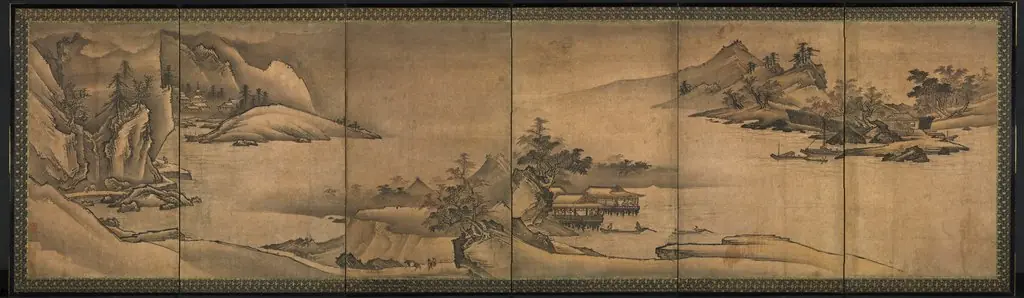 Landscape of the Four Seasons
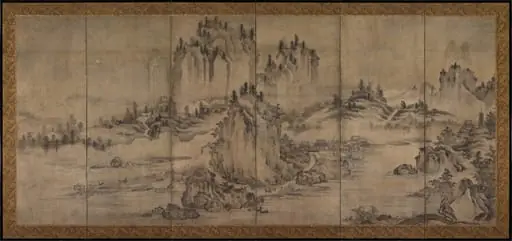 Landscape
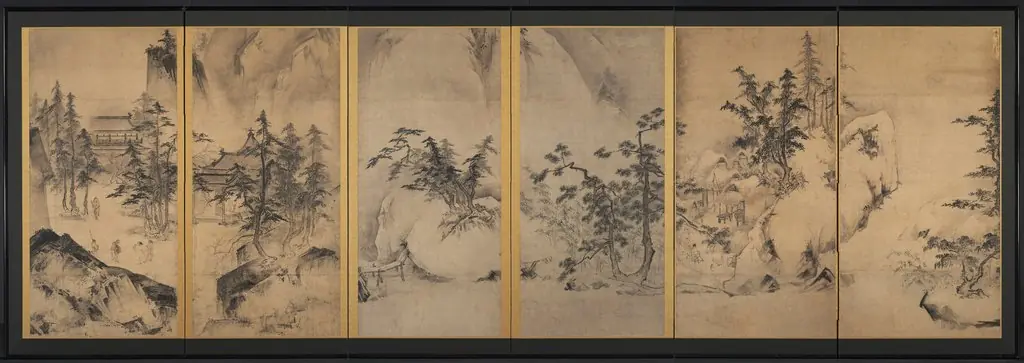 Winter and Spring Landscape
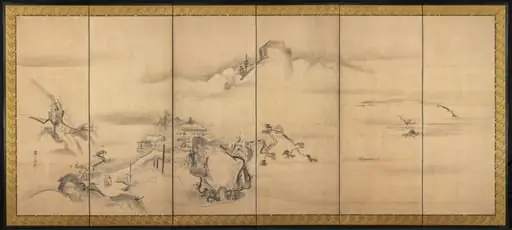 Eight Views of the Xiao and Xiang Rivers
 Landscape of the Four Seasons
 Landscape of the Four Seasons
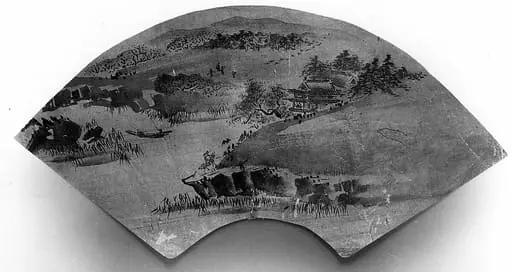
 近江八景|Eight Views of Ōmi (Ōmi hakkei)
 Untitled
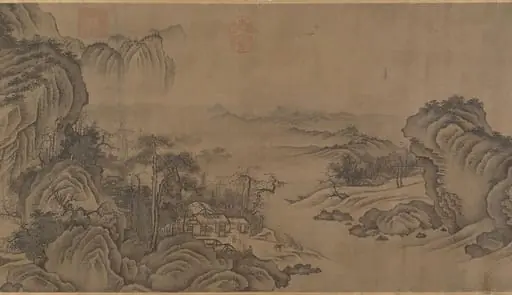 元/明 佚名 舊傳 燕文貴 秋山蕭寺圖 軸|Buddhist Temples amid Autumn Mountains
- 雲谷等顔筆 四季山水図屏風|Landscape of the Four Seasons
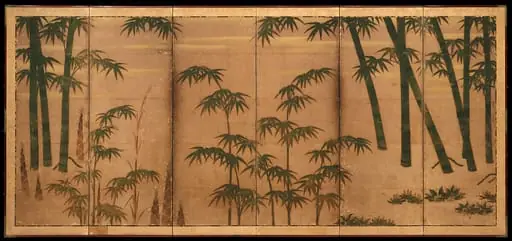 伝土佐光信筆 四季竹図屏風|Bamboo in the Four Seasons