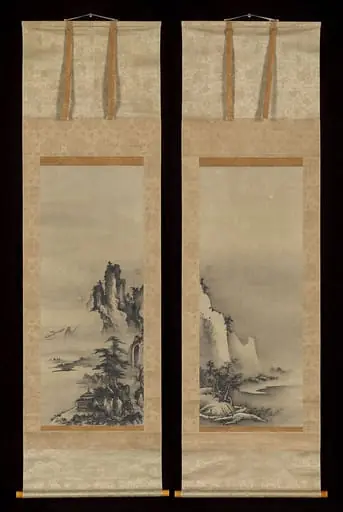
Artwork
雲谷等顔筆 四季山水図屏風|Landscape of the Four Seasons
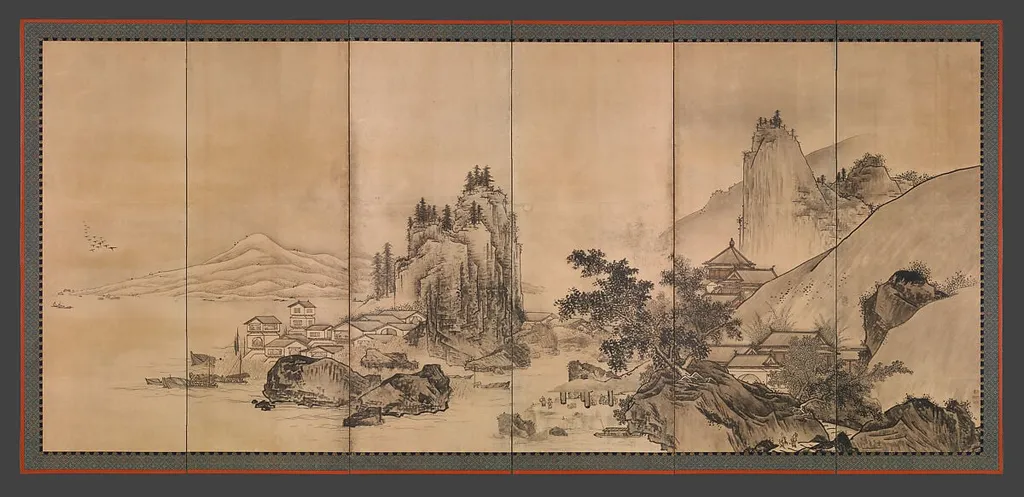
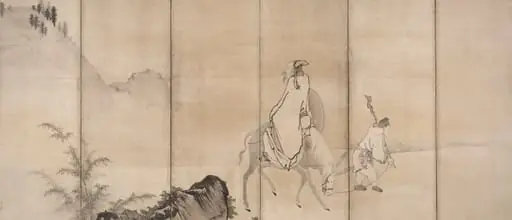
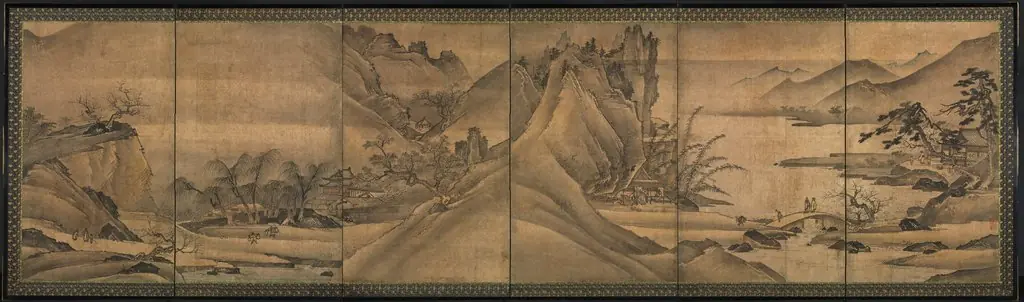
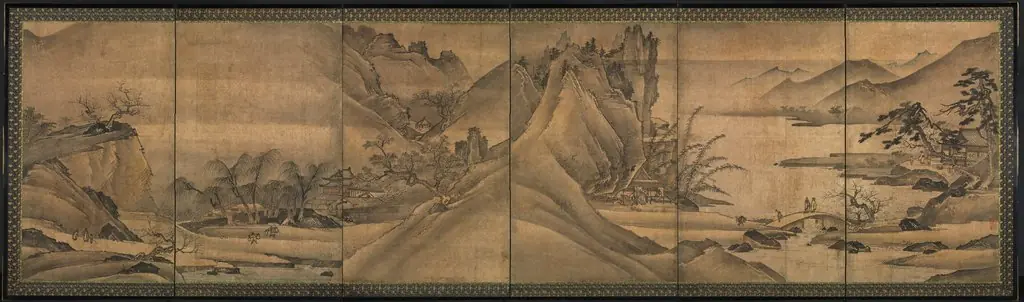
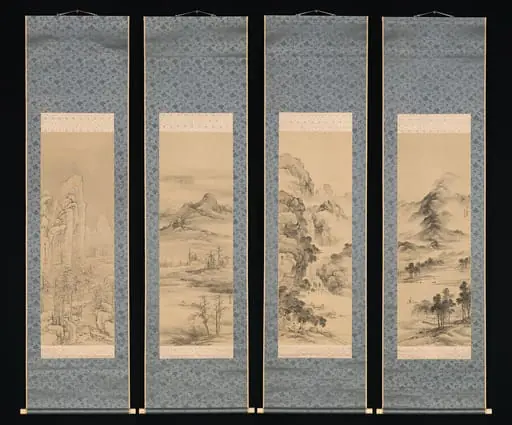
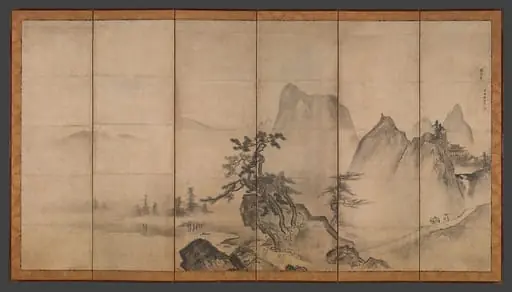
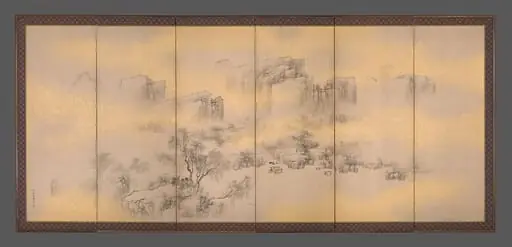
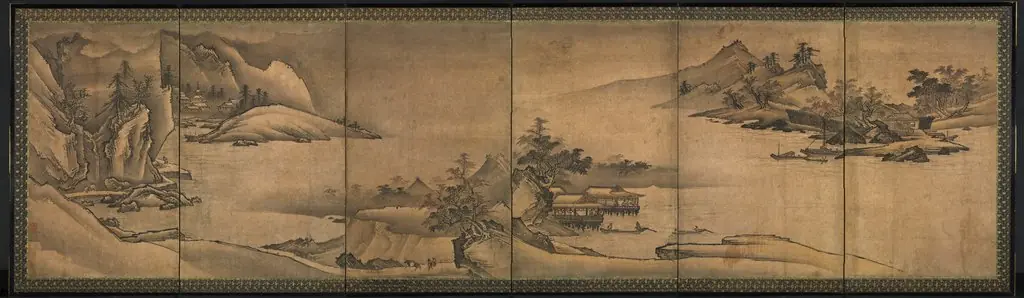
雲谷等顔筆 四季山水図屏風|Landscape of the Four Seasons is an ink painting by the Renaissance artist Unkoku Tōgan. It dates from 1594 and is held in the collection of the Metropolitan Museum of Art. Created in 1594, the work consists of two six‑panel folding screens rendered with ink, color and gold dust on paper.
About this work
Overview
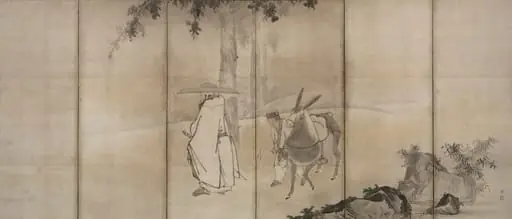
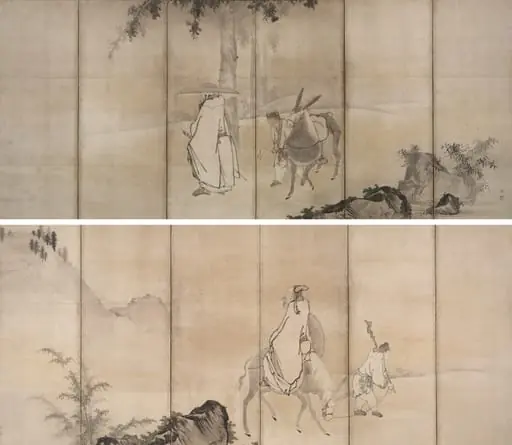
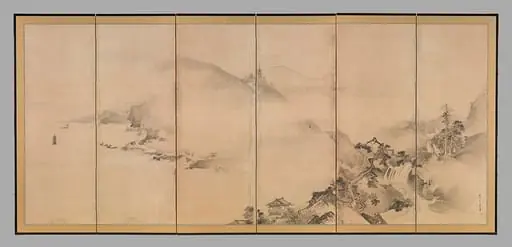
Created in 1594, the work consists of two six‑panel folding screens rendered with ink, color and gold dust on paper. The pair presents a series of tranquil mountain vistas that shift through the four seasons, each panel offering a distinct atmospheric moment within a continuous landscape.
Subject & Meaning
The screens portray a river winding past modest dwellings and trees on the left, while the right side features a sheer cliff crowned by a temple clinging to its rock face. Seasonal cues, such as mist‑shrouded hills and bare branches, suggest the passage of time and the harmony between human habitation and the natural world.
Technique & Style
Fine, layered brushwork builds depth in foliage and stone, while cross‑hatching creates subtle texture on rock surfaces. Soft earth tones of brown and green are highlighted with touches of gold, and ink outlines define forms with a restrained elegance that balances realism with a lyrical, almost dreamlike atmosphere.
History & Provenance
The artist, Unkoku Tōgan, began his career in the Kanō school before turning to the ink landscape tradition of Sesshū. Employed by Lord Mori of Yamaguchi, he later entered Buddhist orders and served as abbot of Unkoku‑an Temple. The screens have remained linked to the Tosa school movement and are recorded in temple inventories from the early Edo period.
Context
Produced during a period when Japanese painters were integrating Chinese monochrome techniques with native decorative sensibilities, the work reflects the cross‑regional influences of Nagasaki’s artistic community. Its seasonal theme aligns with contemporary garden design and poetry, where the changing landscape served as a metaphor for impermanence.
Artist & collection
Artist
Unkoku Tōgan (雲谷 等顔, 1547–1618) was a Japanese painter. He was born into a privileged family in Nagasaki, the second son of Hara Naoie, lord of Nokomi Castle in Hizen province. Starting as an artist of the Kanō school,…