Artwork
Last Judgment
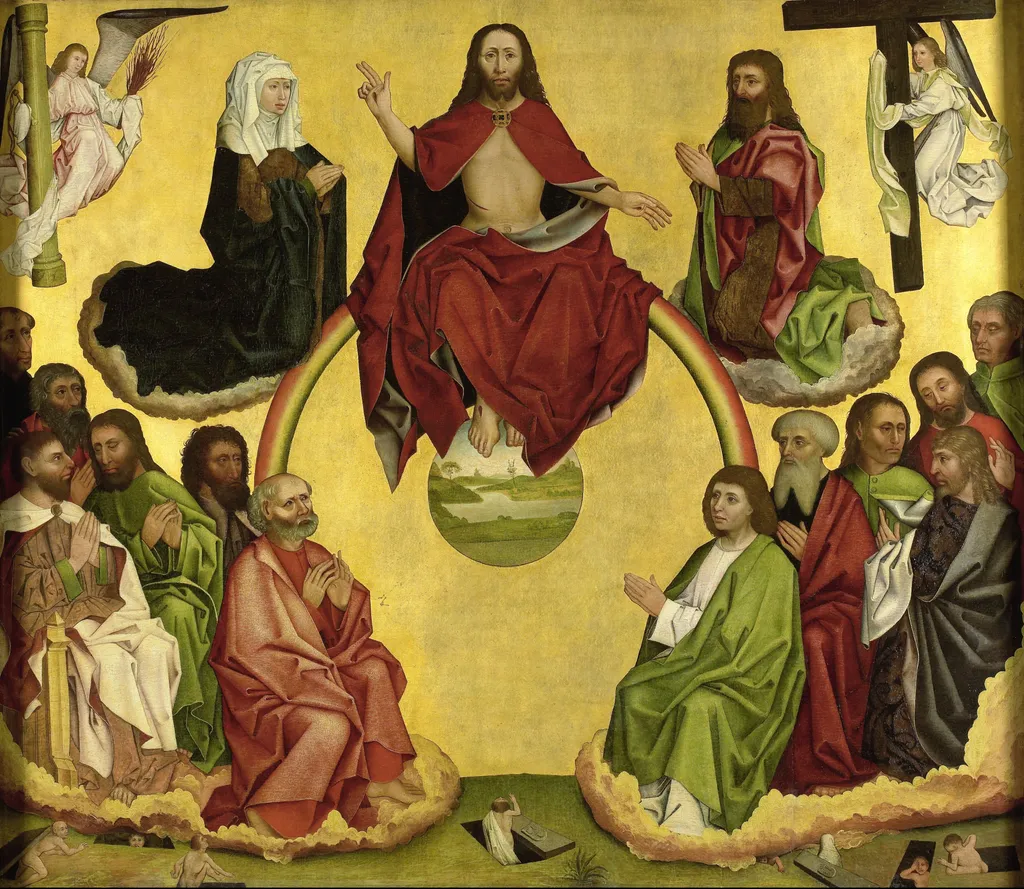
Last Judgment is an oil painting. It dates from 1500 and is held in the collection of the Rijksmuseum.
About this work
History & Provenance
It is currently held in the collection of the Rijksmuseum in Amsterdam, where it is cataloged under the inventory number SK-A-2588.
The anonymous oil painting titled Last Judgment was created in 1500. The work depicts the Day of Judgment and is executed in oil paint on a panel support. Historical records indicate that the painting was previously owned by Cornelis Hoogendijk.
It is currently held in the collection of the Rijksmuseum in Amsterdam, where it is cataloged under the inventory number SK-A-2588.
The anonymous painting titled Last Judgment is held in the collection of the Rijksmuseum in Amsterdam. The work bears the museum's inventory number SK-A-2588. It was previously owned by Cornelis Hoogendijk before entering the public collection.
The painting has been associated with the depiction of the Day of Judgment since its creation around the year 1500.
Context
The Last Judgment is a religious painting executed in oil on panel in 1500. It measures 149 cm by 175 cm and depicts the Day of Judgment, a subject drawn from Christian eschatology. The work is attributed to an anonymous Dutch painter and is part of the collection of the Rijksmuseum, where it has been catalogued under the designation SK-A-2588.
Its provenance traces back to Cornelis Hoogendijk, who is recorded as its former owner. As a 16th-century panel painting, it exemplifies the devotional art produced in the Netherlands during the early religious revival period.
Legacy
The Last Judgment (1500) held by the Rijksmuseum has played a modest yet enduring role in the study of early Netherlandish religious painting. As part of the Cornelis Hoogendijk collection before entering the Rijksmuseum, the work has been accessible to scholars and the public since the early twentieth century, offering insights into late medieval eschatological iconography.
While not as widely reproduced as major altarpieces by artists like Rogier van der Weyden or Hans Memling, the painting has been cited in exhibitions and publications focused on fifteenth- and sixteenth-century Dutch devotional art. Its inclusion in the Rijksmuseum’s permanent collection has ensured its visibility, contributing to ongoing discussions about anonymous workshop practices and regional variations in Last Judgment imagery.
Overview
The work titled Last Judgment is an oil painting that presents a celestial scene dominated by a luminous, golden sky. Central to the composition is a bearded figure in a red garment, suspended above a verdant landscape and extending a benediction with one hand. Surrounding him are numerous human figures, some kneeling, others standing, who gesture upward or clasp their hands in reverence, while winged angels occupy the periphery.
Subject & Meaning
The painting visualizes the Christian eschatological theme of the final assessment of souls. The central bearded man, likely representing Christ, offers a blessing that separates the faithful from the condemned. The varied postures of the surrounding figures, kneeling, pointing, clasping, suggest individual responses to divine judgment, while the ascending tiny figures below imply souls rising toward salvation.
Technique & Style
Executed in oil, the artist employs a pronounced chiaroscuro that renders the figures with a radiant glow against a darker backdrop. Bold hues of red, green, and gold create stark contrasts, emphasizing the spiritual intensity of the scene. The composition balances dynamic movement, figures reaching upward, with a serene, almost static central authority, characteristic of late Renaissance devotional imagery.
Artist & collection

- The Last Judgment
 The last judgment
 Adoration of the Trinity
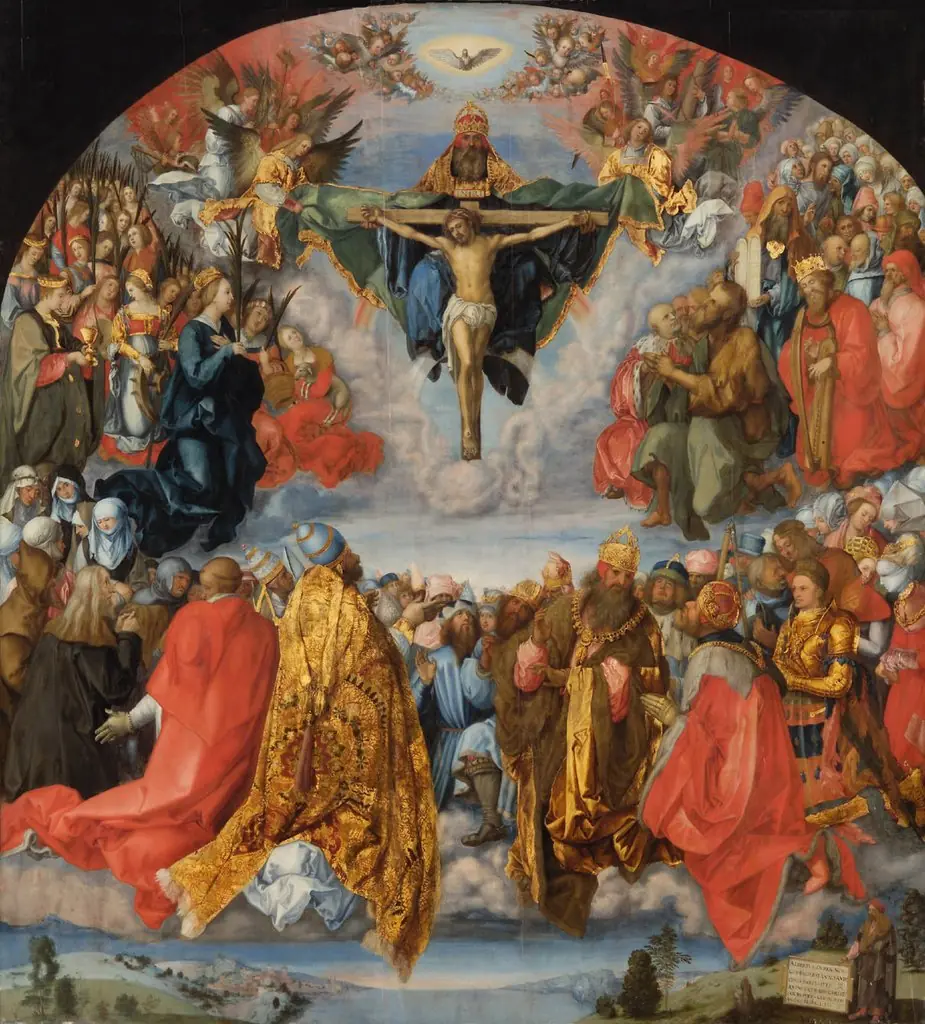 Allerheiligenbild
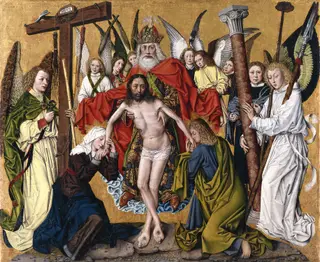 The Throne of Mercy with the Virgin, St. John, and Angels with the Arma Christi
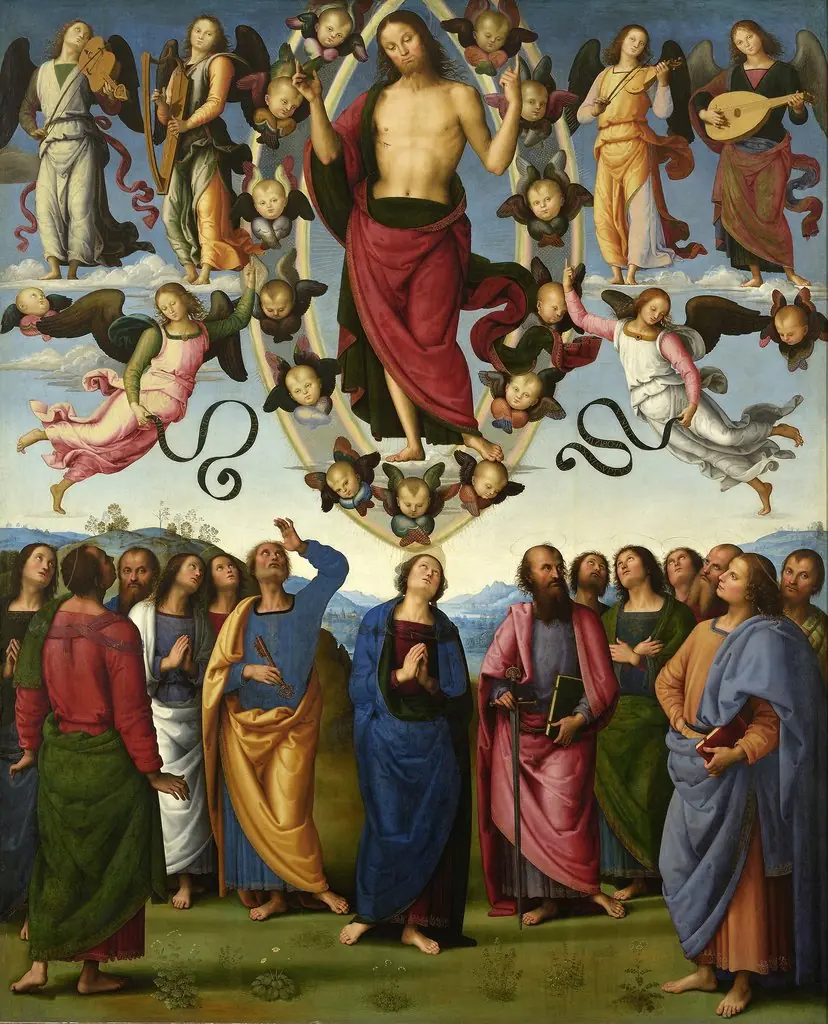 Ascension of Christ
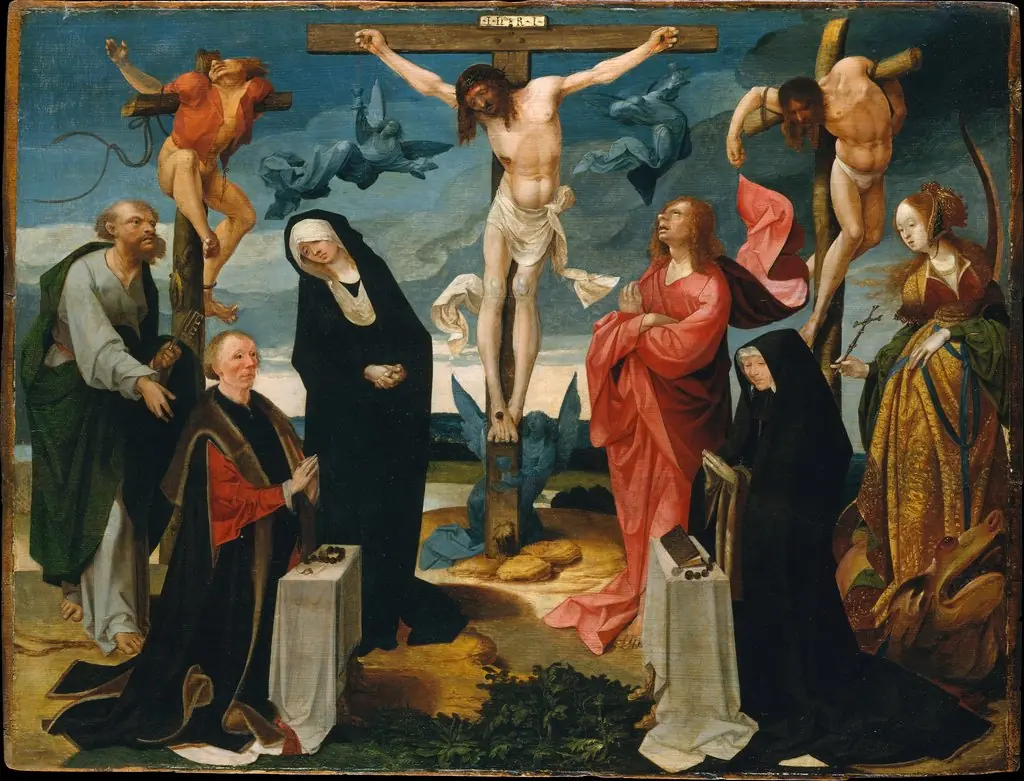 The Crucifixion with Donors and Saints Peter and Margaret
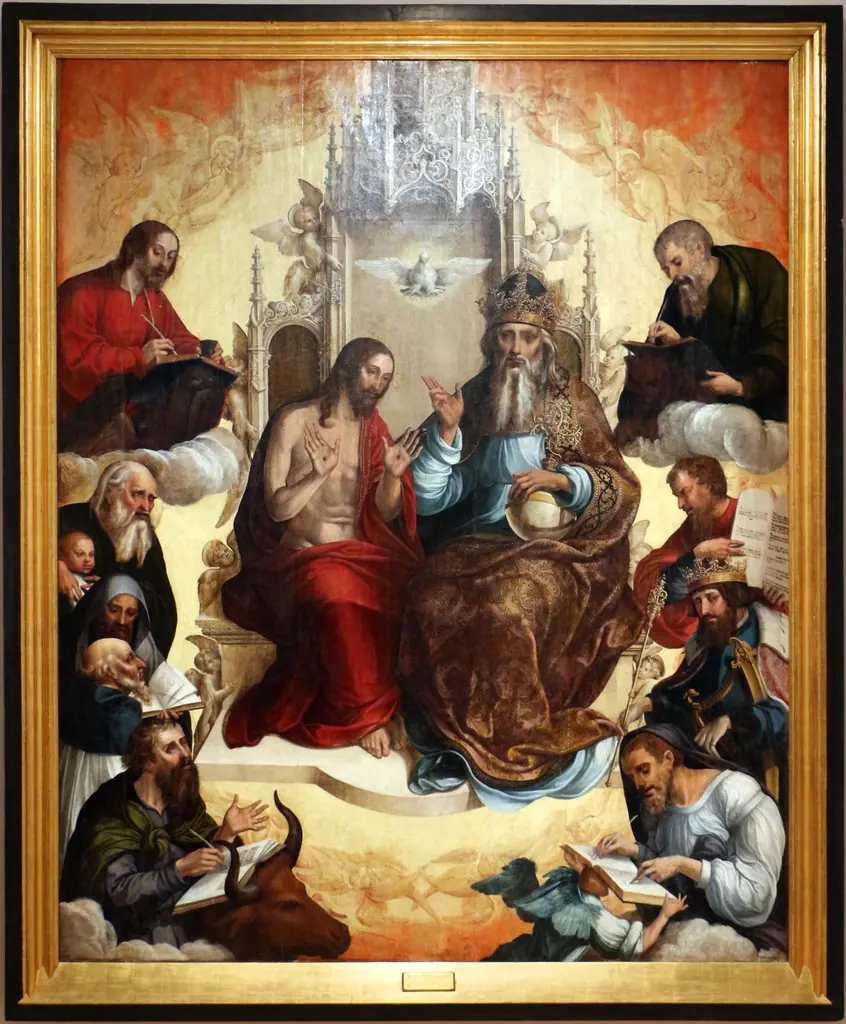 Holy Trinity
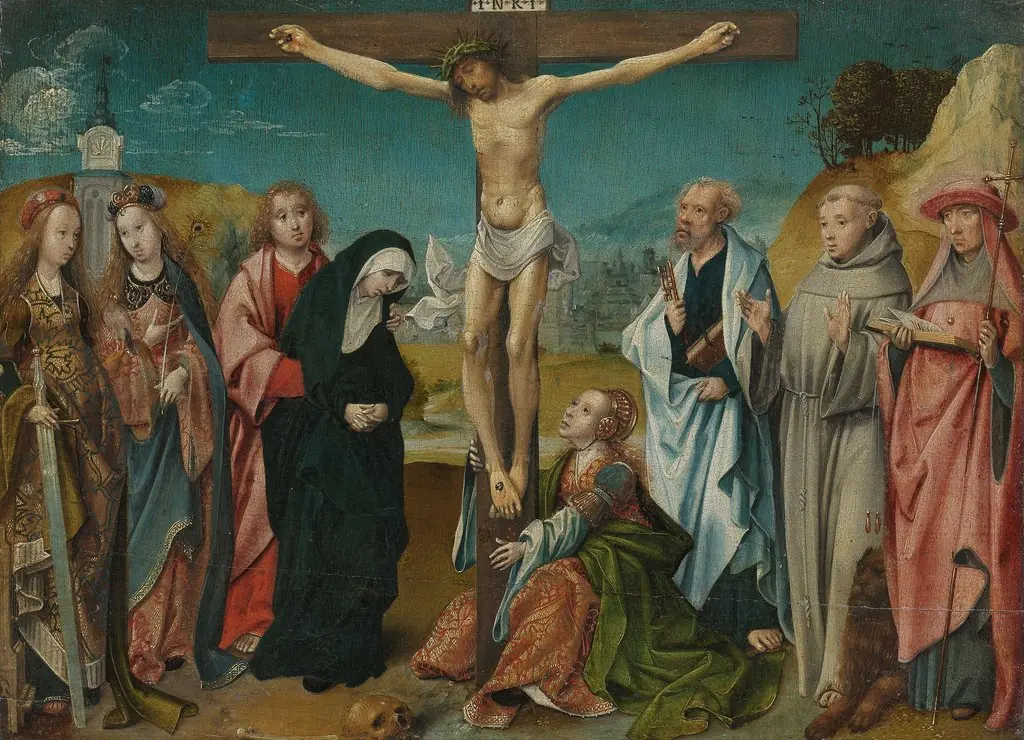 Christ on the cross with the Virgin, St John the Evangelist, Mary Magdalen, and Sts Cecilia and Barbara (left), and Sts Peter, Francis and Jerome (right)
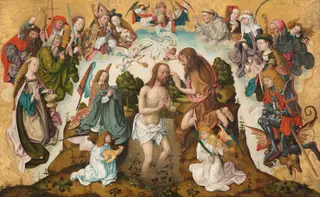 The Baptism of Christ
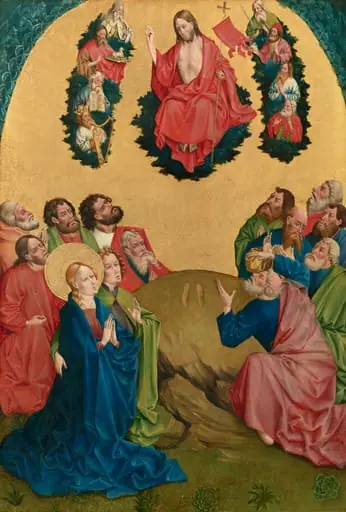 The Ascension
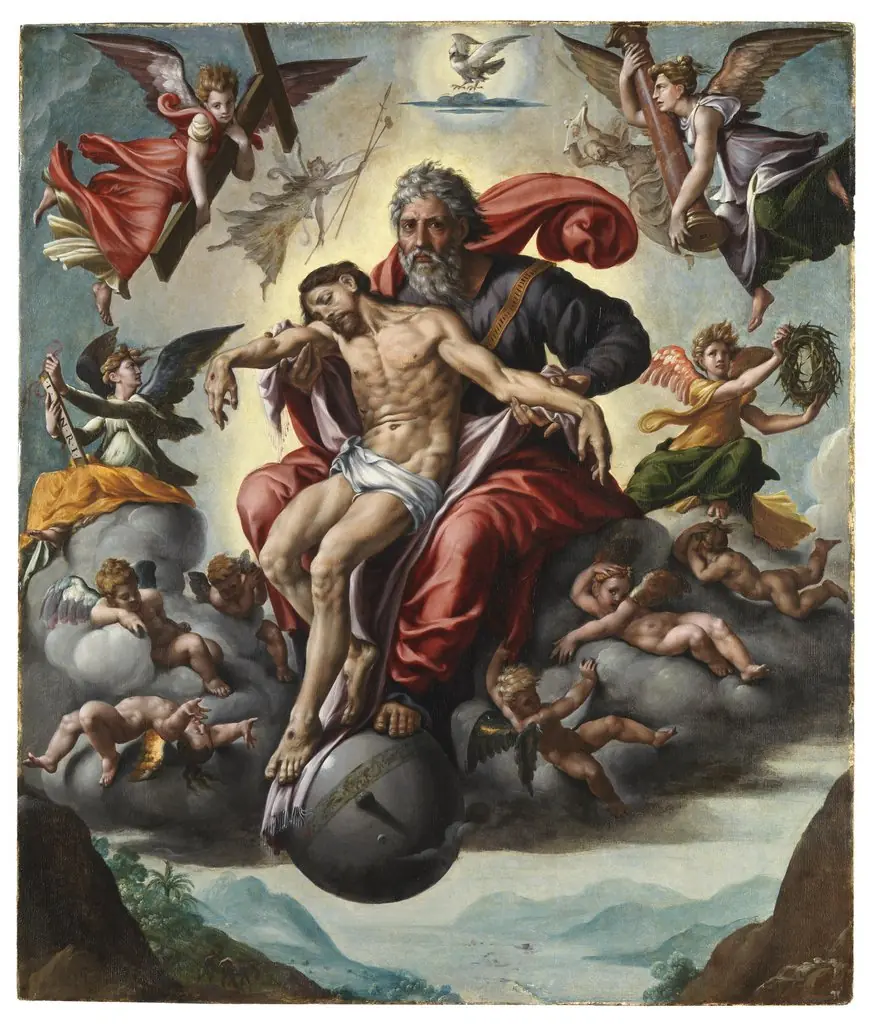 Holy Trinity