Artwork
Madhu Madhavi Ragini
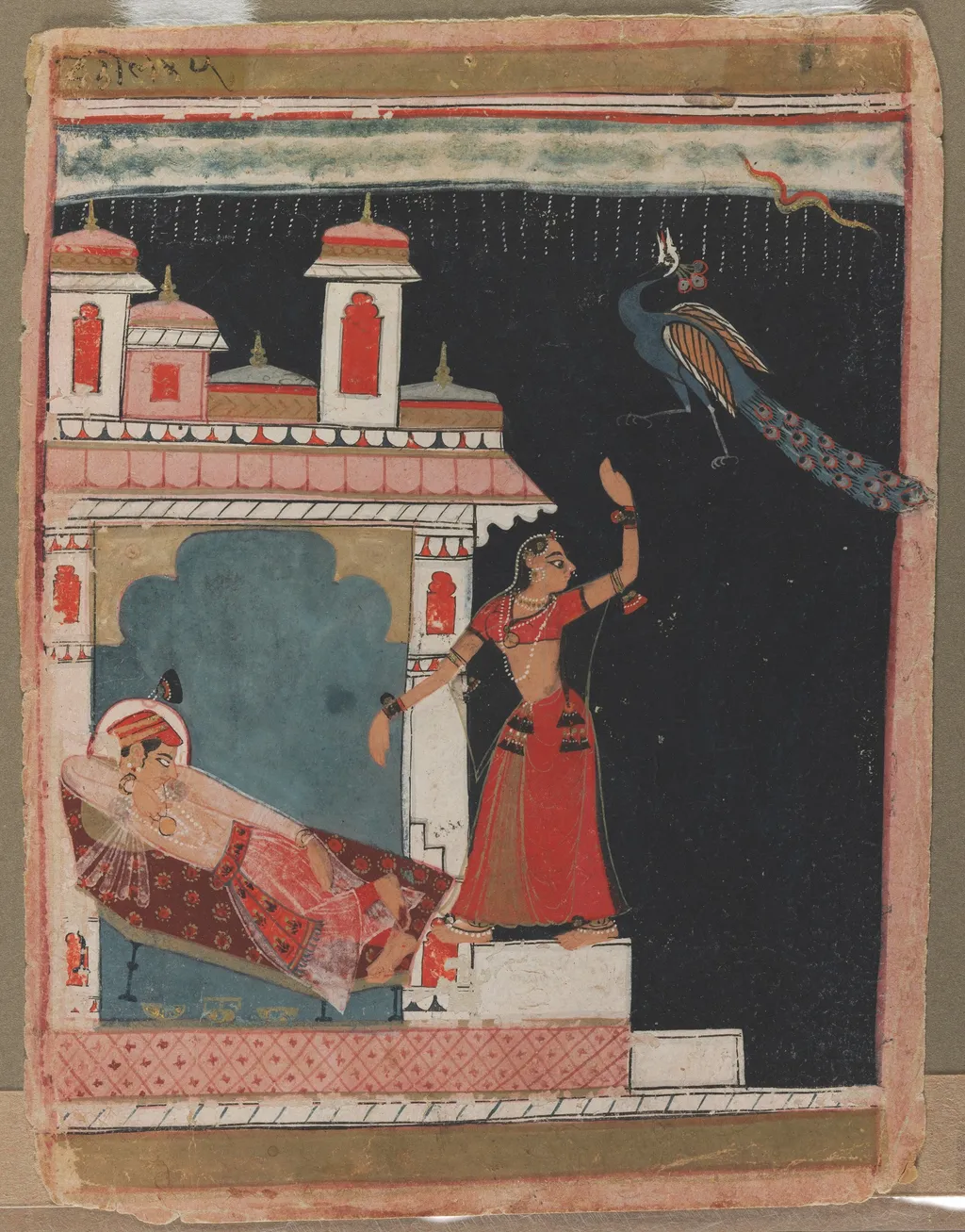
Madhu Madhavi Ragini is an unspecified painting. It dates from 1635 and is held in the collection of the Cleveland Museum of Art.
About this work
History & Provenance
No earlier ownership or provenance prior to 1925 is documented, and no exhibition history is recorded in the available sources.
The Madhu Madhavi Ragini painting is dated to 1635 and attributed to an unknown artist, with no recorded commission or patron. It entered the collection of the Cleveland Museum of Art in 1925, receiving the accession number 1925.1336, and has remained there since. The work is classified as a painting.
No earlier ownership or provenance prior to 1925 is documented, and no exhibition history is recorded in the available sources.
Overview
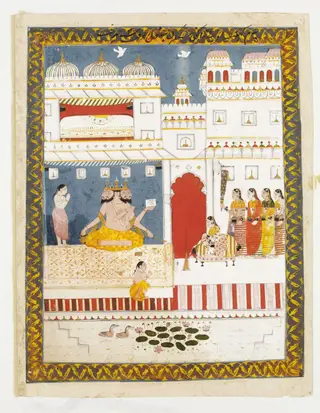
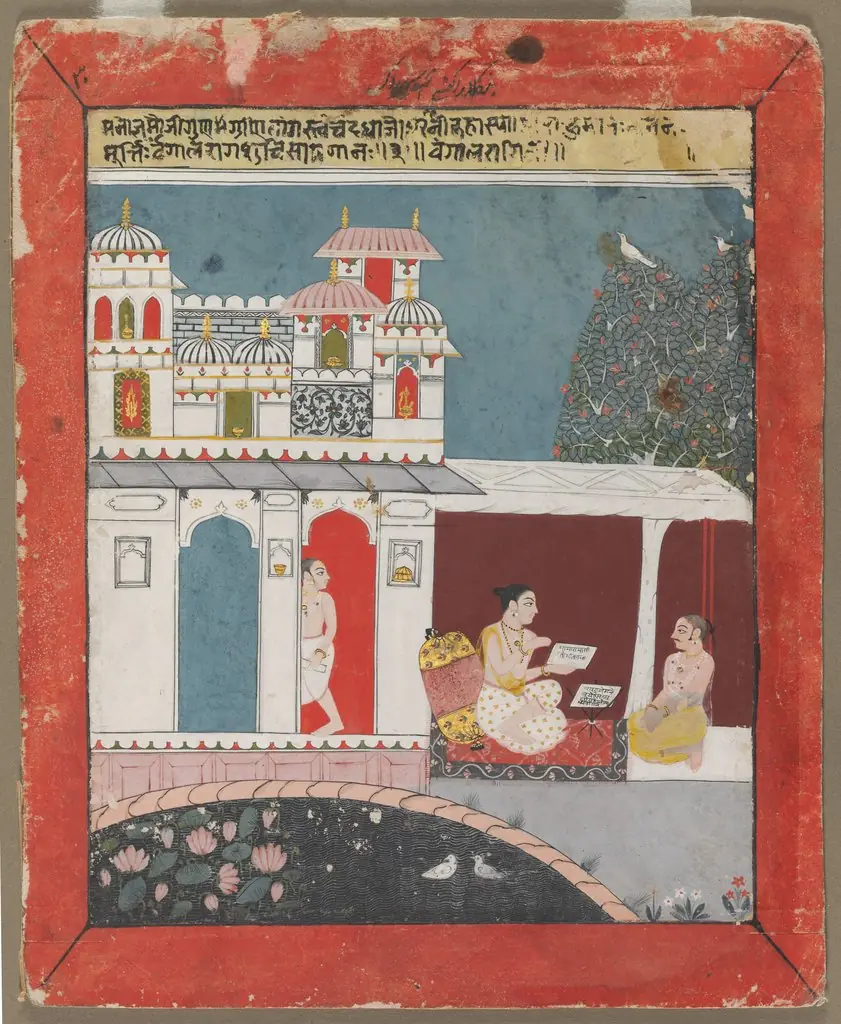
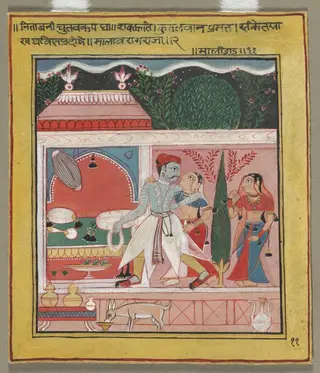
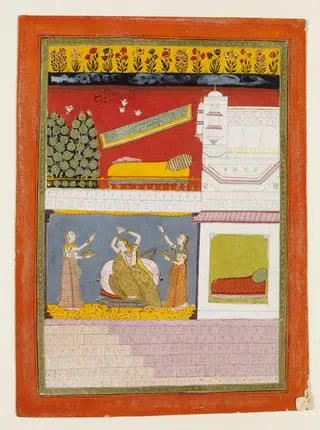
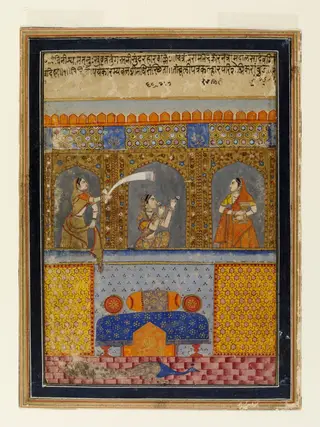
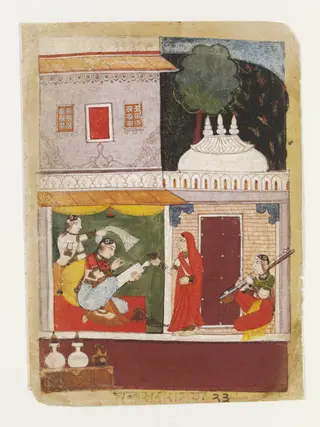
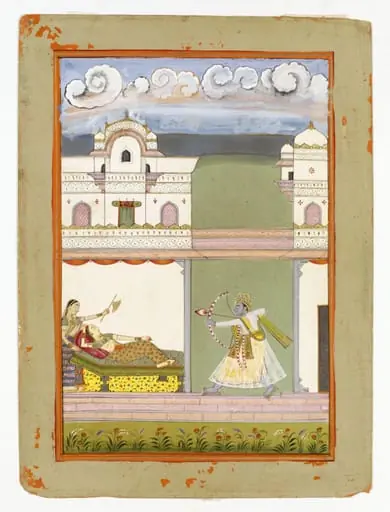
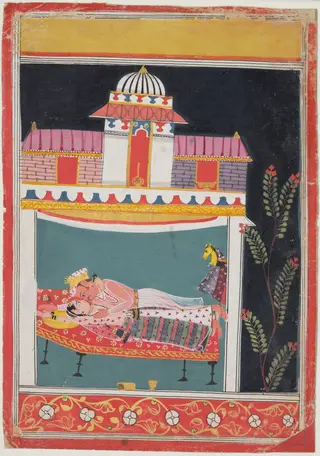
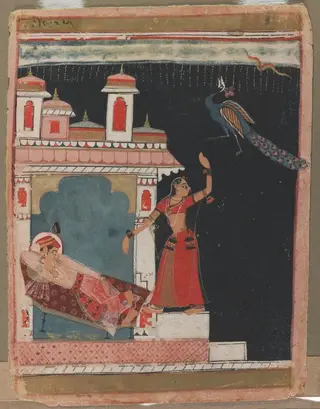
The canvas presents a domestic interior framed by an open balcony, where a woman in a red dress extends her hand toward a peacock perched on the railing. A black shawl drapes over her left shoulder, and a pearl necklace rests at her throat. Beyond the balcony, a man reclines on a bed beneath a red, floral‑patterned blanket, while a dark blue sky looms overhead with rain.
Subject & Meaning
The composition juxtaposes human elegance with the vivid natural presence of the peacock, a bird often associated with beauty and pride in Indian symbolism. The woman's gesture toward the bird suggests a dialogue between cultured refinement and the untamed splendor of nature, while the reclining figure in the background adds a quiet, perhaps introspective counterpoint.
Technique & Style
Rendered with a palette dominated by reds, blues, and golds, the painting balances bold color blocks with delicate detailing, such as the feathered plumage and the intricate floral motif on the blanket. The use of light emphasizes the glossy sheen of the peacock’s feathers and the reflective quality of the pearl necklace, creating a sense of depth within the confined interior space.
Context
The work reflects a period in which Indian artists often blended domestic scenes with symbolic fauna, merging traditional motifs with a more personal, interior focus. The inclusion of rain‑filled skies and ornamental architecture situates the piece within a cultural narrative that values both aesthetic refinement and the natural world.
Artist & collection