Artwork
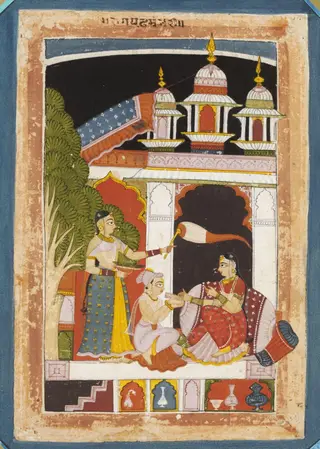
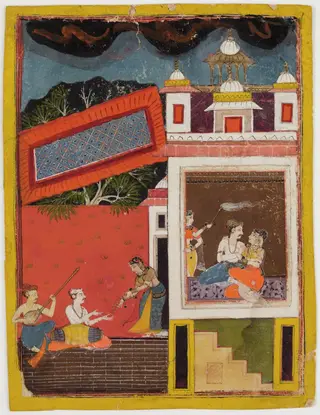
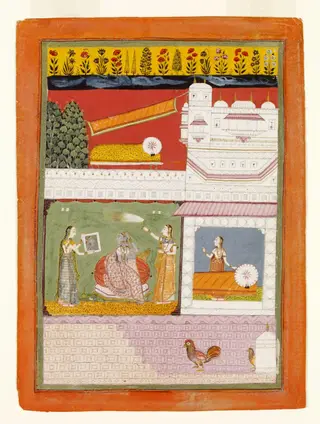
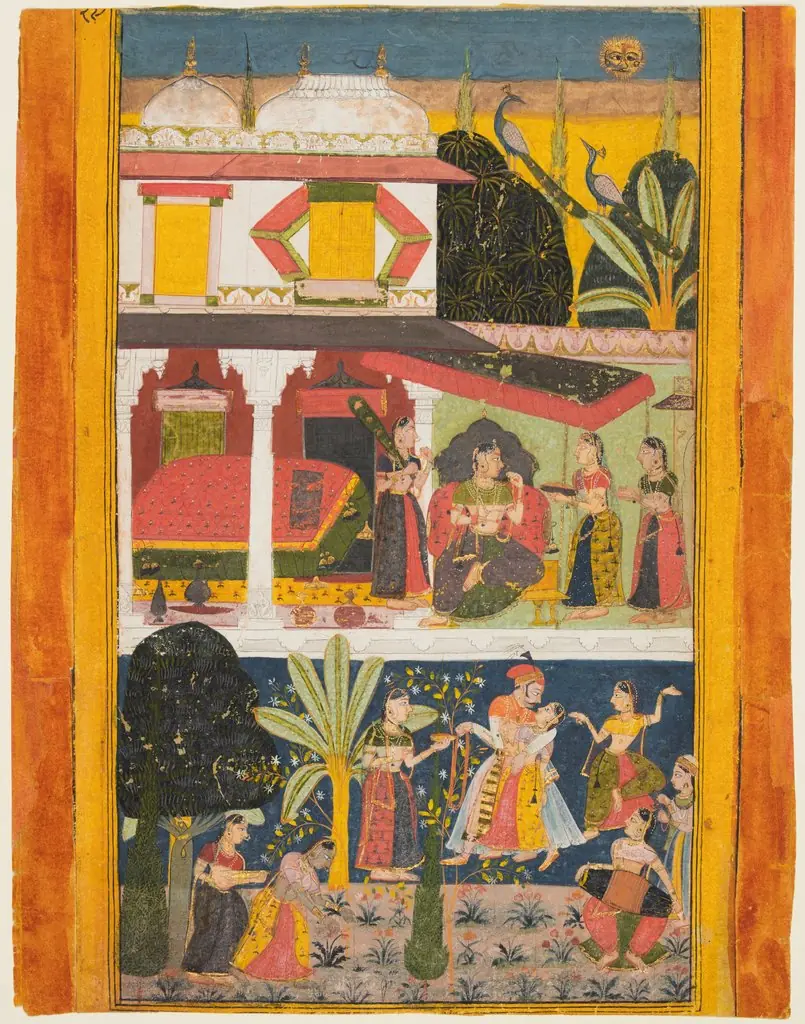
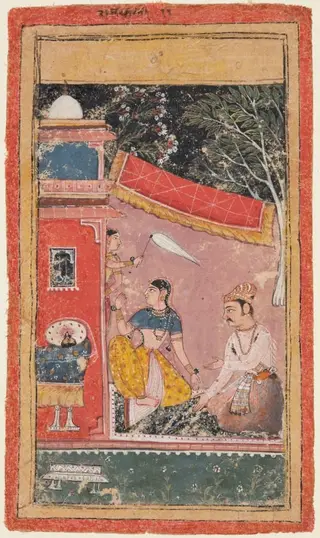
Lovers on a Terrace: Ramakali Ragini of Hindol, from a Bundi Ragamala
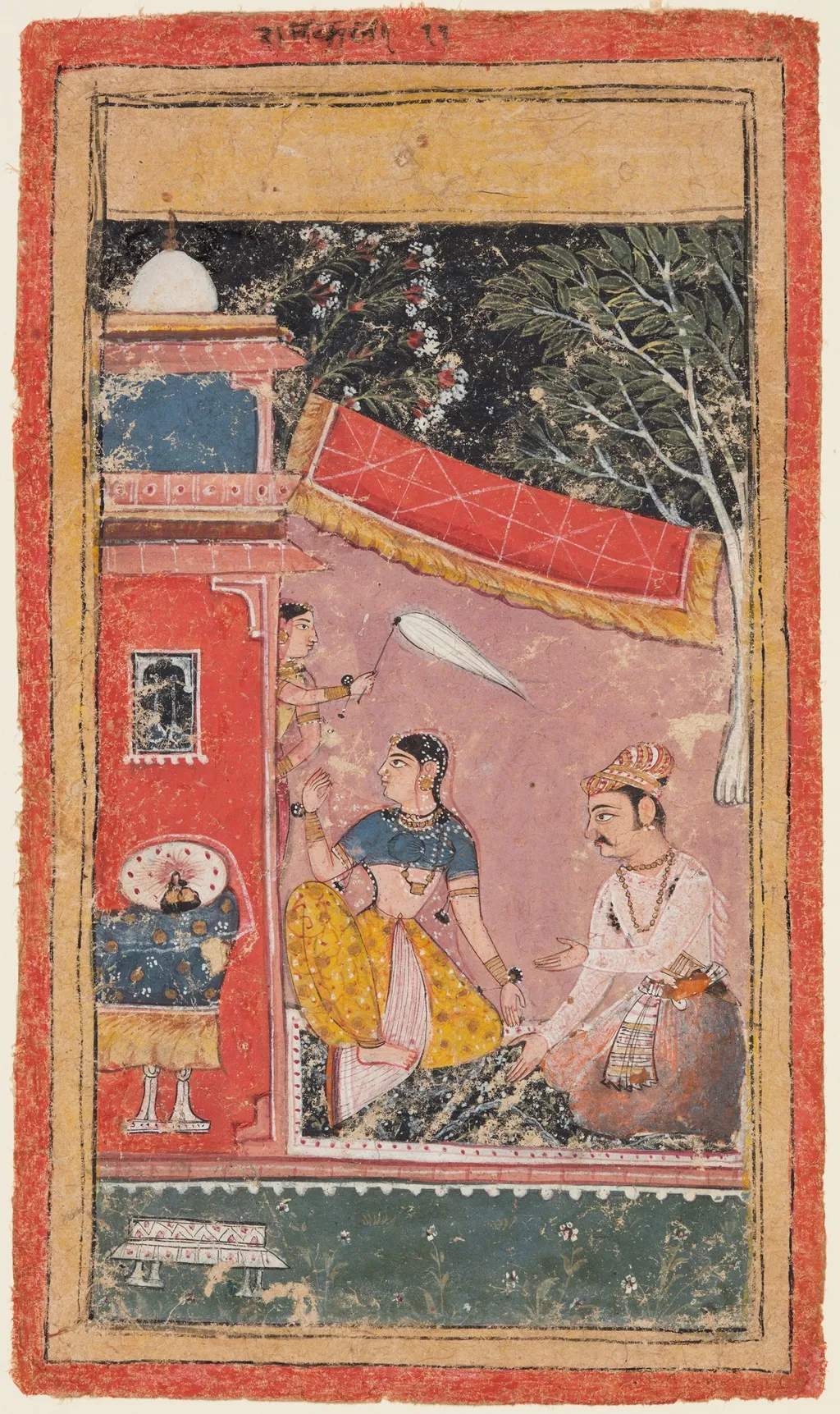
Lovers on a Terrace: Ramakali Ragini of Hindol, from a Bundi Ragamala is an unspecified painting. It dates from 1610 and is held in the collection of the Cleveland Museum of Art.
About this work
Overview
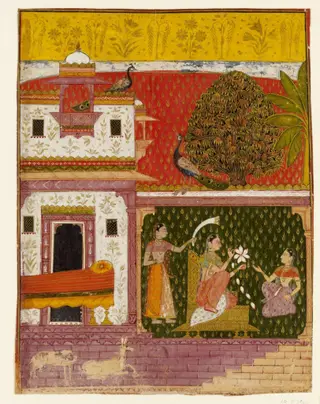
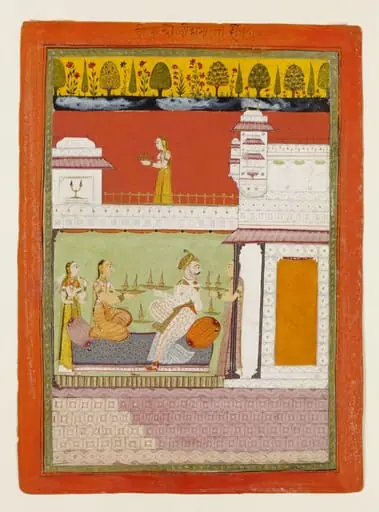
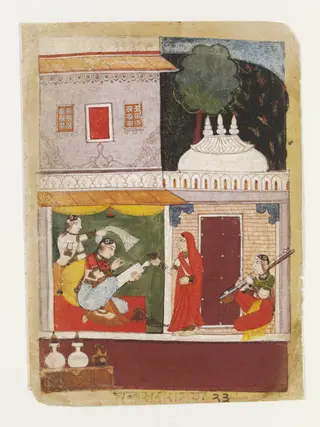
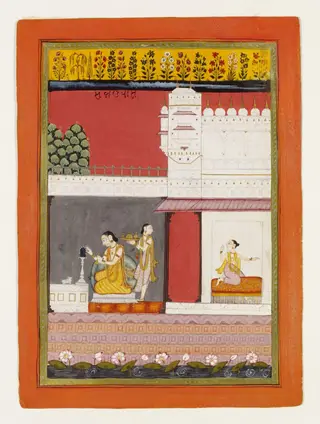
Lovers on a Terrace: Ramakali Ragini of Hindol, from a Bundi Ragamala, is a small Indian painting that depicts a leisurely scene on an open platform.
Lovers on a Terrace: Ramakali Ragini of Hindol, from a Bundi Ragamala, is a small Indian painting that depicts a leisurely scene on an open platform. Central to the composition is a woman in a bright yellow sari, holding a fan, flanked by a man in white with a red turban and a servant shading a modest structure with a red umbrella. The work is noted for its vivid reds, yellows, and greens, though some pigments have softened with age.
Subject & Meaning
The figures suggest a moment of courtly recreation, possibly linked to a musical or dance performance associated with the Hindol raga. The woman's hand gestures and the servant’s umbrella evoke the ritualized gestures of Indian classical performance, while the terrace setting implies an outdoor gathering of refined leisure.
Technique & Style
Executed in the Bundi school’s characteristic style, the painting employs bold, flat areas of color and stylized outlines. The use of strong primary hues and decorative patterns reflects the regional aesthetic of Rajasthan’s courtly art, while the slightly faded pigments indicate the work’s age and the natural wear of a tempera medium on paper.
History & Provenance
Part of a larger Ragamala series, visual representations of musical modes, the piece illustrates the Hindol raga, known for its uplifting character. Such series were traditionally compiled for aristocratic patrons in the 17th–18th centuries, serving both as decorative objects and as pedagogical tools linking visual art to music.
Context
Ragamala paintings originated in northern India as a synesthetic response to the classical music system, pairing each raga with a poetic scene. The Bundi variant combines the region’s courtly elegance with narrative detail, situating the figures within an idealized, semi‑architectural landscape that reflects contemporary notions of refined entertainment.
Legacy
Works like this continue to inform scholars of the interplay between visual and musical cultures in pre‑colonial India. The painting’s preservation in museum collections allows ongoing study of Bundi’s artistic conventions and the broader Ragamala tradition’s role in documenting the cultural life of Indian courts.
Artist & collection