Artwork
Mary of Portugal (1527–1545)
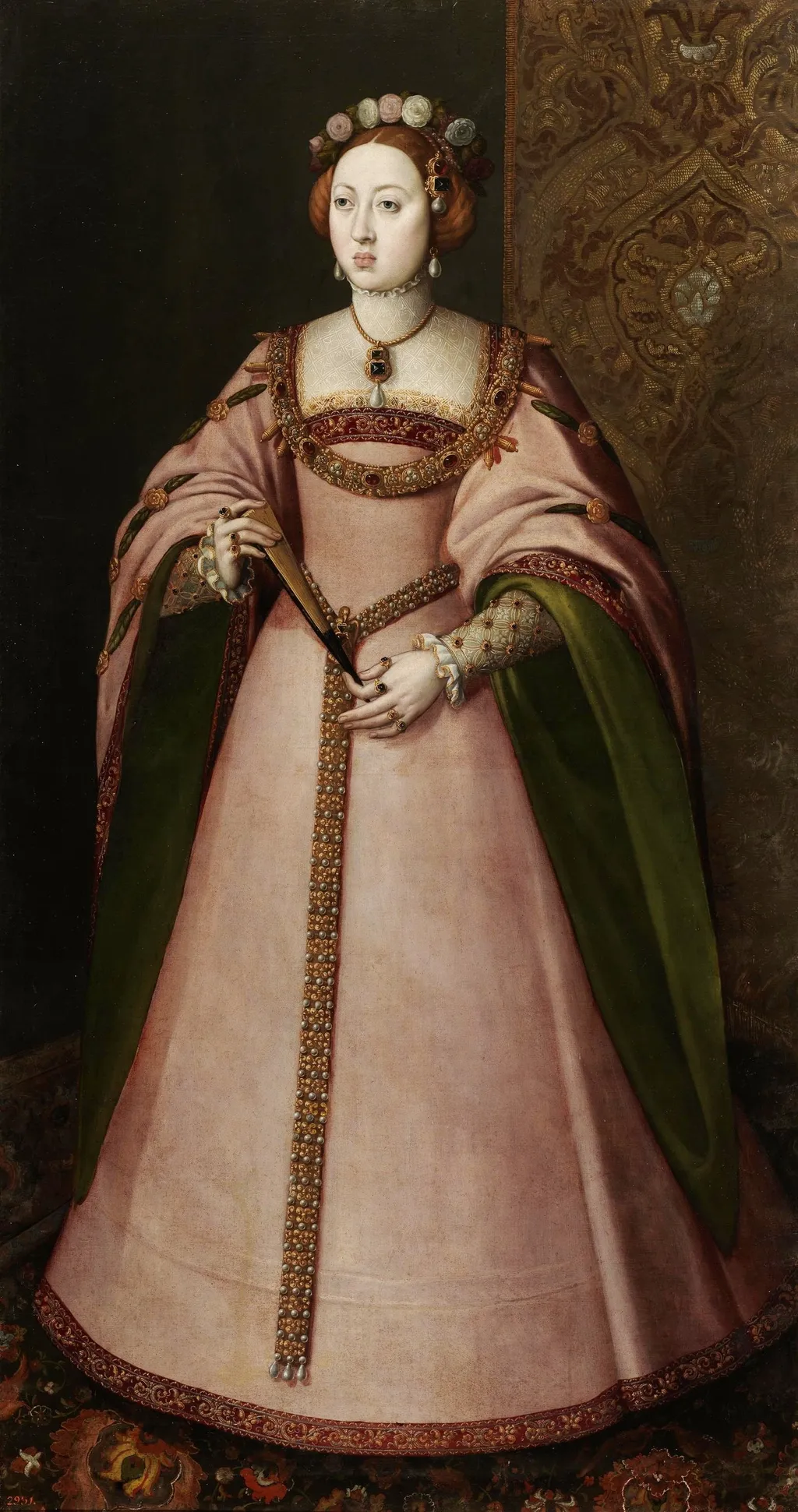
Mary of Portugal (1527–1545) is an oil painting. It dates from 1501 and is held in the collection of the Museo del Prado.
About this work
Technique & Style
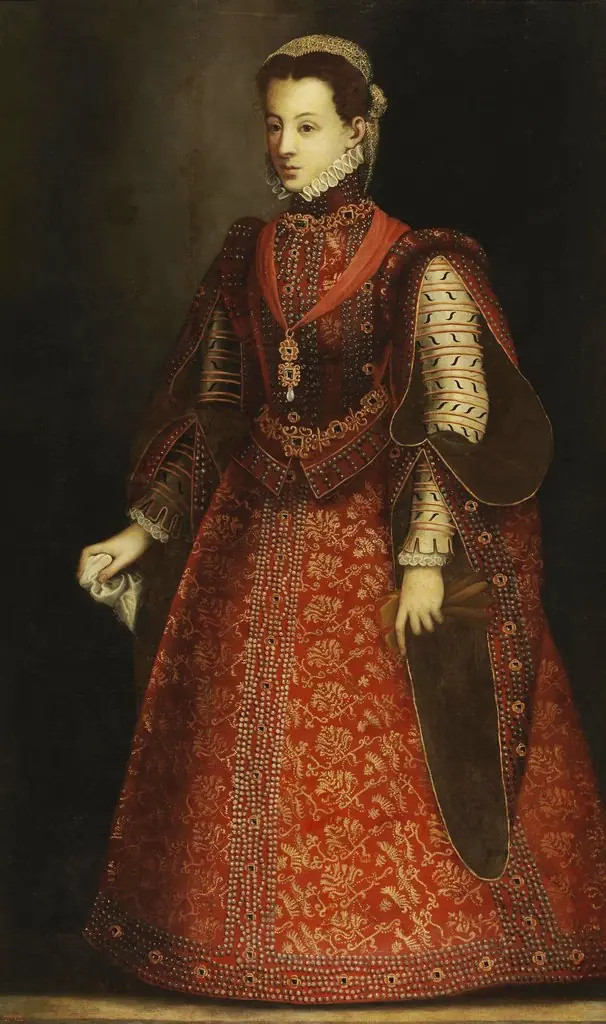
The portrait is executed in oil paint on a canvas support. It measures 193 cm in height and 102 cm in width. The work is classified as a portrait and depicts the main subject, Maria Manuela, Princess of Portugal, alongside specific attributes including a hand fan and a gemstone. The painting is held in the collection of the Museo del Prado.
History & Provenance
The painting titled Mary of Portugal (1527–1545) was created in 1501 as an oil on canvas portrait, as documented in its internal metadata and Wikidata entry.
The painting titled Mary of Portugal (1527–1545) was created in 1501 as an oil on canvas portrait, as documented in its internal metadata and Wikidata entry. It portrays Maria Manuela, Princess of Portugal, and features symbolic elements such as a hand fan and gemstone. The work is part of the collection at the Museo del Prado, where it remains on display.
Its dimensions measure 193 cm in height and 102 cm in width, confirming its scale as a formal court portrait from the early 16th century.
Context
The portrait attributed to an anonymous Iberian hand depicts Maria Manuela, Princess of Asturias, daughter of King Manuel I of Portugal, rendered in oil on canvas. Its formal composition emphasizes aristocratic status through symbolic attributes including a hand fan and a gemstone pendant, while the restrained palette reflects early 16th-century Iberian portrait conventions. The work's technical execution and iconography have been analyzed within the context of Iberian courtly representation, situating it among contemporary devotional and secular paintings produced in the Kingdom of Portugal and Crown of Castile.
It is housed in the Museo del Prado, where it remains part of their collection of Iberian Renaissance portraiture.
Overview
The portrait depicts a young woman dressed in a sumptuous pink gown with dark green sleeves, standing upright and holding a fan in one hand and a string of beads in the other. Gold embroidery decorates the high collar, while a pearl necklace and matching earrings enhance the refined appearance. The figure dominates a patterned backdrop, illuminated by a subtle play of light on her face.
Subject & Meaning
Identified as Mary of Portugal, the work presents the princess in courtly attire, emphasizing her status through luxurious fabrics and accessories. The fan and beads may allude to contemporary notions of femininity and aristocratic leisure, while the composed pose conveys dignity appropriate to her royal lineage.
Artist & collection

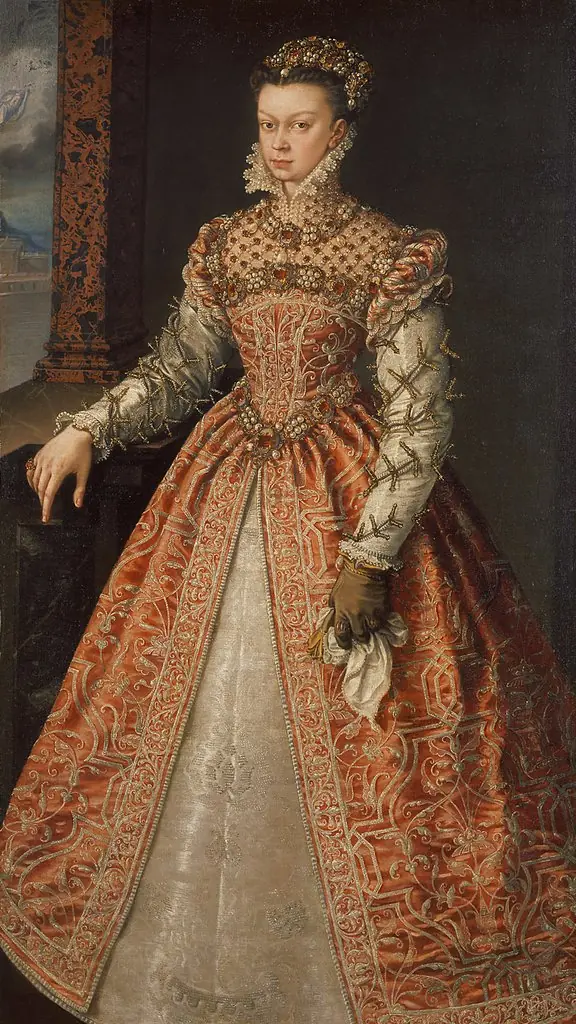 Portrait of Elisabeth of Valois (1545-1568), Queen of Spain
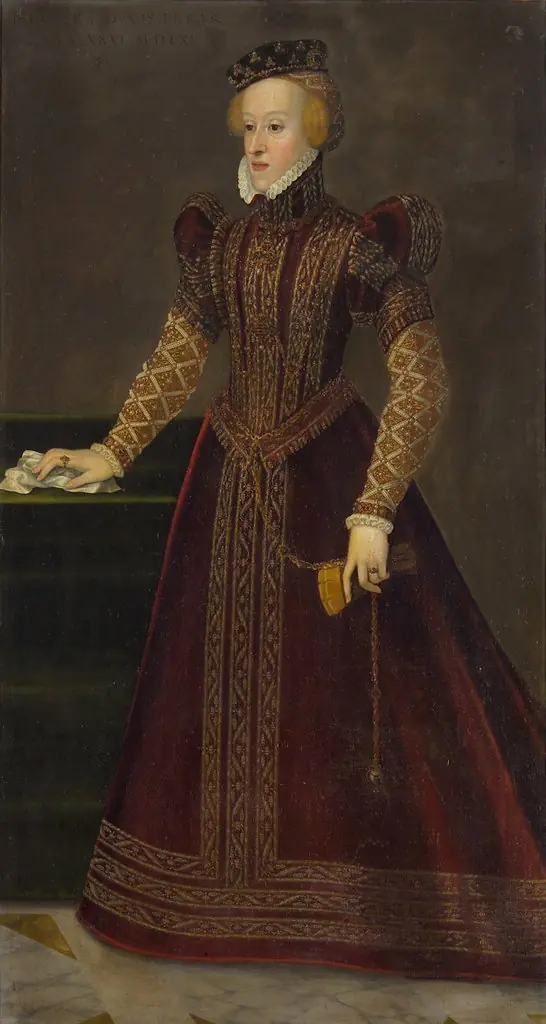 Erzherzogin Barbara (1539-1572), Herzogin von Ferrara in ganzer Figur
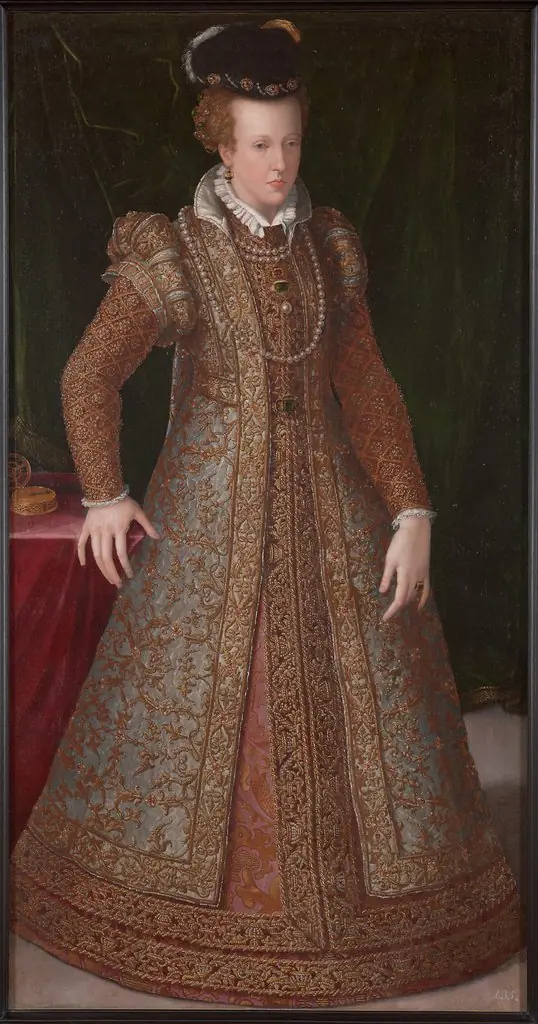 Portrait of Joanna of Austria, Grand Duchess of Tuscany
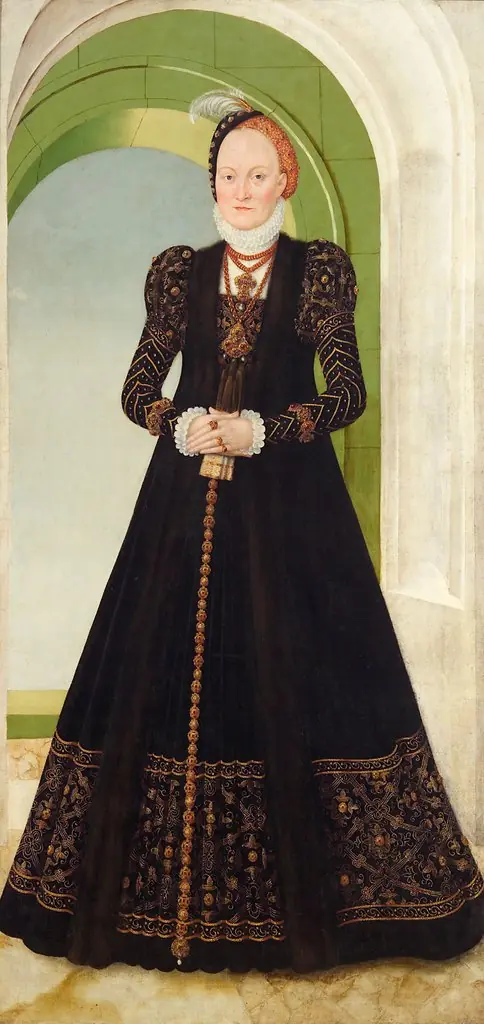 Anna of Denmark, Duchess of Saxony
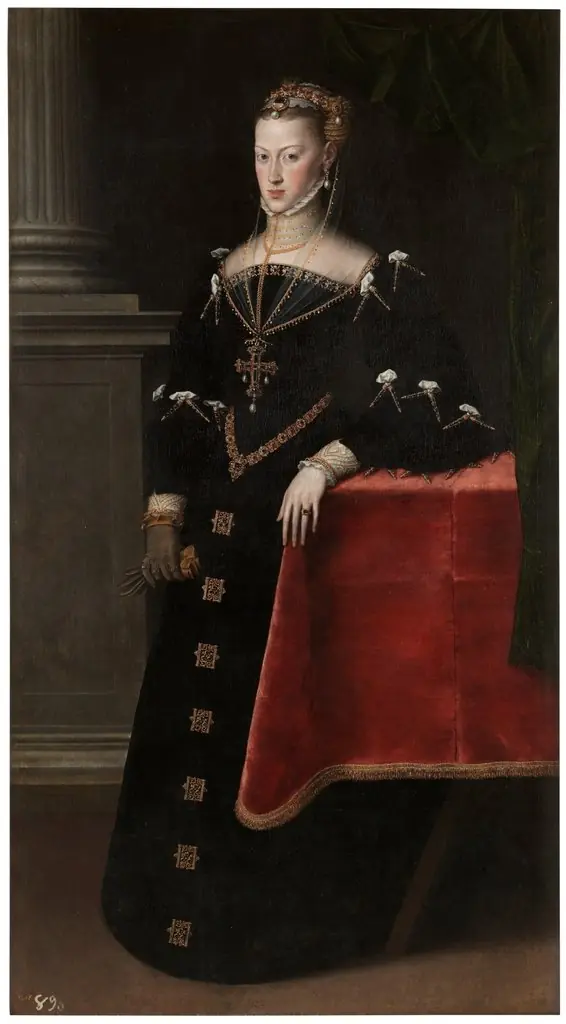 Empress Maria of Austria, Wife of Maximilian II
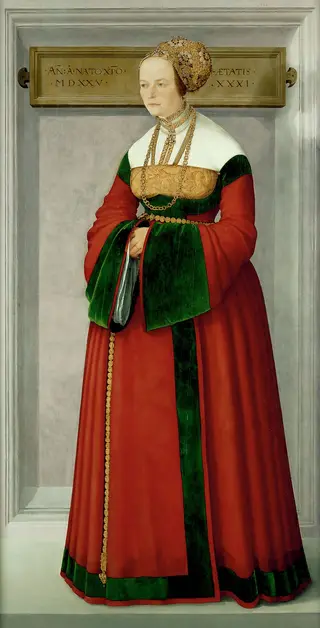 Portrait of a Woman
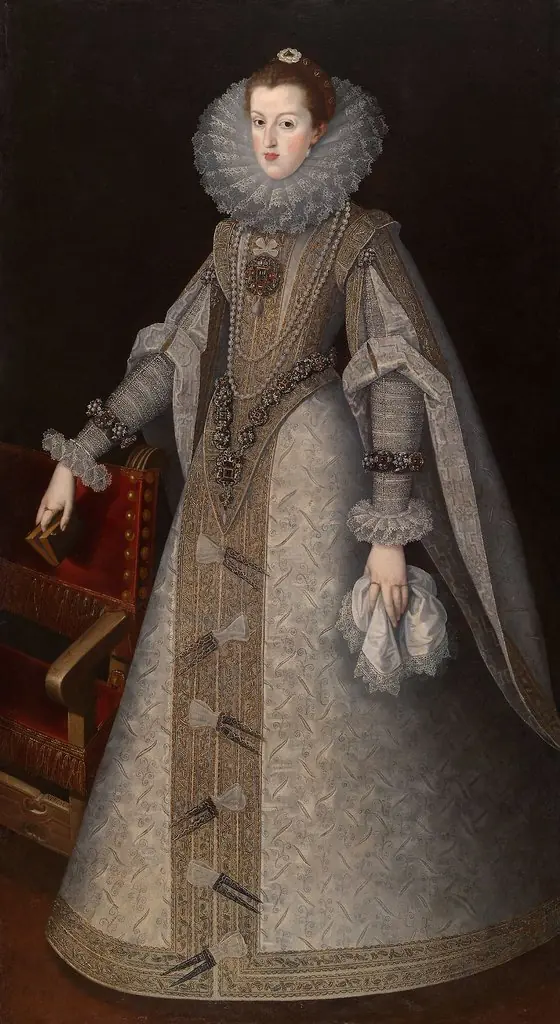 Queen Margaret of Spain
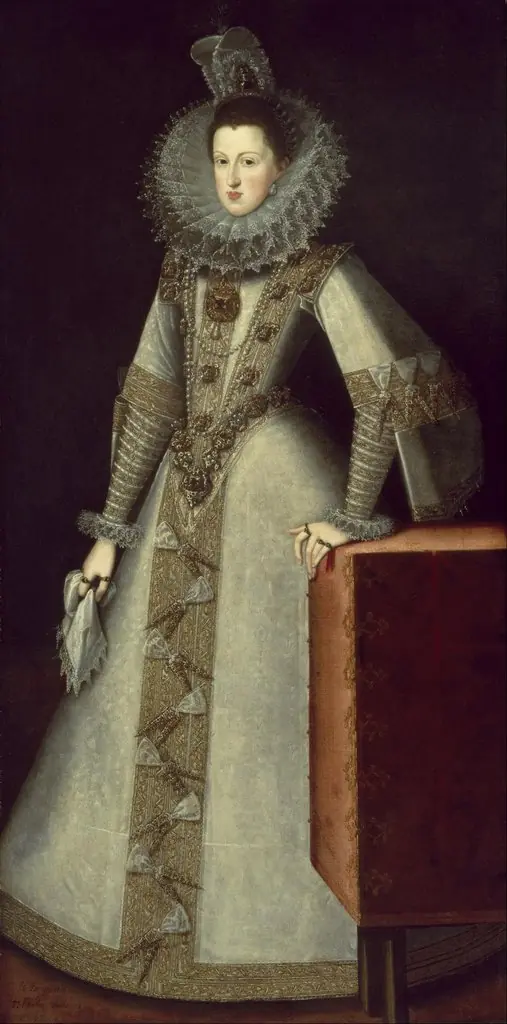 Margaret of Austria, Queen of Spain
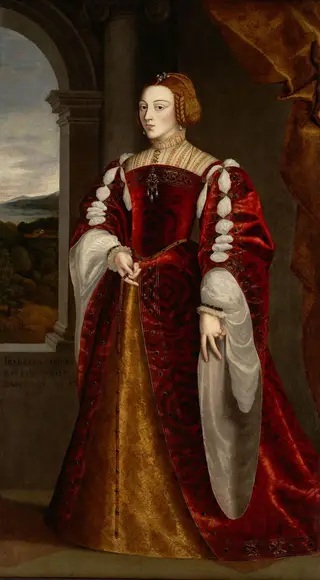
 La emperatriz Isabel de Portugal mujer de Carlos V