Artwork
Memorial Triptych with Lamentation
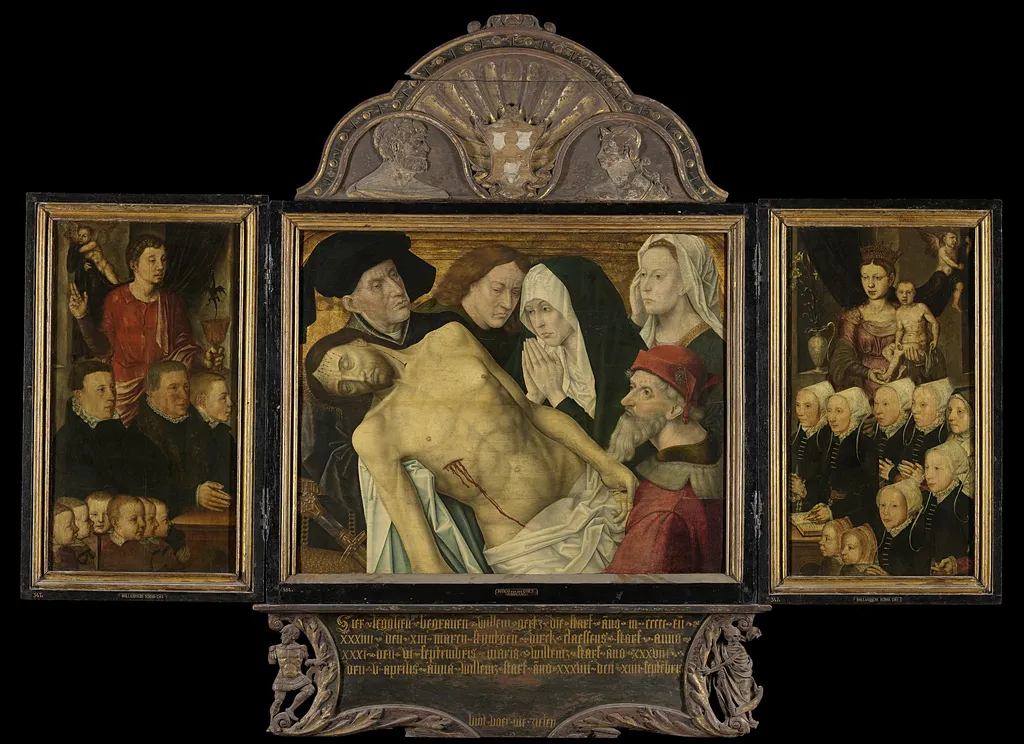
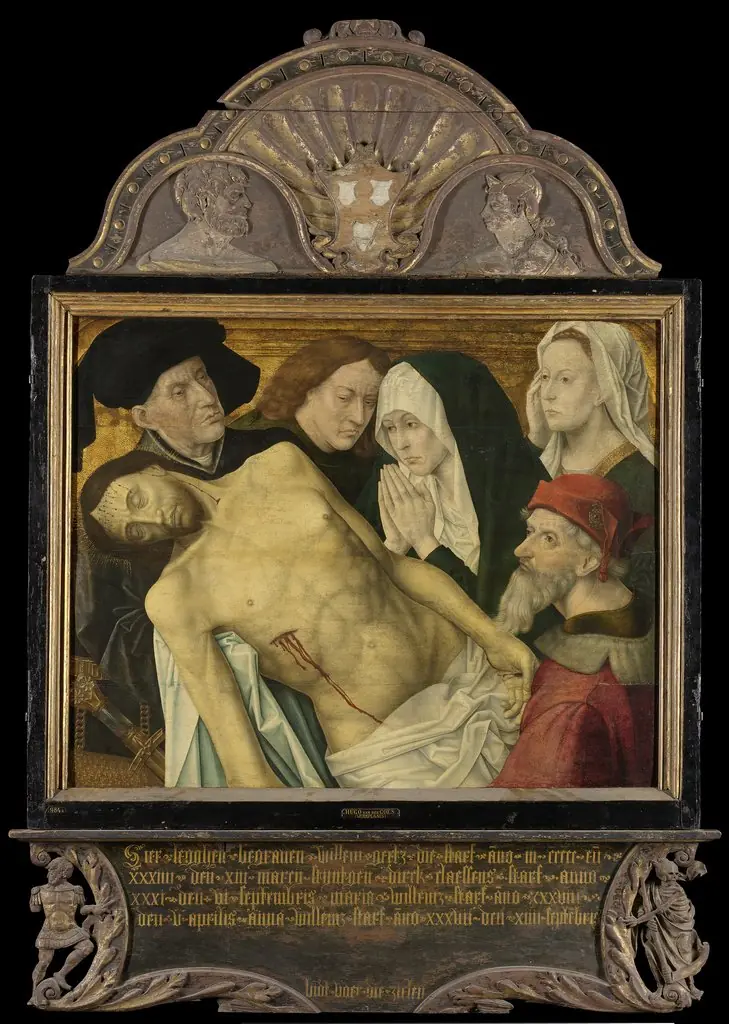
Memorial Triptych with Lamentation is an oil painting. It dates from 1527 and is held in the collection of the Rijksmuseum. The work is a three‑panel wooden altarpiece executed in oil paint.
About this work
Subject & Meaning
The composition depicts the mourning of Jesus following his crucifixion, a standard theme in devotional art intended to inspire contemplation of his sacrifice.
This Early Netherlandish triptych, created in 1527 within the Low Countries, centers on the Lamentation of Christ as its primary religious subject. The composition depicts the mourning of Jesus following his crucifixion, a standard theme in devotional art intended to inspire contemplation of his sacrifice. Distinctively, the work incorporates a donor figure alongside the sacred narrative, a common iconographic device of the period that visually links the patron to the holy event.
By including the donor within the scene, the artwork serves a dual function as both a memorial object and a statement of personal piety, representing the commissioner's hope for salvation through their association with the divine tragedy.
Technique & Style
Created in 1527 within the Low Countries, this triptych is executed in oil paint on a panel support. The work belongs to the Early Netherlandish painting movement and functions as a religious composition depicting the Lamentation of Christ alongside a donor figure. Stylistically, the piece is identified as a work produced after Hugo van der Goes.
The central panel measures 86 cm in height and 46 cm in width. No specific details regarding the artwork's current condition or handling history are provided in the available records.
History & Provenance
The Memorial Triptych with Lamentation was created in 1527 in the Low Countries, executed in oil paint on panel as a religious work in the Early Netherlandish tradition. It is described as a triptych after Hugo van der Goes, indicating it was produced after an earlier composition by the Flemish master. At some point the work was owned by Johannes Bosboom, a private collector, before entering the holdings of the Rijksmuseum, where it is now part of the collection of the Nederlandsch Museum voor Geschiedenis en Kunst.
The triptych is housed in the Rijksmuseum in Amsterdam. Its current inventory number is SK-A-1149. The work has been part of the museum's collection since its acquisition and was included in the exhibition "Early Netherlandish Painting in the Rijksmuseum" in 2018.
Context
The Memorial Triptych with Lamentation (1527) exemplifies Early Netherlandish religious painting, reflecting the influence of Hugo van der Goes through its devotional focus on Christ's lamentation and donor portraiture. Executed in oil on panel (86 cm × 46 cm), it was created for Johannes Bosboom within the Low Countries' artistic milieu and now resides at the Rijksmuseum. Its composition and iconography situate it within the evolution of Netherlandish altarpieces, bridging devotional practice and artistic innovation in the early 16th century.
Legacy
The Memorial Triptych with Lamentation exerted significant influence on subsequent religious painting within the Early Netherlandish tradition, particularly shaping devotional practices through its depiction of the Lamentation of Christ. Its compositional innovations, especially the integration of donor figures within a sacred narrative, informed later altarpieces across the Low Countries. The work's presence in the Rijksmuseum collection cemented its status as a key example of 16th-century devotional art, studied for its technical mastery of oil paint on panel and its emotional resonance in rendering Christ's lamentation.
Overview
The work is a three‑panel wooden altarpiece executed in oil paint. The central panel presents a nude figure lying on a slab, surrounded by four cloaked figures wearing bright hats. Flanking panels contain groups of standing and kneeling figures, their small faces peering upward from the lower edge. The carved wooden frames feature elaborate ornamental motifs, and the surface shows signs of age and wear.
Artist & collection

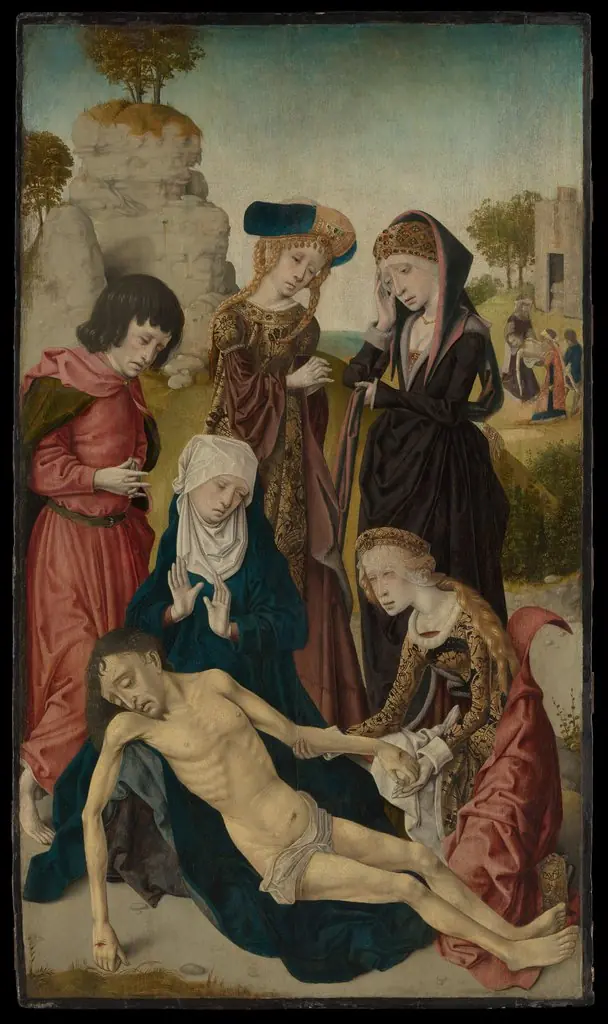 The Lamentation
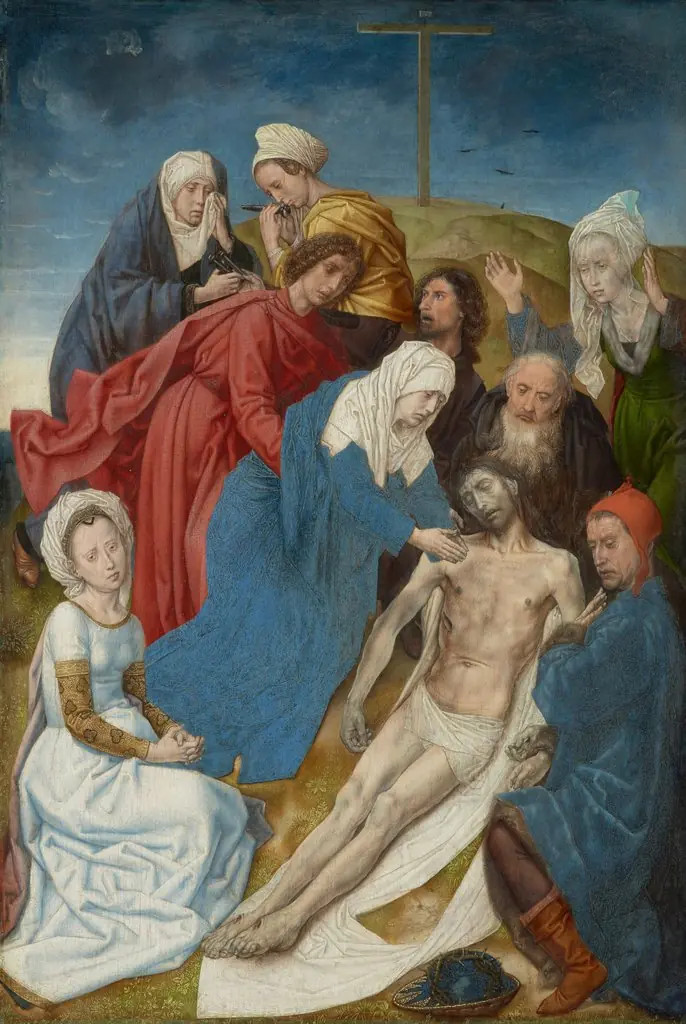 The Lamentation
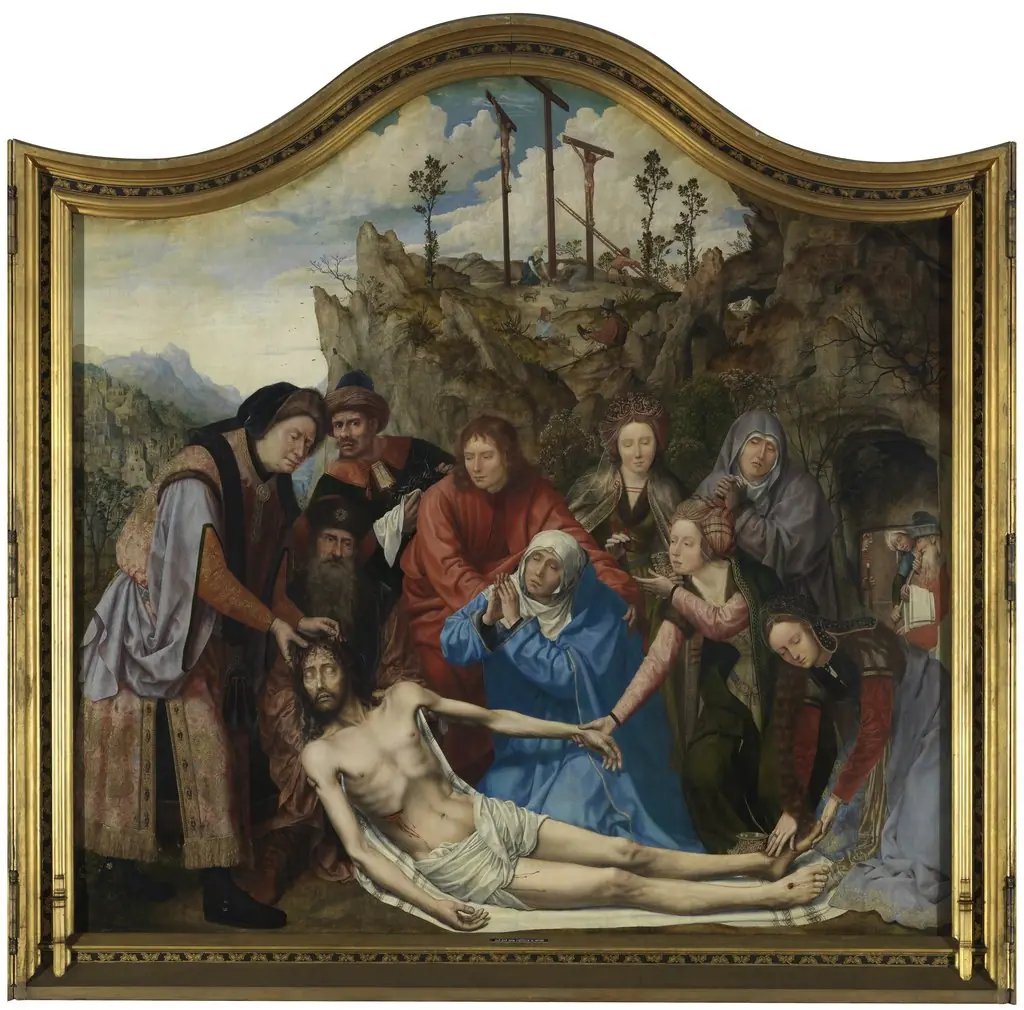 The Lamentation over the Dead Christ
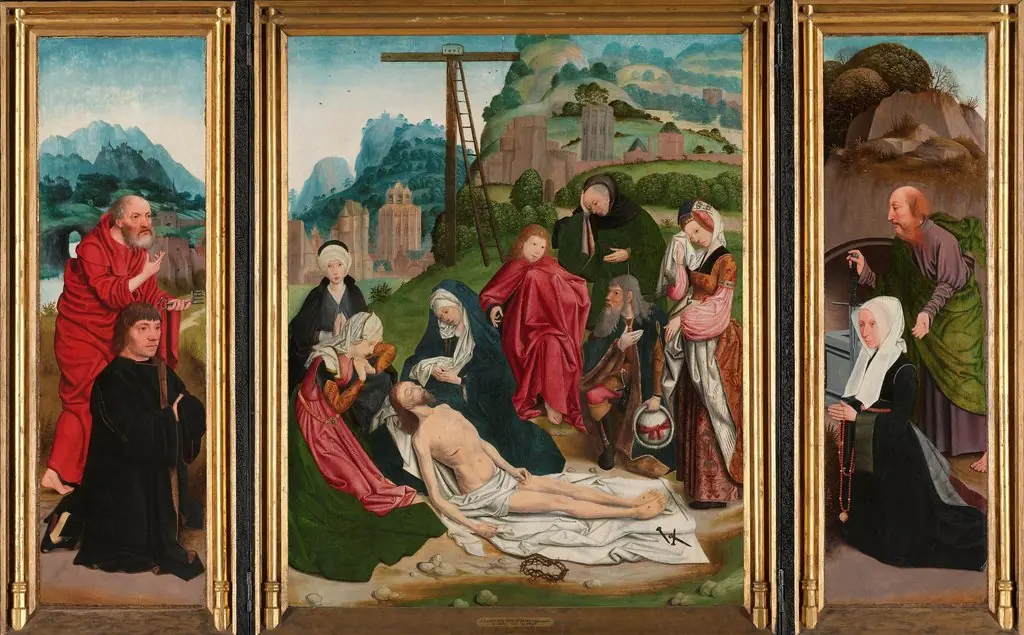 Triptych with the Lamentation (centre panel), the donor with St Peter (inner left wing), the donor’s wife with St Paul (inner right wing) and the donors’ coats of arms (outer wings)
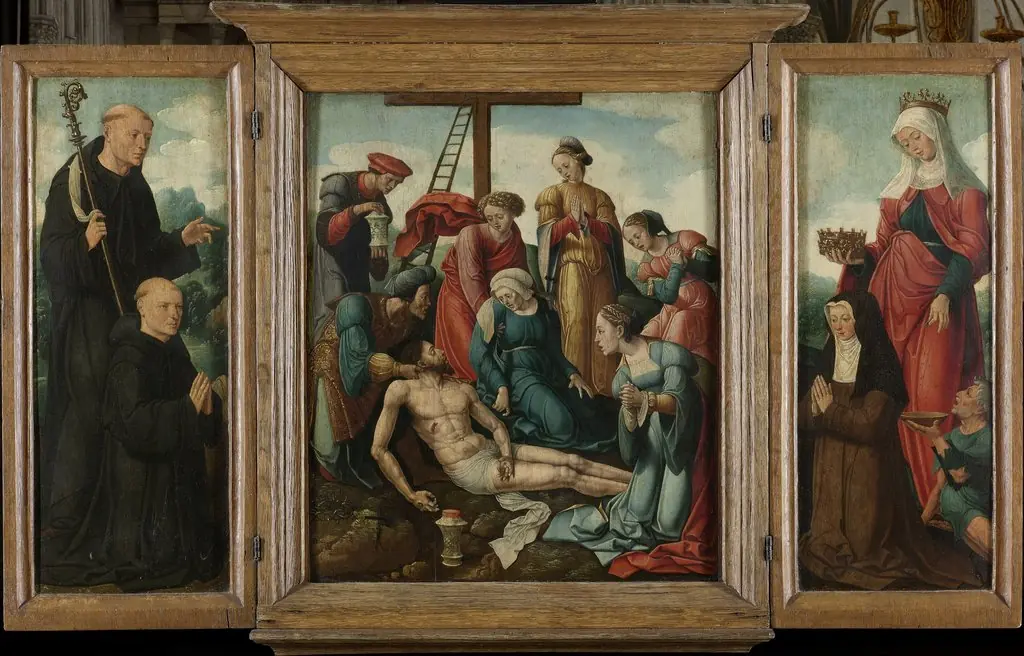 Triptych with the Lamentation of Christ (centre panel), the donor with St Benedict (inner left wing) and the donatrix with St Elizabeth of Thuringia (inner right wing)
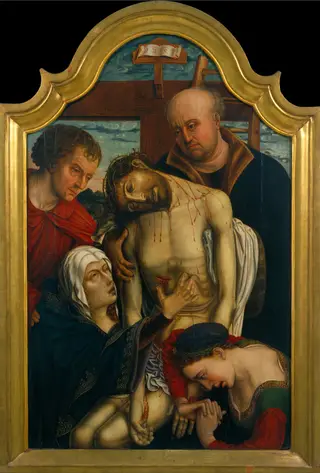 Descent from the Cross
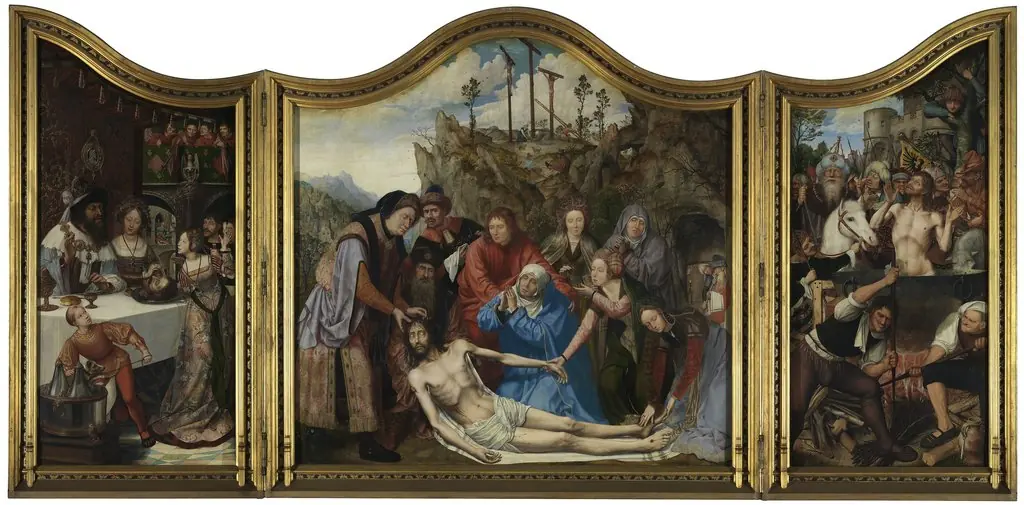 Altarpiece of the Guild of the Joiners
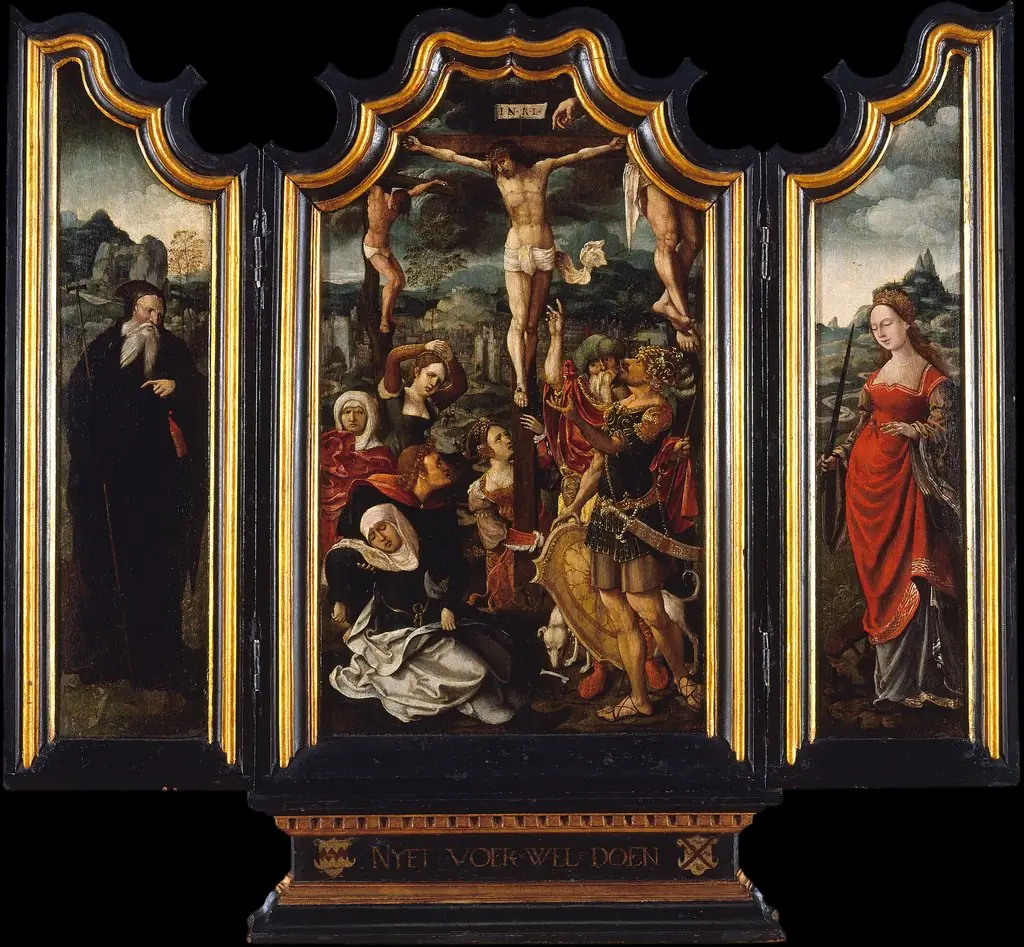 Triptych with Calvary, Saint Anthony the Abbot and Saint Catherine