Artwork
Crucifixion Triptych
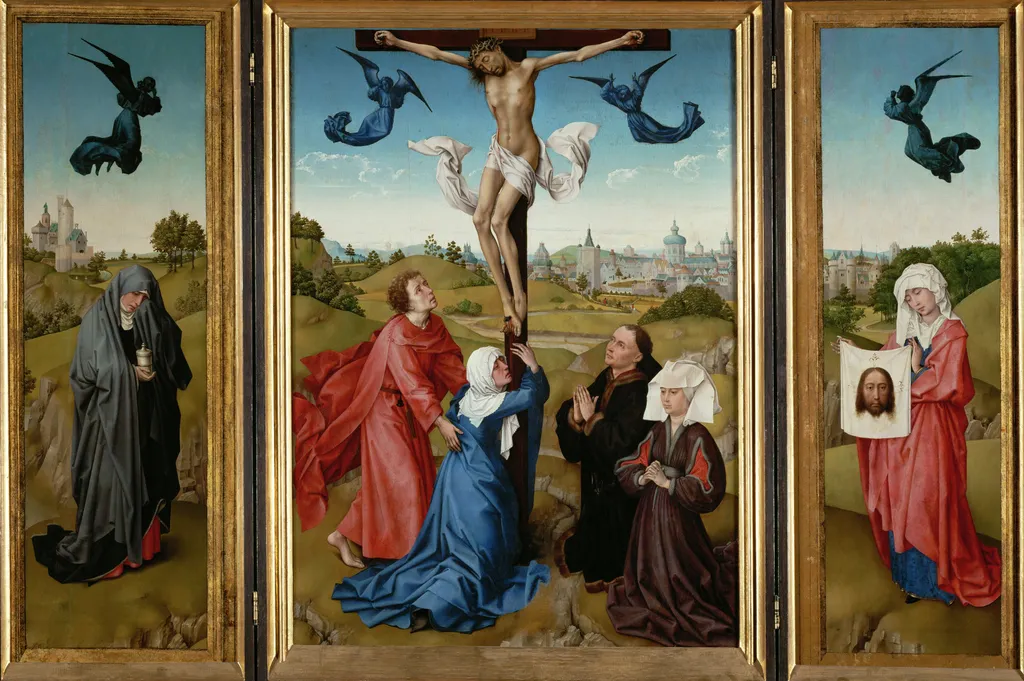
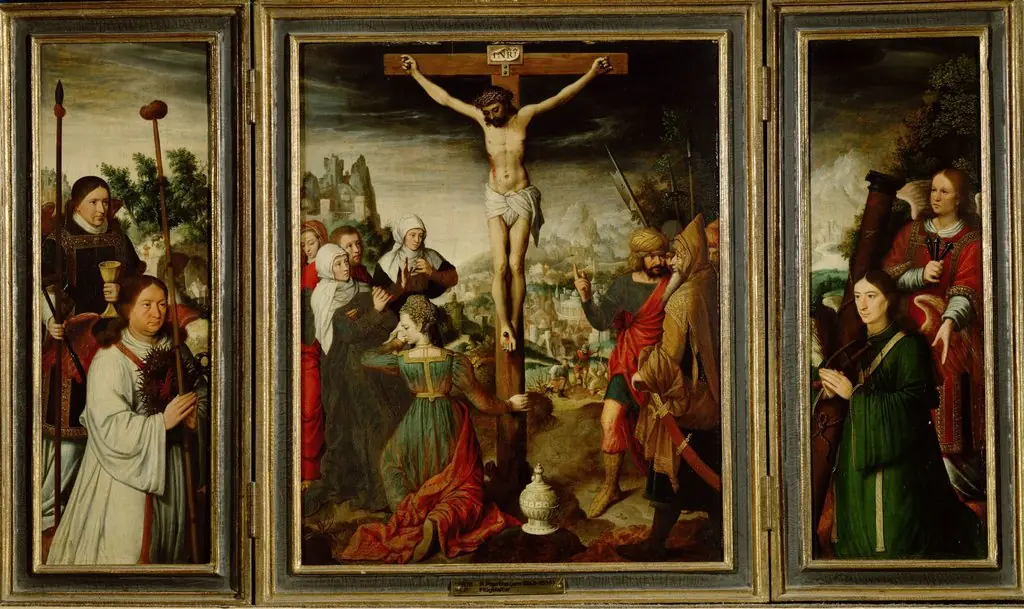
Crucifixion Triptych is an oil painting by the Northern Renaissance artist Rogier van der Weyden. It dates from 1440 and is held in the collection of the Kunsthistorisches Museum.
About this work
Subject & Meaning
Flanking wings show an isolated, aging Mary Magdalene holding an ointment jar and a youthful Saint Veronica displaying the Veil with Christ's face.
The central panel depicts the Crucifixion of Jesus against a unified landscape with Jerusalem on the horizon. Unusually, the Virgin Mary embraces the foot of the cross in a gesture of intense sorrow typically associated with Mary Magdalene, while John the Evangelist comforts her. The donors kneel nearby, bridging the earthly and heavenly realms to facilitate meditative prayer.
Flanking wings show an isolated, aging Mary Magdalene holding an ointment jar and a youthful Saint Veronica displaying the Veil with Christ's face. These figures symbolize Compassion and Adoration respectively. Iconographic details include Christ's floating loincloth, suggesting otherworldly power, and his elongated body emphasizing grandeur. Angels in grisaille above mirror the theological themes of the saints below.
Technique & Style
Executed in oil paint on wood panel, this work was likely created as a single unified composition before being cut into three sections to form a triptych, evidenced by the artist's inclusion of painted golden frames within the image itself. Dendrochronological analysis suggests the timber was felled around 1437, supporting a creation date between 1440 and 1445. The central panel measures approximately 96 by 69 cm, flanked by two wings each roughly 101 by 35 cm.
Stylistically, the painting exhibits a linear, drawing-like quality with simplified chiaroscuro, distinguishing it from the more plastic effects of Jan van Eyck. The composition features a continuous landscape background depicting Jerusalem, contrasting the dramatic narrative of the central Crucifixion with the static, isolated figures of Mary Magdalene and Saint Veronica on the side panels. Van der Weyden departs from tradition by portraying Veronica as youthful rather than aged, while intensifying emotional expression through the Virgin Mary's physical collapse and flushed complexion.
History & Provenance
The Crucifixion Triptych by Rogier van der Weyden was painted in oil on panel, with a long-standing dating of c. 1440–1445 now refined by dendrochronological analysis. The wood used as a support has an earliest possible felling date around 1431, with a probable felling date near 1437; after required seasoning, this points to a creation date no earlier than about 1445, with estimates ranging from the early to late 1440s. The work was originally conceived and executed as a single panel with painted frames, then later physically cut into three sections to function as a triptych.
The original location of the altarpiece and the identity of the kneeling donor couple depicted at the foot of the cross remain unknown. The first documented appearance of the object is in 1659, when it was recorded as entry No. 13 in the inventory of Archduke Leopold Wilhelm's art collection. It is now held in the Kunsthistorisches Museum in Vienna.
Context
The Crucifixion Triptych occupies a notable position within Early Netherlandish painting and within the oeuvre of Rogier van der Weyden. Scholars have long debated its dating: dendrochronological analysis indicates the wood could not have been painted before around 1445, shifting earlier estimates near 1440 toward the middle of that decade. The work's provenance is traceable to 1659, when it was recorded as item 13 in the painting inventory of Archduke Leopold Wilhelm in Vienna.
Art-historical discussion has focused on attribution and stylistic originality. German scholar Stephan Kemperdick argues that the painting's flatter, more linear handling deviates from Rogier's autograph manner and suggests execution by a talented assistant under the master's design. Lorne Campbell, by contrast, maintains that the triptych is fully by Rogier's own hand, interpreting the sober, ascetic style as a deliberate choice.
Erwin Panofsky's Early Netherlandish Painting and Dirk de Vos's monograph on the complete oeuvre both engage the work as a key catalogue entry.
The triptych is cited as an exemplar of Max Friedländer's characterization of Rogier as an "inventor" rather than a "discoverer," with original motifs such as the continuous landscape, donors on the central panel, and the fluttering loincloth that were adopted by later Netherlandish painters.
Legacy
The Crucifixion Triptych's influence is evident in later Netherlandish works. A painting in the Prado by the Master of the Catharine Legend closely copies the middle panel, likely using drawings traced from the original, and the motif of Christ's fluttering loincloth reappears in the Abegg triptych from Rogier van der Weyden's workshop. These derivations show the triptych's impact on contemporary artists and workshop practice.
Its lasting reputation is also reflected in art-historical literature, where it is discussed in studies such as Neuner's 1995 analysis and de Vos's 1999 catalogue raisonné.
Overview
Rogier van der Weyden's Crucifixion Triptych, an oil painting from approximately 1443–1445, functions as an altarpiece composed of three hinged panels. This significant work is currently housed in the Kunsthistorisches Museum in Vienna. It exemplifies the artist's meticulous approach to religious narrative and emotional expression, characteristic of early Netherlandish painting, within a devotional format designed to inspire contemplation.
Own this work as a print
Artist & collection
Artist
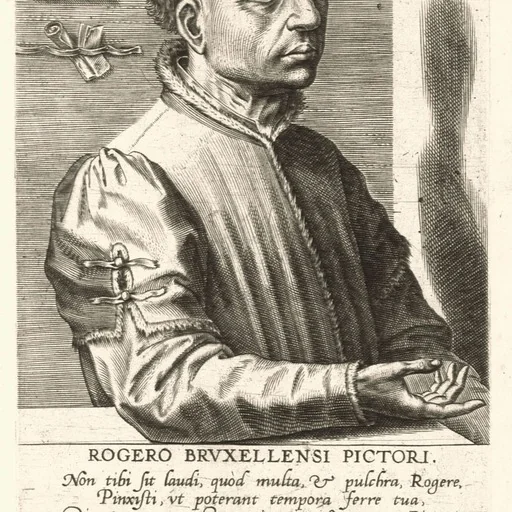
Rogier van der Weyden (Dutch:; 1399 or 1400 – 18 June 1464), initially known as Roger de la Pasture (French: ), was an early Netherlandish painter whose surviving works consist mainly of religious triptychs,…

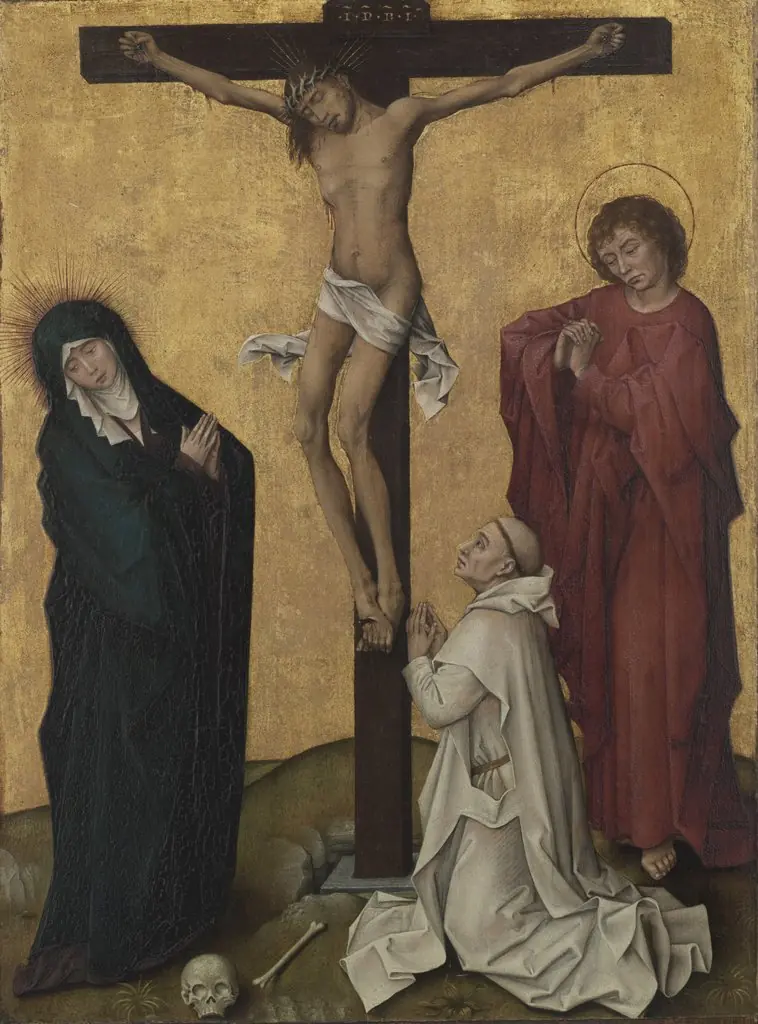
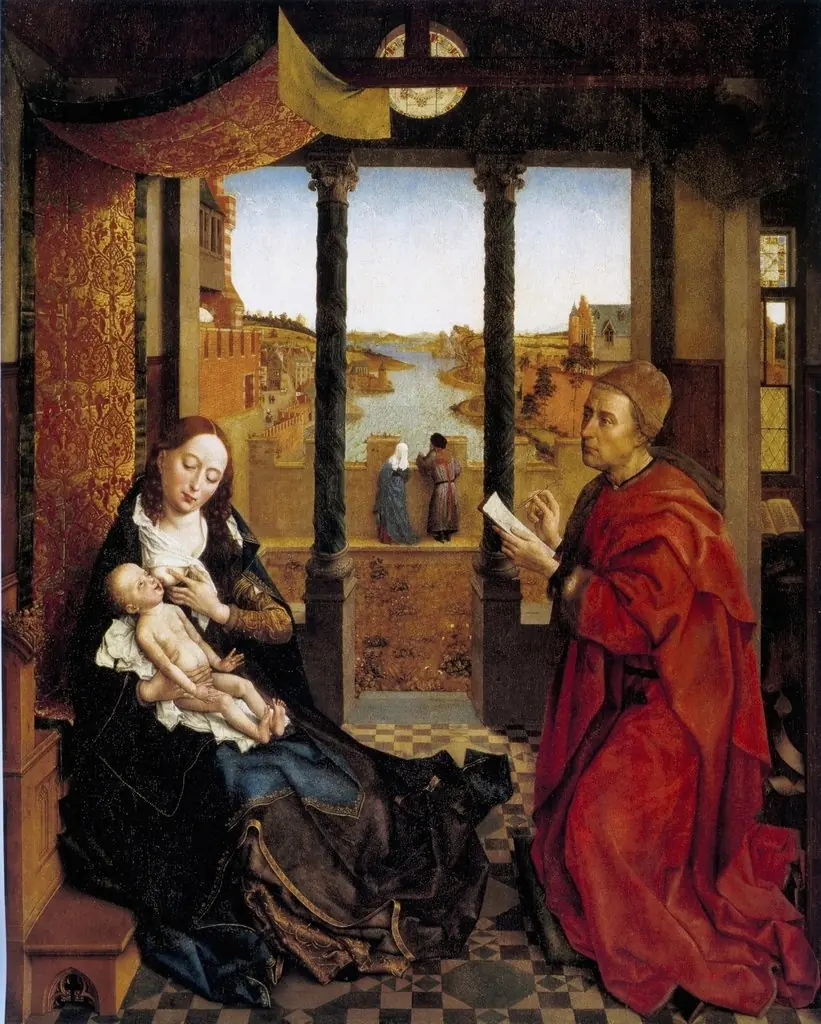
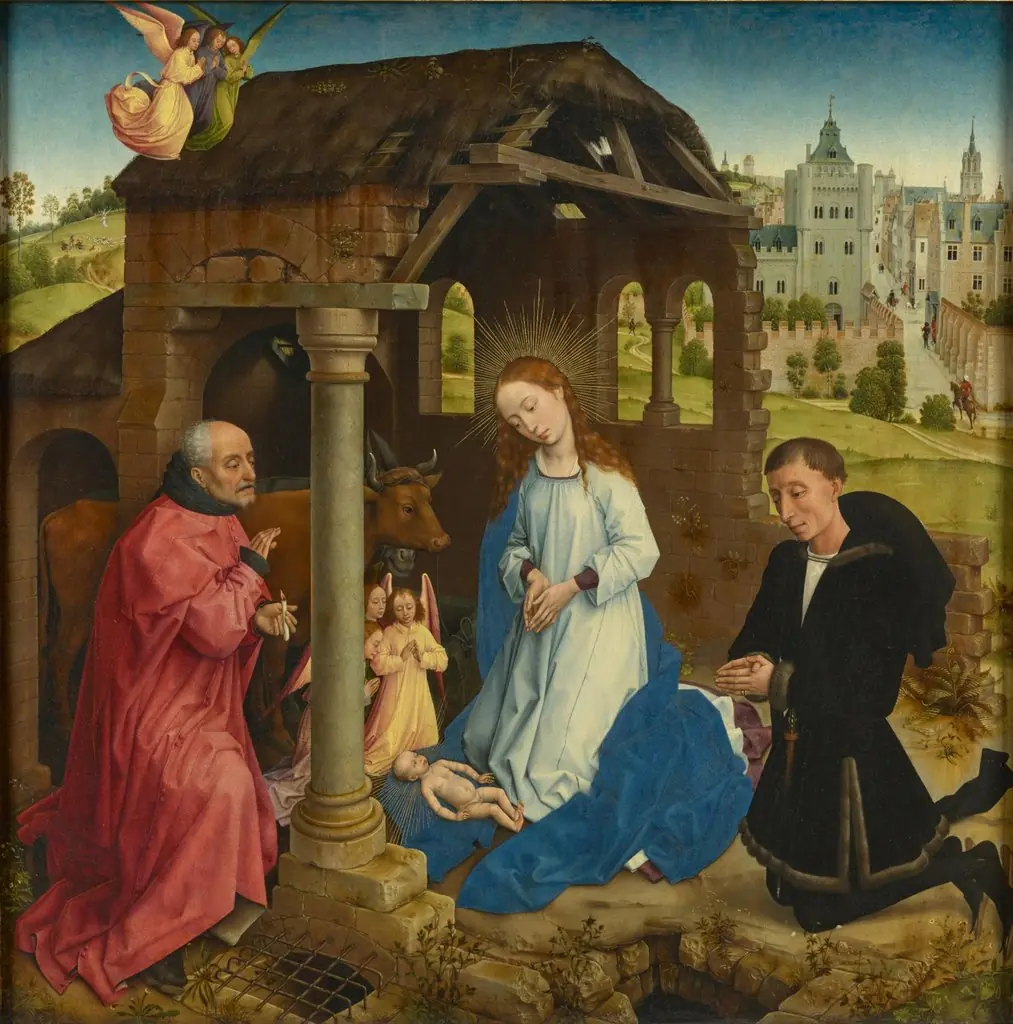
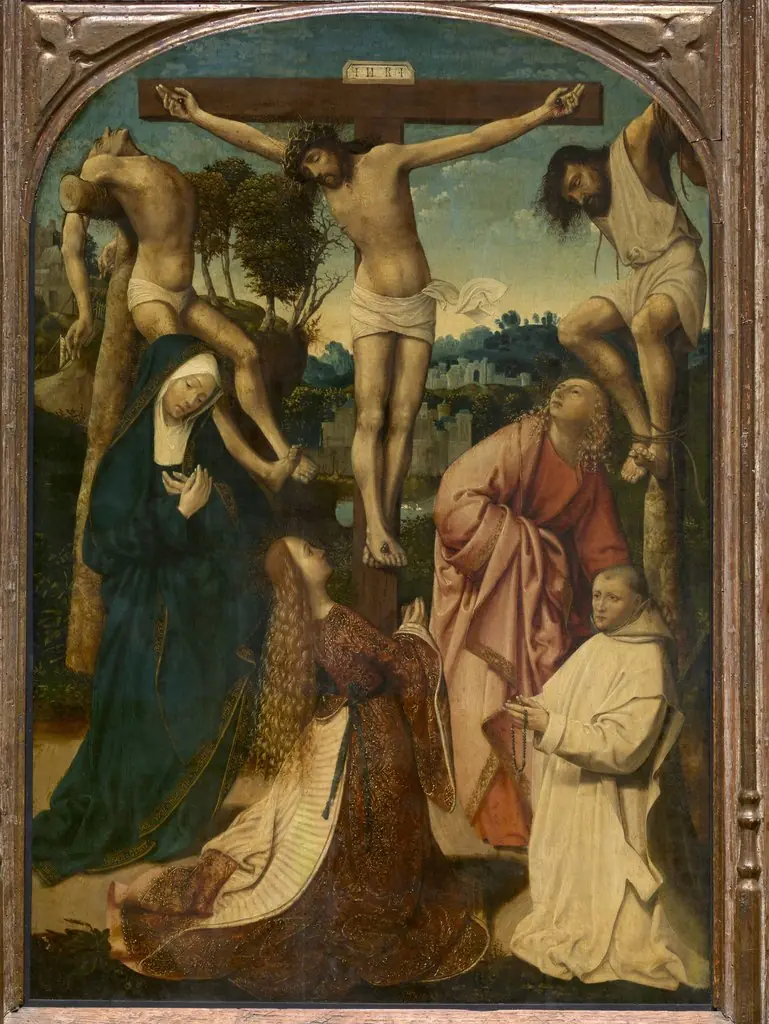 Crucifixion
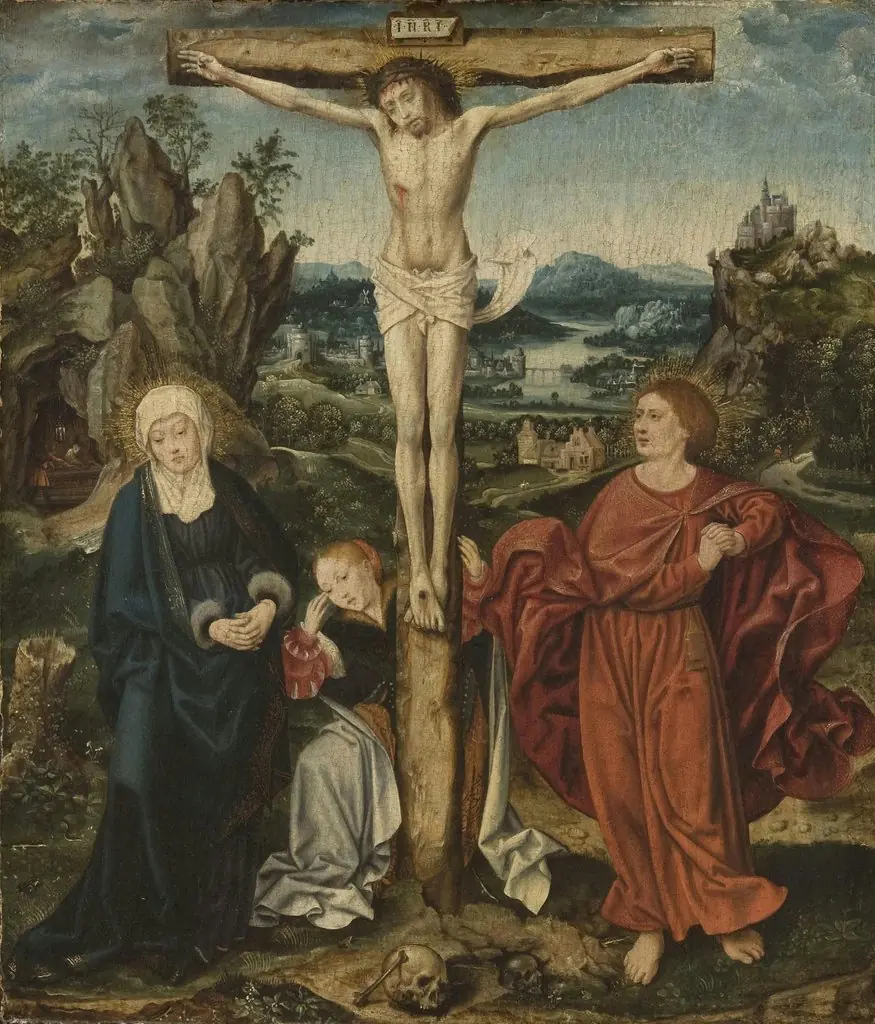 Crucifixion
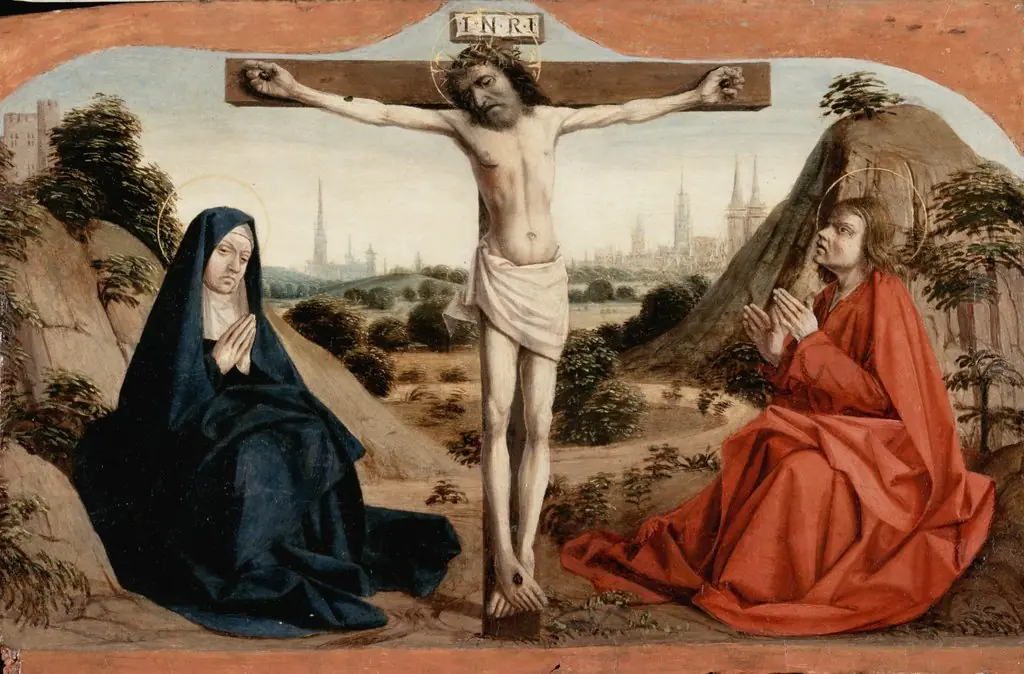 Crucifixion
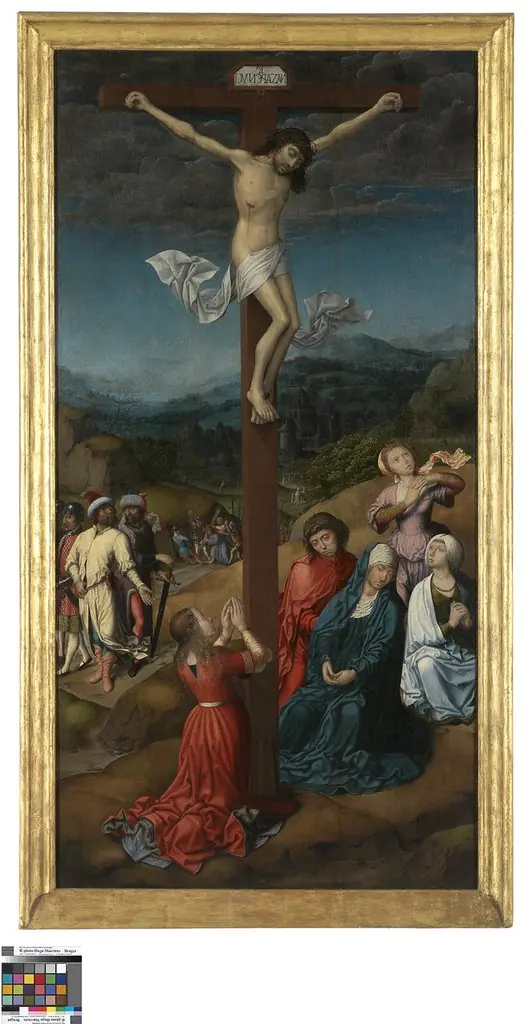 Crucifixion
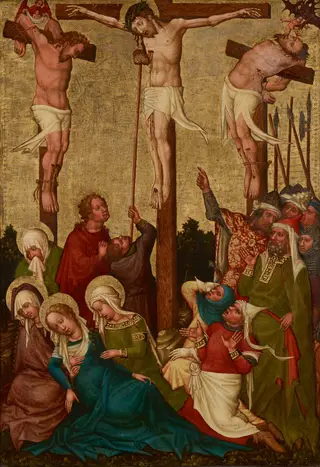 Crucifixion
 Kreuzigungstriptychon
 The Crucifixion
 Christ crucified between Mary and John the Evangelist and the saints Adolphus and Ambrosius
 Crucifixion
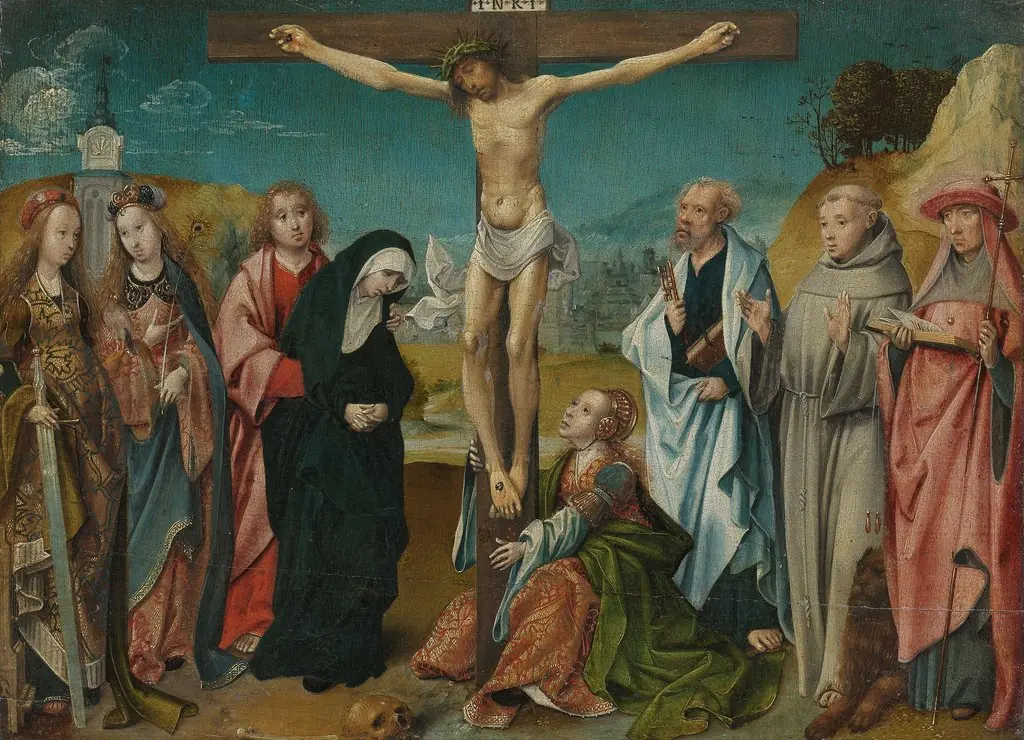 Christ on the cross with the Virgin, St John the Evangelist, Mary Magdalen, and Sts Cecilia and Barbara (left), and Sts Peter, Francis and Jerome (right)