Artwork
The Lamentation
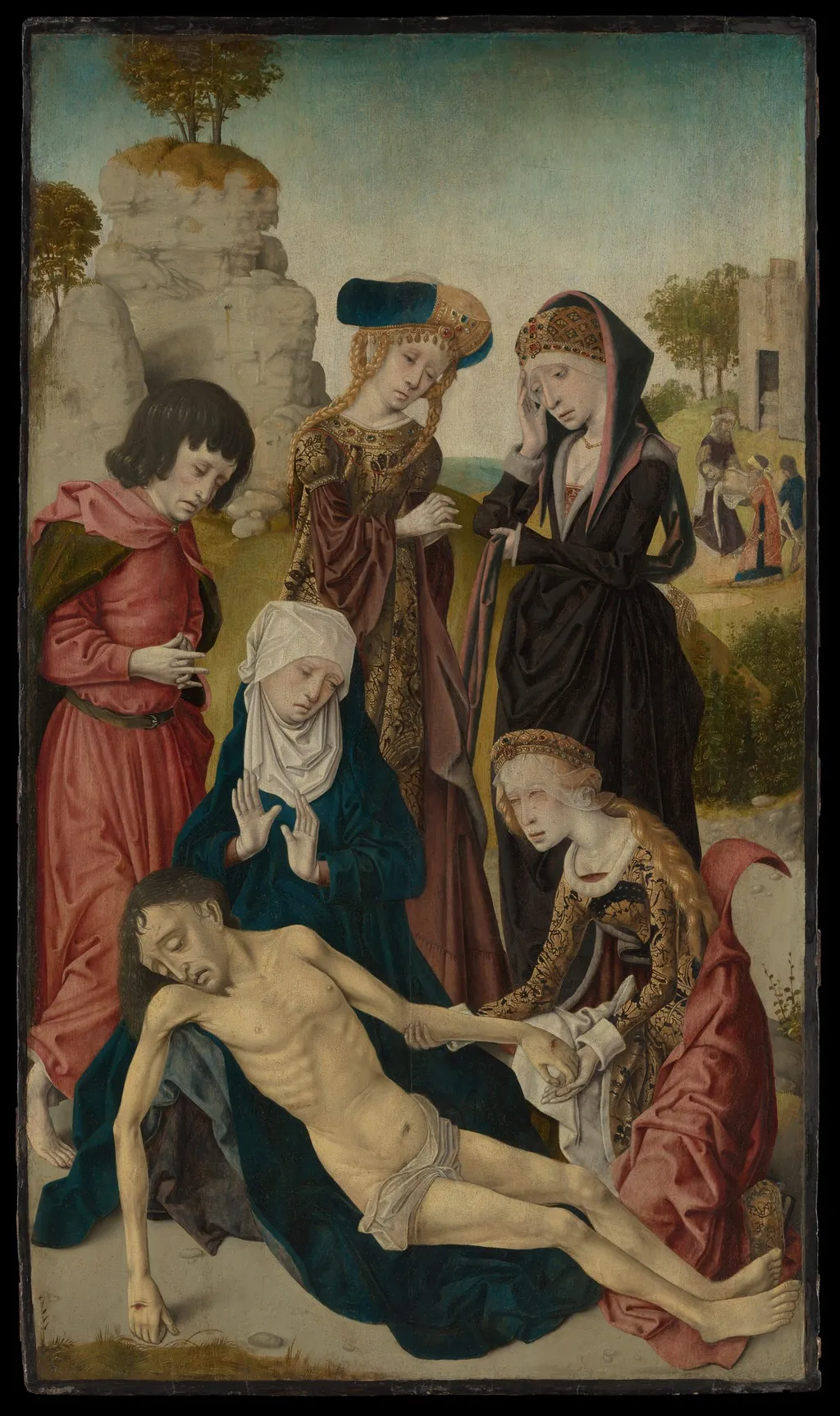
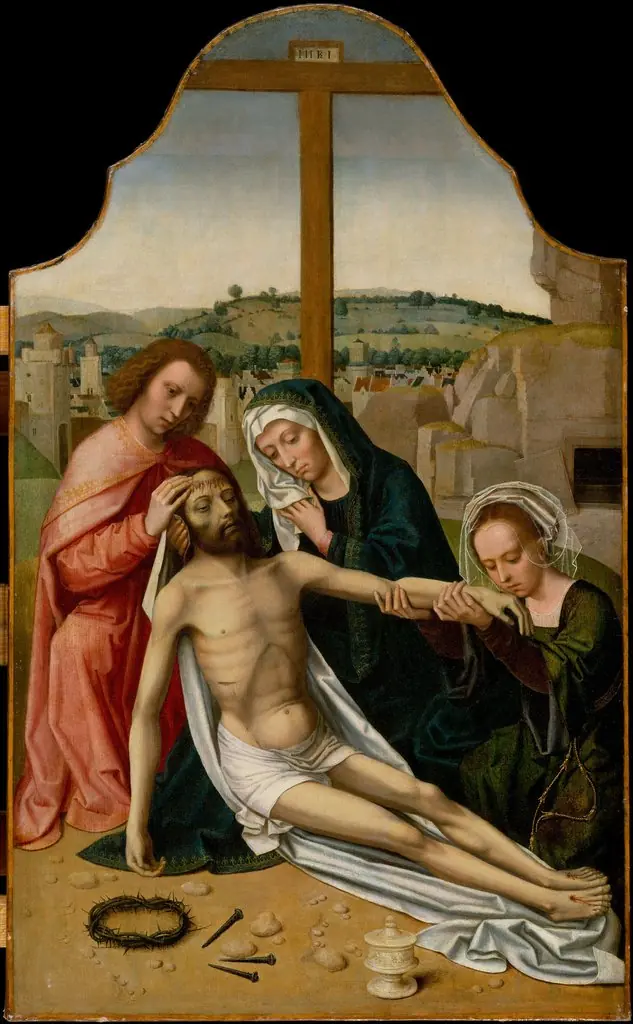
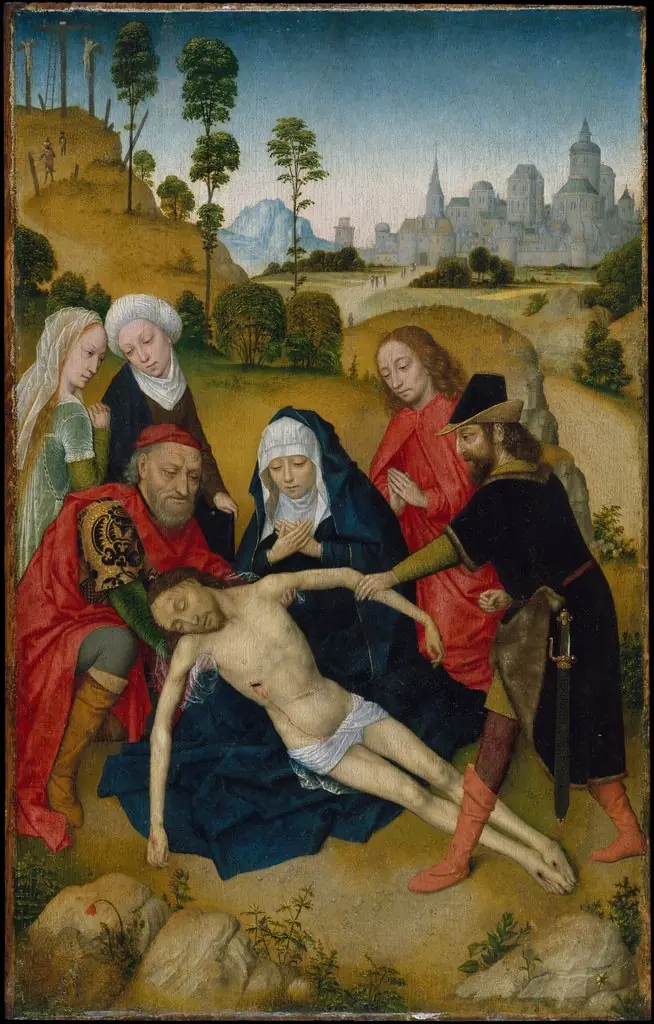
The Lamentation is an oil painting. It dates from 1500 and is held in the collection of the Metropolitan Museum of Art.
About this work
The dead Christ rests on his mother's lap, his limp form supported by John the Evangelist.
Tears streak the faces of the Virgin Mary and the Three Marys as they crowd around Christ's lifeless body in this compact panel from late-fifteenth-century Holland. The dead Christ rests on his mother's lap, his limp form supported by John the Evangelist. Once part of a larger altarpiece paired with a Resurrection formerly in the Rijksmuseum, the painting entered the Metropolitan Museum of Art in 1926 through the Rogers Fund.
Overview
The Lamentation, an oil on wood panel, depicts the somber moment after Christ's crucifixion, with his lifeless body cradled by the Virgin Mary. Attributed to the Workshop of the Master of the Virgin among Virgins, an anonymous North Netherlandish artist active in the late 15th century, this painting is a significant example of devotional art from the period. It measures 34 7/8 by 20 1/4 inches and is now part of the Metropolitan Museum of Art's collection.
Subject & Meaning
The composition centers on the Virgin Mary, who supports the deceased Christ on her lap, surrounded by John the Evangelist and the Three Marys. Their close proximity and visible tears convey deep sorrow, a deliberate artistic choice to foster a strong emotional connection with the viewer. This depiction of collective grief served to encourage personal reflection and empathy for Christ's suffering, a common theme in late medieval religious practice.
Technique & Style
Executed in oil on wood, the painting exemplifies the detailed rendering and rich color characteristic of North Netherlandish art during the late 15th century. The artist's focus on the figures' intense emotional expressions, particularly their tear-streaked faces, aligns with the period's emphasis on fostering personal piety and devotional engagement. This stylistic approach aimed to make sacred narratives more immediate and relatable to contemporary worshippers.
History & Provenance
This panel was originally conceived as part of a larger devotional ensemble, likely an altarpiece, where it was paired with a now-separated Resurrection panel, formerly held by the Rijksmuseum in Amsterdam. This juxtaposition of sorrow and hope was a common narrative strategy. The Lamentation entered the collection of the Metropolitan Museum of Art in 1926, acquired through the Rogers Fund, and is identified by its object number 26.26.
Artist & collection