Artwork
Mountains and Rivers in Autumn
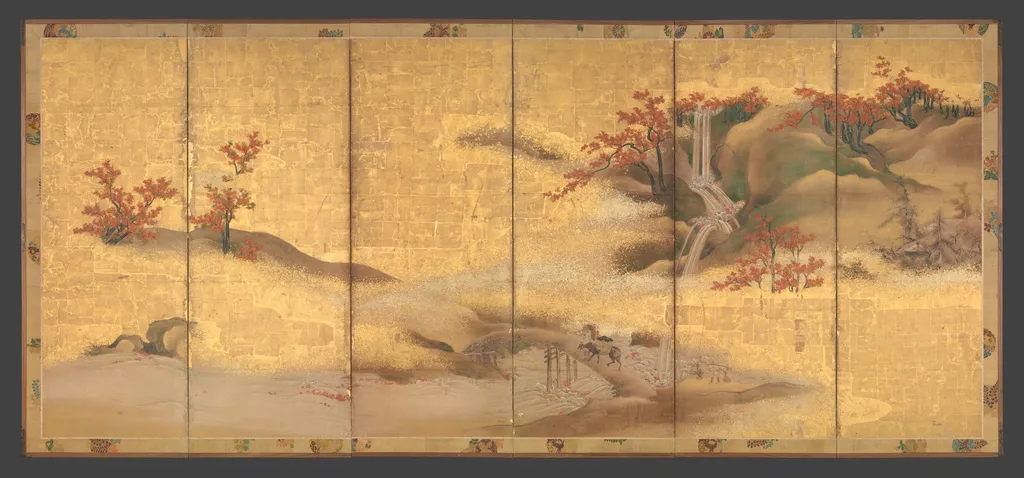
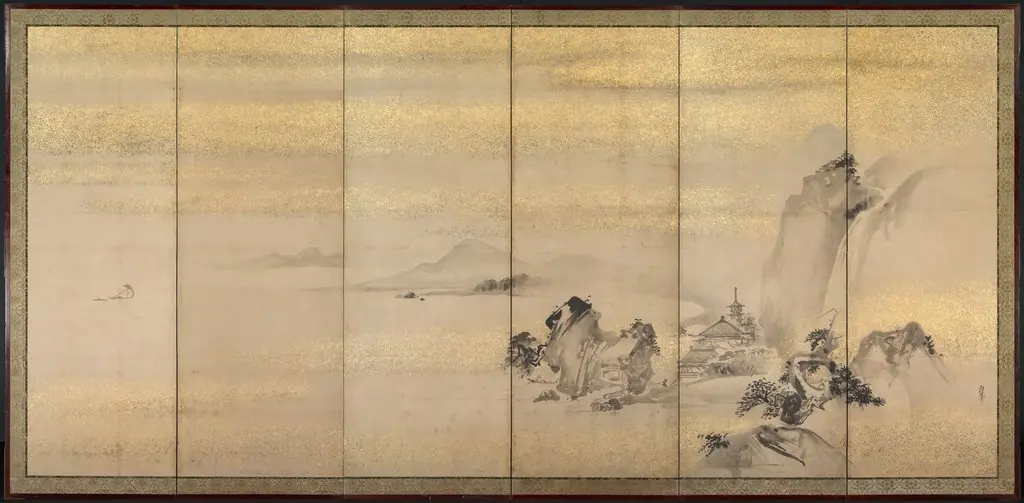
Mountains and Rivers in Autumn is an unspecified painting. It dates from 1625 and is held in the collection of the Metropolitan Museum of Art. The work depicts a tranquil autumnal scene where gentle hills roll toward a meandering river.
About this work
Technique & Style
The scroll's mounting includes silk borders and wooden dowels, allowing the piece to be unrolled for contemplative viewing.
The work is executed in ink and color on a hanging scroll, a format typical of Edo-period Japanese painting. The composition features layered mountain forms rendered with delicate brushwork and subtle gradations of ink wash, while seasonal foliage is suggested through stippled washes of ochre and green. The scroll's mounting includes silk borders and wooden dowels, allowing the piece to be unrolled for contemplative viewing. Formal elements emphasize asymmetrical balance and a misty spatial depth that conveys the transience of autumn.
History & Provenance
Mountains and Rivers in Autumn is a painting created in 1625, as recorded in its internal metadata. The work is attributed to an anonymous painter and is part of the collection at the Metropolitan Museum of Art in New York. It was made in Japan, reflecting the artistic context of its production.
The painting entered the museum's collection at an unspecified date, but its inception is documented as January 1, 1625.
Mountains and Rivers in Autumn is held in the collection of the Metropolitan Museum of Art, where it is located as part of the museum's holdings. The work, dated to 1625, was made in Japan and is classified as a painting.
No specific inventory or accession number is recorded in the available sources, and no exhibition history is documented.
Overview
The work depicts a tranquil autumnal scene where gentle hills roll toward a meandering river. A modest cascade appears on the right, while riders on horseback traverse the riverbank. Dominant hues of muted gold and green are punctuated by vivid reds in the foliage and occasional white accents, creating a balanced, serene composition.
Subject & Meaning
The painting presents a quiet interaction between humans and landscape, emphasizing the seasonal shift of autumn. The presence of riders suggests a harmonious coexistence with nature, while the calm water and soft lighting convey a sense of contemplation and the fleeting beauty of the changing season.
Context
Created within a tradition that values landscape as a vehicle for poetic reflection, the piece aligns with East Asian aesthetic principles that celebrate seasonal transformation and the quiet dignity of everyday scenes. Its composition and color scheme echo the broader 19th‑century interest in integrating natural motifs with subtle decorative techniques.
Artist & collection

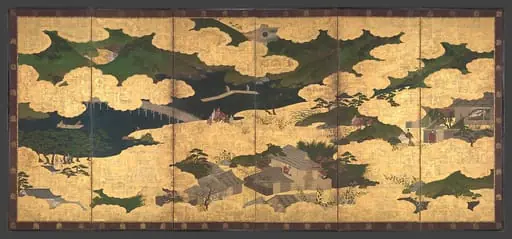
- 平家物語図屏風 「小督」 「大原御幸」|"Kogō" and "The Imperial Procession to Ōhara", from The Tale of the Heike (Heike monogatari)
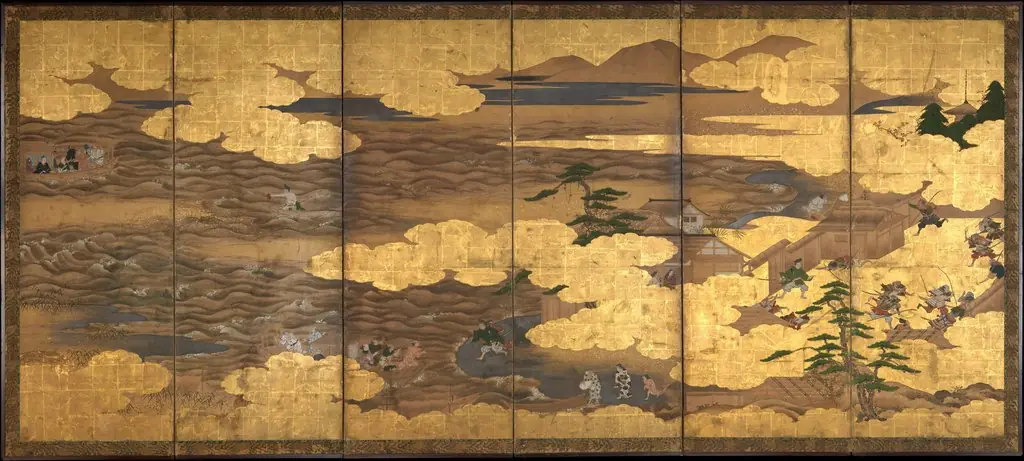 “Takebun,” from the Musical Drama “The New Piece” (Shinkyoku)
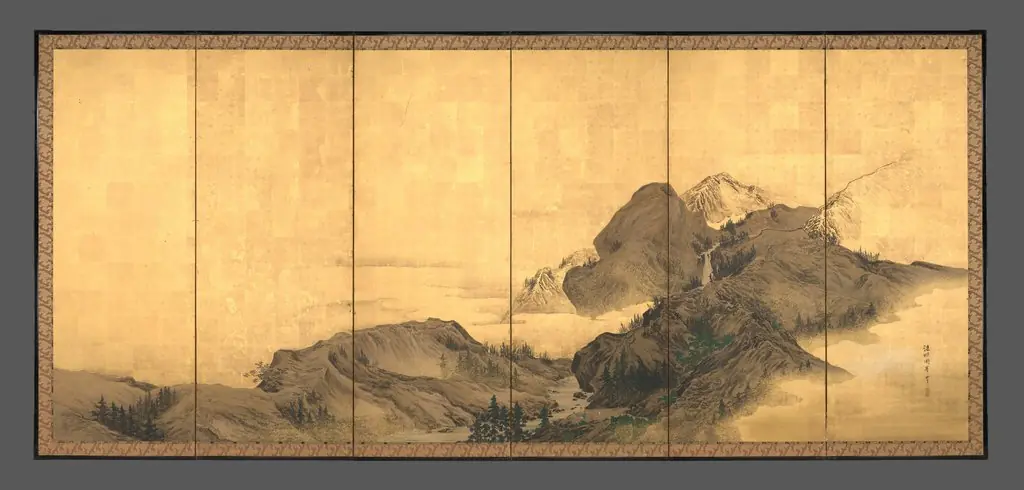 Landscape with Pavilion
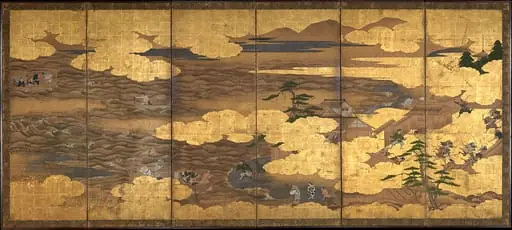 新曲図屏風|“Takebun,” from the Musical Drama “The New Piece” (“Shinkyoku”)
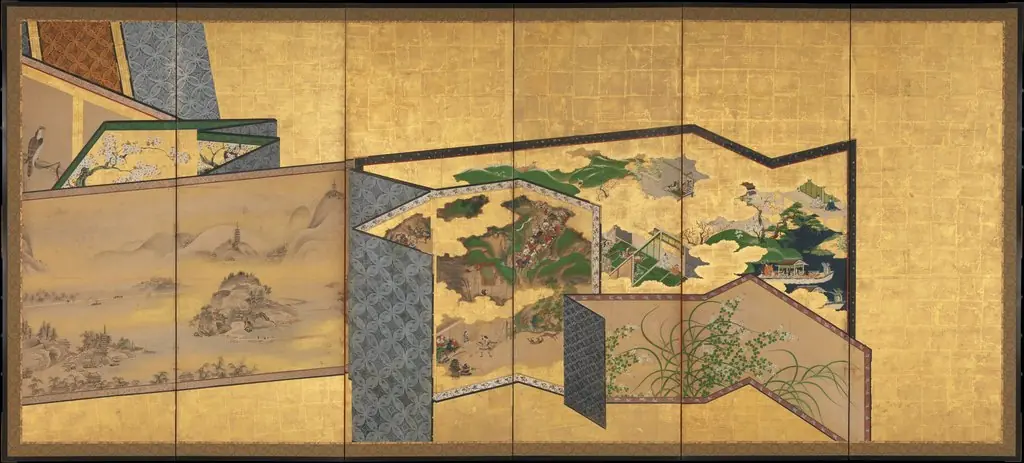 Screens within Screens
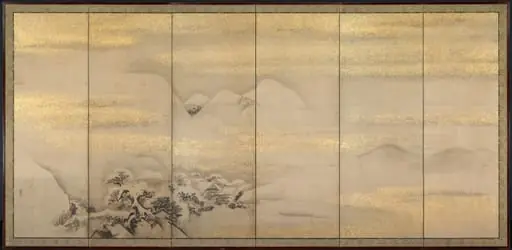 Summer and Winter Landscapes (one of a pair)
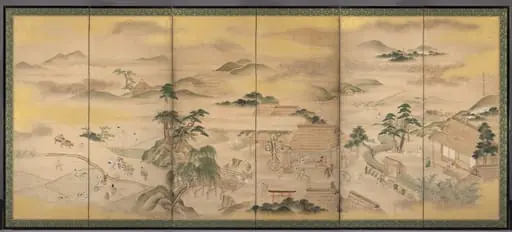 Spring and Autumn Farming (Spring)
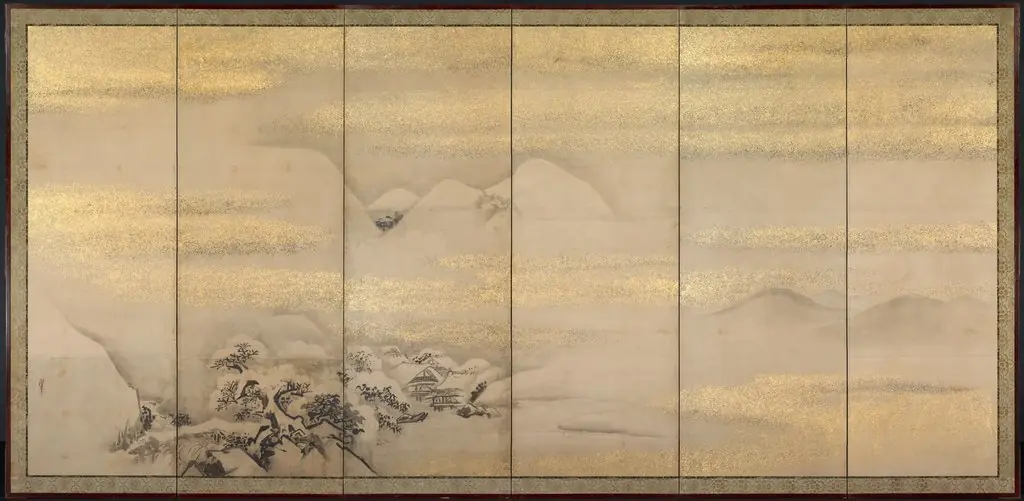 Summer and Winter Landscapes (one of a pair)
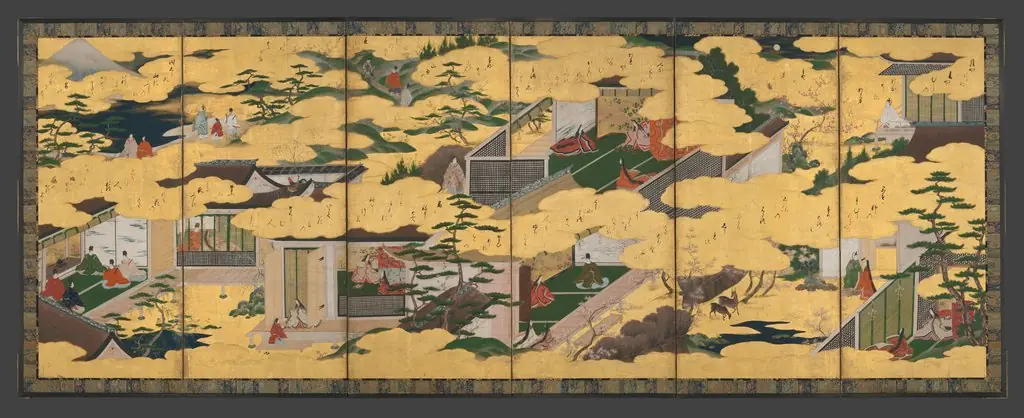 Scenes from the Tales of Ise
 Flowers and Birds
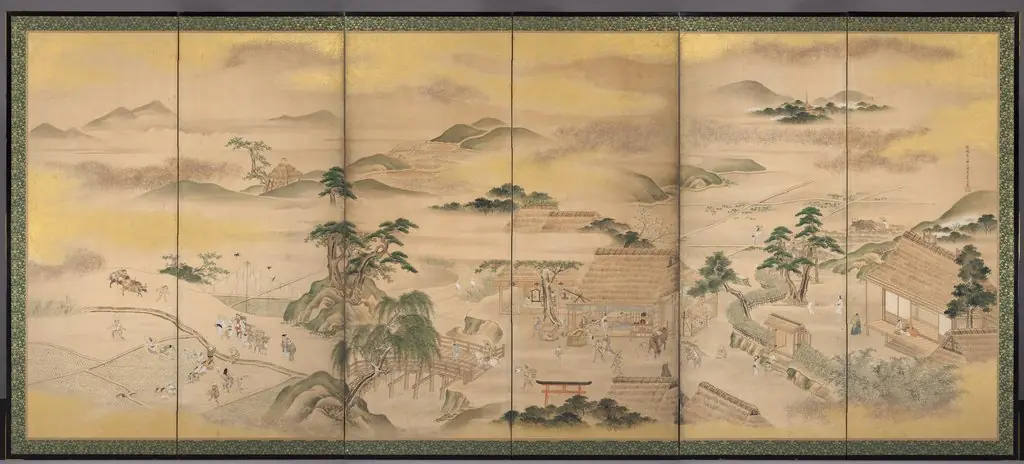 Spring and Autumn Farming (Spring)
 Summer and Winter Landscapes