Artwork
Spring and Autumn Farming (Spring)
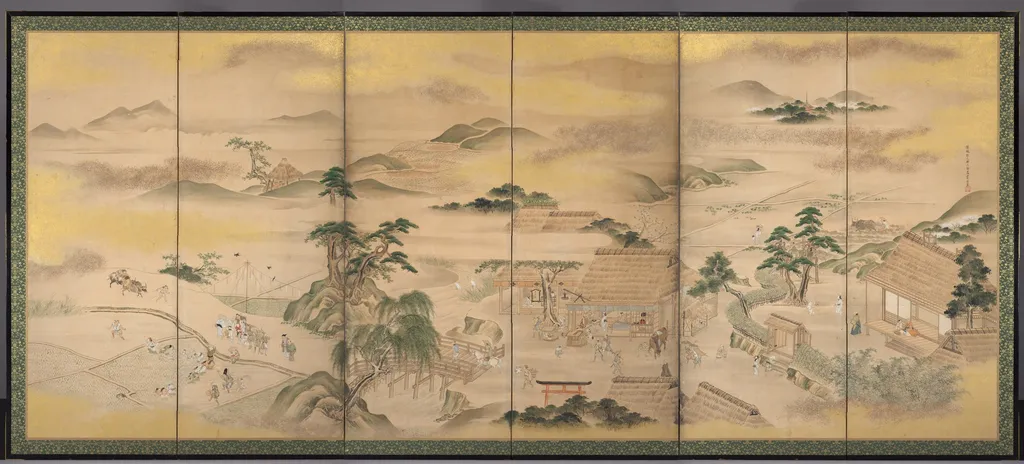
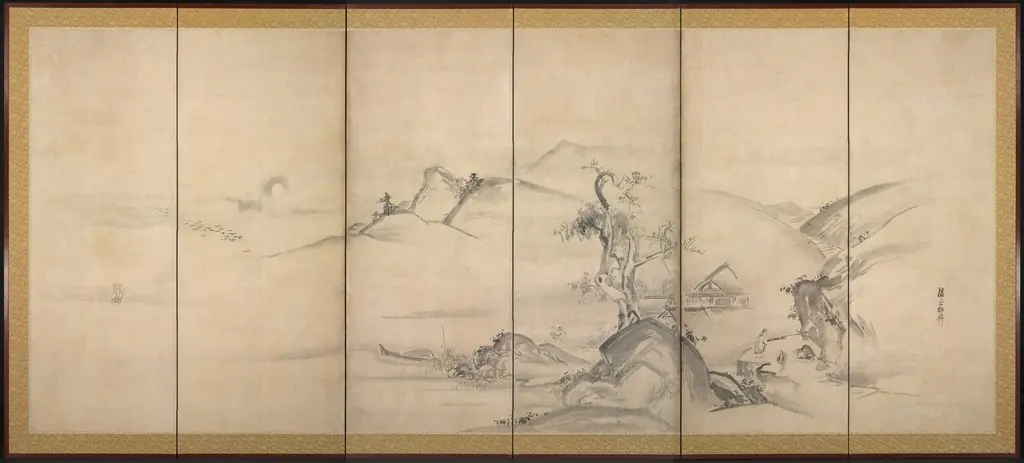
Spring and Autumn Farming (Spring) is an unspecified painting by the Nanga artist Kō Sūkoku. It dates from 1774 and is held in the collection of the Cleveland Museum of Art.
About this work
History & Provenance
The painting Spring and Autumn Farming (Spring) by Kō Sūkoku, created in 1774, is held in the collection of the Cleveland Museum of Art in Cleveland, Ohio.
The painting Spring and Autumn Farming (Spring) was created by the Japanese artist Kō Sūkoku in 1774. This work, classified as a painting from Japan, is currently held in the collection of the Cleveland Museum of Art, where it is cataloged under the accession number 2012.72.1. The specific inception date recorded for the artwork is January 1, 1774.
The painting Spring and Autumn Farming (Spring) by Kō Sūkoku, created in 1774, is held in the collection of the Cleveland Museum of Art in Cleveland, Ohio. The work is cataloged under the accession number 2012.72.1. This Japanese painting was produced in Japan and remains part of the museum's permanent holdings.
Overview
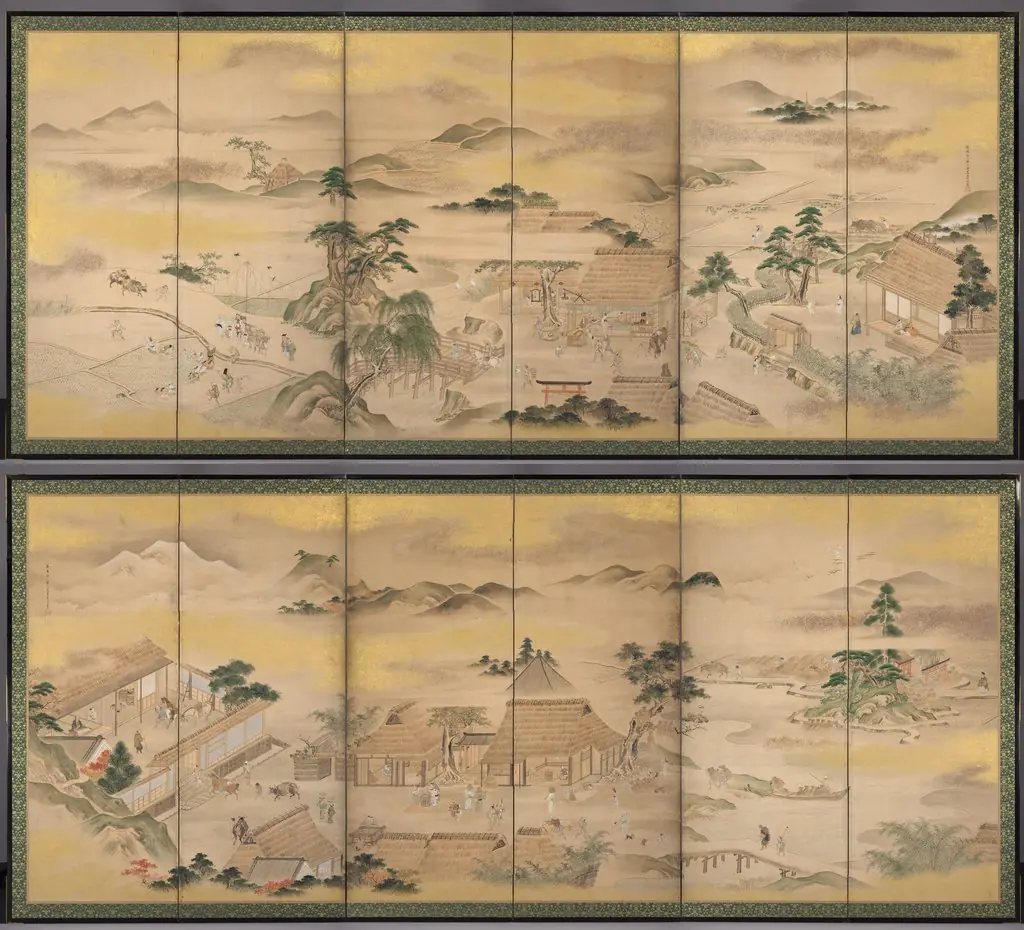
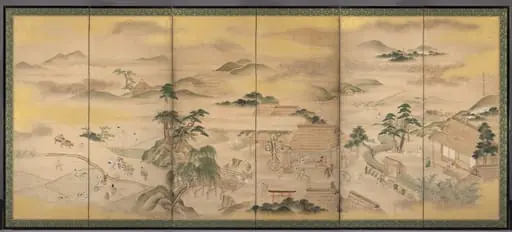
Spring and Autumn Farming (Spring) is an 18th‑century Japanese painting by Kō Sūkoku, dated 1774 and presently in the collection of the Cleveland Museum of Art. The work presents a broad, gently rolling countryside rendered in muted earth tones, with a pale sky overhead. Human activity is depicted on a modest scale, emphasizing the expansive, tranquil nature of the agrarian setting.
Subject & Meaning
The scene captures a moment of rural labor in early spring, where figures engage in plowing, walking, and riding horses across cultivated fields. Small thatched houses and bridges punctuate the landscape, suggesting a harmonious relationship between people and the land. The composition conveys the rhythm of seasonal work and the quiet continuity of agricultural life.
Technique & Style
Executed in a delicate brushwork typical of Edo‑period genre painting, the piece employs a restrained palette of browns, soft greens, and light blues. The figures are rendered in miniature, allowing the artist to foreground the vastness of the terrain. Linear perspective is subtle, with gentle hills receding into the distance, creating a sense of depth without dramatic chiaroscuro.
Context
Kō Sūkoku worked during a period when Japanese artists often depicted everyday life, aligning with the broader ukiyo‑e tradition that celebrated common people and seasonal activities. The work’s focus on agricultural labor situates it within a genre that documented the cyclical nature of farming, a central theme in Edo‑period visual culture.
Artist & collection