Artwork
Scenes from the Tales of Ise
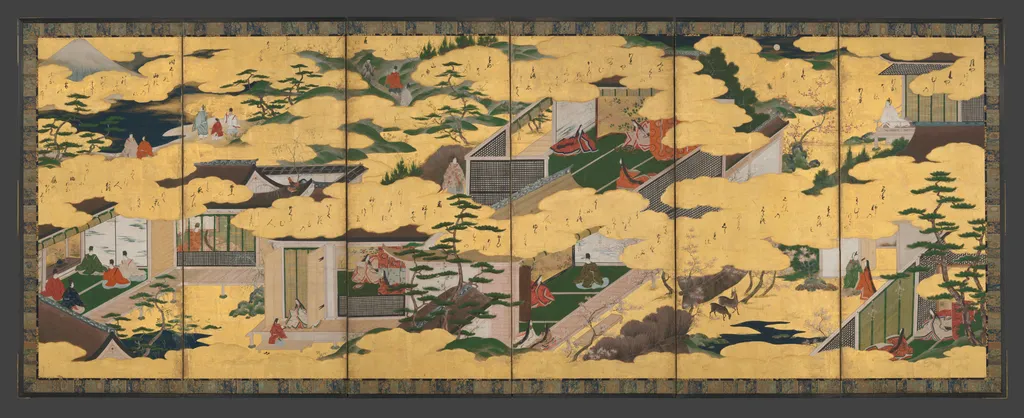
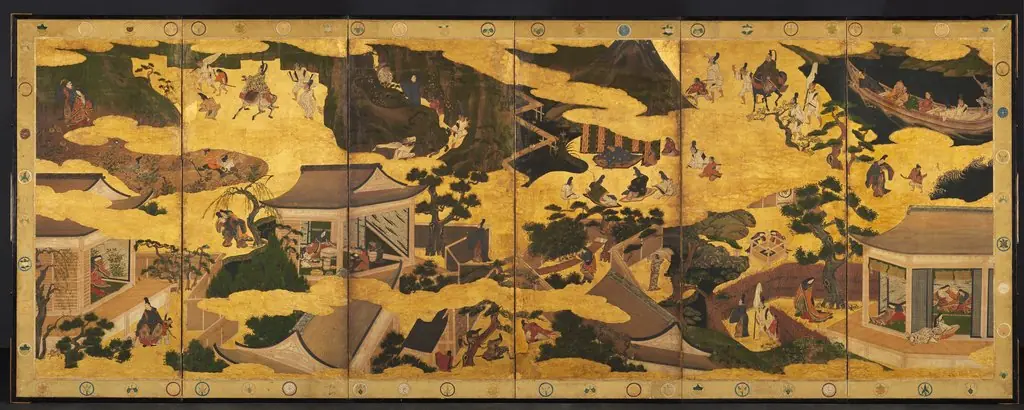
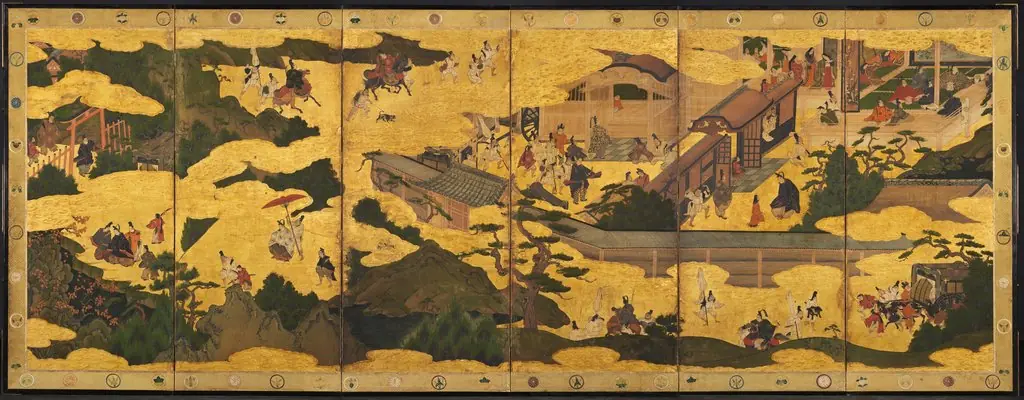
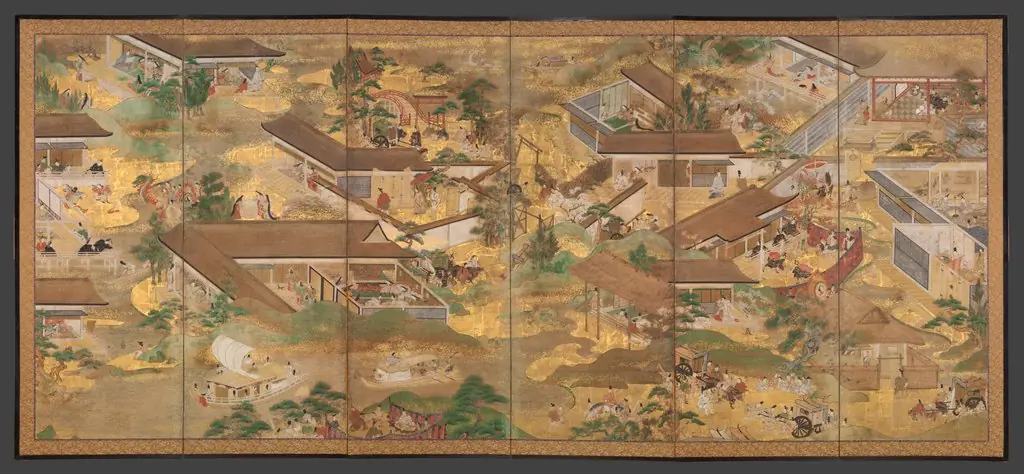
Scenes from the Tales of Ise is an unspecified painting. It dates from 1624 and is held in the collection of the Metropolitan Museum of Art.
About this work
Overview
Across a gold‑toned sky dotted with clouds and a pale moon, figures in vivid robes traverse hills, bridges, and fenced enclosures while deer graze nearby.
The work titled Scenes from the Tales of Ise is a painted screen composed of a multitude of compact vignettes. Across a gold‑toned sky dotted with clouds and a pale moon, figures in vivid robes traverse hills, bridges, and fenced enclosures while deer graze nearby. The composition is deliberately flat, yet the overlapping elements create a layered, narrative tableau reminiscent of an illustrated storybook.
Subject & Meaning
Each miniature scene draws on episodes from the classic Japanese collection The Tales of Ise, portraying courtly travel, conversation, and leisure. The juxtaposition of bustling human activity with tranquil natural motifs such as trees and grazing deer underscores the interplay between refined culture and the surrounding landscape, a recurring theme in Heian‑period literature.
Technique & Style
The artist renders figures with highly stylized, almost schematic faces, while the garments are rendered in intricate detail using bold pigments of green, red, and gold. The flat pictorial space is organized through successive layers of scenery, giving the impression of depth without linear perspective. This combination of decorative coloration and simplified anatomy is characteristic of screen painting in the period.
History & Provenance
The screen is part of the collection of the Metropolitan Museum of Art, where it is displayed for public viewing. Its acquisition history traces back to early twentieth‑century collectors of Japanese decorative arts, though the exact date of creation remains uncertain, typical of many portable screens whose origins are documented primarily through stylistic analysis.
Context
Created during a time when narrative scrolls and folding screens served both aesthetic and functional roles in aristocratic interiors, the piece reflects the cultural practice of illustrating literary works for visual enjoyment. The use of bright colors and detailed costume design aligns with the Heian court’s emphasis on elegance and the visual representation of literary themes.
Artist & collection

- Scenes from the Tales of Ise
 Scenes from the Tales of Ise
 Scenes from the Tale of Genji
 Scenes from the Tale of Genji
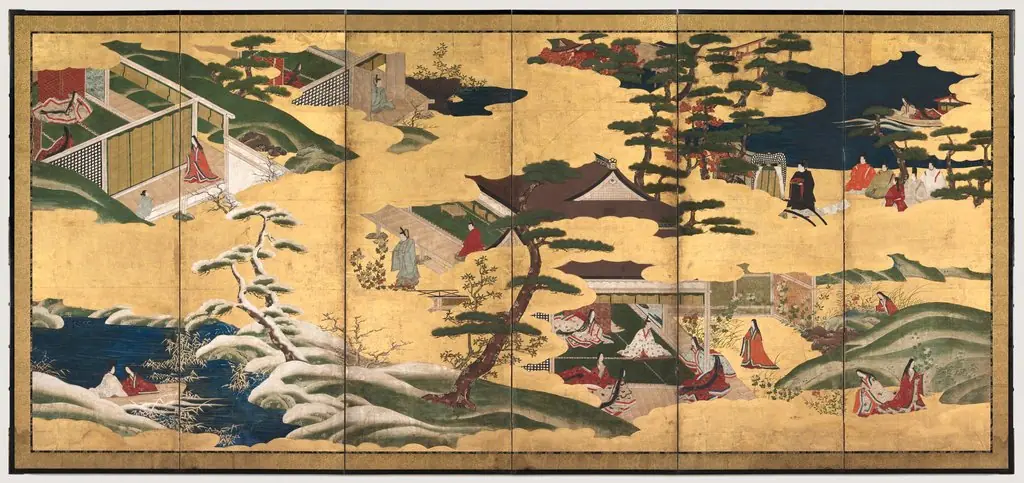 Scenes from the Tale of Genji
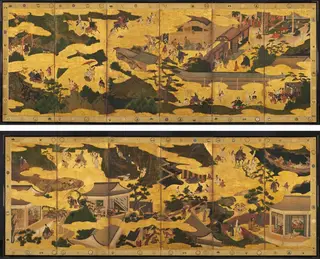 Scenes from the Tales of Ise
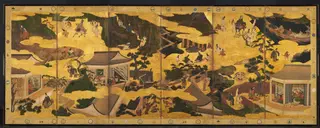 Scenes from the Tales of Ise
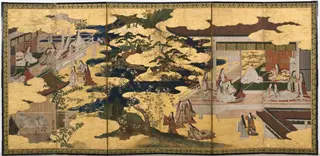 Scene from "The Tale of Genji": from the chapter "The Maiden"
 Fifty-Four Scenes from The Tale of Genji