Artwork
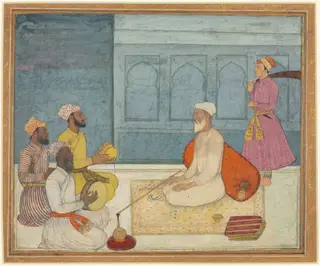
Nobleman Visiting Saint at his Shrine
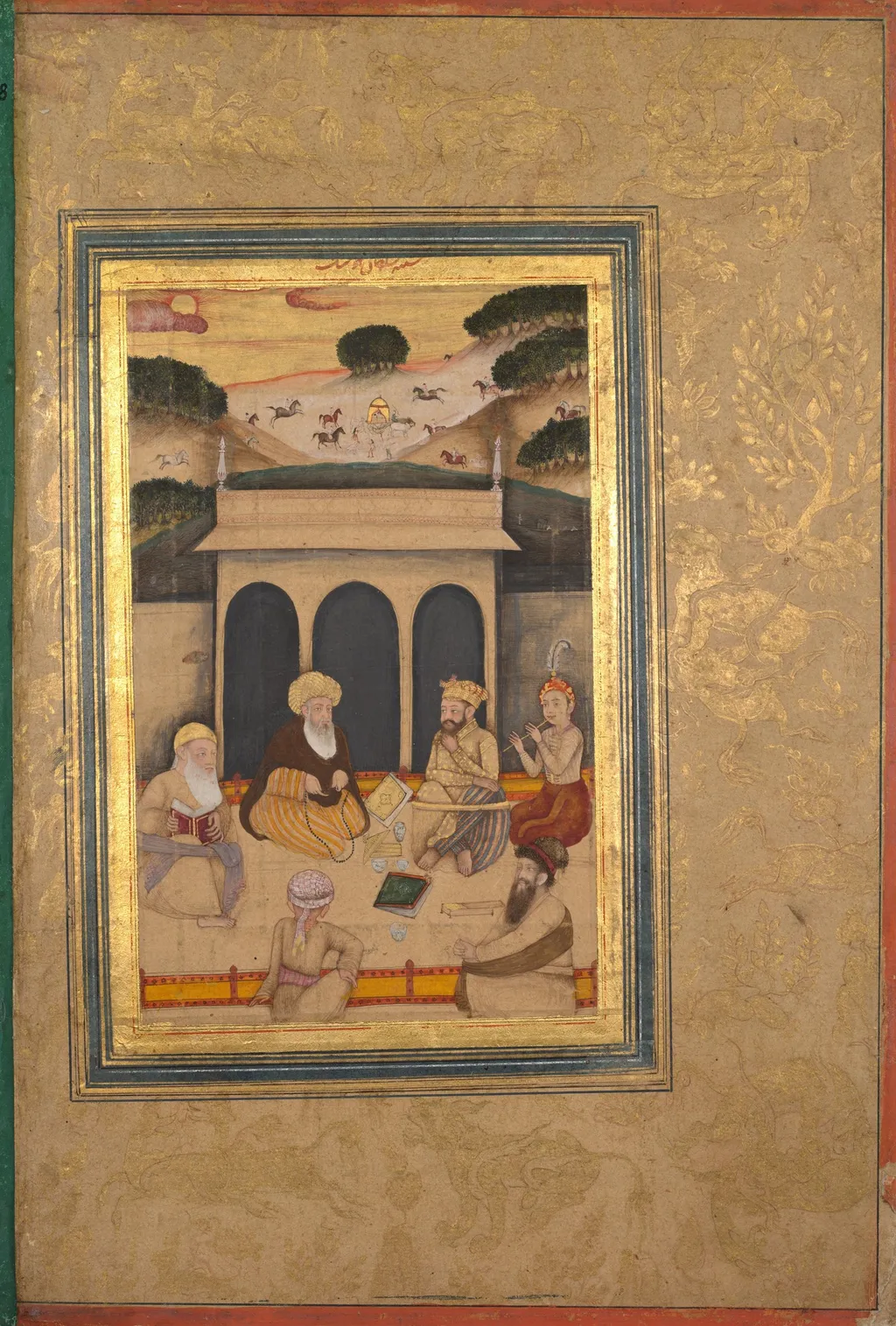
Nobleman Visiting Saint at his Shrine is an unspecified painting. It dates from 1700 and is held in the collection of the Cleveland Museum of Art.
About this work
History & Provenance
No further information about its original commission, earlier owners, or subsequent provenance is available in the sources.
The painting Nobleman Visiting Saint at his Shrine is dated to 1699 and is attributed to an unknown artist. It is classified as a painting, with an inception date of 1699-01-01. The work entered the Cleveland Museum of Art in 1939, receiving the accession number 1939.163, and has remained in the museum’s collection since. No further information about its original commission, earlier owners, or subsequent provenance is available in the sources.
Context
The painting titled Nobleman Visiting Saint at his Shrine was created in 1699 and is attributed to an unknown artist. It is part of the Cleveland Museum of Art's collection, where it is cataloged as 1939.163. Art historical analysis situates the work within the late Baroque period, reflecting devotional practices of the time. The composition demonstrates the interplay between aristocratic patronage and religious imagery in 17th-century European painting.
Legacy
The painting has been part of the Cleveland Museum of Art collection since its acquisition, where it is displayed in the European paintings galleries. Its presence in a major museum has contributed to renewed scholarly interest in Dutch Golden Age genre scenes and the religious dynamics of 17th-century devotional art. The work is frequently cited in studies of shrine-based pilgrimage imagery in European art.
Overview
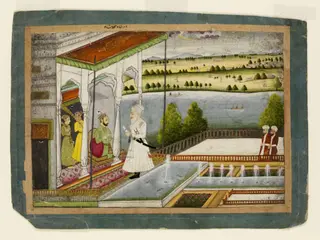
The work titled Nobleman Visiting Saint at his Shrine is an oil painting that presently belongs to the collection of the Cleveland Museum of Art. It depicts a small gathering of four figures seated beneath a three‑arched, shaded pavilion, while riders pass along a bright, open landscape beyond the structure.
Subject & Meaning
At the centre of the composition a dignified figure in a long robe and white turban holds a book, suggesting a scholarly or devotional role. To his right, a man dressed in red and gold rests beside a modest table bearing assorted objects, perhaps offerings. The surrounding riders, shown on horseback, imply a narrative of pilgrimage or a noble party’s visit to a holy site.
Technique & Style
The painter contrasts the darkened stone walls of the pavilion with the warm, saturated hues of the figures’ garments, creating a clear visual separation between interior and exterior. The landscape beyond is rendered in a flattened, decorative manner, with the horses and riders arranged in a staged, almost theatrical fashion, emphasizing pattern over naturalistic depth.
Artist & collection

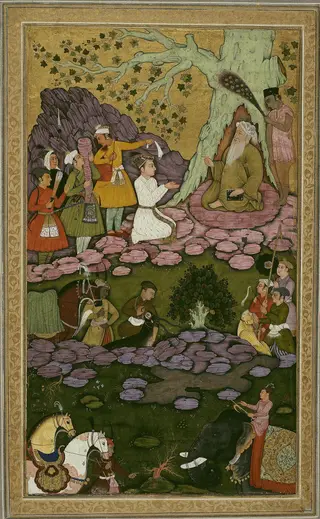 Prince Visiting an Ascetic during a Hunt
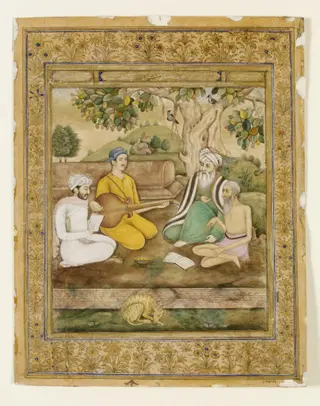 Shaikh Salim Chishti
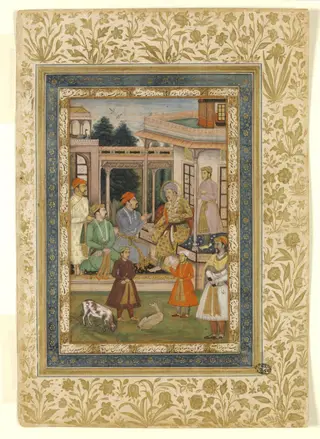 Akbar
Akbar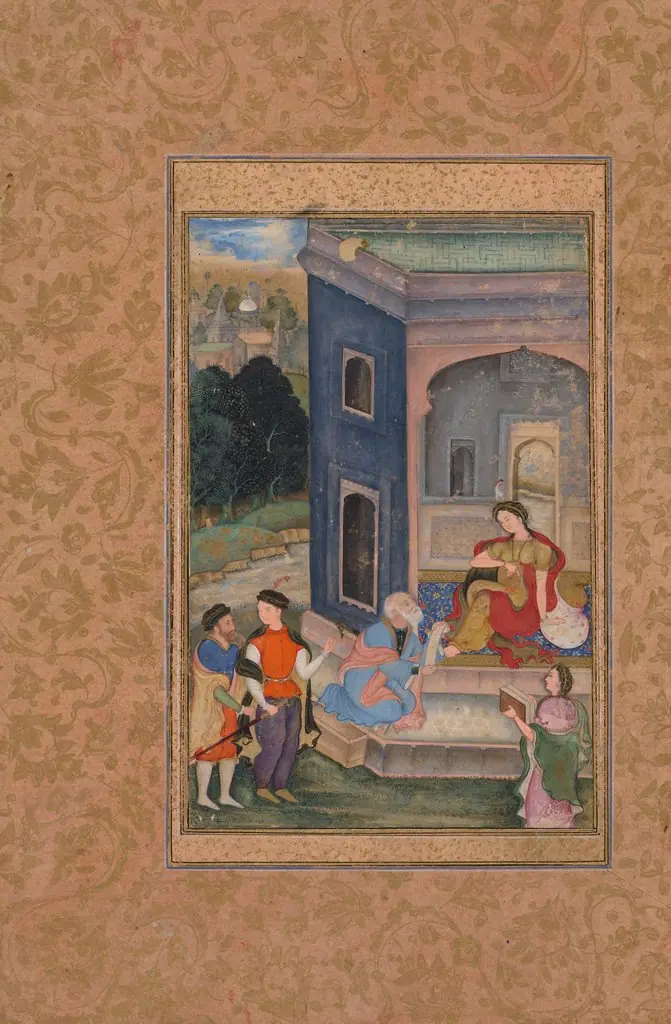 European Costume Scene
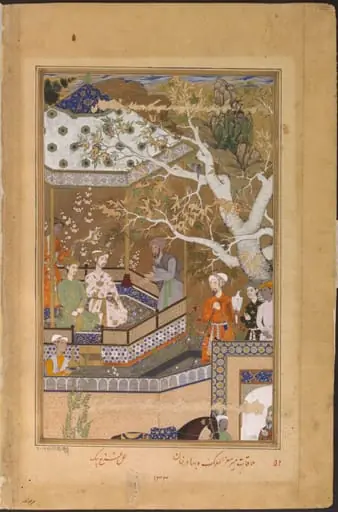 Mir Muizzu'l Mulk and Bahadur Khan
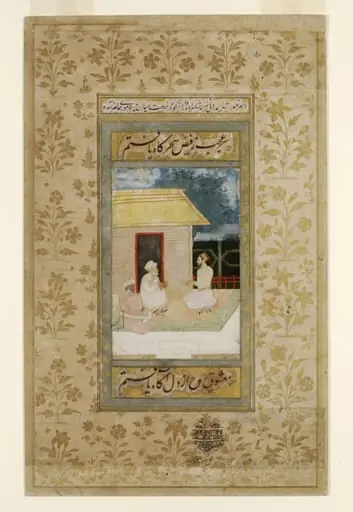 Dara Shikoh
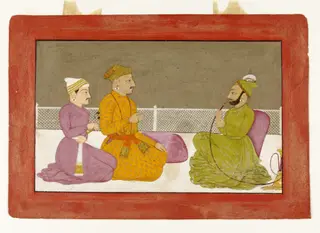 Raja Bhupal Dev of Jasrota, Raja Dalip Singh and Raja Daya Dhat
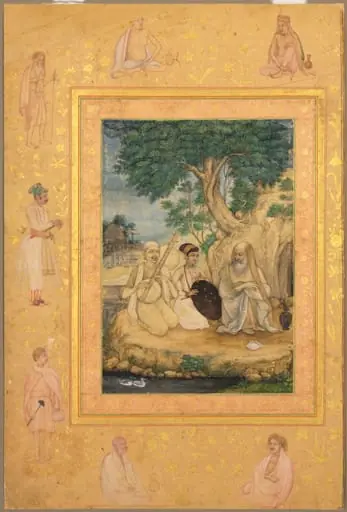 Prince and ascetics, from the Late Shah Jahan Album
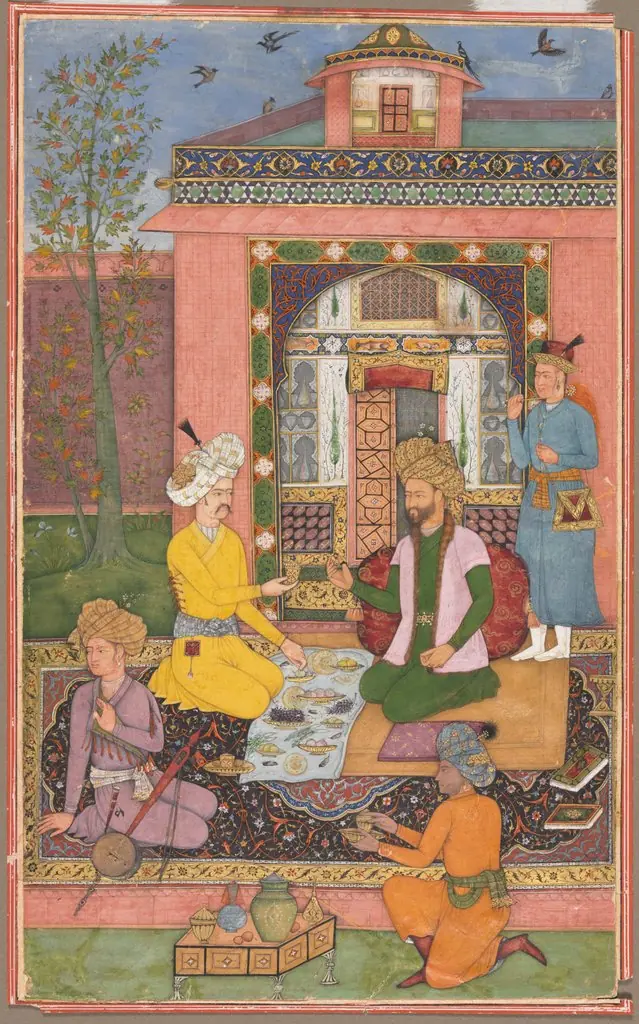 A Royal Picnic on a Terrace
 Emperor Muhammed Shah
 Sultan and Musicians
- Nobleman Visiting Saint at his Shrine