Artwork
A Royal Picnic on a Terrace
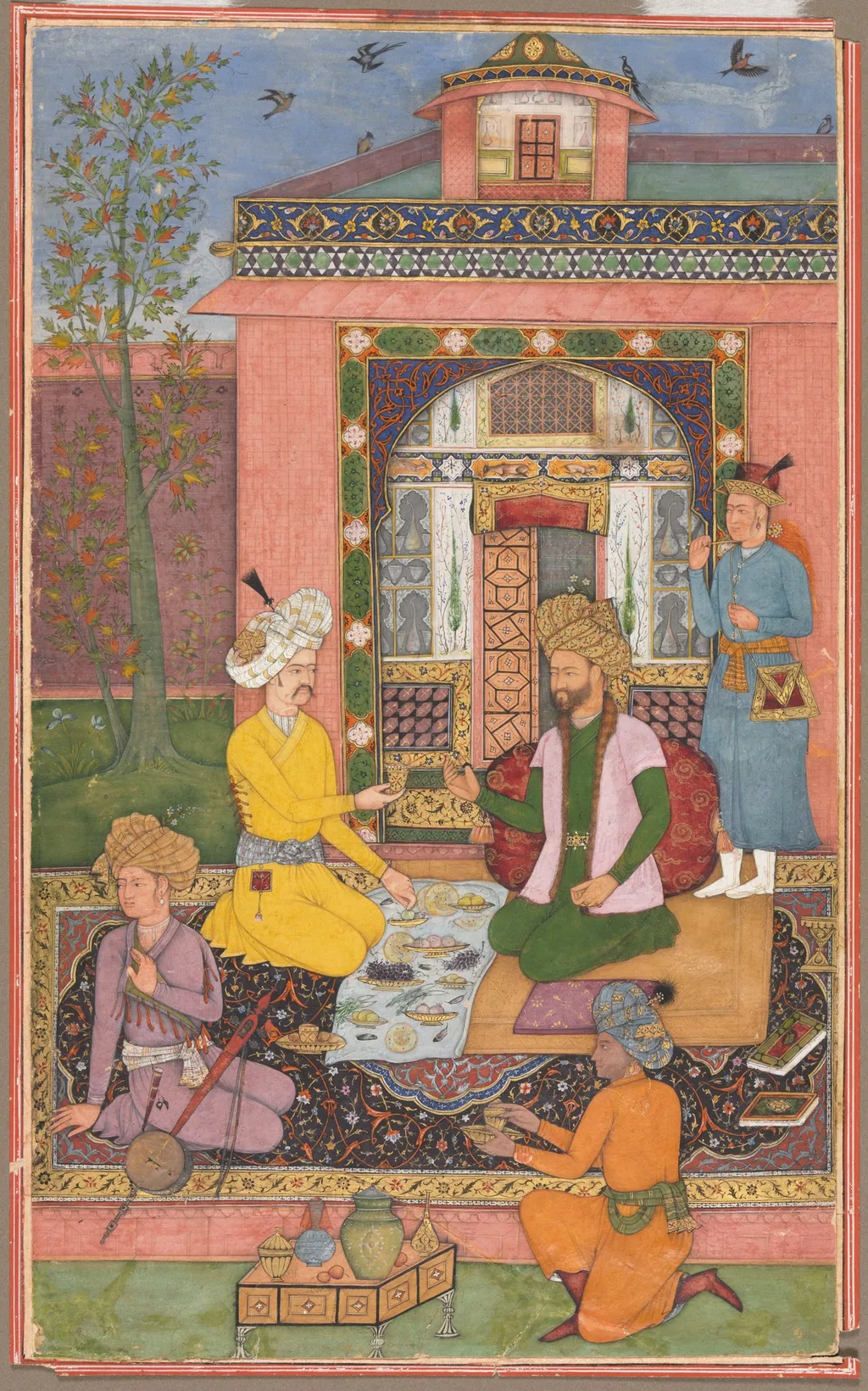
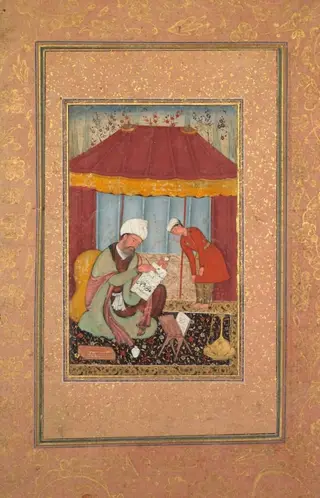
A Royal Picnic on a Terrace is an unspecified painting by the Mughal Painting artist Muhammad Ali. It dates from 1620 and is held in the collection of the Cleveland Museum of Art.
About this work
History & Provenance
No specific details regarding the original commission or intermediate ownership history prior to its museum acquisition are provided in the available records.
Created in 1620, A Royal Picnic on a Terrace was produced by the Persian artist Muhammad Ali, who was active between 1590 and 1620. Although the artist is identified as Persian, the work was made within the Mughal Empire. The painting currently resides in the collection of the Cleveland Museum of Art, where it is classified as a painting.
No specific details regarding the original commission or intermediate ownership history prior to its museum acquisition are provided in the available records.
Legacy
The work's reputation rests on its attribution to Muhammad Ali, an early Mughal court painter whose documented activity (1590–1620) is confirmed by museum records. The painting's presence in the Cleveland Museum of Art's collection since its acquisition of the work (cataloged under accession 1920.1966) solidified its scholarly recognition, though specific exhibition histories or direct influence on later artists are not documented in the provided sources. Its legacy is primarily tied to its status as a representative example of Mughal-era court painting, reflecting the stylistic conventions of early 17th-century Persianate art in India.
Overview
A Royal Picnic on a Terrace, painted in 1620 by Muhammad Ali, is part of the collection at the Cleveland Museum of Art. The canvas captures a leisurely outdoor gathering, rendered with vivid hues and meticulous detail, inviting viewers to observe a moment of refined social interaction set against an architectural backdrop.
Subject & Meaning
The composition presents four gentlemen dressed in richly patterned garments, seated around a low table laden with food and a teapot. Their attire, accented with gold embroidery, suggests status and ceremony, while the orderly arrangement of figures and objects conveys a sense of controlled hospitality within a leisurely setting.
Technique & Style
Ali employs a bright palette of greens, yellows, and reds, applying intricate decorative motifs to both clothing and architectural elements. The brushwork balances fine linear detail, visible in the embroidered threads and tiled roof, with broader washes that define the sky and surrounding foliage, creating a lively yet harmonious visual rhythm.
Context
The painting reflects a period when courtly leisure scenes were popular in Persian-influenced art, emphasizing elegance and social order. The architectural features, arched windows and tiled roofing, anchor the scene in a stylized urban environment, while the inclusion of birds and a red-leaved tree adds naturalistic touches common to the era’s decorative programs.
Own this work as a print
Artist & collection

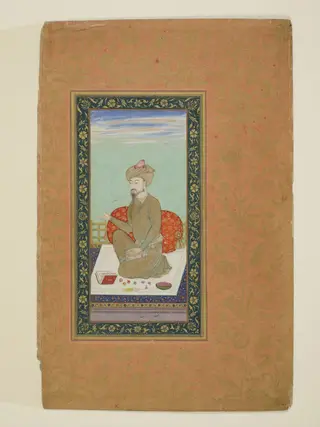 Emperor Babur
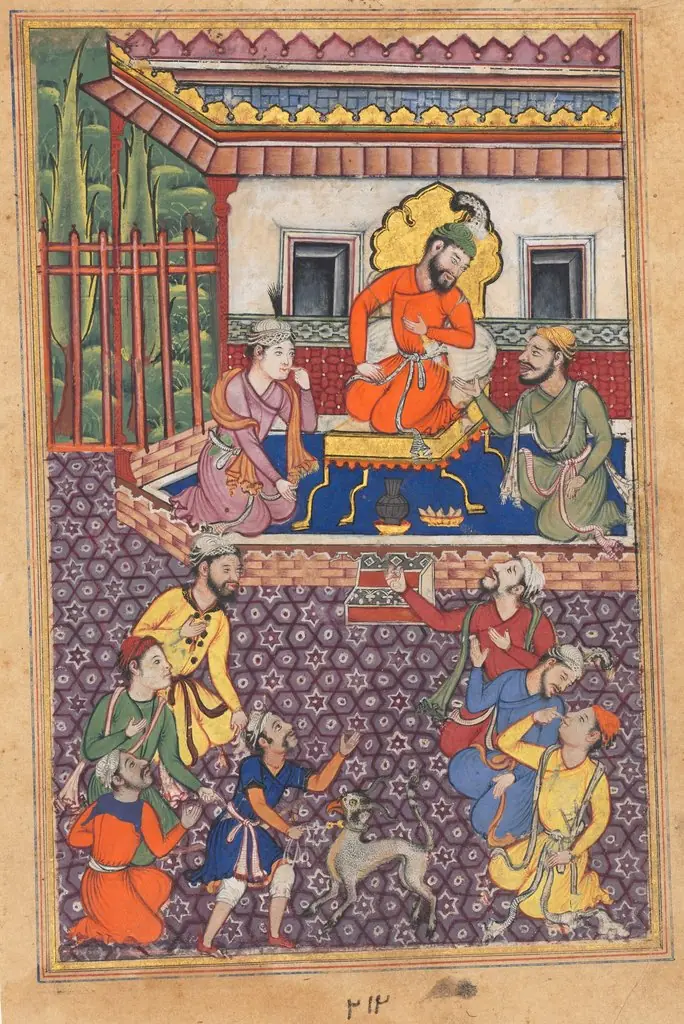 The court of the Raja of Ujjain, from a Tuti-nama (Tales of a Parrot): Forty-sixth Night
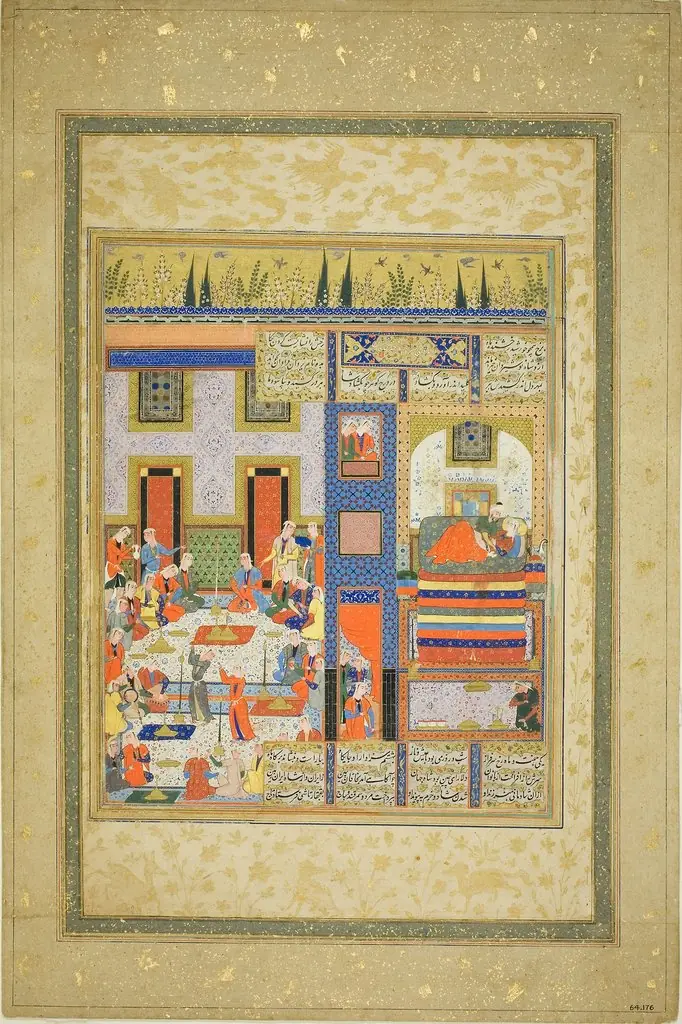 The Wedding Night of Anushirvan and the Khaqan's Daughter (from a copy of Firdausi's Shahnama)
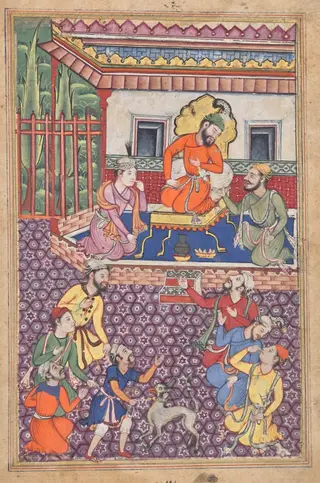 The court of the Raja of Ujjain, from a Tuti-nama (Tales of a Parrot): Forty-sixth Night
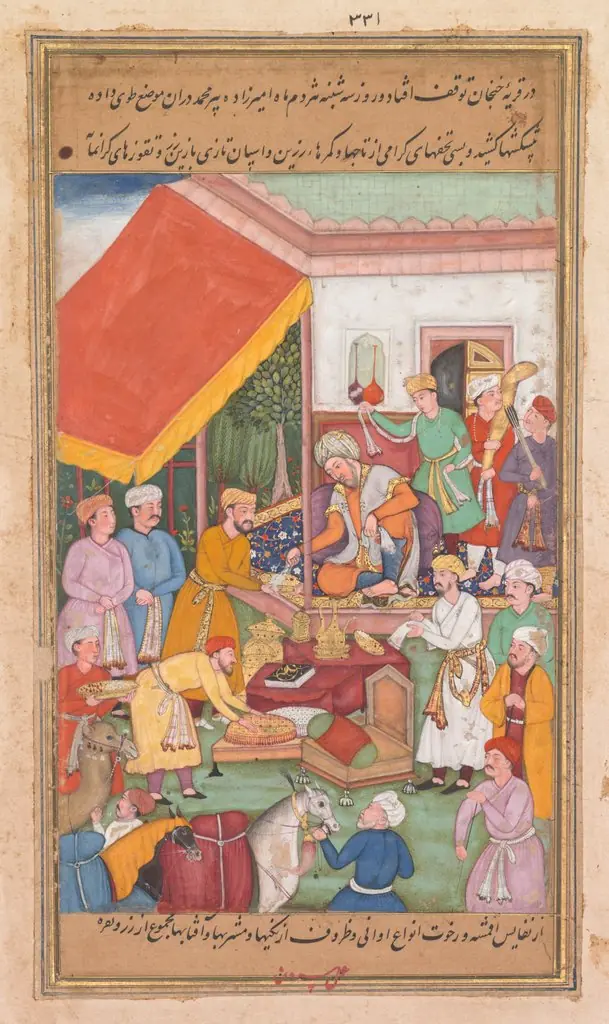 Timur distributes gifts from his grandson, the Prince of Multan, from a Zafar-nama (Book of Victories)
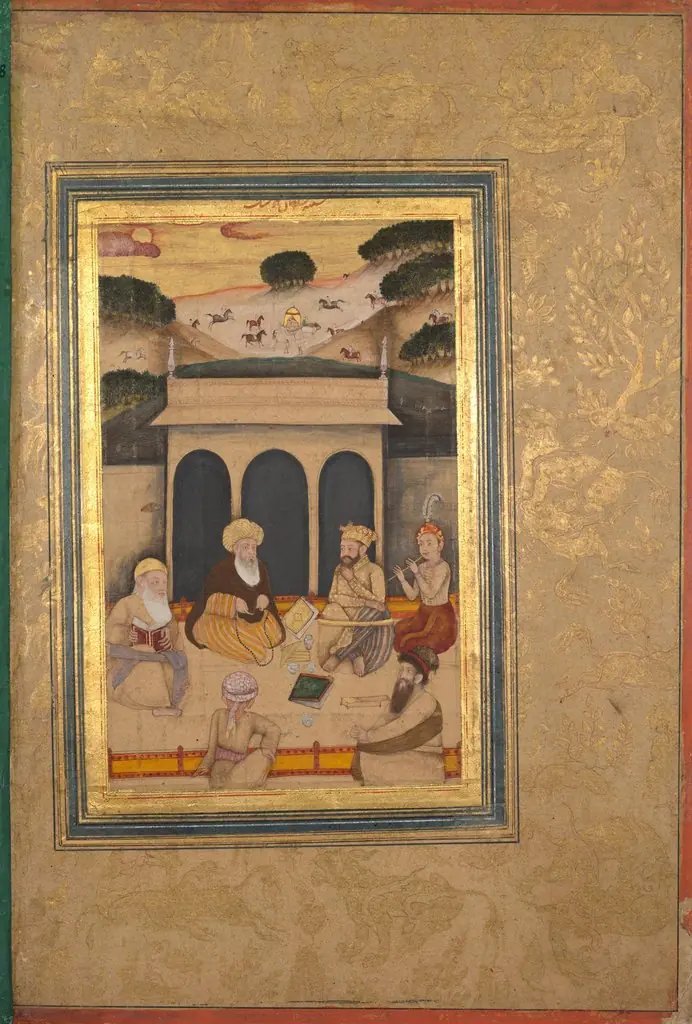 Nobleman Visiting Saint at his Shrine
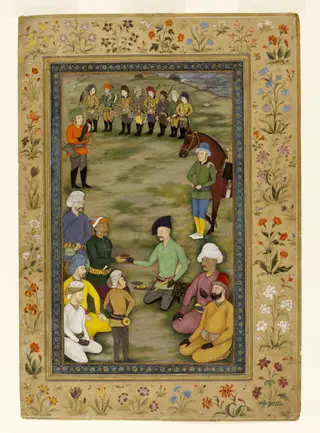 Shah Abbas and Khan Alam
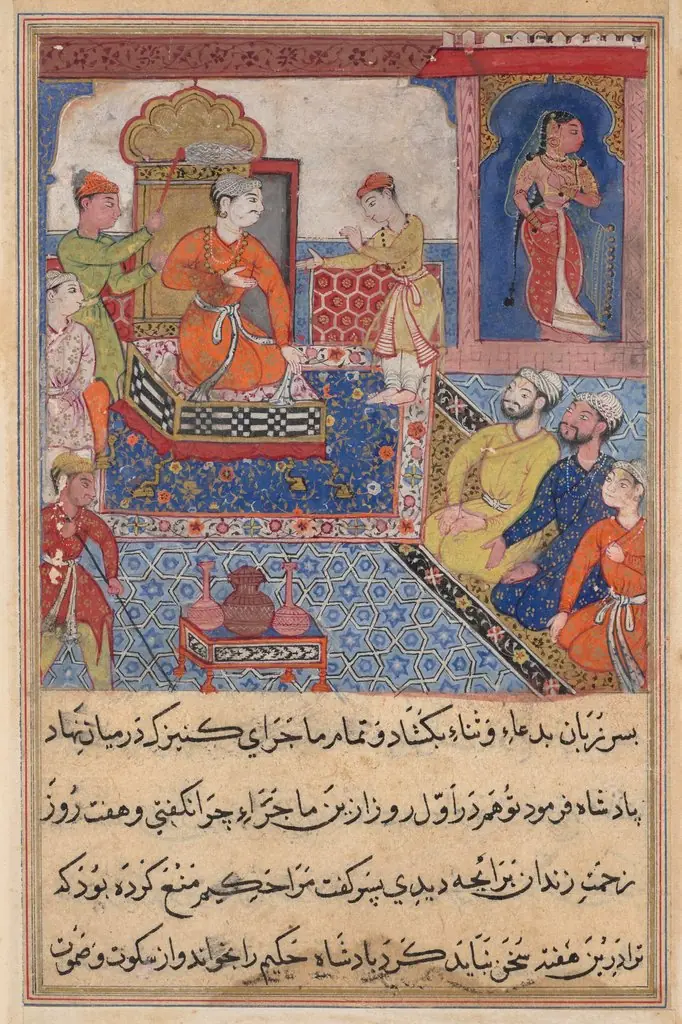 Page from Tales of a Parrot (Tuti-nama): text page
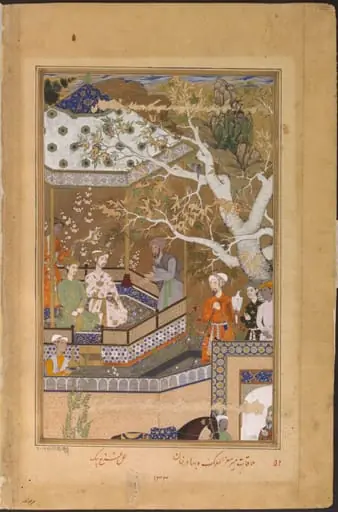 Mir Muizzu'l Mulk and Bahadur Khan
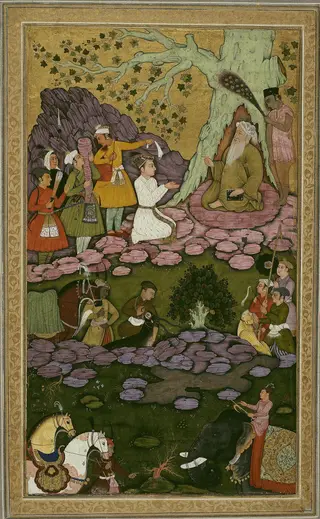 Prince Visiting an Ascetic during a Hunt
 Teacher with his Pupil
- A Royal Picnic on a Terrace