Artwork
Page from Tales of a Parrot (Tuti-nama): text page
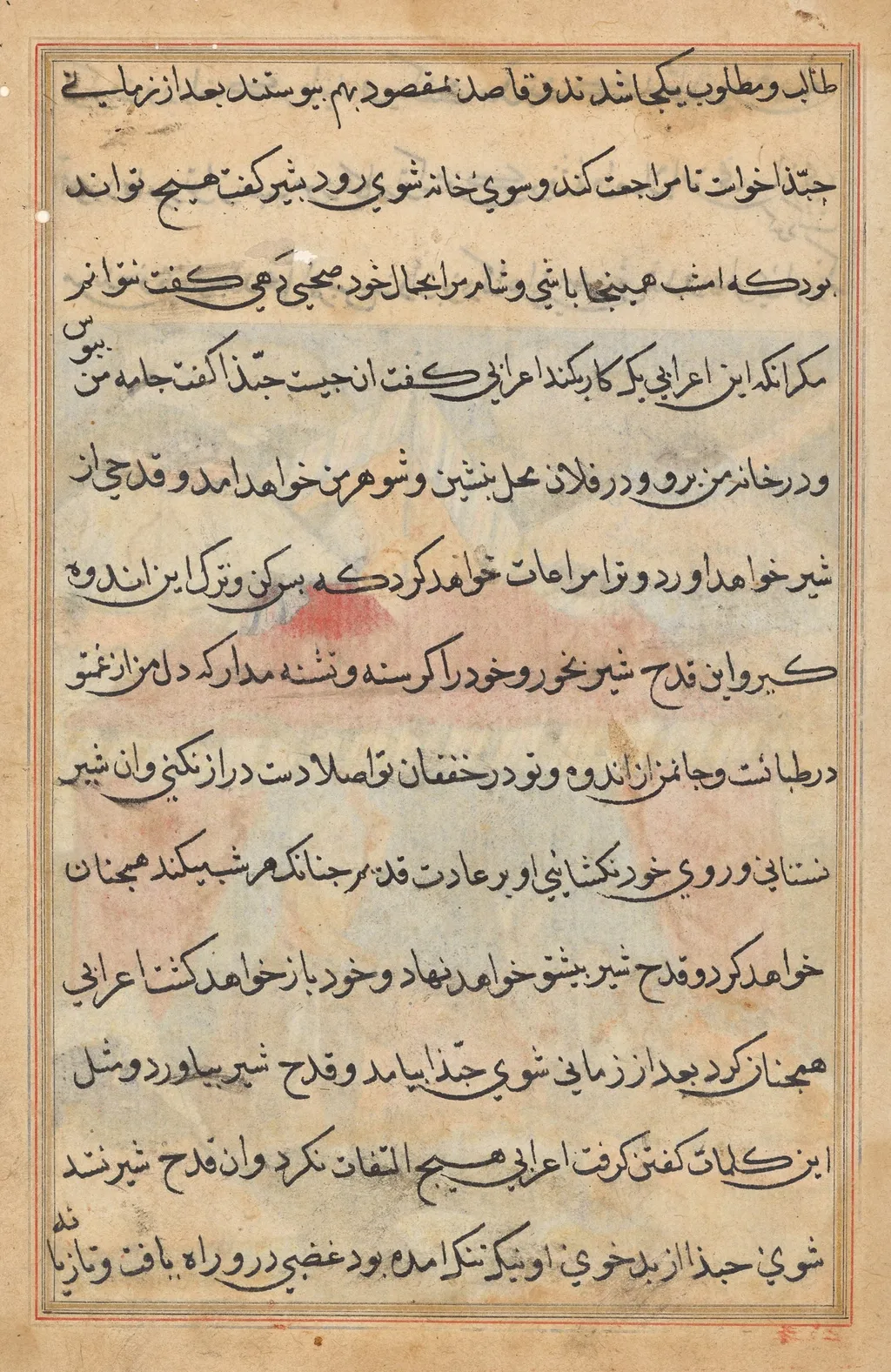
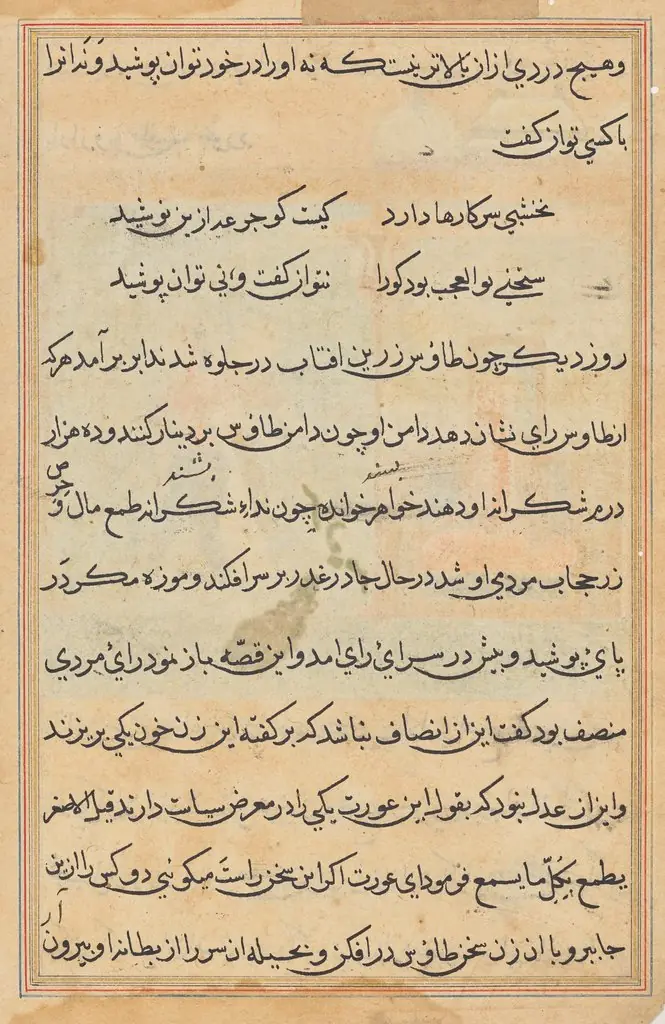
Page from Tales of a Parrot (Tuti-nama): text page is an unspecified painting. It dates from 1560 and is held in the collection of the Cleveland Museum of Art. This object is a painted page from the Persian manuscript known as Tales of a Parrot, or Tuti‑nama.
About this work
History & Provenance
The work is classified as a painting and is held in the collection of the Cleveland Museum of Art, where it is recorded under the accession number 1962.
The page is dated to 1560 and was produced within the Mughal Empire, a period when illustrated manuscripts of the Tuti-nama were actively commissioned at the imperial court. The work is classified as a painting and is held in the collection of the Cleveland Museum of Art, where it is recorded under the accession number 1962.279.169.a. Beyond its attribution to an unknown artist, its Mughal-era origin, and its current institutional ownership, the sources do not document earlier ownership, specific patrons, or a detailed chain of custody.
The painting is held in the collection of the Cleveland Museum of Art, where it is catalogued under the accession number 1962.279.169.a. It has been exhibited at the museum as part of displays focusing on Mughal miniature painting and Indian subcontinent artworks, though specific exhibition titles and dates are not detailed in the source records.
Overview
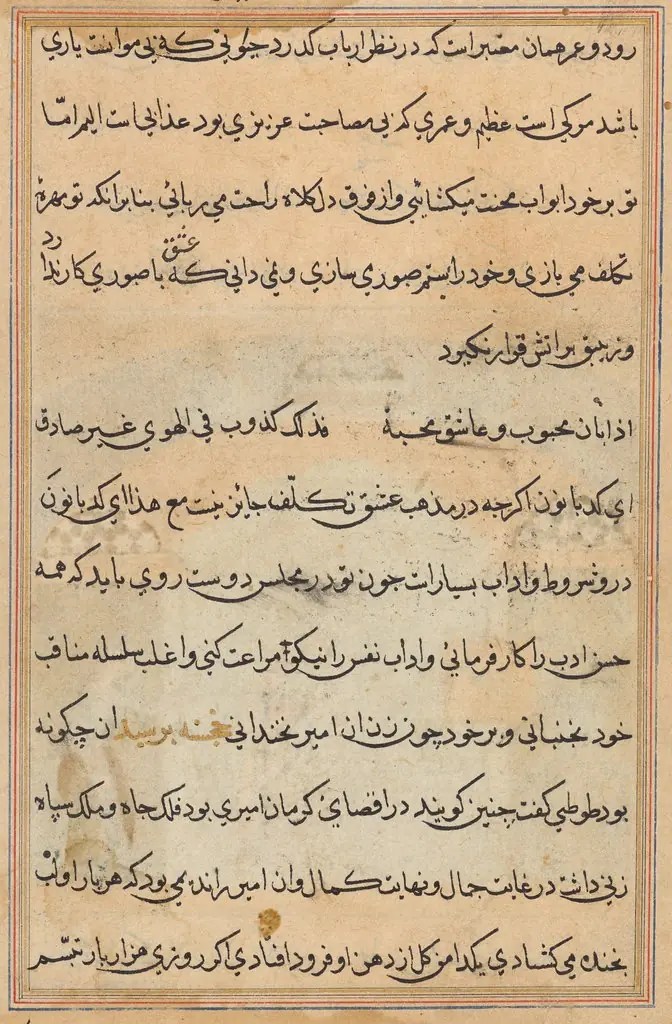
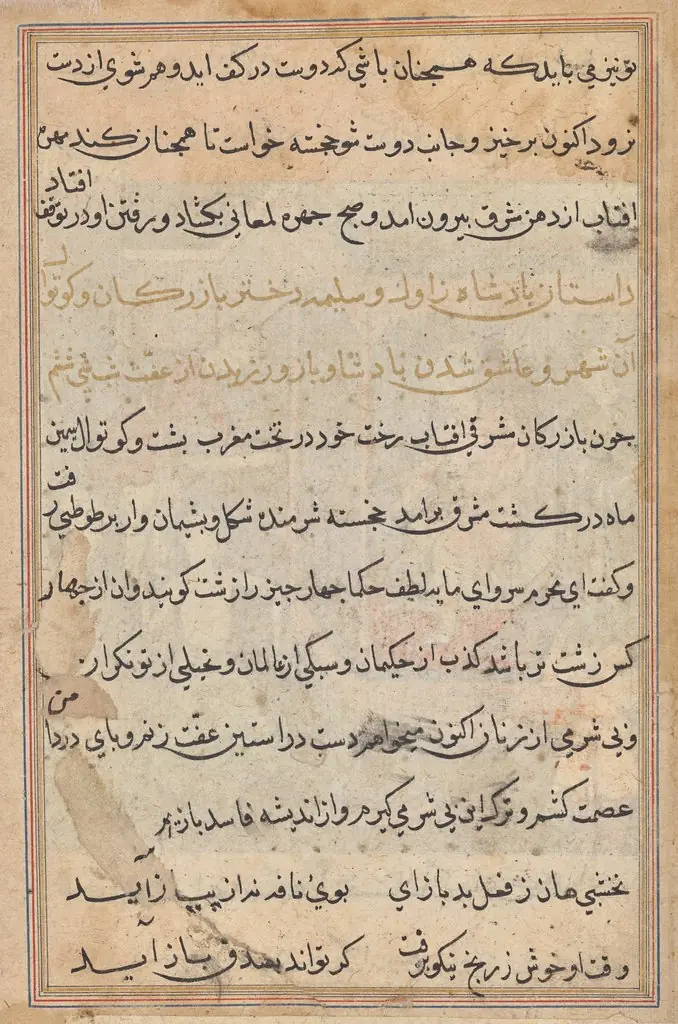
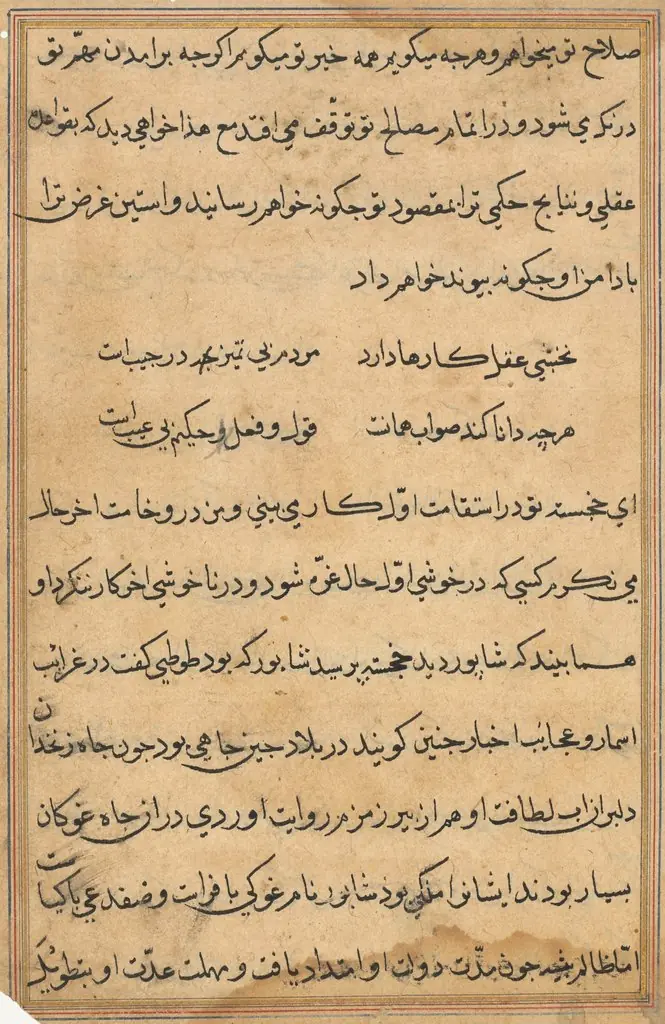
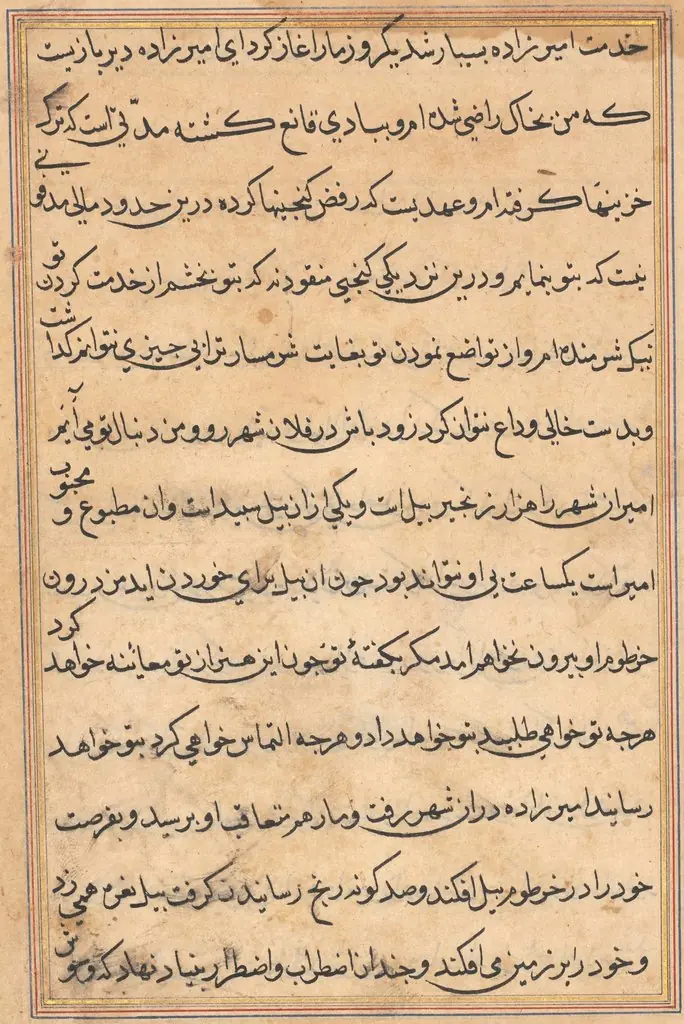
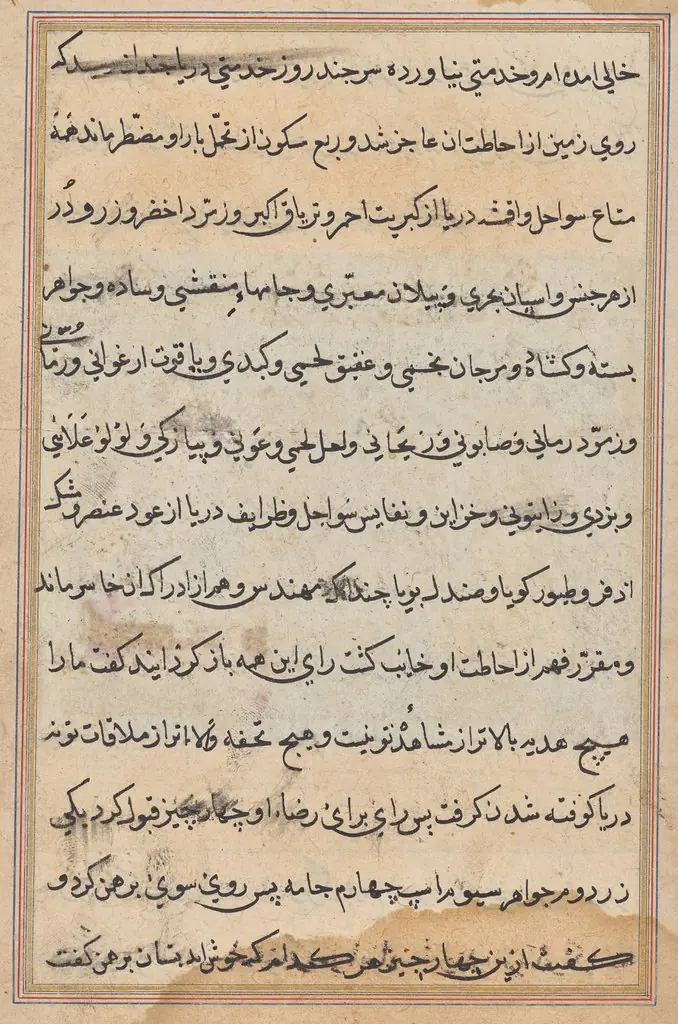
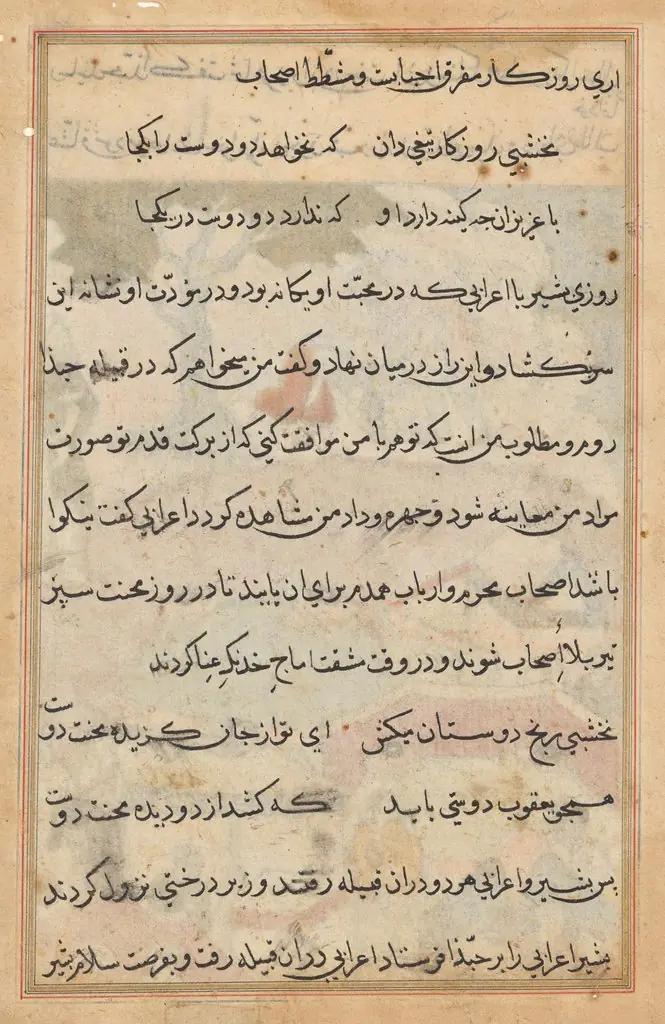
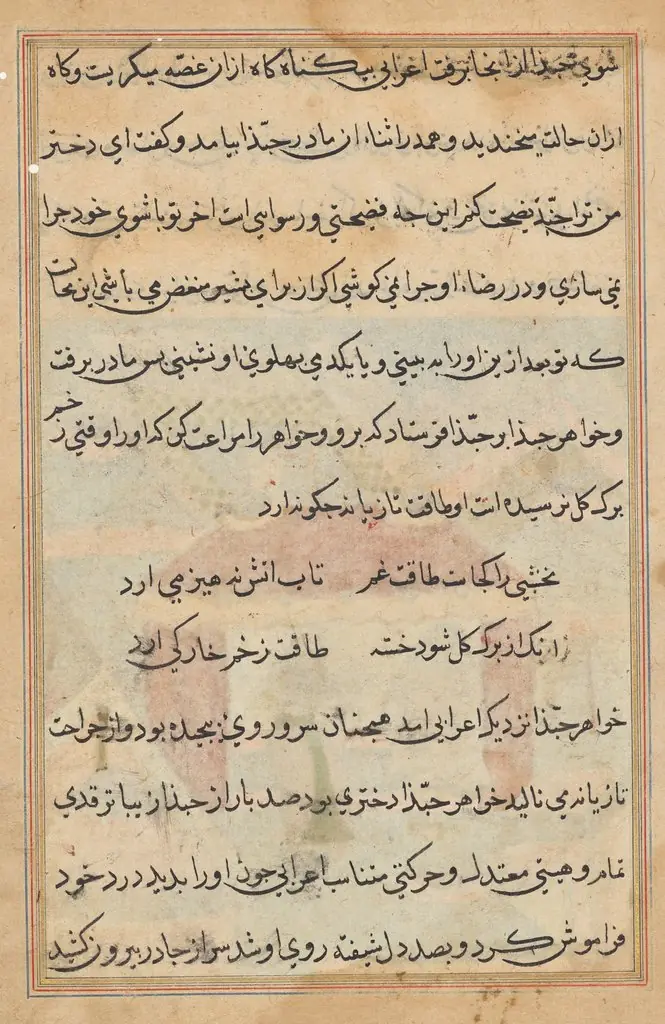
This object is a painted page from the Persian manuscript known as Tales of a Parrot, or Tuti‑nama. Executed as a miniature painting, the sheet functions primarily as a textual surface rather than an illustrated scene, presenting a dense block of black calligraphic script framed by a subtle colored wash.
Subject & Meaning
The page contains a continuous narrative rendered in flowing Persian script, each line designed for deliberate, measured reading. The tight arrangement of the letters and their rhythmic variation in line thickness suggest an emphasis on the lyrical quality of the story, inviting contemplation of the tale itself rather than visual representation.
Technique & Style
The calligraphy is executed in black ink, with slight modulation of stroke weight that creates a lively visual pulse. A faint background wash of pale blue and red provides a delicate tonal underlay, while a thin red border delineates the text area, reinforcing the page’s sense of containment and privacy.
Context
Tales of a Parrot is a collection of moral and didactic stories that circulated widely across the Islamic world. The manuscript tradition combined literary content with decorative elements, reflecting the cultural value placed on both narrative and aesthetic refinement in courtly libraries.
Legacy
Pages like this illustrate the interplay between text and visual art in Persian manuscript culture, influencing later book production and informing contemporary scholarship on Persian literary aesthetics and calligraphic practice.
Artist & collection

- Page from Tales of a Parrot (Tuti-nama): text page
 Page from Tales of a Parrot (Tuti-nama): text page
 Page from Tales of a Parrot (Tuti-nama): text page
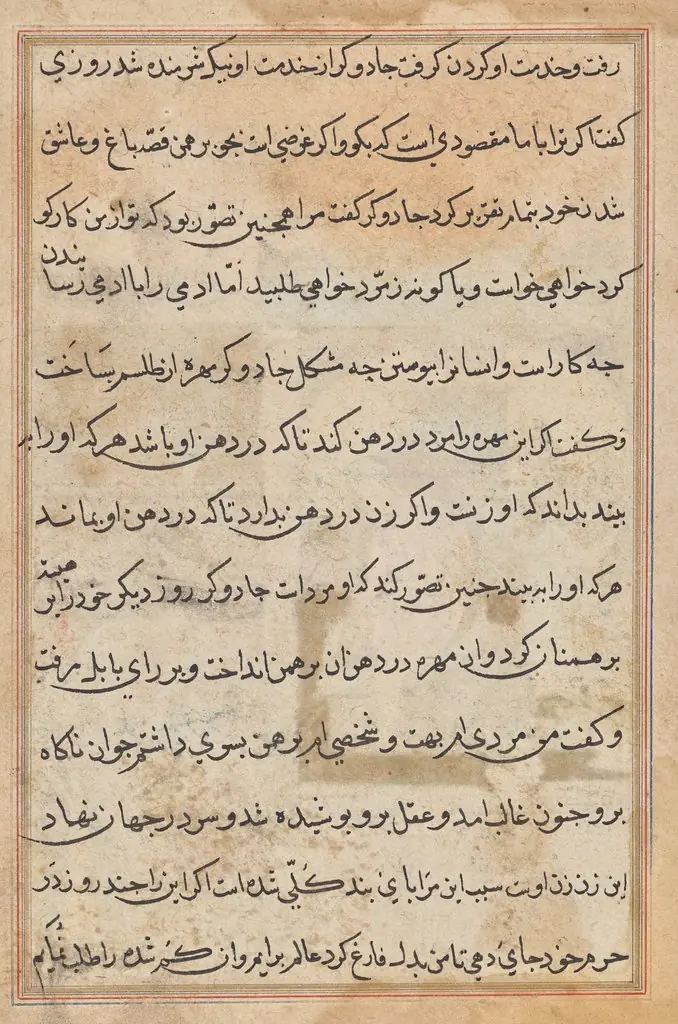 Page from Tales of a Parrot (Tuti-nama): text page
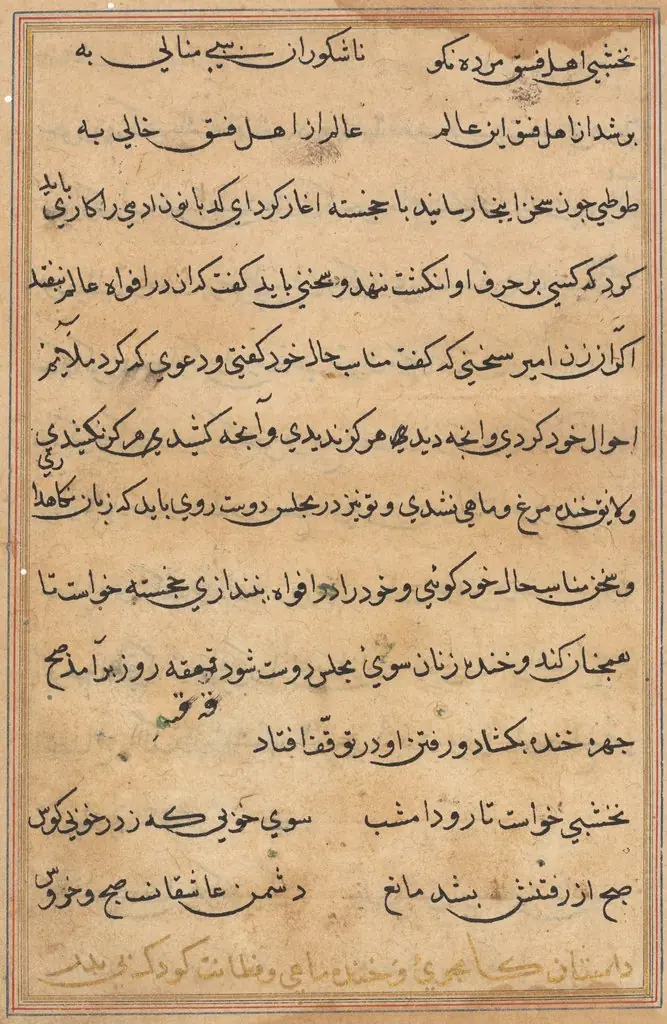 Page from Tales of a Parrot (Tuti-nama): text page
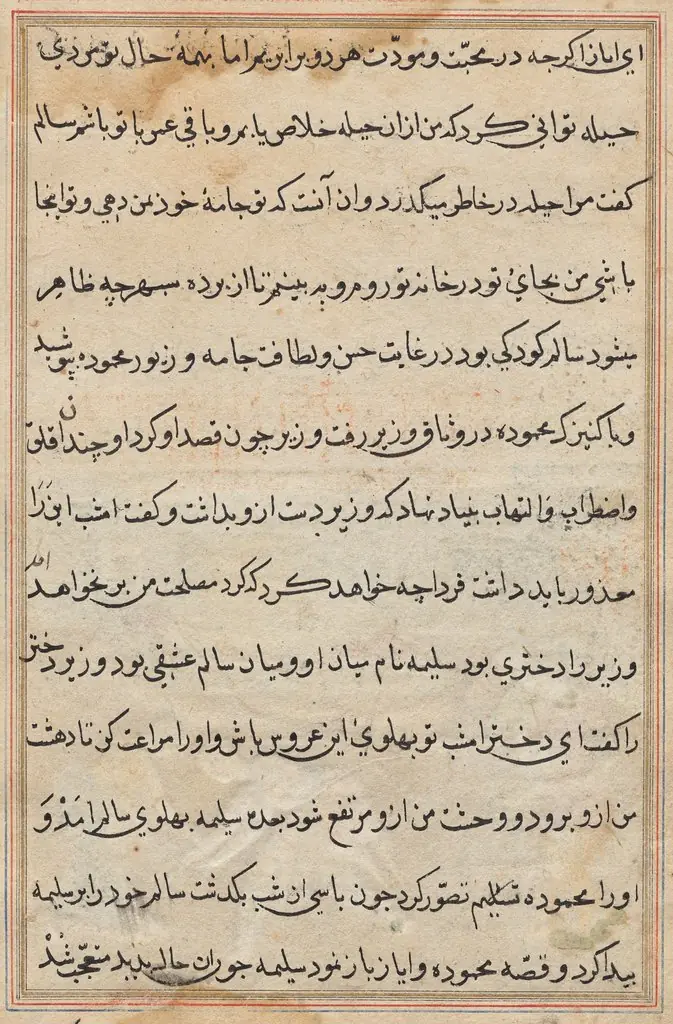 Page from Tales of a Parrot (Tuti-nama): text page
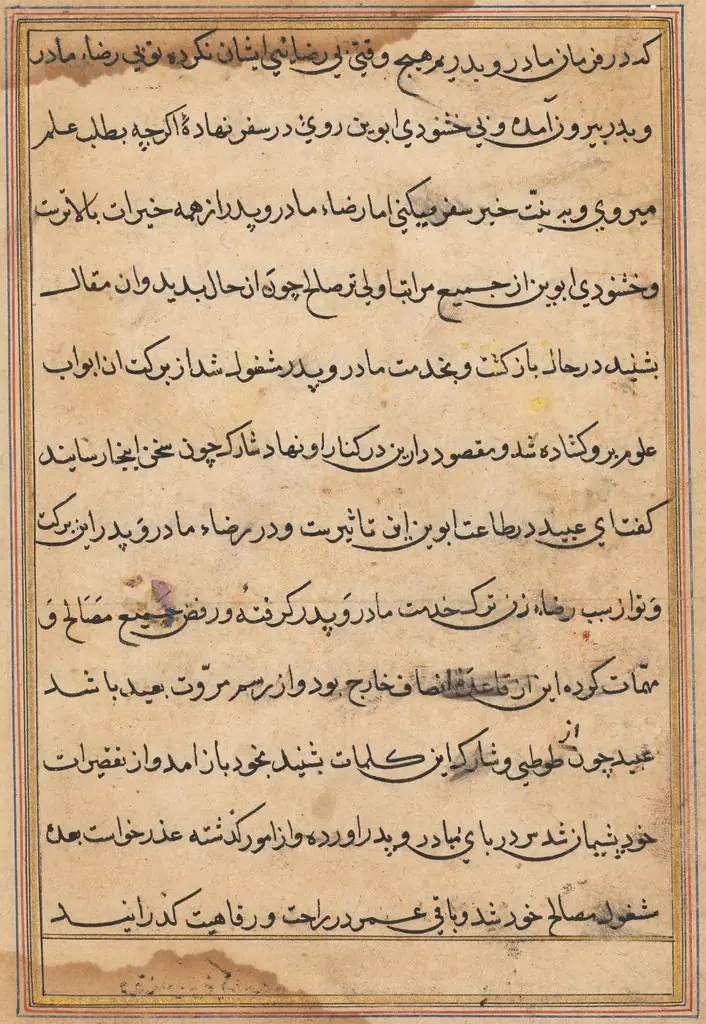 Page from Tales of a Parrot (Tuti-nama): text page
 Page from Tales of a Parrot (Tuti-nama): text page
 Page from Tales of a Parrot (Tuti-nama): text page
 Page from Tales of a Parrot (Tuti-nama): text page
 Page from Tales of a Parrot (Tuti-nama): text page
 Page from Tales of a Parrot (Tuti-nama): text page